Rental deposits are lost to a short list of habits, not to bad luck. Wiping rosin dust off the strings and body after every session, storing the violin away from heat and dry air, loosening the bow hair before it goes back in the case, returning every piece the shop handed over, and reporting damage the day it happens — those five things keep a rented violin inside the range shops treat as ordinary wear. Everything outside that range is what gets deducted.
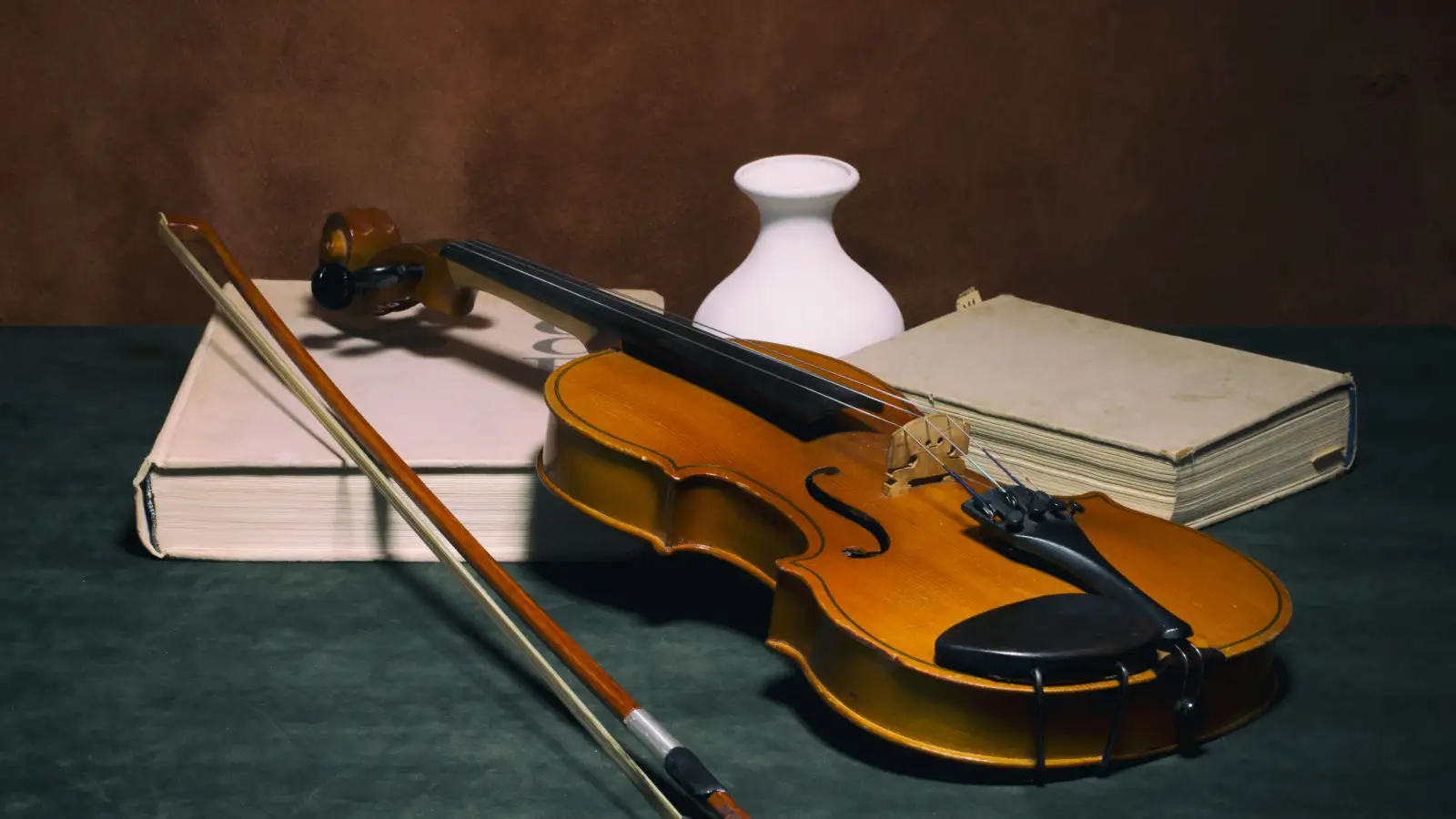
What the counter actually looks like
I've stood at that counter enough times now to know the routine, and it plays out the same way. The person behind it lifts the violin out of the case by the neck, turns it so the top plate catches the light from the lamp over the register, and tilts it slowly, side to side. They aren't admiring it. They're reading it. A thumb runs along the varnish near the chin rest, a glance goes down the length of the strings from the scroll end, and then the instrument goes onto the padded mat while the case gets opened wide to see what's in the compartments.
What they wave through tells you a lot. That shine on the varnish where your hand and chin rest is expected — it's just contact. So is the grey track across the strings where the bow crosses, and the slightly worn patches on the fingerboard under the strings. Nobody at a rental counter has ever looked surprised by those. They don't come out of the deposit.
What stops the conversation is different. A hairline crack running out from an f-hole or down from the edge. A seam that's opened along the purfling, visible as a thin dark line where two pieces of wood used to meet. A bridge that's leaning or has fallen flat. That isn't wear. That's damage, and it's the difference between a refund and a deduction.
The thirty seconds that does most of the work
If I could only keep one habit, it would be this one, and it wouldn't be close. After every session — every one, not every few — wipe the rosin off.
Rosin isn't dust. It's a sticky resin that you've just ground to powder and flung onto the top plate and the strings. Left alone, it grabs airborne dust and sets, and over weeks it can print itself into the varnish as a dull patch that no longer wipes away. The worst of it collects under the strings between the bridge and the end of the fingerboard, and on the top plate just below the f-holes. The bow stick collects it too. And a string caked with old rosin sounds dull and answers slowly, which is its own small punishment.
A dry, soft microfiber cloth. Two, if you want to be tidy about it — one for the body, one for the strings. Fold it so you're not dragging a corner across the bridge. Under the strings, slide it flat along the top instead of scrubbing at the dust. Then the instrument goes back in the case. Thirty seconds, maybe forty. That's the whole ritual.
What I don't reach for: furniture polish, alcohol, water, or anything in a spray bottle. None of that protects a deposit, and some of it puts the finish at risk in ways the shop will notice. The cloth is doing the work.
Where it lives matters more than what you polish it with
This one I learned the annoying way, watching a seam open on an instrument that had been spotlessly clean.
Wood moves. It swells as it takes on moisture and shrinks as it dries, and the seams on a violin are held with a glue made to release before the wood itself gives way. That's the safety valve. Heat and dryness push on that valve. Direct sun does its damage partly through heat and partly by baking the finish unevenly.
The three spots that cause trouble in my house: the case leaning against the radiator all winter, the case on the chair by the window where the afternoon sun lands, and the hall closet that shares a wall with the unheated garage. Any of those, over a season, is enough.
So the routine is boring. The case goes in an interior closet, on a shelf, away from the outside walls. In January, when the heat runs constantly and the air in the house gets painfully dry, a room humidifier in that room does more for the violin than any accessory I could buy. I don't steam the case and I don't tuck anything damp inside it. The goal is to keep the instrument out of the extremes, not to build a rainforest in a closet.
And not the car. Never the car, not even for an hour in the shade, and definitely not overnight in a cold snap.
Loosen the bow. Every time.
This is the one people skip because it feels fussy, and it's the one that turns a bow into a chargeable item.
The hair is under tension while you play. It's meant to be. It isn't meant to stay that way. A bow left tightened for months pulls itself into a curve, and you'll see it if you sight down the stick — by the time it's visibly warped, it isn't coming back. Tightened hair also presses against the inside of the case lid, which is another way to bend a stick and a way to crack a case.
Turn the screw until the hair is just barely slack. Not floppy, not so loose that the hair drapes across the stick or the frog rattles. A little give, a sliver of daylight between hair and stick at the middle. That's it.
Return it the way it arrived, pieces and all
The deposit isn't only about the instrument. It's about the kit.
Whatever came with the rental goes back with it. The bow, the case, the shoulder rest if the shop supplied one, the rosin, the cloth, the spare set of strings if one was included, the little inventory tag. Missing pieces are the quietest expensive item on the list, because there's no judgment call involved — the thing is either in the case or it isn't, and if it isn't, it shows up as a line on the deduction.
So I keep a short list of what left the shop with us, taped inside the lid, and I check it before I walk out the door. It sounds like overkill. It takes ten seconds, and it has saved me at least one fee I'd rather not have paid.
If something happens, the phone call is the whole strategy
Here's the part that surprises people: a broken thing isn't automatically a lost deposit. A hidden thing is.
If a bridge tips over, if a string snaps and the tailpiece looks wrong, if you notice a crack you can't account for — call the renting shop that day and bring it in. Let them look at it and tell you what they want done. That's the entire move.
What voids the protection is the alternative. Gluing it yourself. Having a handy friend take a look. Carrying it to a different shop or a general instrument repair place. Rented instruments are usually covered by an agreement that puts repairs in the shop's hands, and an unauthorized repair — even a good one — can turn a covered problem into a chargeable one, or end the rental outright. I've watched someone try to be helpful with a tube of glue and turn a small problem into a large one.
The honest caveat
Not every shop grades the same way. Some are lenient about cosmetics and strict about structure; some are the reverse. Some apply the deposit toward a purchase if you decide to buy, which changes how much the deposit even matters. Deposit amounts vary by instrument size and by shop.
The categories, though, don't vary much. Ordinary wear is ordinary wear. Cracks, open seams, warped bows, and missing pieces are the same story everywhere. The habits that keep you on the right side of that line are all small, all daily, and none of them require knowing anything about how a violin is built.
I closed the case on the last return, handed it across the counter, and watched the same slow tilt under the same lamp. No crack running anywhere. Bow slack. Everything in its compartment. The person nodded and reached for the paperwork, and that was the whole inspection.