The Order of a Beginner Violin Practice Session Matters More Than Its Length
Why the order of a beginner violin practice session matters more than its length: a step-by-step timeline from tuning to the final repetition.
Structured practice plans for the first weeks and the foundations of reading violin sheet music, including notes, key signatures, rhythm, and rests.
Why the order of a beginner violin practice session matters more than its length: a step-by-step timeline from tuning to the final repetition.
A wall, a doorway, and a chair are enough to catch violin posture drift. Three repeatable checks for the start, middle, and end of practice at home.
No bow, no noise, no audience: the left-hand drills an adult beginner can run quietly in an apartment at midnight, in three-minute pieces, most nights.
Counting aloud exposes rhythm mistakes that playing hides. Here are the four errors adult beginners repeat, each with a pencil-and-paper fix.
Ten minutes a day with unfamiliar music, one level below what you play, builds violin sight reading. Here is how to set up the block and run it.
Set the metronome slower than you can play, loop two bars, and read each click as data. A slow-tempo sequence that turns the tick into a diagnostic tool.
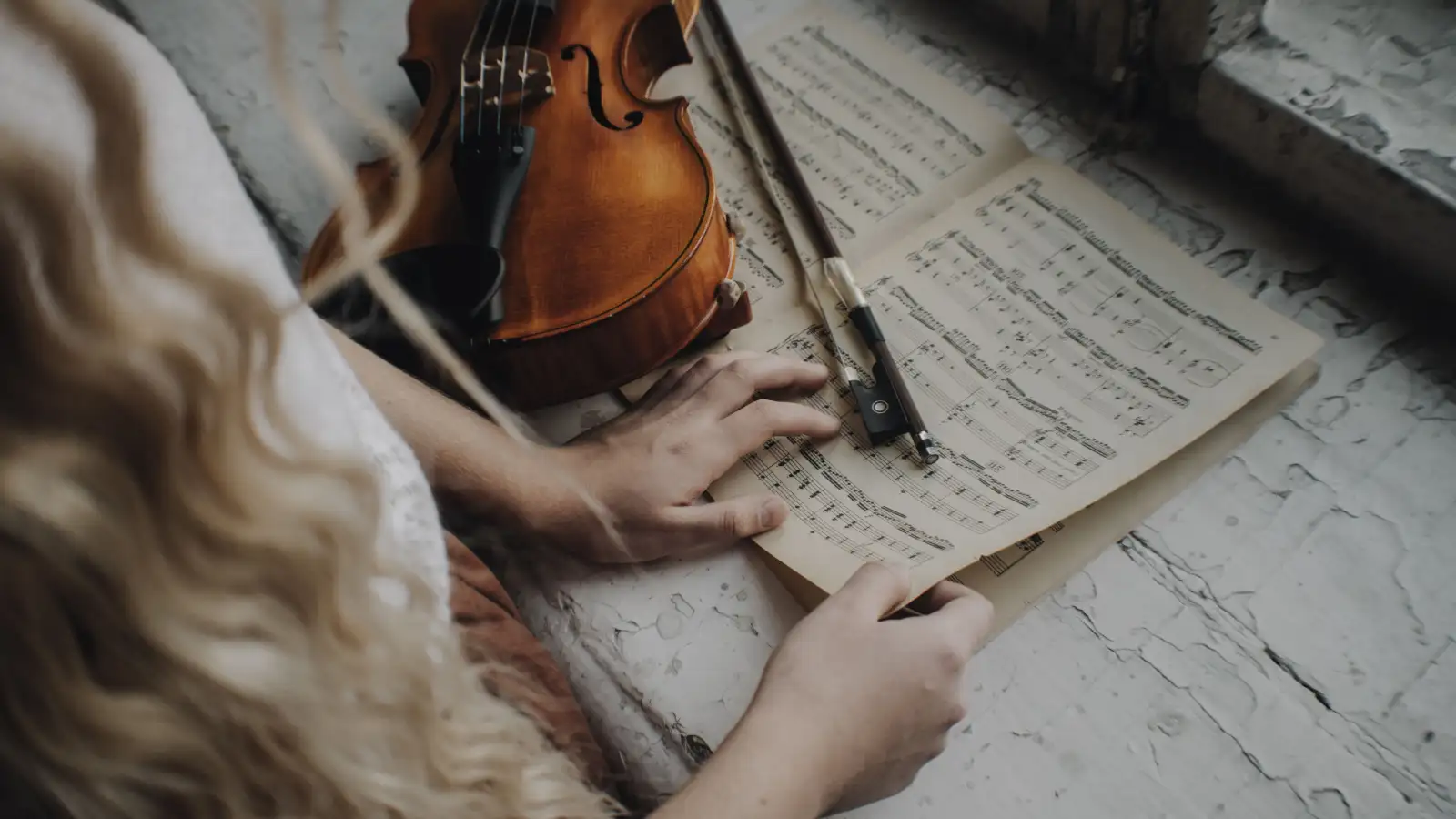
Reading violin music isn't a gate before playing. It grows alongside your hands, and beginners meet pitch, rhythm, key signatures, and bowing marks in order.
Note values and rests in beginner violin music, counted in beats: what each symbol means, how long to hold it, and how to time the silence before your next bow.