How Parents Can Help a Child's Violin Bow Hold Without a Fight
Stop grabbing the bow. Use short verbal prompts, one element per practice, a pencil at the kitchen table, and a simple independence test to build a relaxed bow hold.
How to form a relaxed bow hold, keep the bow parallel to the bridge, and practice straight bowing on open strings.
Stop grabbing the bow. Use short verbal prompts, one element per practice, a pencil at the kitchen table, and a simple independence test to build a relaxed bow hold.
A drifting bow usually starts in a rigid bow hold, not the shoulder. Here's how soft fingers, the wrist, and the contact point keep the bow straight.
Four bow hold mistakes—straight thumb, tight grip, collapsed wrist, floating pinky—plus a simple self-check for each so you fix one at a time.
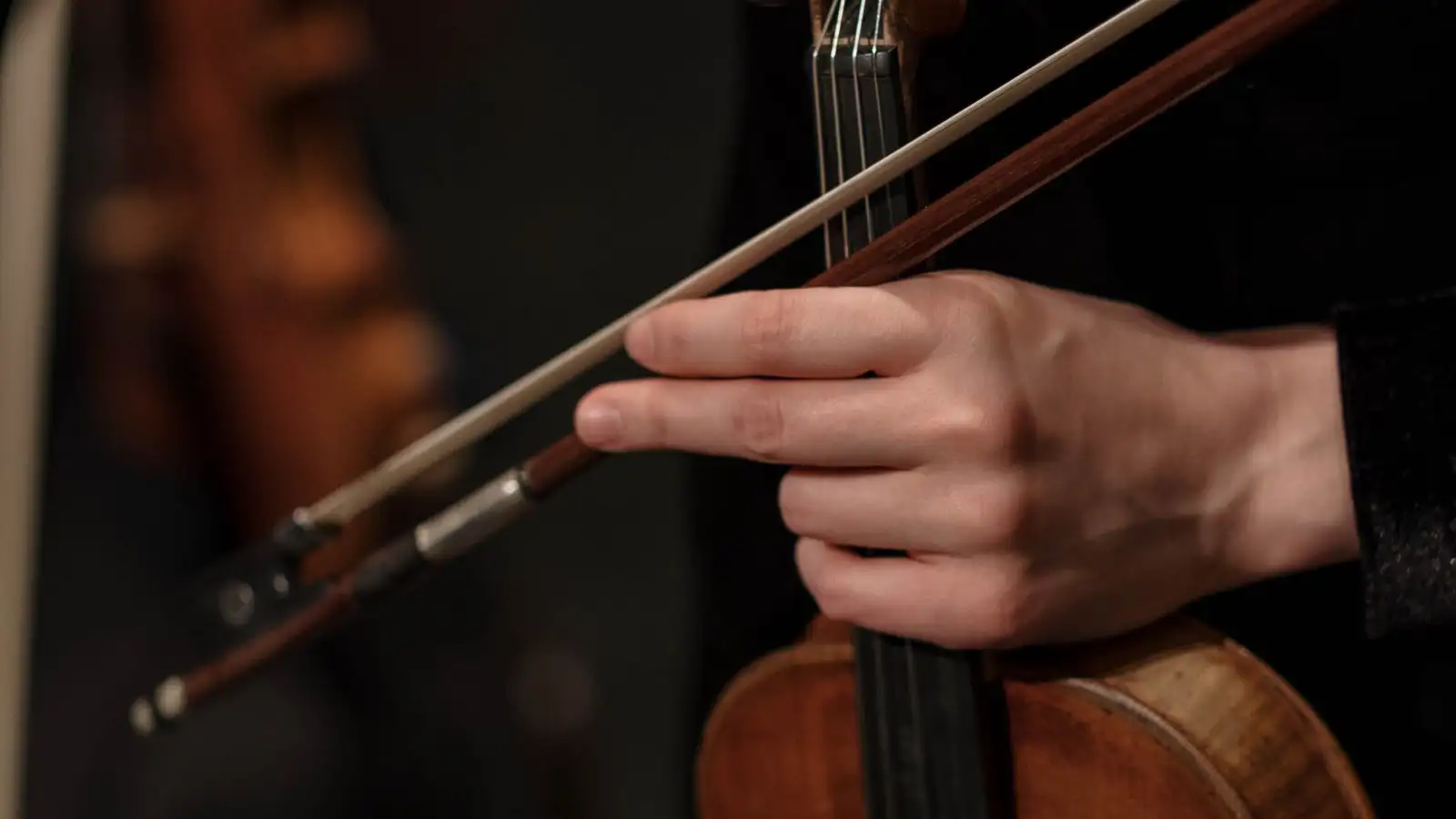
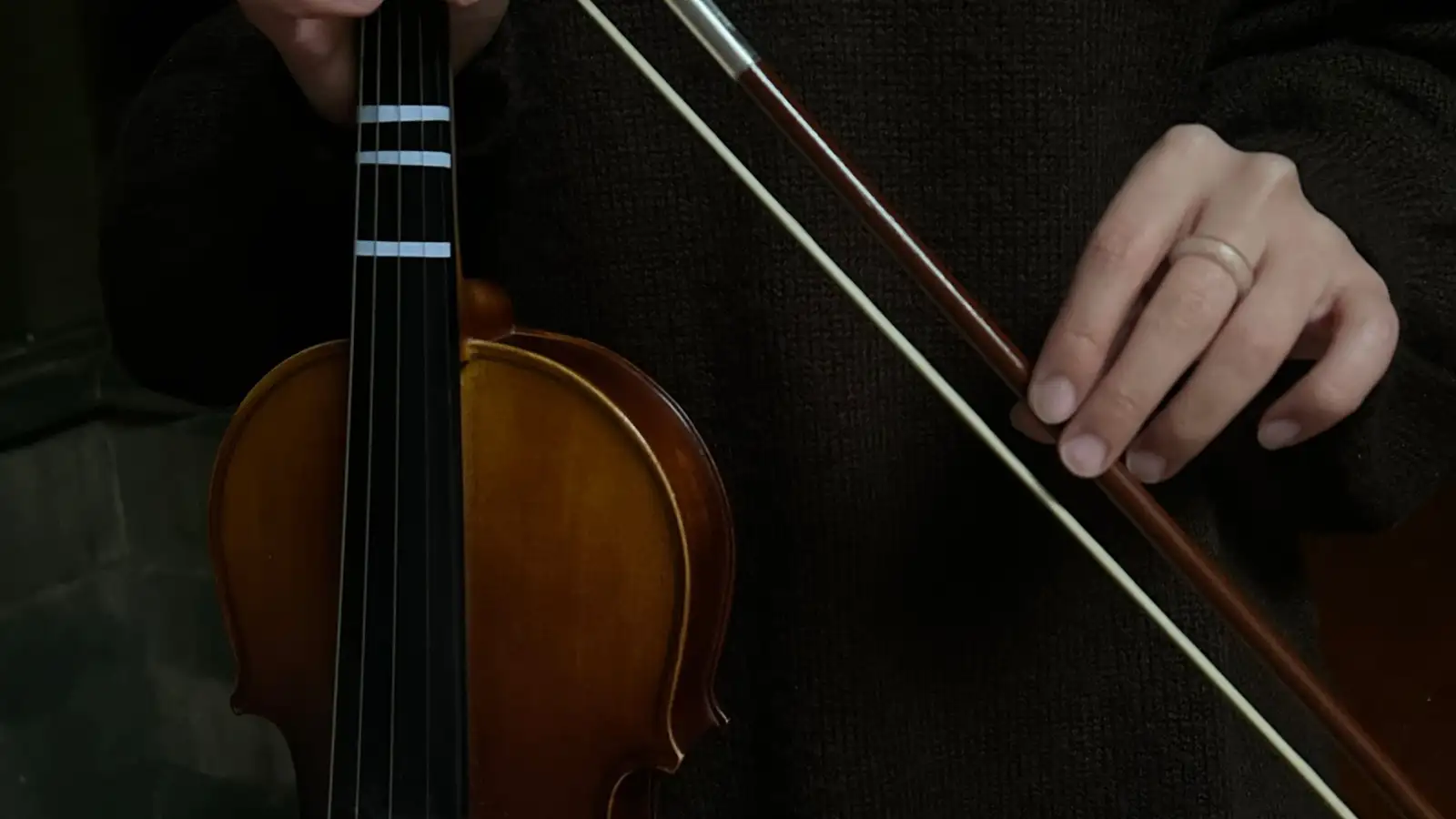
A pencil-first way to place every finger on a violin bow: index crease, frog contact, curved pinky, bent thumb, and the diagonal that proves it.
Switching between acoustic and electric violin? Bow hold and finger placement stay the same. Here's what changes, and the habit to watch for.
A 20-second pre-practice bow hold check for parents, plus why correcting mid-song tightens a child's hand and how to stay in a support role at home.
A bow hold works by balance, not grip. Here's what each contact point does, what relaxed really means, and self-checks you can run alone at home.
Three physical tests you can run on your own bow hand to find out if you're gripping too hard, and why squeezing harder never makes the violin louder.
Most bow-hold problems trace back to one finger that quietly leaves the stick. Test each finger at the frog to find the one that quit on you.
A bow that drifts or bounces breaks your tone. Here's why the fix starts in a flexible bow hold and a parallel bow path, before any pressure or speed changes.