The Shoulder Rest Has Its Own Size, and Teachers Check It First
Shoulder rests come in size ranges matched to the violin, not the player. Here's the placement check teachers run before they say a word about posture.
Types of shoulder rests, how to choose one that fits your body, and proper adjustment for comfort and support.
Shoulder rests come in size ranges matched to the violin, not the player. Here's the placement check teachers run before they say a word about posture.
A slipping violin is usually a gap problem, not a grip problem. Adjust height, legs, and angle in the right order, then check chin contact and shoulder line.
A full-size shoulder rest will not fit a half-size violin. Here's why the narrower lower bout breaks the fit, plus a lift test you can run in 90 seconds.
A shoulder rest substitutes for the contact between violin, collarbone, and shoulder. Here is the five-second self-test and how to close the gap.
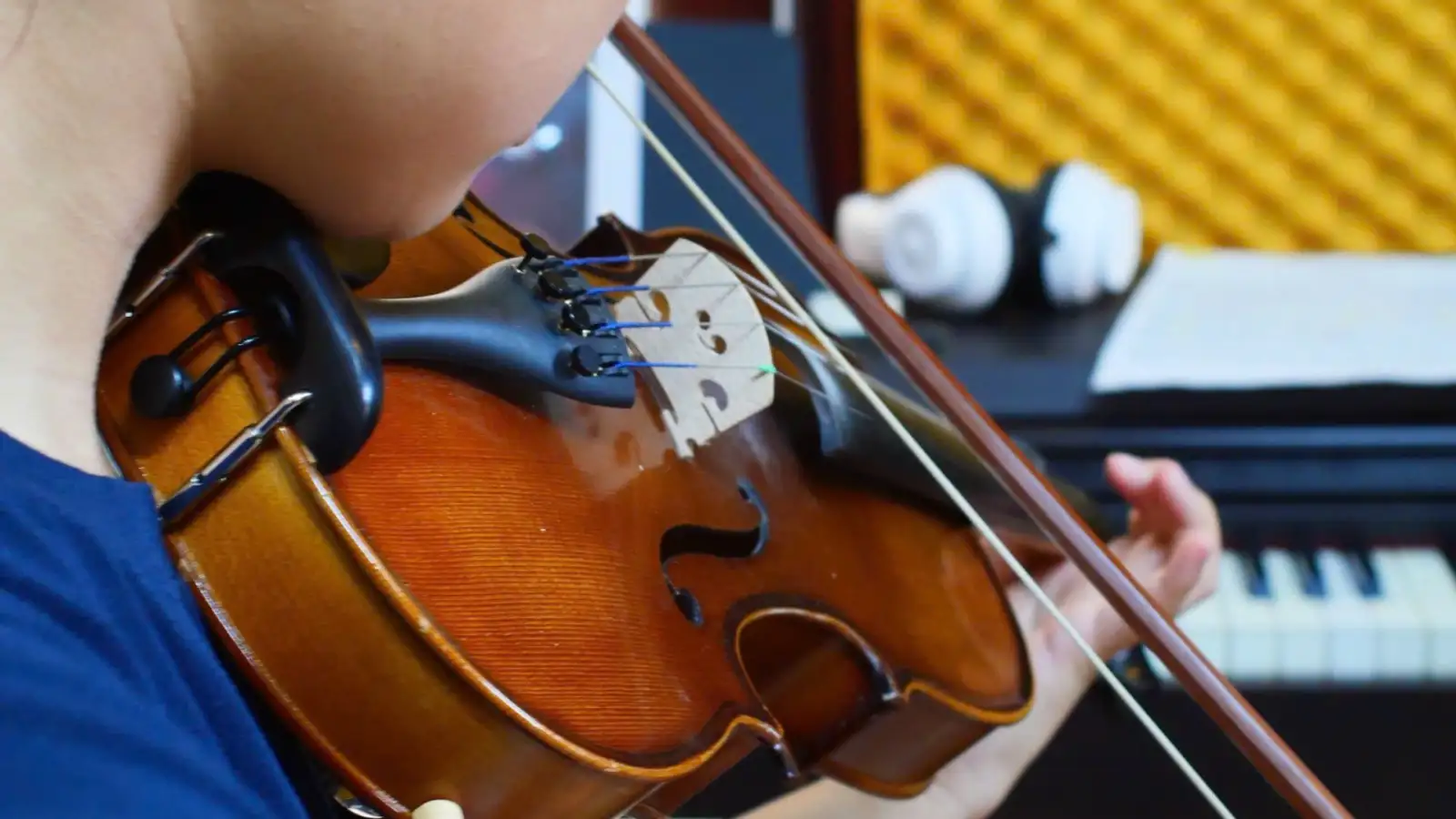
The violin is held by two contact points — chinrest and shoulder rest. Learn how they split one job, and a simple check to see if yours actually match.
A shoulder rest fills the gap between violin and shoulder and frees your left hand. Here's why it's a setup you tune to your body, not a one-time buy.
Shoulder rests sorted by design principle: how rigid frames, foam wedges, inflatable bladders and shoulder cushions change where the violin contacts your body.
Set violin shoulder rest height, tilt, and placement in playing position, then run a release test to confirm the fit. Change one variable at a time.
Wipe the chin rest, shoulder rest feet, and case lining instead of leaving them untouched. Here is the contact-point routine that actually matters.
A shoulder rest is a height setting, not a cushion. How a too-tall rest tilts your head and lengthens your left arm's reach, plus a one-change-at-a-time fit check.