A smaller violin is not automatically the cheaper one. Fractional sizes are built for fit, not for savings, and a 1/4-size instrument can sit within a few dollars of the full-size violin hanging above it in the same shop. Because a young beginner can outgrow a fraction in under a year, the only number worth comparing is cost per year of use: the price you actually pay, divided by the months the child can actually play it.
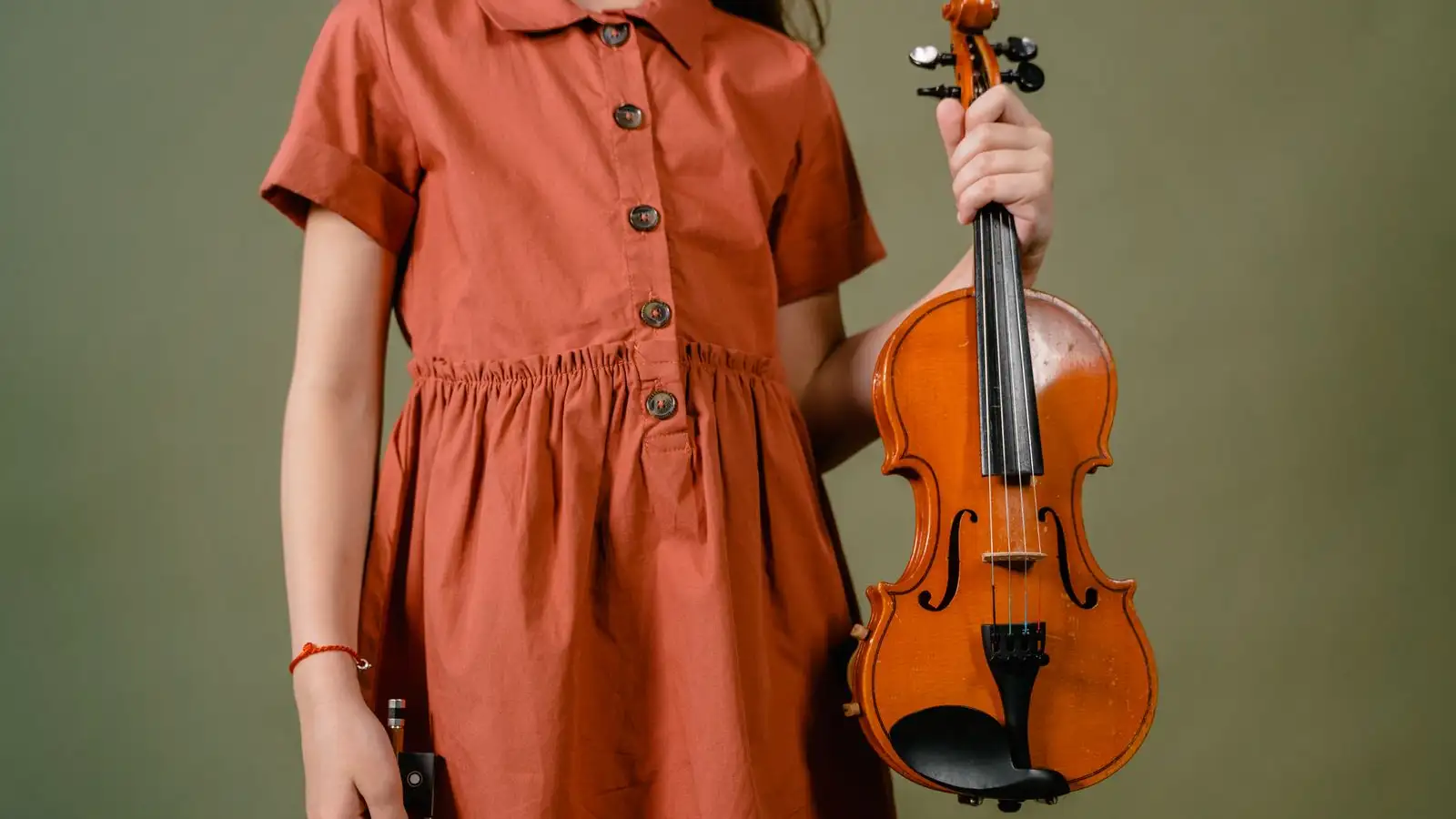
I learned that with my palm flat on a shop counter. The clerk had lined four violins up on a strip of green felt — a 1/4, a 1/2, a 3/4, and a full-size on a hanger above the case — and I read the tags left to right, expecting them to climb. They didn't climb the way I expected. The small one near my elbow was the second most expensive thing on the felt. I picked it up, turned it over, read the tag twice, and asked, half joking, whether someone had swapped the labels.
"They're all about the same to make," she said.
Behind the practice room door, a kid was grinding through the first phrase of Twinkle, stopping, starting over. The clerk handed me the 1/4 and I felt how little of it there was. Light as a toy. No weight in the hand at all. That was the exact problem with my assumption. Small, light, and cheap-feeling are three separate ideas, and I had been treating them as one word.
Nothing in the build gets smaller except the box
What I didn't understand until I watched someone actually work: the hours don't shrink. A small top still has to be carved to an arch, graduations still have to be measured and thinned, a bass bar still gets fitted and glued, f-holes still get cut, a soundpost still gets set through them with a tool, and a bridge still gets cut and fitted to the curve of that particular top. Those are the expensive minutes in any violin. They are close to identical whether the body is fourteen inches or eight.
On top of that sit the parts that don't scale at all. Strings. A bow — shorter, yes, but still a stick, a frog, hair, and a real cost. A case. Pegs, tailpiece, chin rest, fine tuners, the setup labor. Put a full-size bow and a fractional bow side by side and the fractional one will not read as half a purchase.
Wood is where people assume the savings live, and it's the weakest assumption of the bunch. A 1/4 top uses less spruce, but it still needs good spruce, aged and split, and the offcut is worth nothing to anybody. Small work is also fussier work. Shaping a bridge for a tiny violin is not easier than shaping one for a full-size instrument. It's often worse, because your fingers are bigger than the part.
Volume is the part nobody brings up
Fractional sizes get built in smaller runs. Fewer are made, fewer are stocked, and a shop that carries thirty full-size violins might carry four fractional instruments, two of them the same size. Shipping, setup, and shelf space cost the same per instrument no matter how much wood is in it, and those costs get spread across fewer sales. The price doesn't drop because the box is small. It holds, or it climbs.
Used is the other half of this. The full-size used market is deep — every adult who quit, every student who sold, every estate sale with a violin in the closet. That depth is what makes "buy used and save" real advice at 4/4. Down at 1/4 and 1/8, the pool is shallow, and a good deal of it gets swallowed by the shops that rent. When you do find one, you're competing with every other parent whose kid happens to be that size this year.
Do the arithmetic in months, not dollars
Here's the exercise. Say a shop quotes you around $250 for a small outfit with a case and bow, and around $250 for a basic full-size outfit, and the child plays the small one for fourteen months before moving up. That's roughly eighteen dollars a month. Now the same child plays the full-size for five years: about four dollars a month. And the small one was never a substitute for the big one. It was a cost you paid before you started paying for the big one.
Run the growth math and it gets more pointed. A child who starts very young can pass through several sizes before reaching full-size. Buy each one new, at retail, and you pay the setup-and-volume penalty over and over. The number I write on the back of a receipt now is this: what I pay, minus whatever credit I expect to get back, divided by the months of use I expect to get. With a fractional instrument, you are buying months. There are not many of them in the package.
Renting is a sizing hedge, not a lack of commitment
I resisted renting for a while. It felt like paying rent on something I could own, and I'm cheap about that in a way I'm not proud of. Then I understood what the monthly payment actually buys: the right to walk in the week the teacher says the arms have grown and walk out with the next size. No resale, no listing, no shipping, no argument. That exchange is the product.
It has limits, and I'll name them. If a child stays in the same size for years, rent adds up past the purchase price and you've lost on the deal. Renting wins when turnover is likely, and fractional sizes are the definition of turnover. Before signing, ask what percentage of rent accrues as credit, what it can be applied to, whether it expires, and who pays for a cracked top or a snapped bow.
What an upgrade or trade-in program actually is
Many shops will credit part of what you paid for a fractional instrument toward the next size up. The details swing wildly. A common shape: a percentage of your purchase price, full or close to it inside a short window, dropping after a year, applied only to instruments bought from that shop. Sometimes the credit is tied to the same maker's line. Sometimes it's open to anything on the wall.
None of that is hidden, but none of it is volunteered either. Ask before you pay, and get it written on the receipt: the percentage, the window, what it applies to, the condition requirements, and whether you need the original case and bow. A shop without a program isn't doing anything wrong. It just means the small violin has to be cheap enough on its own to make up for the fact that nothing comes back to you.
The cheapest violin in the room is the one that fits
The monthly math collapses entirely if the child quits. And what makes beginners quit is a violin that doesn't fit: an elbow locked because the body is too long, a wrist collapsed to reach first position, a scroll that keeps dropping, a bow that skates off the string because the angle was never right to begin with. Every one of those is a sizing problem wearing a posture costume.
So the fit comes first, and it has to be done on the child, in person. Arm extended and relaxed from the neck to the middle of the palm. The ability to hold the instrument with the left hand and cup the scroll without craning the neck or lifting the shoulder. A teacher or a shop does that in two minutes. A chart on a website does not do it at all — and a chart is also where the wrong price assumptions get made.
The next time I stood at that counter, I flipped the tag over first. Then I did the division. Same felt, same little violins, same clerk, and nothing about the price surprised me anymore.