The mechanics of bowing do not change when you switch to an electric violin, and the fear that an electric will quietly install bad habits in your bow arm is aimed at the wrong target. Your bow hold is the same, the path the bow travels is the same, and your left-hand fingers land in the same places, because the instrument is still tuned G, D, A, E with the string spacing and fingerboard your hand already knows. What changes is the room around the mechanics: how the instrument balances against your jaw, how much of it you feel, and what your ears are told the moment the bow starts moving. That is where habits actually get made.
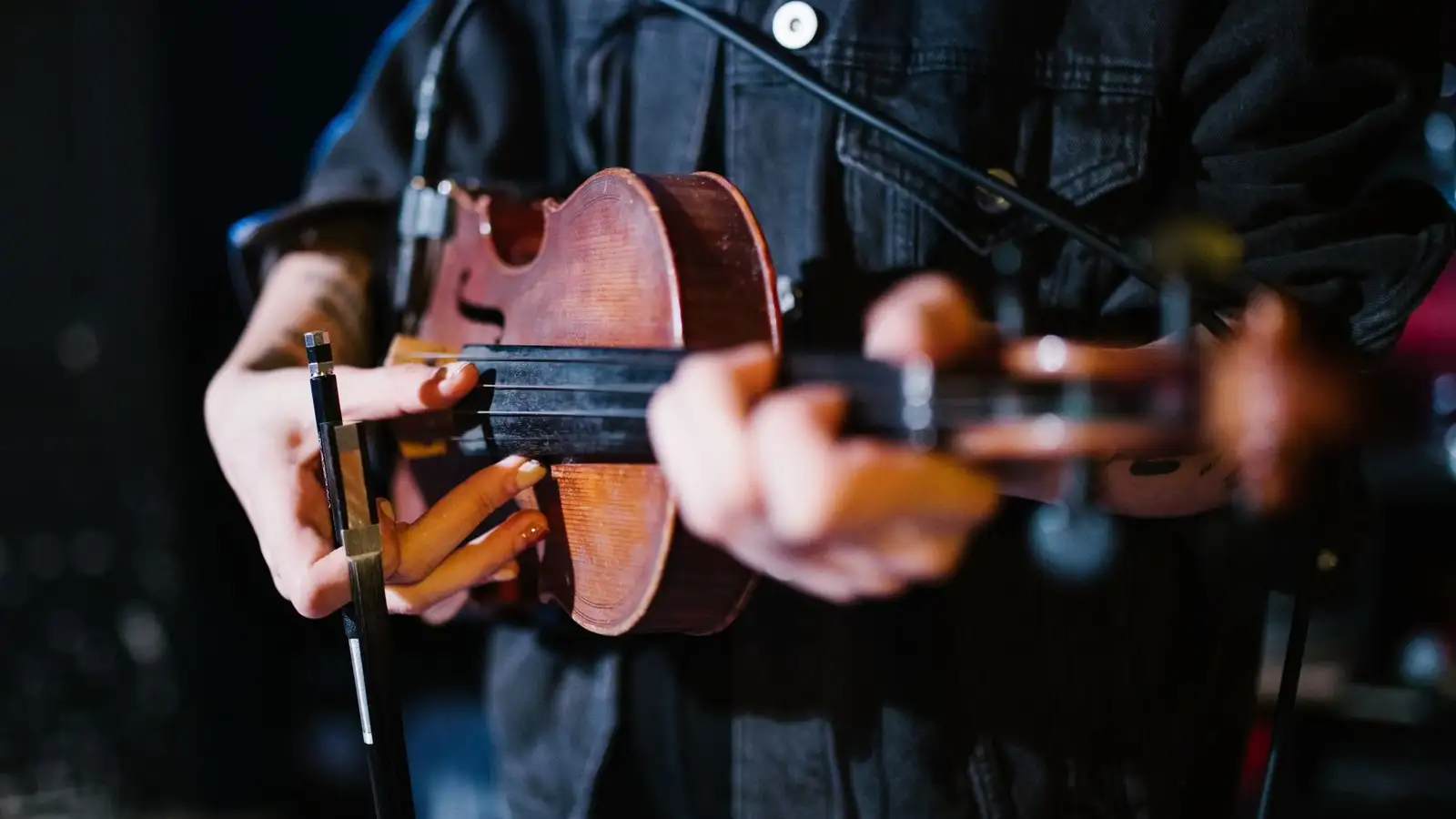
I found that out the boring way, standing in my kitchen at eleven at night with the kids asleep upstairs, a solid-body electric on my shoulder, and a bow in my hand. The little headphone amp sat on the counter, still switched off, because I wanted to hear the instrument by itself first.
What you hear is the bow. Not the note. The note is a thin ghost of a pitch hanging somewhere behind the sound of hair dragging across the winding, plus a small wooden click every time the bow changes direction. If you have only ever played an acoustic, this is the part that throws you. On my acoustic, the box fills the room and covers the mechanics. On the solid body, the mechanics are the sound.
So I sat the bow on the D string at the contact point I always use, halfway between the fingerboard and the bridge, and pulled a long down bow. Elbow opening. Wrist following. The stick staying parallel to the bridge because that is what my arm does now without being asked. Nothing in that motion needed to be relearned. My left hand found first position with its usual stretch, and my third finger knew exactly where D was, because it has known for years.
Then I put the headphones on and turned the amp up, and the first thing that jumped out was not a wrong note. It was that my bow was leaning into the string harder than the sound wanted.
What Carries Over Without Any Adjustment
Bow hold, bow path, contact point, and finger placement all transfer, because the instrument underneath them is the same instrument in the ways that matter to your hands. The strings are tuned the same. The intervals between them are the same. The neck might feel different in your palm, but the note locations do not move. If you have been playing acoustic and you pick up an electric, your muscle memory is not starting over. It is arriving somewhere new and finding the furniture already arranged.
I check this about once a month, the same way, when something feels off: I play a slow two-octave G scale on the electric with the amp off, then put the headphones on and play it again. The hand does the same thing both times. Only the ears get a different report.
Where Your Body Notices the Difference First
Weight and balance. An acoustic violin is a hollow box, and most of what you feel is that box. A solid body puts the mass somewhere else, sometimes neck-heavy, sometimes the opposite, and that changes the angle the instrument wants to hang at. When the fiddle tilts a little differently than you expect, your jaw and your shoulder start taking the weight in a new place, and your bow arm begins making tiny corrections to keep the bow tracking straight. Those corrections are what people mistake for bad habits forming. They are really your body solving a balance problem the instrument handed it.
Chin rest and shoulder rest configuration matter here more than most players expect. A flat or differently contoured body means the rest feet may not sit where they sat before, and the instrument may want to slide. When my electric started drifting forward under my jaw, the answer was not to grip harder with my chin. It was ten minutes with a screwdriver, moving the rest.
And then there is the missing hum. On my acoustic, I feel the note in my jawbone and in the pad of my left thumb. That buzz is part of how I know a string is actually ringing, and I had been using it as information for longer than I realized. On the electric it is essentially gone. The note lives in the headphones and nowhere else.
The compensation trap
The instrument does not teach you bad bowing. The compensation you invent for the missing feedback does. When the note is not humming against your chin, the instinct is to hold on harder: jaw down, left thumb pressing into the neck, right hand leaning into the string to try to make the thing respond the way the acoustic responds. Do that for a month of nightly practice and you will carry all of it back to the acoustic, where none of it is needed and all of it is audible.
So instead of adding pressure, add information. A tuner sitting on the counter. A drone through the amp. A thirty-second phone recording of yourself playing the scale, listened back with the same suspicion you would give someone else's recording. These are not crutches. They are the feedback the solid body did not give you.
Bow Pressure Is the One Adjustment Nobody Warns You About
An acoustic body is a resonator and a filter at the same time. It smooths things out, blends them, and forgives a certain amount of arm weight. On my acoustic, if I lean into the string a little too much, the tone gets warm and slightly pressed and I can get away with it.
A pickup does not do that. It reads the string's motion directly and sends it along with very little coloring, which means bow weight, bow speed, and contact point are all laid bare. The same amount of arm weight that sounded merely warm on the acoustic goes hard and flat through the headphones, and a bit more than that and the tone starts to break up. The relationship between speed and pressure stops being a background detail and becomes the main thing you hear.
Practically, this means backing off. Let the bow's own weight rest on the string and shape the sound with speed and contact point instead of arm weight. Small changes on the electric produce large audible differences, which is frustrating for about a week and then becomes the most useful ear training you will get all year. When I go back to the acoustic after a stretch on the electric, my bow hand is lighter than it used to be, and the acoustic likes it.
Intonation Did Not Move, It Just Got Louder
Where your fingers land decides the pitch on both instruments. That part is not negotiable and it is not different. What changes is how clearly you hear your own mistakes. Through headphones, with no room around the sound, a note that sits a hair high stands out like a smoke alarm. On the acoustic, the same note blends into the body's resonance and you can talk yourself into it.
This is uncomfortable and it is a gift. The electric is the most honest practice partner I have, precisely because it refuses to flatter me. If you have been quietly fudging your third finger for a year, the electric will tell you on the first scale.
Refit before you rebuild
When something feels wrong on the electric, work through this order before you assume your technique fell apart: check the shoulder rest and where the instrument is sitting, check the balance and whether the neck is diving, check your bow pressure. Nine times out of ten the fix is in the setup, not the arm. Posture and rest fit are not less important on a solid body. They are more important, because you have lost the hum that used to tell you when things were right.
Moving Between the Two Without Losing Either
Keep both in rotation. On the nights when I have twenty minutes, I will spend five on the electric with the amp off, then five plugged in, then ten on the acoustic. The electric cleans up my bow weight and my finger placement because it hears everything. The acoustic puts the hum back in my jaw and reminds me what a ringing string feels like.
The bow arm genuinely does not know which one is on your shoulder. It performs the same motion, holds the same shape, tracks the same path. Only your ears and your shoulder know the difference, and those are the two things worth deliberately retraining when you make the switch.