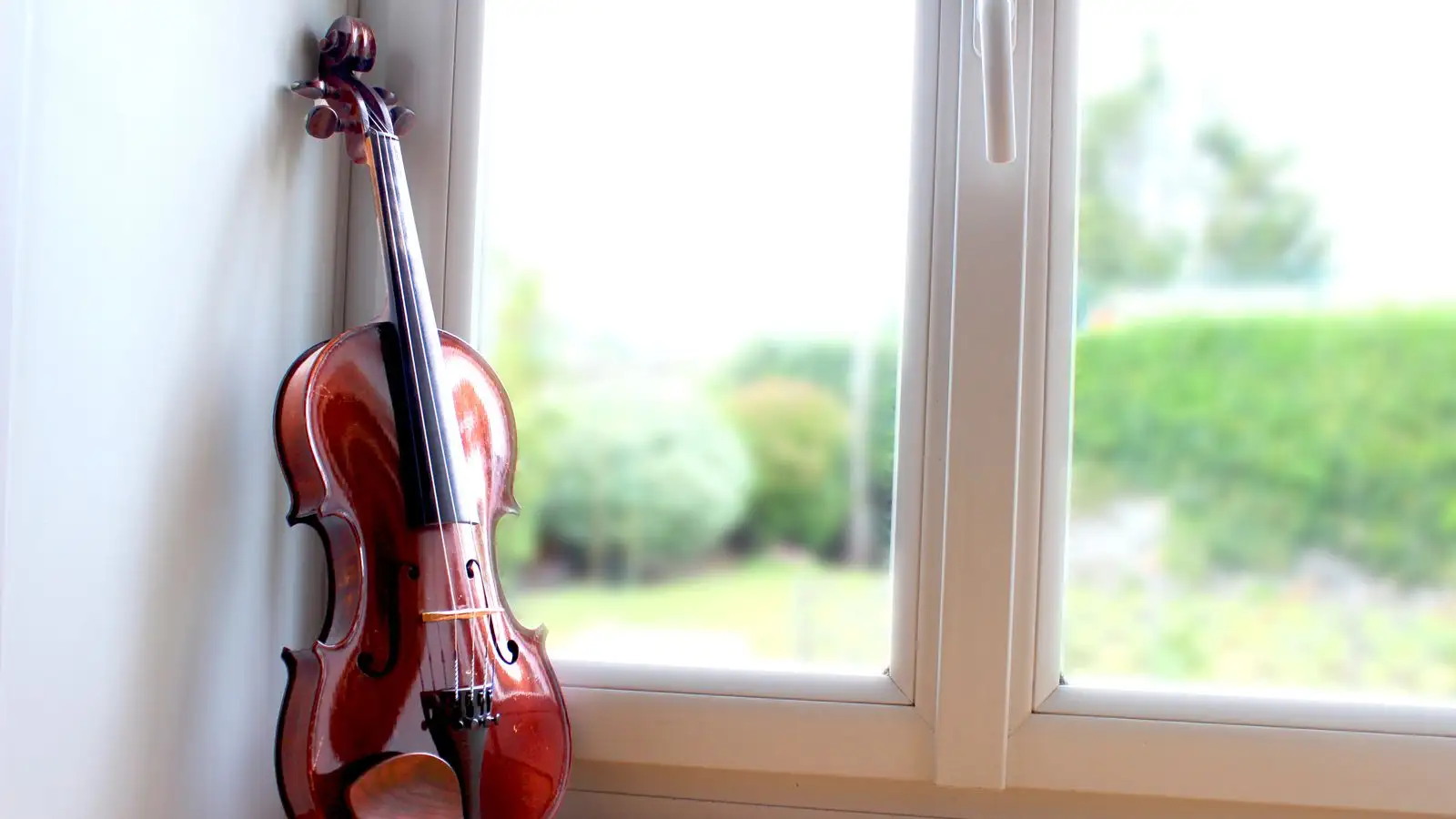
The loss when violin strings get old is not only brightness. It is the string's ability to tell the truth. An aged string has lost elasticity, so it responds unevenly, drifts in pitch while you hold a steady note, and asks for more bow pressure in exchange for less sound. That gives a beginner bad information, and a string problem starts to feel exactly like a technique problem. Separating the two comes down to the four things that decide how any string behaves — core material, winding, tension, and age — because each one fails in a different way and points to a different decision.
I keep that list in that order on purpose. Core first, because it decides how a string dies before it ever gets old. Winding second, because it is the only part you can inspect with your eyes and your thumb. Tension third, because that is what your bow arm actually feels. Age last, because age is the multiplier sitting on top of all three.
Here is the moment I want you inside. It is late and the house is finally quiet, and you are playing a slow two-octave G scale, the one you use to warm up. Open G rings. Open D rings. Then the A comes out blurry, like the note has a shadow underneath it. You check the tuning. Still blurry. You move the contact point closer to the bridge, then farther away, then you add bow weight, then you take it off. Same blurry A. You start negotiating with yourself: my bow arm is tense tonight, maybe the rosin is dead, maybe my ear is just tired. Any of those could be true. What you are actually hearing might be one tired string imitating every weakness you have at the same time.
Core material decides how a string will fail
Under the winding there is a core, and the core is the part that vibrates. Steel, synthetic, and gut are the three families, and they do not age the same way at all.
Steel core strings are bright, quick to speak, and extremely stable in pitch. They barely notice a change in the weather. What they do notice is wear, and when they go, they tend to go suddenly: a metallic edge creeps in, then a false beat shows up on an open string, and the response starts to feel stiff instead of warm. If you play steel and your sound turns glassy while one note begins to buzz, you are probably not imagining it.
Synthetic core strings, the perlon-style ones most adult beginners end up with, are warmer and more flexible. They absorb bow weight gradually, which is forgiving while you are learning bow control. They also die slowly, and that slow death is the trap. The warmth goes woolly. The string feels soft and slow under the bow. Held notes start to sag. Nothing announces itself. You just gradually start working harder for the sound you used to get for free.
Gut core strings are the traditional sound: rich, complex, alive in a way that is hard to fake. They are also the most sensitive to the room they live in. A damp day can leave a gut string feeling slack and sitting noticeably low; a dry, heated house can pull it sharp and tight. If your problem comes and goes with the weather, the core is the first place to look, and it will tell you more than any note on a package.
The winding is the part you can inspect with your thumb
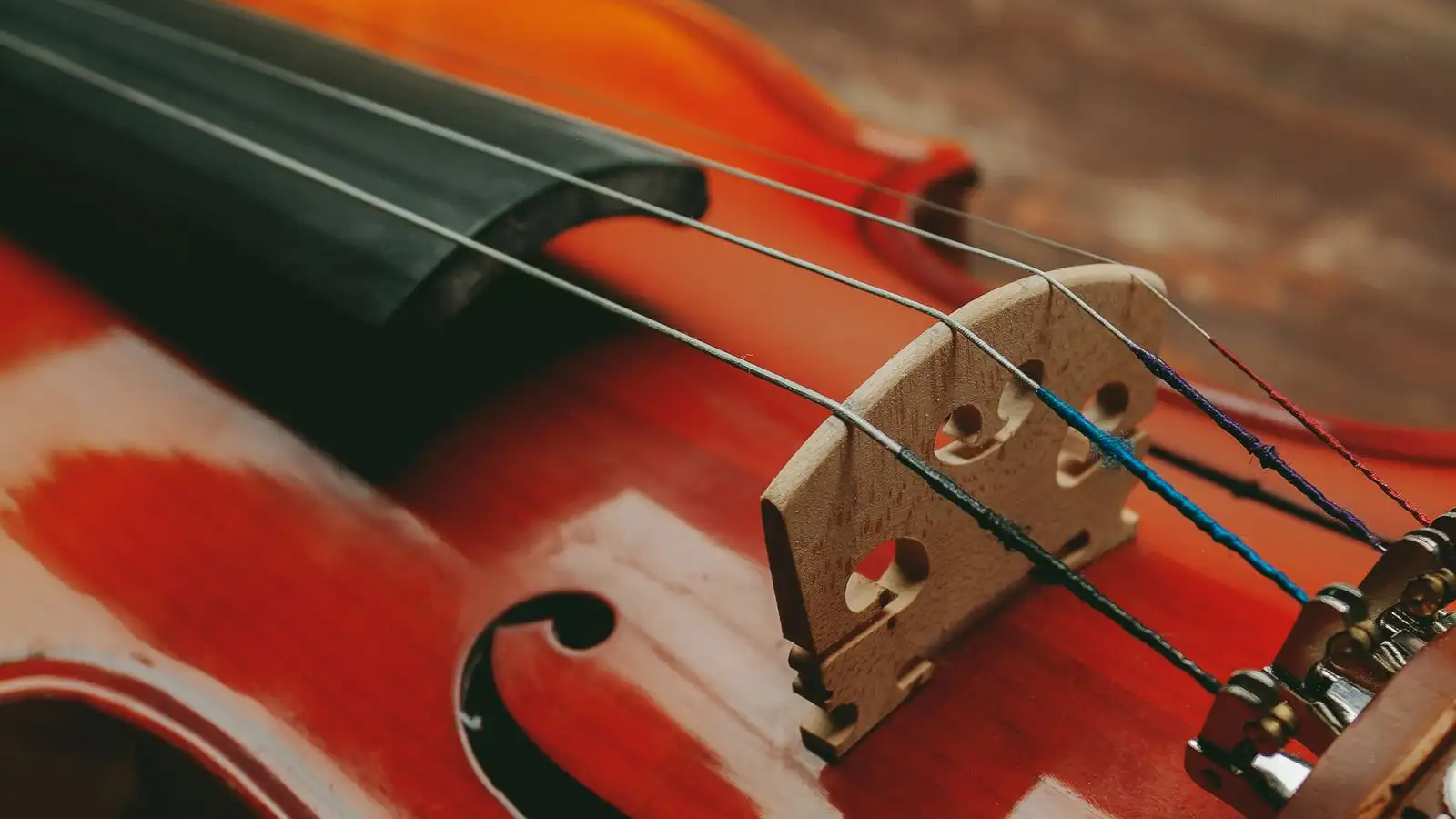
The winding is the metal ribbon wrapped around that core. It is not decoration. It adds mass, and mass is part of what decides whether a string leans bright or warm and how quickly it starts speaking under the bow.
It is also the part that takes the abuse. The bow rides directly on the winding. Skin oils, rosin, and the hair itself all sit there, and where you bow, the winding flattens and thins over time. Next time the violin is in your lap, run your thumb slowly along the string where you normally bow, then compare it to the string near the bridge. If you can feel a flat spot, or see a gap-toothed pattern in the metal, you have just located a real source of buzz, false notes, and uneven response. That is a lot of diagnosis for one thumb.
The winding metal matters too, in broad strokes. Silver windings tend to feel warmer and denser, and they tarnish to a dull grey over time. Aluminum is lighter and brighter and wears faster. Chrome holds up well. Tungsten is heavy and powerful, and it pushes the sound in a direction not every instrument wants. I do not pick strings by the name of the metal. I use it to understand why two strings on the same violin feel so different under the bow, and why something that sounded bright last winter now sounds muted.
One thing to get straight: a dirty string and an old string sound surprisingly similar. Rosin and oil buildup damp the string, and damping is the same thing age does to a core. Before you decide anything, wipe the strings down. If the sound opens back up, you just saved yourself a set of strings.
Why an old string feels tighter when it isn't
This is where a lot of beginners get confused, and it is worth slowing down for. When a string ages, the tension at pitch does not change. Pitch is set by tension, mass, and speaking length. If the string is in tune, it is at the tension that pitch requires. What changes with age is how efficiently the string turns bow energy into sound. Internal damping rises, so the string absorbs energy instead of ringing with it. Your bow has to work harder for the same result, and it never quite gets there.
That is why an old string can feel tighter even though it is not. You are compensating for lost efficiency, not for changed tension.
Actual tension is a choice you make when you buy. Higher-tension strings need more bow weight and more bow speed to open up, and they can feel like work on a cautious bow arm. Lower-tension strings speak easily but can sound thin if you lean in. Gauge, whether light, medium, or heavy, moves you along that same line, and it also changes how the string feels under your fingers. A heavy set on a light, older violin can feel stiff and choked. A light set on a loud violin can sound small. Neither is wrong. It is a match question, not a quality question.
Age is measured in playing hours, not months
Strings have a life measured mostly in playing hours, not calendar time. A violin that lives in a case and gets played twice a month will hold onto its strings far longer than the same strings on a violin played every day. Sweat, skin oil, and friction are what kill them.
The signature of an aged string is a cluster of symptoms, not one. Dullness across all four strings. False notes, meaning a pitch that will not settle no matter how steady your finger is. Tuning instability you cannot blame on the pegs. Uneven response, where one string answers your bow and another one resists. When three or four of those show up together, and the strings have real playing hours on them, the string is the cheapest suspect to rule out.
But keep the tradeoff in mind: new strings are not stable either, for the first few days. They stretch, and they need tuning constantly. If you changed strings yesterday and today nothing holds pitch, that is not a bad string, that is a normal break-in. Give it a few days of playing before you judge it. A lot of beginners swap a brand new set for another brand new set and conclude that all strings are unreliable, when the strings only needed time.
Two symptoms point at the string more than anything else. The first is an open string that beats or wobbles all by itself, with no finger involved. The second is a string that drifts sharp or flat while you hold a steady note with a steady bow. If the open string is false, the problem sits above your left hand, in the string or the setup. If the open string is clean and only stopped notes are false, your finger and the fingerboard are back in the picture.
The one-string test, and what the comparison buys you
When it is time, change one string and leave the other three alone. I know how tempting it is to do all four and be done with it. Resist that, at least once.
Leaving three old strings in place does two things. It keeps a reference literally under your fingers, so you can play the same phrase and hear exactly what came back and what did not. And it keeps tension on the instrument, which older violins appreciate. Change the string that bothers you most, play on it for a few days, and listen. If the dullness moves and the new string sings, you have your answer. If nothing changes, you have saved yourself three strings and learned the problem was somewhere else.
The comparison is the real prize. Your ear does not learn from a new string. It learns from the difference between the old one and the new one. Change all four at once and you get "different" with nothing to measure it against. Change one and you get information you can actually use next time.
When the string isn't the problem
Clear the cheap suspects before you spend anything. Dirty strings, glazed or worn bow hair, too little rosin, a damp practice room, a space that goes cold overnight. Every one of those will make a perfectly good set of strings sound old.
Then check yourself honestly. Play a slow open string with one long, even bow stroke and listen for wobble. Then play the same note stopped, with a finger down. If the open string is clean and steady and the stopped note is not, your left hand is the variable, not the string. If both are unstable, look at the string and the setup.
And if a fresh string still buzzes on an open note, or the winding starts unraveling the day you install it, stop. That is a defect or a setup issue, and it is worth having someone who works on violins check the nut, the bridge, and the fine tuners rather than forcing it yourself. There is a limit to what you should fix on your own, and crossing it usually costs more than it saves.
The real thing you lose with old strings is not brightness. It is a teacher. A string that responds honestly is how a beginner learns what bow weight and bow speed actually do. When a string goes false, you start compensating for a lie, pressing harder, bowing nearer the bridge, tuning around a beat, and you can rehearse that compensation for months without knowing it. That is the cost. Not the tone. The feedback.
So when the sound goes dull and unstable, treat it as a question first. Is the open string honest? Do the symptoms move with the weather or with the hours? Is the winding flat exactly where the bow crosses? You do not need to buy anything to answer those. You need five minutes, your thumb, and your own ear.