The room is part of the instrument. A violin that sounds warm in one room and thin and harsh in another is usually the same violin — what changed is how much reflected sound reaches your ears and which frequencies the space boosts or swallows. Size, surfaces, and the exact spot where you stand decide that, and they decide it differently for you than for anyone standing across the room.
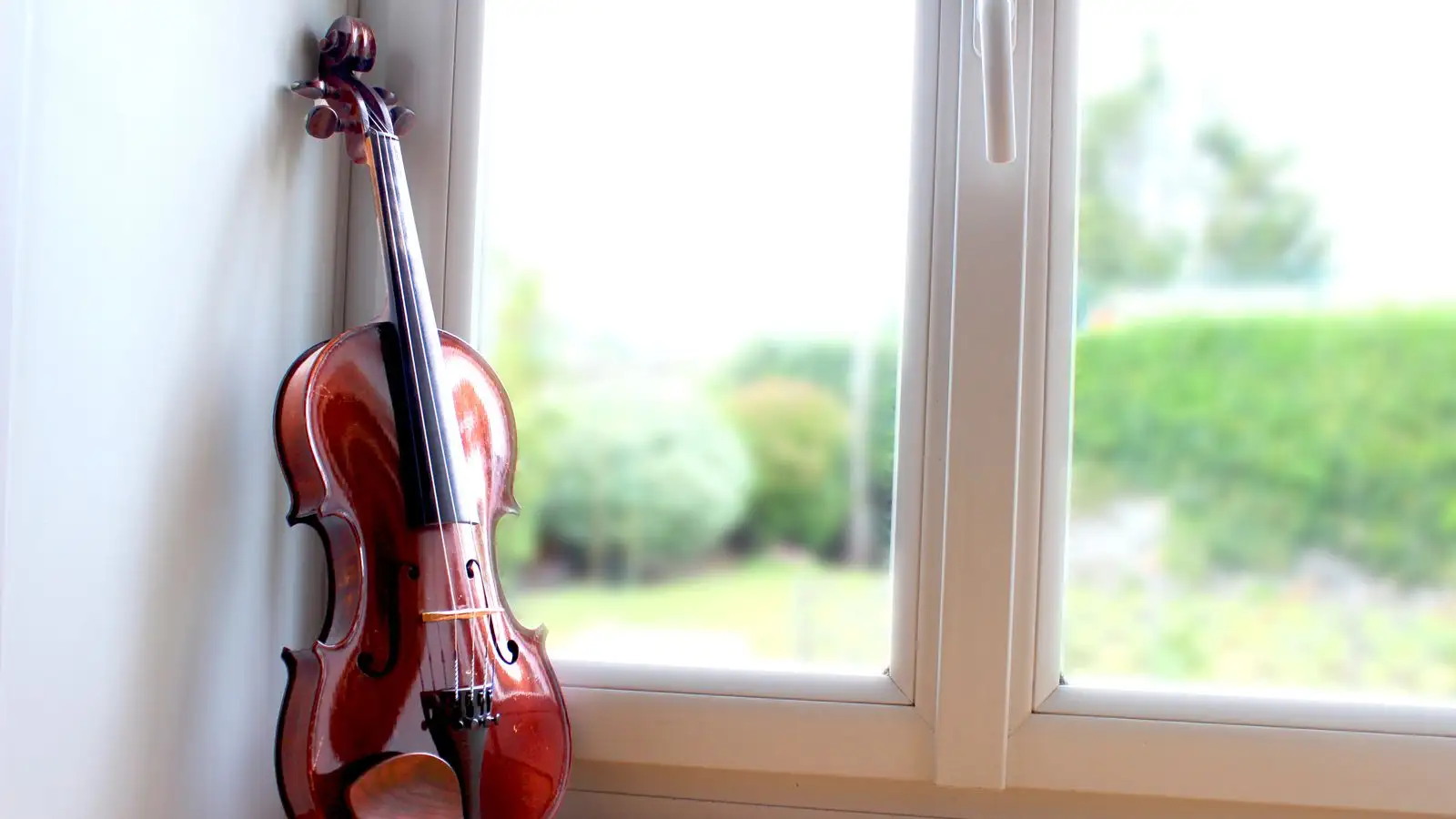
A while back I spent three evenings in a row on the same two bars of a slow scale, first position, riding the D and G strings. The first evening was in the living room — big, half full of furniture, one wall of windows. The notes bloomed. The second evening I practiced in the little guest room, carpet to the baseboards, blinds shut, bed taking up most of the floor. Same violin, same bow, same hands, and it sounded like I was playing into a folded blanket. The third evening I ended up in the kitchen because the house was noisy — tile, painted cabinets, nothing soft anywhere — and my A string came out glassy and bright and a little thin. I could hear every scratch of every bow change, which I liked right up until I noticed I was playing differently to chase it.
Nothing about the instrument changed in those three days. What changed was how much of my own sound came back at me, and which parts of it survived the trip.
What the walls give back and what they eat
Hard, smooth surfaces — tile, glass, bare drywall, wood floors, countertops — bounce your sound back almost unchanged. High frequencies survive that bounce, and high frequencies are most of what you read as bright, clear, or edgy. So a hard room makes a violin louder, brighter, and more aggressive, and it does it almost instantly: the first reflection off a wall a few feet away returns in a few thousandths of a second, and even the far wall of a normal room gets back to you in well under a tenth of a second. You never hear that as an echo. Your ear folds it into the note and calls it tone.
Soft surfaces do the opposite, but not evenly. Carpet, curtains, upholstery, a bed, a pile of laundry on a chair — they absorb high frequencies much faster than low ones. That is why a carpeted bedroom does not simply make the violin quieter. It makes it duller. The scratch and the edge get eaten first, and what is left under your chin can feel like relief: the harsh overtones are gone and you sound warmer than you actually are.
That is the trap I lived in for a while. I thought my tone had improved. What had improved was my practice room. I had not learned a single thing about my bow arm.
The corner that booms and the note that disappears
Stand a foot from a wall and the reflection stacks up on the direct sound before it has any room to spread out. Bass builds. Get close to a corner and it builds twice, because two walls are working on you. That is the classic boomy practice spot: your G and D strings swell until the low end is loud enough to cover the detail you are trying to listen for.
Rooms also have favorite notes. Size and shape set up standing waves — spots where a reflection arrives back in step with the note being played and reinforces it, and spots where it arrives out of step and cancels it. In an ordinary bedroom or small living room those reinforcements tend to bunch up somewhere in the low hundreds of hertz, which is right where a violin's lower strings live. You can hear it happen. Play a slow chromatic scale from your open G up through first position and just listen. One or two notes will jump out of the instrument, and one or two will sound hollow next to their neighbors. Same bow, same finger, same string. That is the room talking, not you.
You are not standing where the room is listening
Here is the part that took me the longest to accept: under your own ear is the worst seat in the house for judging tone. The instrument sends a large share of its sound forward and downward, away from your head. What reaches you is a blend of a little of that, whatever is bouncing off the walls, and some vibration coming up through your jaw and collarbone. That blend belongs to your head position and changes the moment you turn five degrees.
So run this test. Have someone stand ten feet in front of you while you hold a long tone. Then have them step to the side. Then behind you. Then sit down on the couch. Their description will change every time, and none of those descriptions is wrong — direct sound and reflected sound are mixing in different proportions at each spot, and in some spots the room is doing more of the talking than the violin is.
The practical version for your own practice is narrow and cheap: when you want to know what you actually sound like, do not trust the chair you always sit in. Walk a slow circle while you hold a long tone. If there is another person in the house, put them where an audience would be. No equipment required.
A practice mute changes more than the volume
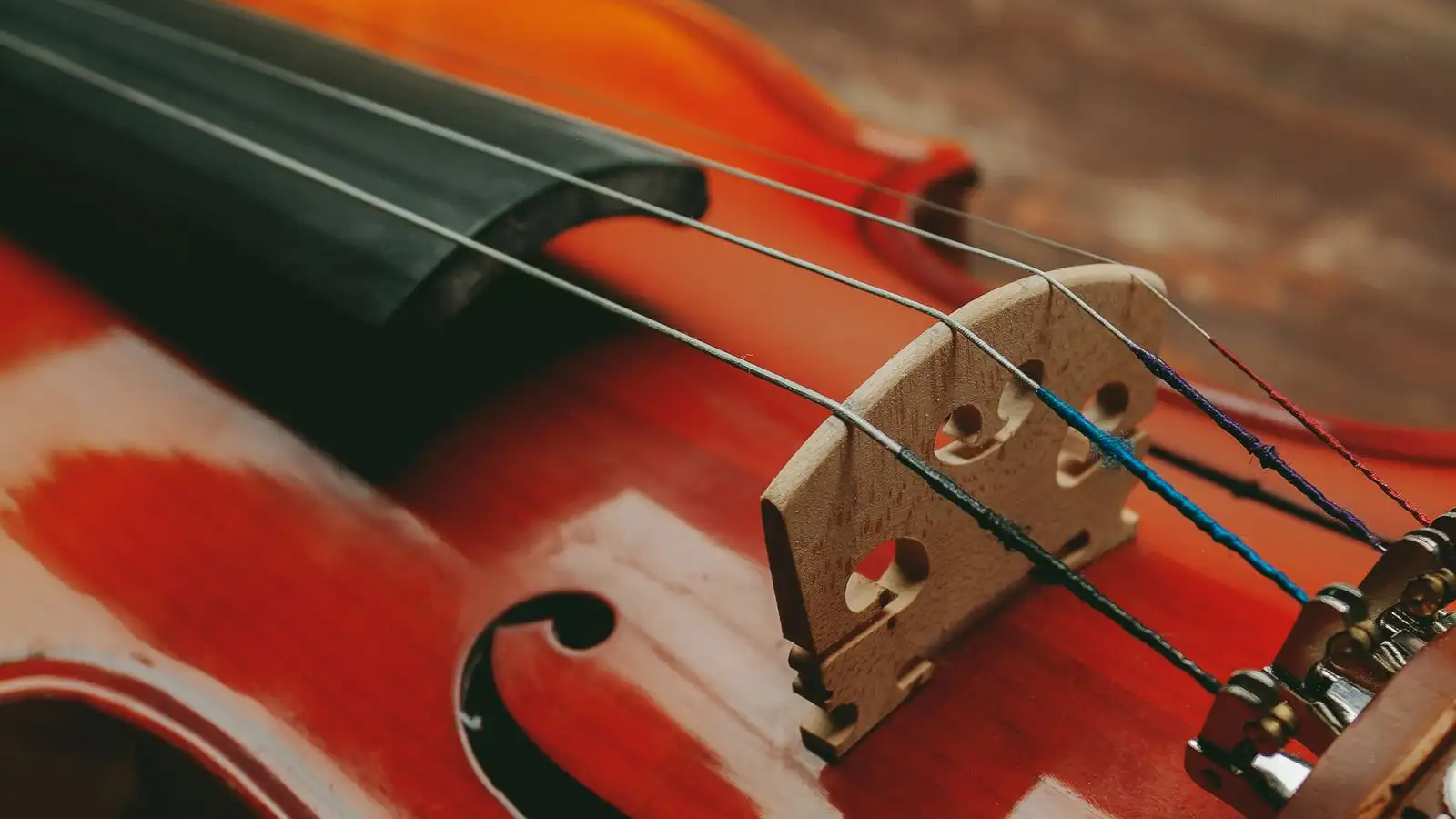
A practice mute adds mass to the bridge and stops it from moving the way it wants to. Volume drops, which is the point. The trade is that it also trims the high-frequency content and changes how the whole instrument feels in your hands — less sensation in the left hand, a slightly sluggish response under the bow, and a muffled quality that is not the same thing as quiet.
The sneaky part is what you do about it. When the sound feels dead, the instinct is to press harder and pull faster to coax some ring back out of the string, and you can spend an entire session teaching your bow arm to dig. Take the mute off and your normal bow pressure sounds harsh and you cannot figure out why. You have been practicing a different instrument.
I still keep a mute on my stand. It is what makes ten o'clock at night possible in a house with other people in it. But I do not judge anything through it — not tone, not contact point, not how much bow weight sounds right. Mute on means I am practicing notes and rhythm. Mute off is when I am allowed to have opinions about sound.
Pick one room and learn its habits
There is no magic room you can buy your way into, and even if there were, it would stop working the day you moved. What you can do is stop drifting between rooms at random and mistaking that drift for progress.
Choose the room that is neither the bathroom nor the closet — somewhere with a mix of hard and soft. You want enough reflection to hear that your tone has energy, and enough absorption that you are not fooling yourself into thinking you sound like a concert hall. A room with a floor, some furniture, and a couple of bare walls is usually enough. I have gotten far more consistent feedback in an ordinary bedroom than in any tiled space.
Then learn that room's lies. Notice which notes bloom and which go hollow. Notice what happens to your low strings when you drift toward the wall — do they get rich, or does everything turn to mud? Notice whether you sound brighter in the middle of the floor than you do beside a window. You do not need to write any of it down. Ten minutes of walking around with a long tone will teach you more about your sound than a month of wondering.
And the thing I keep relearning, the one that matters more than any of the physics: when a practice session suddenly sounds wonderful or suddenly sounds terrible, ask where you are before you ask what you did. Most beginner breakthroughs and bad days are room changes wearing a costume. Your tone is not a fixed possession you carry from place to place. It is what happens between the instrument, your bow, and whatever the walls decide to do with what you send them.