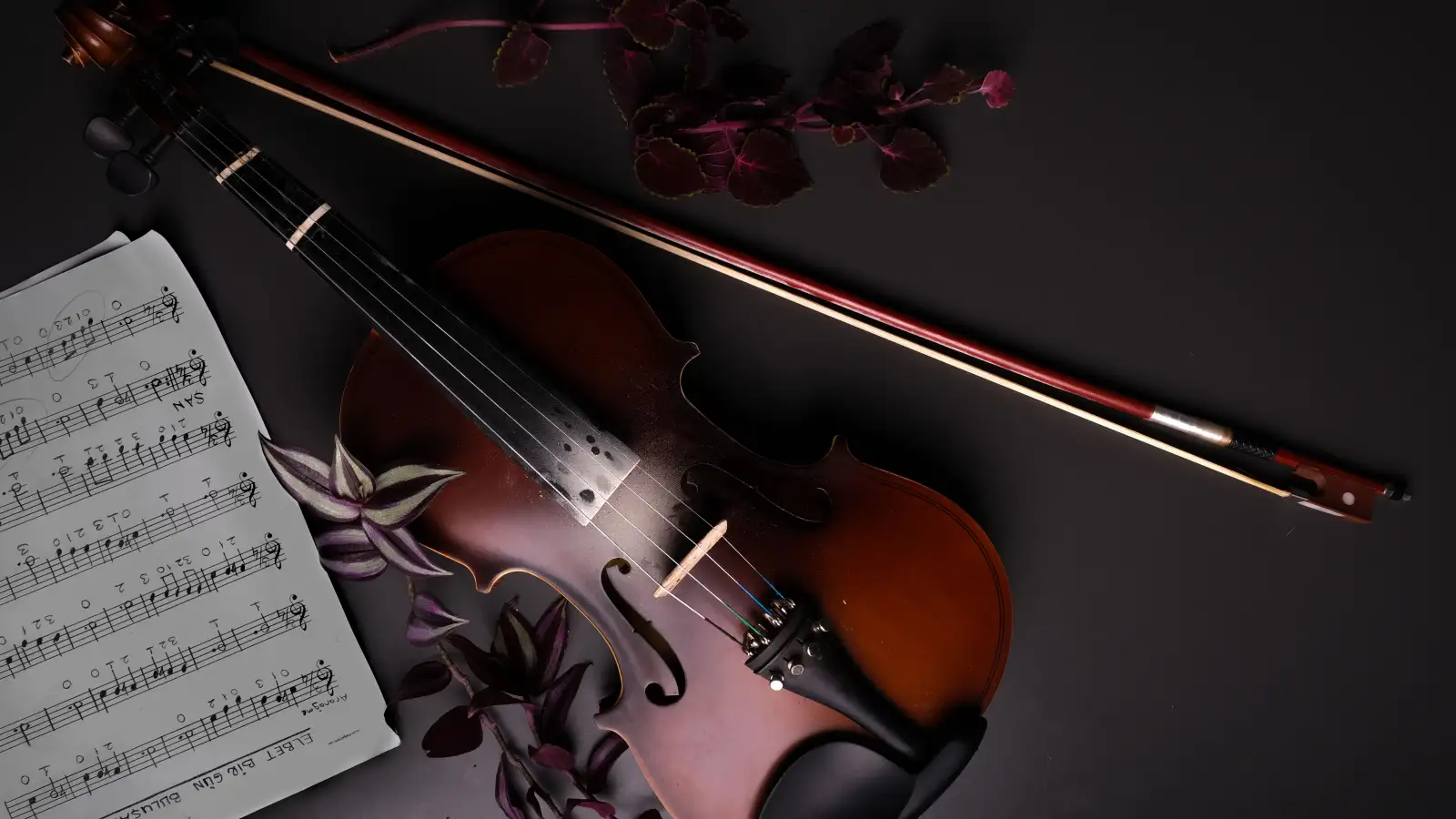
The practical difference between steel, synthetic, and gut violin strings comes down to three things you can actually observe in a practice room: how the string sounds under your ear, how long it holds pitch between sessions, and how much it drifts when the weather shifts. Steel cores are bright, direct, and stubbornly stable, which is why they show up on so many student instruments. Synthetic cores, usually nylon, push the sound toward warm and complex without giving up much tuning stability. Gut cores produce the richest, most nuanced tone of the three and demand the most from you: they move with humidity, they need frequent tuning, and they are the least forgiving of neglect. For most adult beginners, synthetic lands in the useful middle. But the material only becomes a real decision once it matches the instrument you own and the sound you can already hear.
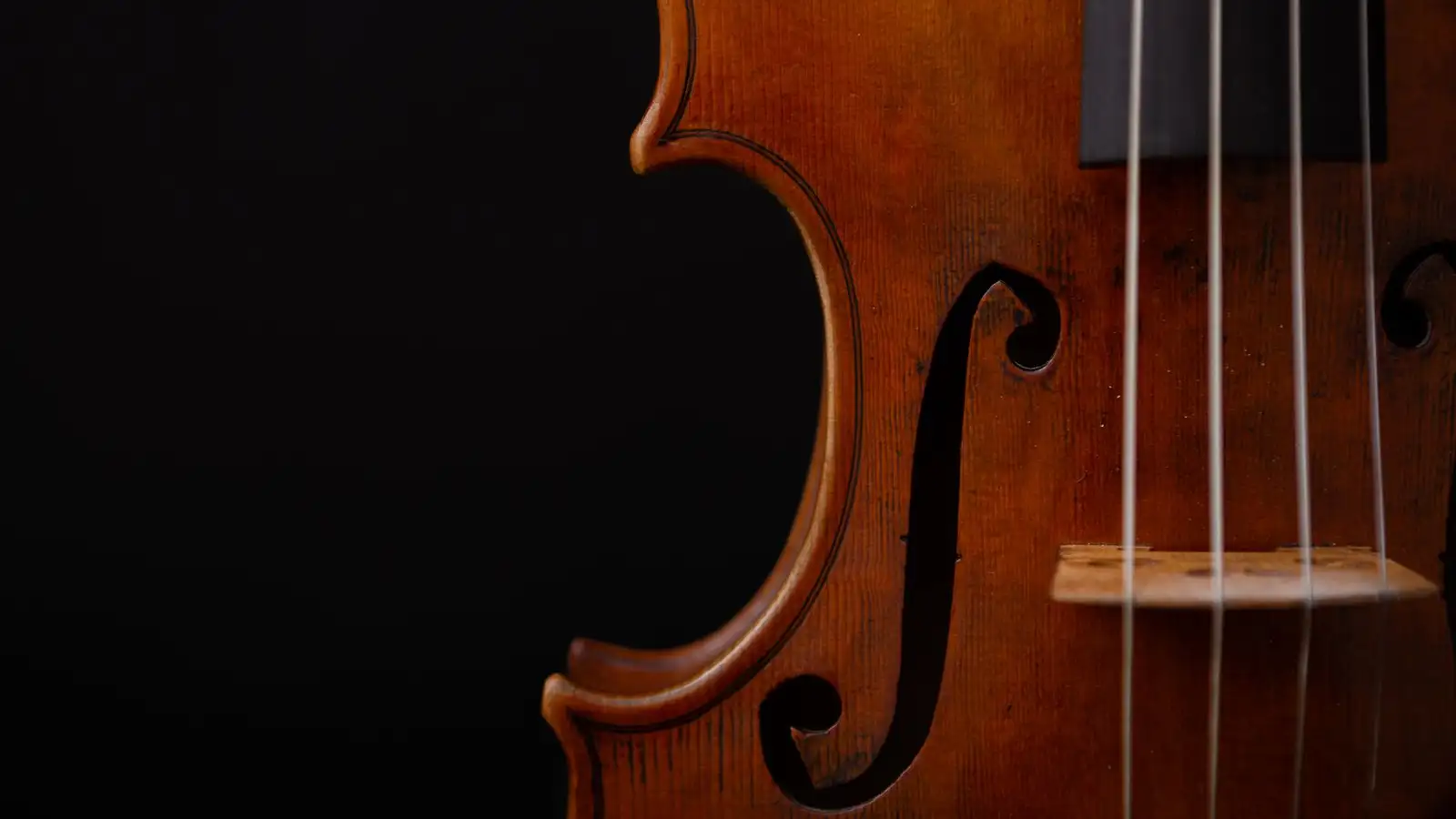
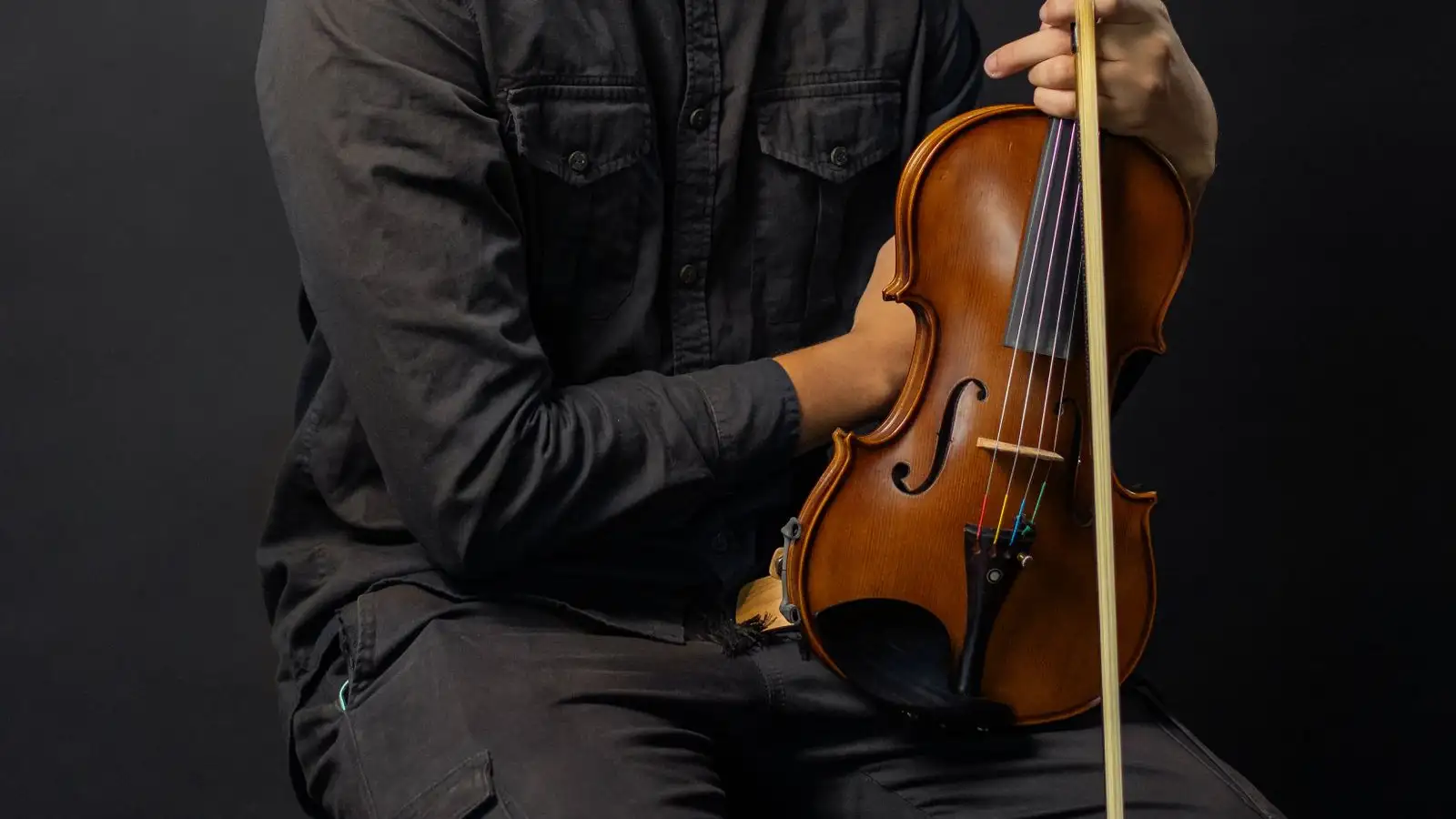
I was sitting at the kitchen table on a Sunday morning, before anyone else was up, with a rental violin, a phone tuner, and maybe twenty minutes. The A string had gone flat overnight. Not dramatically, just enough that the needle sat left of center and the open string sounded like it was shrugging at me. I tuned it, played a slow scale, and by the third time through it had drifted again. That was the morning I stopped thinking of strings as strings and started thinking of them as three different materials that happen to be shaped like strings.
What "different material" actually changes
There are only a few things a string can do to you. It can change how the violin sounds, it can change how well it holds pitch, and it can change how long it lasts before it goes dull or false. Those three things trade against each other, and the core material is what sets the trade.
The core is the part you can't see: the strand running down the middle, under the metal ribbon, or winding, that wraps around it. The winding gives the string its mass, its grip, and a lot of its character. The core decides how the string behaves.
Steel: the one that lets you forget about tuning
A steel core is exactly what it sounds like, a thin steel strand, and it behaves like a piece of wire. It resists stretching, so it holds pitch. On a dry morning it barely moves. On a humid one it still barely moves. New steel strings settle in within a day or two rather than a week.
The sound is bright and direct, sometimes described as focused or even sharp. Under the finger it feels thin and firm, and the winding has a bit of bite. On a student instrument, that brightness can be a gift, because a stiff, heavily built beginner's violin often sounds muffled on its own and the steel cuts through that.
The cost is color. Steel tends to give you one version of the note, plainly stated, without much bloom after the bow. If you are chasing a warm, singing sound, steel is not going to hand it to you.
For an adult beginner practicing in short sessions, that stability is worth more than it sounds. If your whole session is twenty minutes and five of them go to tuning, you've lost a quarter of your practice. Steel quietly gives that time back.
Synthetic: the warm middle, with a weather habit
Synthetic cores are usually nylon or a similar polymer, wrapped in metal. They stretch more than steel, and that's the point. The extra give lets the string vibrate in a more complicated way, which your ear reads as warmth, depth, and overtones. Put a set on a plain beginner violin and it can genuinely sound like a better instrument.
The trade is behavior. New synthetic strings drift for days before they settle, and they keep responding to the room. A humid week will push them around; a dry radiator in January will too. I learned to expect a small adjustment on the first day of a weather change and to stop being annoyed by it.
They also feel different under the fingers: rounder, a little softer, more forgiving on the left hand. For someone still building calluses, that is not a small thing.
Synthetic is the common recommendation for beginners because it splits the difference: most of the tonal warmth people imagine when they picture a violin, with tuning stability that's good enough to live with.
Gut: the sound people mean when they say "violin"
Gut cores are made from animal intestine, and they are the oldest version of the string. They are also the one most people have heard without knowing it. If a recording sounds like the violin is breathing, there's a good chance you're hearing gut.
Gut has a richness that neither of the others quite reaches, a complexity that seems to sit behind the note. It also has real drawbacks. Gut moves with moisture more than anything else, so it goes out of tune with the weather, with your hands, and with the room. It needs tuning often, sometimes several times in a session. It takes longer to settle. It's more delicate to handle, less tolerant of a sharp nut slot or a burred fine tuner, and it wears out faster under the kind of constant contact a beginner's fingers produce.
For a player with a controlled room, a mature ear, and a habit of tuning without thinking, gut is worth all of that. For someone who gets twenty minutes between dinner and bedtime, it's a way to spend your whole session on the pegs.
The winding is half of what you feel
The winding gets ignored in a lot of explanations, which is odd, because it's the part your fingers actually touch.
Aluminum winding is lighter and brighter. It's common on the lower strings of student sets, and it's the winding most likely to discolor and pit from sweat and hand oils over time. Silver winding is denser, which gives a darker, warmer, more focused sound, and it holds up better against sweaty fingers. It's also heavier, which changes how the string feels under the bow and how quickly it responds. There are other winding metals, but those two cover most of what a beginner will meet.
If you swap a set and the sound is warmer but the string feels strangely heavy, the winding may be doing more of the work than the core. This is why "steel versus synthetic" is not quite the whole question.
The E string is often lying to you
Here's a small thing that confuses a lot of beginners. A set advertised as synthetic core often has a plain steel E string, because a synthetic E is fragile and quiet and most players don't want it. So when you put on a "synthetic" set, you are often running three synthetic strings and one steel one. That's normal, and it's why the E can sound noticeably brighter than the rest until you adjust. Some sets offer an alternative E in a different material, which is the cheapest way to audition a tonal change without redoing the whole violin.
Matching the string to the instrument and to you
This is the part I wish someone had said to me earlier: strings are not an upgrade, they're a match.
A high-end string on a beginner violin doesn't unlock anything. It reveals what the instrument already is, and if the instrument has a tight, thick top and a badly fitted bridge, an expensive string mainly makes that clearer. The instrument is a system, and the strings are one part of it. If the bridge is leaning, the soundpost is off, or the nut is pinching the strings, no core material fixes it.
Same principle on the player side. The difference between a warm string and a bright string is real, but it is small compared to the difference between a steady bow and a shaky one. If your bow is still skating and your intonation is still guesswork, you're not yet at the point where a string's overtones are the limiting factor. That's not a reason to buy badly. It's a reason not to agonize.
There's a rough ladder that makes sense. A beginner on a student instrument who wants to stop fighting the tuner: steel or synthetic, depending on how much warmth matters. A beginner a year or two in, playing in tune and wanting more color: synthetic, possibly with a different E. A player with a good instrument, a controlled room, and a tuner in their hand anyway: gut becomes a reasonable choice, and often only for some strings rather than all four.
How to actually compare them
Change one thing at a time.
Pick a short passage you can play cleanly, something with open strings and a slow bow, and play it the same way every time you sit down. Change one string, or one set, and change nothing else. Same rosin, same bow, same room, same time of day if you can manage it. Play the passage. Then listen for three things specifically: whether the note blooms or stops dead after the attack, whether the pitch moved when you came back an hour later, and how the string feels under your fingertip.
If you swap the strings, the rosin, and the bow all at once, you have learned nothing except that something changed.
Two more practical notes. Every new string needs a break-in period; a string that sounds thin and unstable on day one is often fine on day four. And strings die slowly, so you don't hear it happening. A string that will not play a clean fifth anymore, that wavers no matter how carefully you tune, is likely false, usually because the winding has loosened over the core. That isn't a tuning problem. That's a string that's finished.
What I'd tell someone starting now
Buy the material that matches the amount of tuning you're willing to do, not the sound you're hoping to hear in six months. If a wandering pitch needle drains your will to practice, gut will hurt you and steel or synthetic will help you. If you're already tuning by ear without effort and you want the sound to have more air in it, gut is a genuine option and not a mistake.
The sound you're chasing is mostly built by your bow arm, your ear, and how well the instrument is set up. The string decides the flavor. It doesn't decide whether you can play.