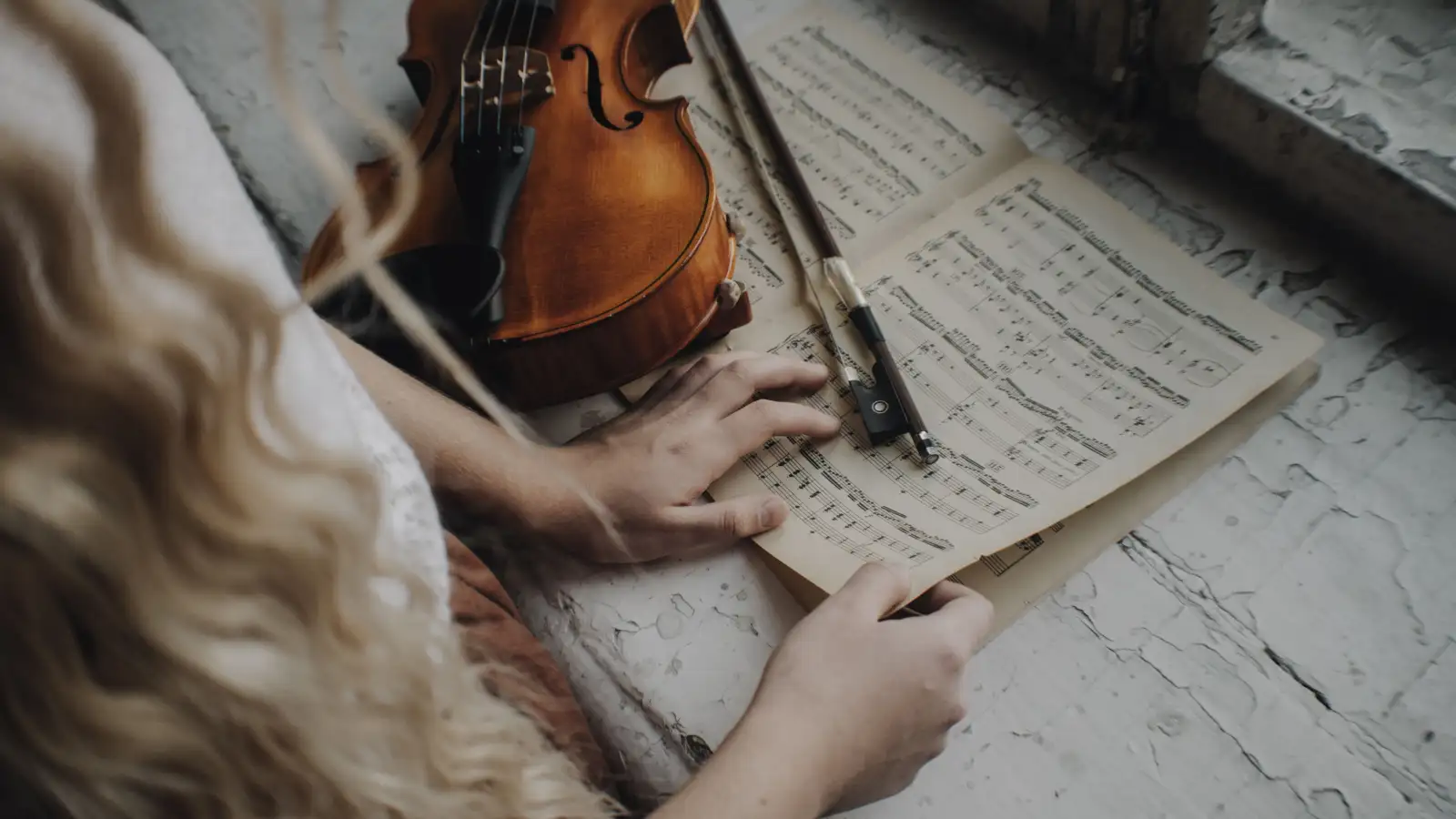
Ten minutes a day with music you have never seen before, set one level below what you can actually play, is what builds violin sight reading. Replaying the two pieces already memorized feels like practice and does almost nothing for it, because reading is a separate skill from learning a piece, and it only grows when the page is unfamiliar.
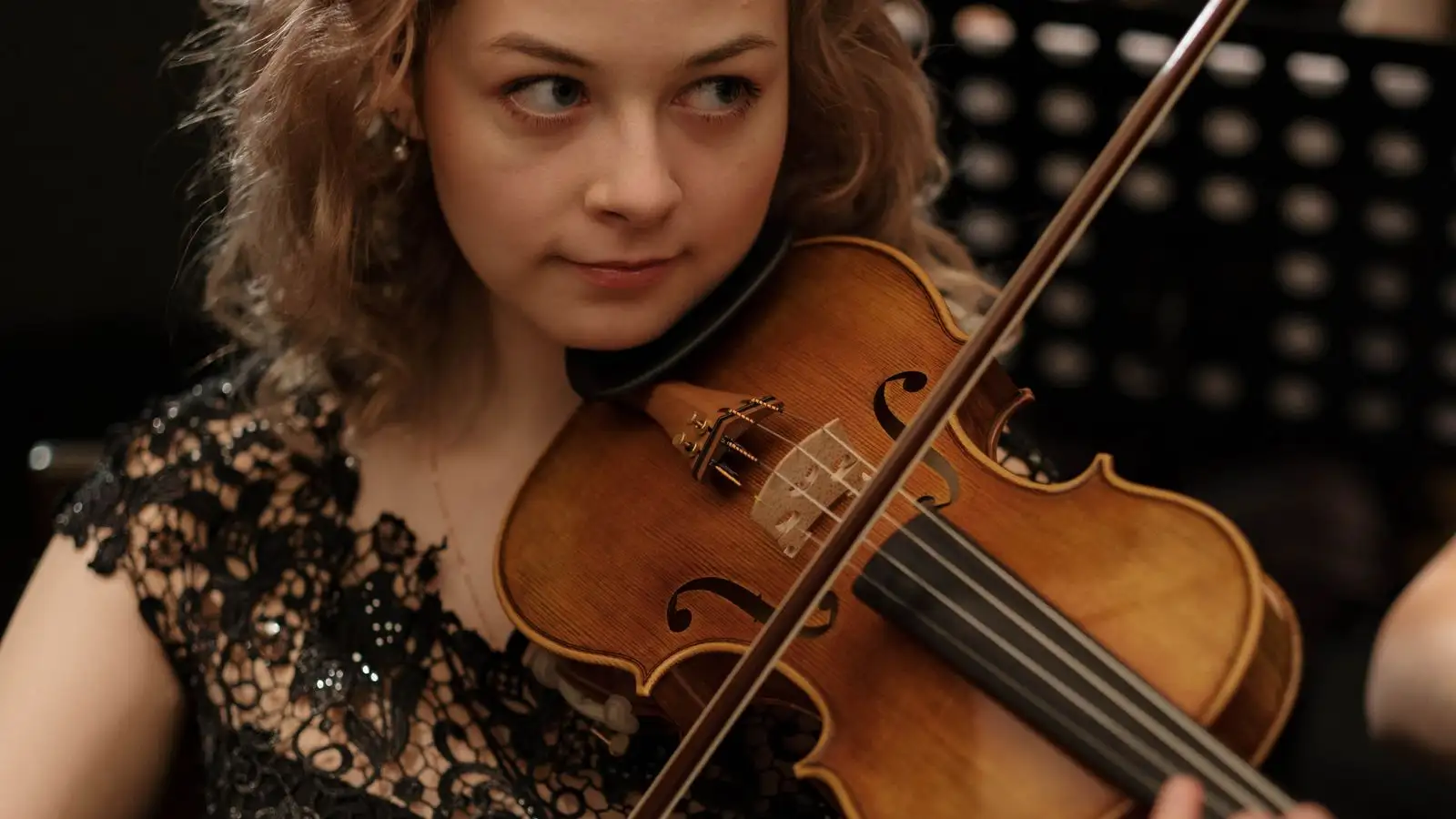
I keep a stack of music on the left side of my stand that I am not allowed to fall in love with. That took about a year to accept. My teacher would put a photocopy up and say, read it down, and I would do what everyone does. Play the first line. Hit a wrong note. Stop. Fix the note. Back up two measures and try again. Then I would go home and spend the hour on the two pieces I could already play from memory, and the next new page would be exactly as hard as the last one.
The pieces were never the problem. They were the best thing I had going. The problem was that playing them was the entire session.
What changed it was a kitchen timer, a rule about difficulty, and giving up on the idea that a wrong note has to be repaired the instant it happens.
Ten minutes, and why ten
The number matters less than the repetition. The skill underneath sight reading is a habit of the eyes: they sit a beat or two ahead of the hands, taking in the next note while the current one is still sounding. That lead is fragile. When you stop to fix something, the eyes catch up to the hands, the lead collapses, and you spend the rest of the page playing from behind.
A habit that fragile has to be rebuilt often. One long session on Saturday does not do it. Ten minutes every day does, partly because a ten-minute block is small enough that you will actually do it on the nights you do not feel like it, and partly because you get six or seven chances a week to practice looking ahead instead of one.
So the timer goes on. Ten minutes. Not fifteen. Fifteen is a number you negotiate with, and I have lost that negotiation plenty of times.
The thirty seconds before you play a note
I run the same check every single time, and it is not optional.
Key signature first. How many sharps or flats, and which ones. Then I scan for the accidentals, the stray natural or sharp sitting in the middle of a measure that is not in the key. That is usually where the surprise lives.
Time signature second. Not just the top number. I want to know what the beat actually feels like, whether I am counting in four with an eighth-note pulse underneath, or whether the piece is in three and beat two is going to arrive sooner than my body expects.
Then the highest note and the lowest note on the page. I hunt for both the way you scan a trail for the steep part. If the highest note sits somewhere my hand does not live comfortably, I want to know that before I am halfway through line three, not when I arrive.
Thirty, forty seconds. Then play.
The rule that feels wrong
Keep going. Through the wrong notes, through the rhythm you fumbled, through the spot where you are not sure whether that was an F natural or an F sharp. You do not stop. You do not back up. You do not lean over, pencil in a fingering, and restart the line.
This is the part that feels like cheating, or like sloppiness, and it is the part that makes the whole thing work. The ten minutes is not about producing a clean performance of an unfamiliar piece. It is about training the eyes to keep feeding the hands information while the hands are busy. Every stop teaches your eyes that they can afford to lag.
Play the page top to bottom. When you finish, you are allowed to go back and look at what went wrong. Often you will find the mistake was one note, and that you kept the rest of the measure, which means the reading was fine and the fingers were the issue. That is a different problem for a different part of your practice.
Counting, out loud first
The first thing most beginners lose when they stop staring at the page is the rhythm. Not the notes. The notes they can find. The counting goes.
So count. Out loud at first, which feels ridiculous in an empty room and works anyway, because your mouth is physically committed to the beat and cannot drift the way silent counting does. One and two and three and four and. Then once that is steady, drop it to a whisper. Then to silent counting with the lips barely moving. The goal is a silent count that runs underneath everything else, so that when you look up from the notes for a second, the beat is still there holding your place.
Here is the tradeoff I had to swallow: playing the page at a steady tempo with the wrong notes in it is a better read than playing it accurately with three long pauses. Notes can be fixed later. A habit of stopping is much harder to fix.
Picking the right music
This is where most people get it wrong, and it is why a reading routine can run for months with nothing to show for it.
The material has to be one level below what you can play. Not at your level. Below it.
If the music sits at your level, you will spend the ten minutes fighting the instrument, and what you are actually practicing is problem-solving under pressure. Useful skill, wrong exercise. If the music sits far below your level, it is boring but harmless, with one exception: after two or three passes you will have memorized it, and memorized music is not reading material.
The band you want is narrow. The page should contain a few moves you do not recognize, while the notes themselves are mostly under your fingers. A new key with a familiar rhythm. A familiar key with a rhythm you have to count. A small reach up to a note you know how to find but have not yet found in that context.
One easy test: after the ten minutes, if nothing surprised you and the tempo felt comfortable, it was too easy. If you got lost twice in the first line and had to stop, it was too hard. The right level is uncomfortable in a boring way.
A second test, the one that matters more to me: could I play it again tomorrow from memory? If yes, it is done. The whole value of the page is that it is new.
What this routine is not
Sight reading is one bucket among several. Ten minutes of reading does not replace scales, tone work, or the slow, patient learning of a piece you actually want to perform. It runs alongside those things, and it does not help them much. If you have forty-five minutes total, the reading block is ten of them, not forty.
It also does not produce a number. There is no honest way to clock your reading speed, and the improvement does not announce itself. What tends to happen, without warning, is that a piece you would have frozen on a year ago turns out to be readable. You notice it because you did not notice anything.
And there will be weeks you miss. Travel, a cold, a stretch of late nights. The routine survives that, because ten minutes is small enough to restart the next morning without a negotiation. What kills it is the long session you keep meaning to have.
The stack on the left side of my stand still holds music I will never perform. That is fine. Its job is to stay unfamiliar, so that when someone puts a page in front of me and says, just read it down, my eyes already know what to do.