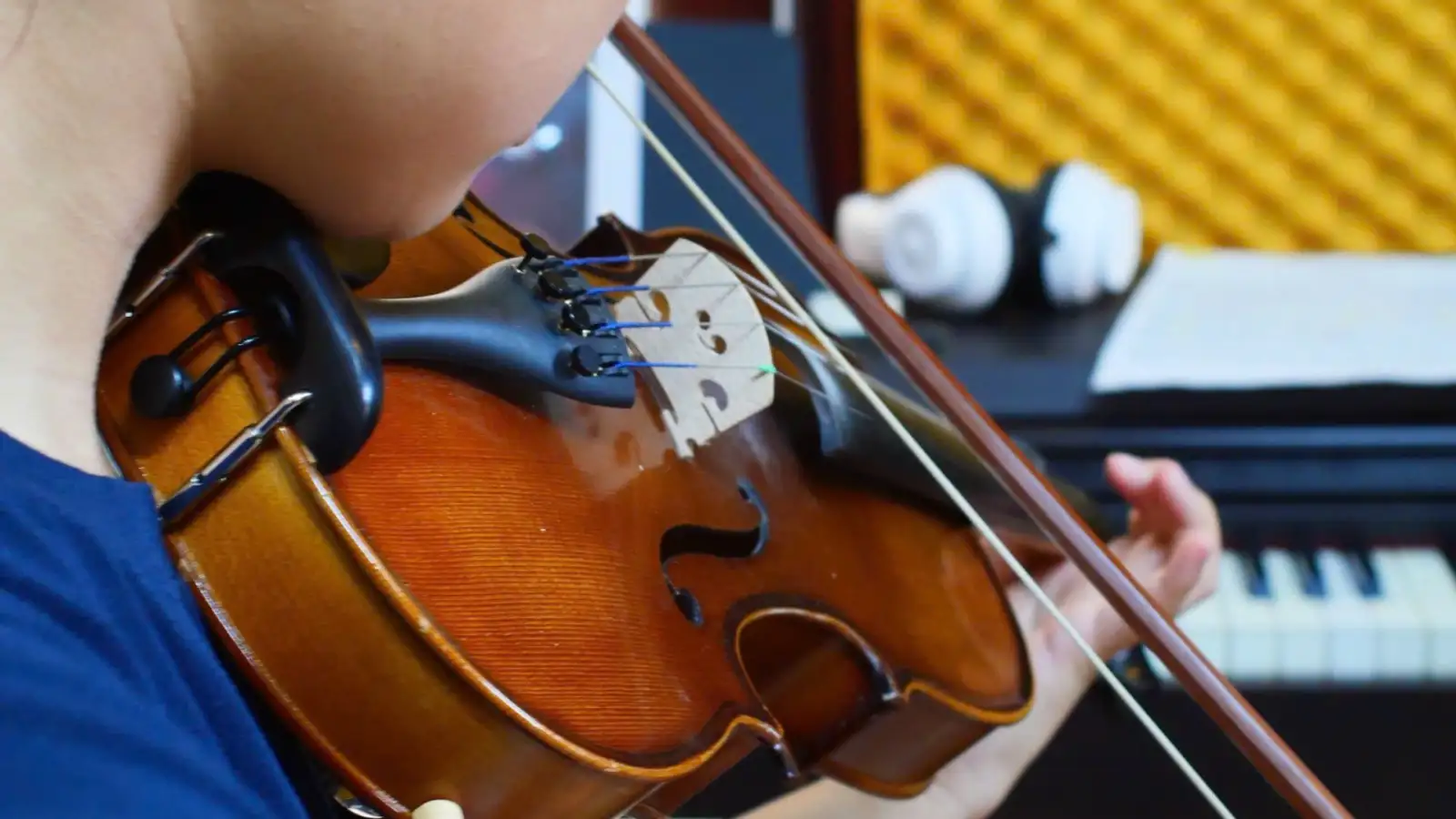
The black film that collects on your strings, your fingertips, and the strip of fingerboard underneath them is not dirt. It is rosin dust, skin oil and sweat, and fine wear from the strings' own windings, packed together into a dark paste. That is why it appears first directly under the strings and along the fingerboard's edge, and it is why a quick wipe across the tops of the strings leaves most of it sitting there.
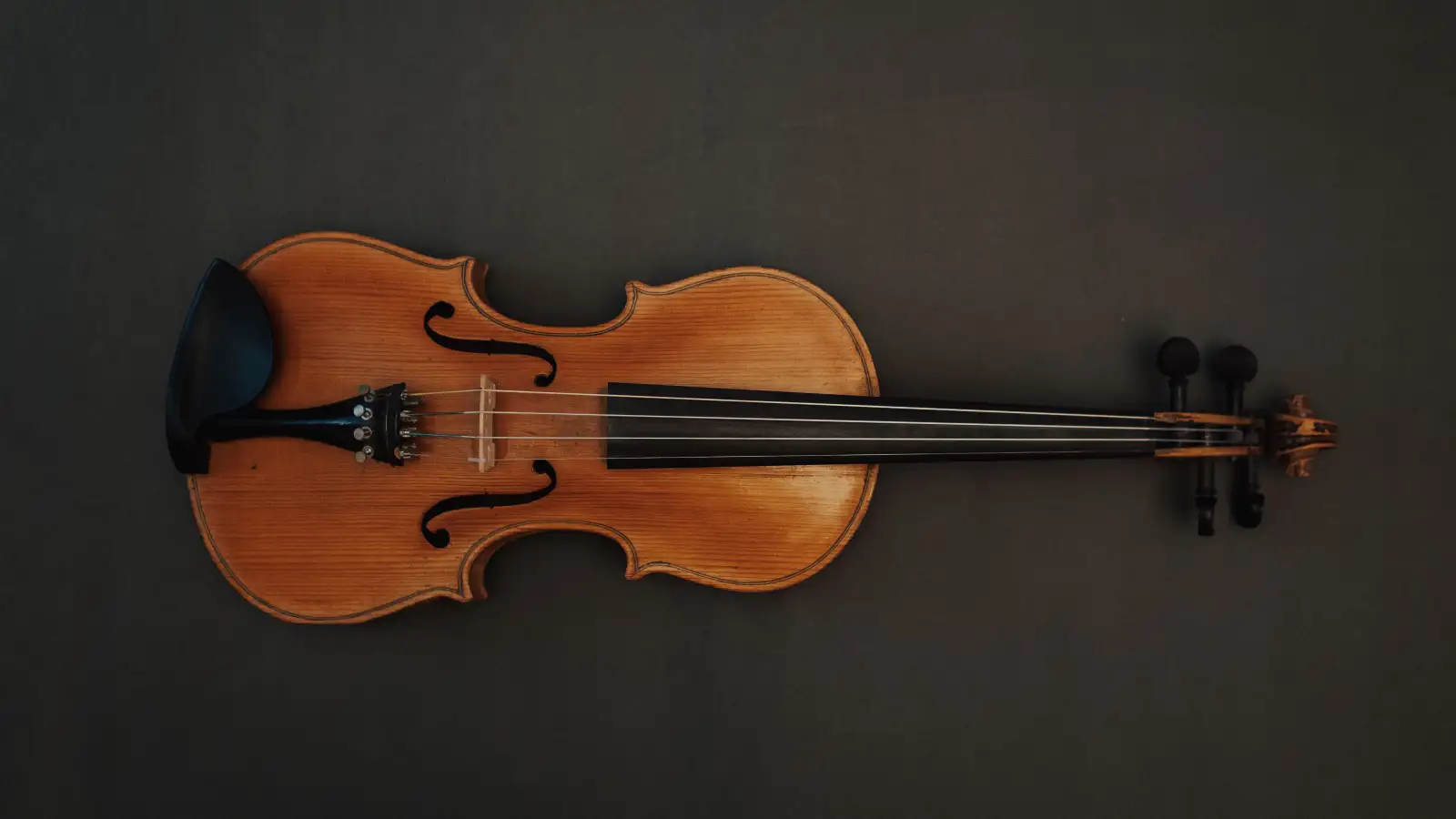
I noticed it properly one evening after a long practice, the kind where you stay in the same three positions for forty minutes and your fingertips go shiny. I flipped the violin over, then lifted the strings with my thumb and looked at the board underneath. Two black lines ran the length of the fingerboard, one on each side of the string band, darkest right at the outer edge. The cloth I had just used on the tops of the strings had a gray streak on it. The board had more.
That gap between what the cloth caught and what was actually there is the whole story. Once you understand what the film is made of, the cleaning stops being a chore you guess at and becomes something closer to scraping frost off a windshield: you know where it lives and you know what will take it off.
Rosin is the glue, sweat is the acid, metal is the color
Rosin is the powder your bow sheds. It is fine, it is sticky, and it is acidic. It does not evaporate or dry into something harmless; it drifts off the bow and off the strings and lands on the fingerboard, most of it falling straight down into the gap under the strings where nothing rubs it away.
Then your hands arrive. Sweat is water plus salt plus a handful of acids, and your skin also produces oils that never fully dry. Where do they land? Fingertips press on top of the strings. The thumb rides the neck. The side of the index finger drags along the fingerboard edge, which is exactly where that black line is darkest.
And then the strings themselves contribute. Every slide, every vibrato, every shift sands a little material off the winding. Nickel, silver, aluminum, chrome-plated steel: whatever the winding is, it gives up fine particles, and fine metal particles are dark. That is the color.
So the film is a collaboration. Rosin supplies the stickiness, so the sweat sits against the metal instead of drying and flaking off. The salt and acid in that sweat go to work on the winding underneath. The metal powder darkens the whole mixture. What you are looking at is a small, self-feeding reaction, and it is why the residue feels slightly tacky rather than dusty, and why it smears instead of brushing away.
The same thing explains the black marks on your fingertips after playing. The string hands back what you left on it, plus a little of itself.
Why the fingerboard edge and the space under the strings get it worst
Pay attention to the geography, because the geography is what the usual advice gets wrong.
The board under the strings is nearly untouched by fingers. Nobody presses there. So what accumulates in that strip is rosin falling from above, plus whatever drifts down from fingers working on either side of it. It has no friction to wear it away and no air movement to dry it out. It just sits and thickens.
The fingerboard edge is the opposite case. It gets everything at once: rosin drifting down, skin oil from the hand riding the neck, and the friction of the index finger sliding along it. That is why the darkest line is usually at the outer edge on the E side, and why it is so easy to miss if you only wipe what you can see from above.
A cloth folded into a strip and threaded under the strings reaches that strip. A cloth laid flat on top of the strings does not. This is the single change that makes the biggest difference, and it is entirely a mechanical thing. Folding the cloth also lets you wrap it around a single string and draw it from the board toward the bridge, which uses the string's own length as the cleaning stroke. Work one string at a time and turn the cloth to a fresh face as you go, or you are just moving the paste from string one onto string two.
The corrosion part is the part that costs you money
Here is what the residue actually does while it sits there, and it is more than cosmetic.
Metal windings react to skin acids and hand oils. Left in place, the film holds those acids against the metal, and the winding starts to corrode. A corroded winding loses its shine, then its tone goes flat and dull, then something subtler happens: the string stops settling. You tune it, and a sustained note has a wobble in it that no amount of tuning removes. That is a winding that has been eaten into enough that it is no longer behaving like one uniform piece of material.
The reason this matters for your routine is timing. Wiping after playing is not about tidiness; it is about removing the acid source before it has hours to sit. Some people need to do it mid-session too. If your hands run acidic, you will know, because you will see the discoloration start within a practice session, and in a humid summer it moves faster than it does in dry winter air. That is a real variable and there is no single schedule that fits everyone. The honest rule is: wipe when you stop playing, and if you can see the film forming while you are still playing, you have your answer about your own hands.
What not to reach for
Alcohol is the big one. It is tempting because it cuts through the paste instantly, and it will also dull the varnish at the fingerboard's edge. That damage does not come back. Household cleaners bring the same risk plus a residue of their own that you then leave sitting on the string surface.
On the board itself, less is genuinely more. An ebony fingerboard is typically unfinished, dense, and close-grained, which means the film sits on top of it rather than soaking in, which is exactly why a dry cloth works. Oils, conditioners, and polishes are not needed. They leave a tacky surface, and a tacky surface catches more dust than a dry one, so you end up with a board that now needs real cleaning where before it needed a thirty-second wipe.
Use a clean, soft cloth, dry, and nothing else. Cotton or a plain microfiber both work. No solvents, no sprays, no polish.
When it is not residue at all
This is the part people get wrong in the other direction, and it wastes money both ways.
Take a clean section of cloth and wipe one spot on the winding with light pressure. If the black comes off and the metal underneath is bright and even, you are looking at film, and you have caught it in time.
If you wipe with a clean face three times and the darkness stays, that is not film. On silver-plated windings, a dull gray or greenish tinge that will not lift is the metal itself changing. On any winding, a dark patch that persists, or a spot where the texture has gone rough or the winding has separated into visible coils, is wear. No cloth fixes that, and no amount of scrubbing walks it back. That string is past what cleaning can do, and treating it as a cleaning problem just means you keep playing on a string that will not hold pitch cleanly.
Wiping will not rescue a worn winding, and it should not be asked to. What wiping does is stop the film from getting the chance to create the next worn winding. Those are two different jobs.
The routine that falls out of all of this
Thirty to sixty seconds after you play, and it is the last thing you do before the case closes.
Fold the cloth into a strip. Thread it under the strings at the fingerboard and draw it along the board, top face and the strip underneath, letting it follow the edge where the dark line lives. Then, one string at a time, wrap the cloth around the string and pull from the board toward the bridge, turning to a fresh face between strings. If the cloth comes up black on the first pass and clean on the second, you did it right.
The rosin dust that settles on the top of the instrument is a different substance and a different problem, dry and loose, and a soft dry cloth handles it. Keep the rosin on the bow reasonable and knock the cake off the strings when you see it building, because that cake is what feeds the film. But the black paste under the strings is a contact phenomenon, and it only ever forms where hands, rosin, and winding meet.