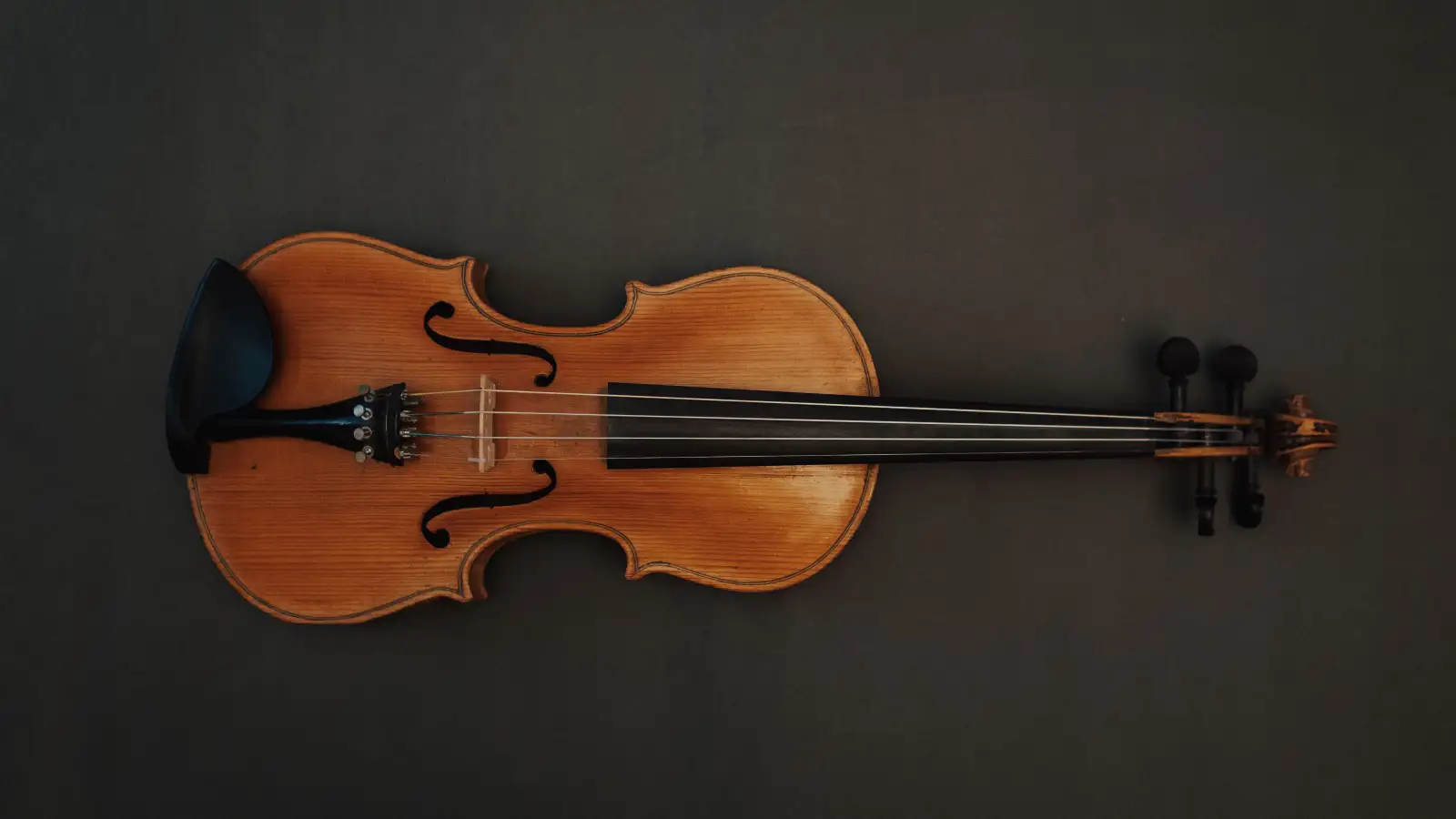
The chin rest, the shoulder rest feet, and the inside of the case are the three surfaces on a violin where residue genuinely piles up, and they are the three that most players clean last or not at all. The rule for them is not the rule for the varnished top: a dry cloth, or one wrung out until it is barely damp, a soft brush, and the lid left open to air. No sprays, whatever the label claims about being instrument-safe.
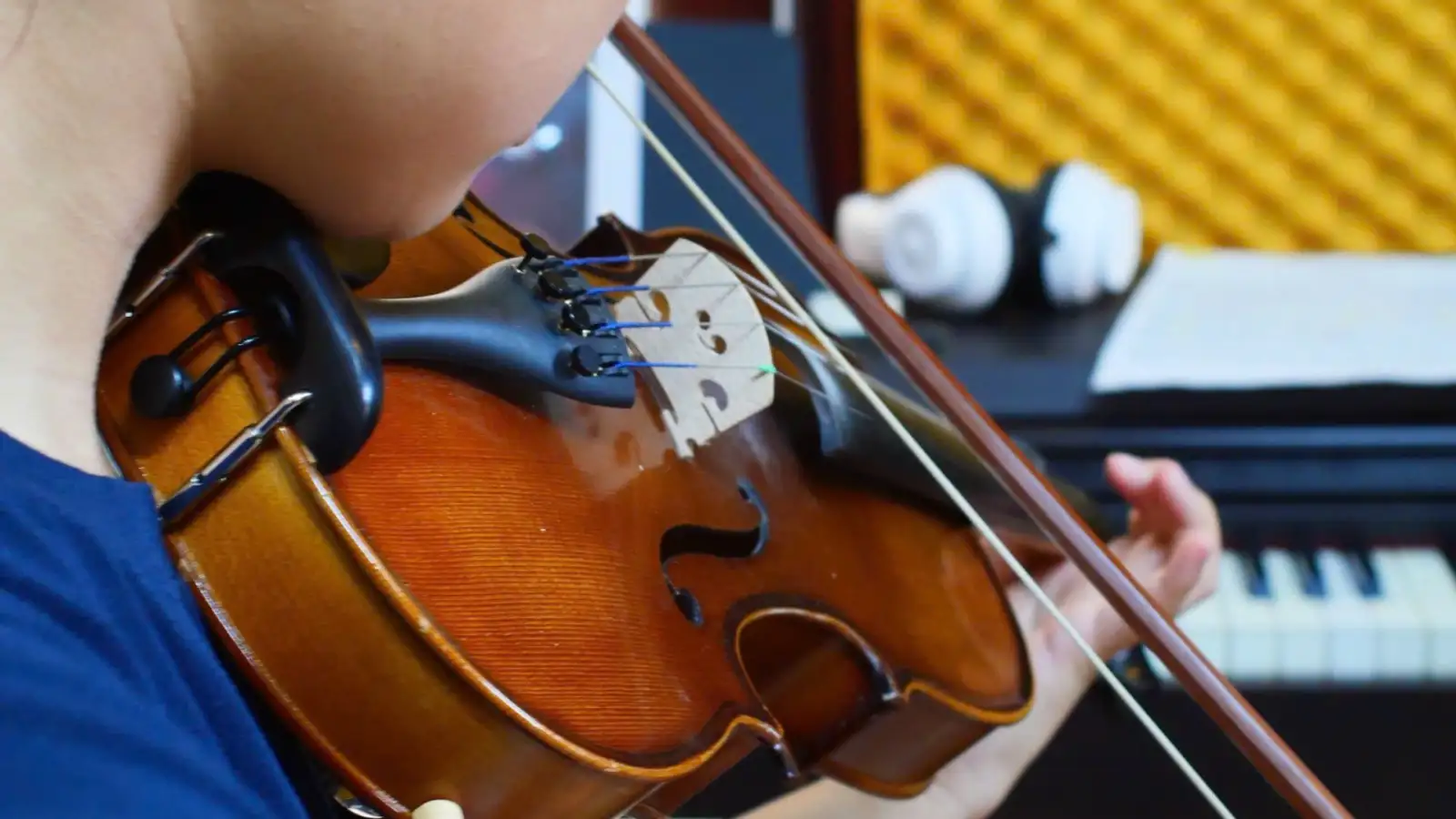
I keep my cleaning cloth folded on the shelf over the case now. For two years it lived inside the case, tucked under the neck, and it looked so tidy there. What it actually was: a square of fabric that had picked up rosin dust, lint, and rehearsal-room grit, sitting three inches from the top of my violin every day. Moving it out to the shelf was the single change that made the biggest visible difference to the inside of that case. I trust that kind of before-and-after more than any product claim.
The cloth goes where the shine is
Here is how it usually goes. You finish playing, you wipe the strings, you run the cloth over the top and back where you can see fingerprints, and you put the violin away. That routine covers perhaps a third of what actually needs wiping.
The varnished top is the easy part, because residue mostly sits on top of it and comes off in one pass. It is also the part where being careless costs the most, which is why everybody's attention goes there. Meanwhile the chin rest, which your jaw has been pressed against for forty-five minutes, gets nothing.
Take the violin out and run a thumb along the top edge of the chin rest. Feel that slight drag, that tackiness? That is what your skin leaves behind every session: oil, a little moisture, and a film that holds dust. On a bare wood chin rest it works into the grain. On plastic it just sits there, glossy and faintly slick, and it gets slicker over time. It does not dry off and it does not evaporate. It accumulates, and the next session presses more of it in.
The chin rest wants almost nothing
A chin rest needs a dry cloth, or a barely damp one if the grime has really set in. Wipe it, let it dry, put the violin away. That is the whole method.
What it does not want is anything from under the kitchen sink. Strong household sprays and disinfectants, the kind built around alcohol, solvents, or citrus oils, do real damage to a chin rest and to the finish around it. Ebony and boxwood darken and dry out. Plastic can cloud. And the varnish at the margin between the rest and the top is thin, and it catches overspray no matter how careful you are. I have watched a chin rest go gray and chalky after a couple of months of enthusiastic wiping, and it never came back.
The part people forget is underneath. Loosen the barrels just enough to slide the rest to one side, and look at the plate where it sits, and at the cork pads on the bracket feet. That cork is what touches your ribs. It compresses, it hardens, and it holds dust against the finish. Wipe the cork, wipe the plate, then slide the rest back and snug it down.
Do that once or twice a year, when you are changing strings anyway, not every week. The barrels are small and their threads are soft metal, and every loosen-and-tighten cycle wears a little of that away. A chin rest that will not stay tight is worse than a dusty one. If you can feel the rest shifting under your jaw, that is your warning to stop taking it on and off so often.
The patch under the shoulder rest feet
The shoulder rest is the piece of equipment I see left on the instrument for years at a time. It feels permanent because it is fitted, and taking it off means refitting it and finding the setting again.
Those feet, whether rubber, foam, or a molded compound, press against the edge of the lower bout and sometimes the back. Nothing gets in there while the violin is in the case, and that is exactly the problem. Whatever grit was on the edge when you put the rest on stays there, trapped, and the foot grinds it into the varnish every time you lift the instrument to your shoulder. Over months, the patch under each foot goes dull. Not scratched, necessarily. Just dull, which is the first stage, the one you can still do something about.
Pop the rest off and look at the instrument at a low angle with a lamp behind it. Raking light is the only way to see this. Straight on, the varnish looks fine. Tilted into the light, two faint ovals show up where the feet sat.
Wipe those patches with the dry cloth. Wipe the feet too, both the surface that touches the instrument and the little cavity in the middle of each foot, which collects dust like a cup. Then put the rest back where it was.
The feet have a lifespan. Foam goes gummy before it falls apart, and gummy foam picks up lint and hair and holds it, and starts leaving a sticky ring on the edge. If your feet have gone soft and tacky, or flattened so far that the rest sits lower than it used to, replace the feet or the rest. A compressed foot rides closer to the edge, and there is less clearance between the rest and the varnish than there was when it was new. That is the moment when a contact point turns into a wear point.
The case is not storage. It is the last step.
This is the part I would want a beginner to hear first, and it is the part most cleaning advice skips, because it treats the case as furniture instead of as part of the routine.
Everything you did not wipe off the contact points ends up in the case. And everything in the case ends up back on the instrument. It is one loop, not two separate chores. Clean the instrument and leave the lining alone, and you are washing a dish and putting it back in a dirty drawer.
Open the case and look at the bow compartment. That fine pale powder along the bottom is rosin. Some of it fell off the bow on the way in; some is dust that shook loose from the hair. It looks like nothing. It is abrasive, and it is what dulls a finish in transit, because a violin shifts a few millimeters inside a case and whatever is under it at that moment acts like sandpaper.
Once a month, or whenever you can see a dust line, take the violin and bow out, open the lid all the way, and brush the lining with a soft dry brush. A wide, soft cosmetic brush does this well. Work top to bottom so you are pushing dust toward the bottom of the case, then tip the case and let it fall out over a trash can or outside. If your case has a removable accessory pouch or a blanket that lifts out, shake those out separately. A washable blanket can be hand-rinsed and dried flat, but only if the maker says so, and only if it goes back bone dry. A slightly damp blanket is worse than a dusty one.
Nothing damp goes back in the case
Not the instrument. Not the cloth. Not the bow. Not a wipe you used on the chin rest. Not the case itself, if you have just gone over the lining with something damp.
Trapped moisture is what damages both the instrument and the lining. It swells the wood, it softens glue, and it sits in the plush and turns into a smell. Which is the real reason my cloth lives on the shelf and not in the case. If you wipe the violin with a barely damp cloth, and for contact points that is the dampest you should ever get, leave the case open and let the instrument sit out for a few minutes before you close it. Ten minutes on a stand or a table is enough. Longer if the room is cold.
If you have been practicing somewhere humid, or the instrument feels clammy, leave the case open overnight. Nothing bad happens to a violin that spends a night out of its case in a normal room. Plenty happens to one that goes in wet.
Two cloths, and why
I use two. The first goes over the strings, the fingerboard, and the body. The second, the one that lives on the shelf, handles the chin rest, the shoulder rest feet, and the case lining.
The reason is grit direction. The cloth that has been over the body has picked up particles you do not want rubbed into a varnished surface later. Contact points and linings are far more forgiving of a slightly gritty cloth. Keep the clean job and the dirty job on separate squares of fabric, and wash them when they go stiff. Warm water, no fabric softener, since softener leaves a residue that smears onto everything it touches afterward.
When two people share one violin
This is where all of it doubles, and where you notice it in a week instead of a year.
Two players means two sets of hands, two jaws, two shoulder rests on one instrument. The oils at the contact points go on at roughly twice the rate. The chin rest turns slick twice as fast, and it stops feeling like a surface you can hold onto.
The practical split is this: the shoulder rest is the easy thing to separate. It is removable, it is fitted to a body rather than to an instrument on most designs, and swapping it takes seconds. Two players, two shoulder rests, one violin, and you have solved half the problem without touching the instrument at all. The chin rest is harder, because it belongs to the instrument. If both players are comfortable with the same rest, the honest answer is that it needs wiping after every single session instead of every few. That is the whole fix. It is a thirty-second job that simply has to happen twice as often.
Some players lay a soft cloth over the chin rest while they play. That keeps oils off the wood, and it costs you a little feel against your jaw. Whether that trade is worth it is entirely up to the person holding the instrument.
The short version
Wipe the chin rest with a dry or barely damp cloth after you play. Once in a while, take the shoulder rest off and wipe the patches under the feet. Brush out the case lining before it develops a visible dust line, and never close a damp instrument or a damp cloth inside it. Two cloths, one brush, lid open for ten minutes.
That is the entire routine, and it is the one part of violin care where the least popular job is also the one that shows up the fastest.