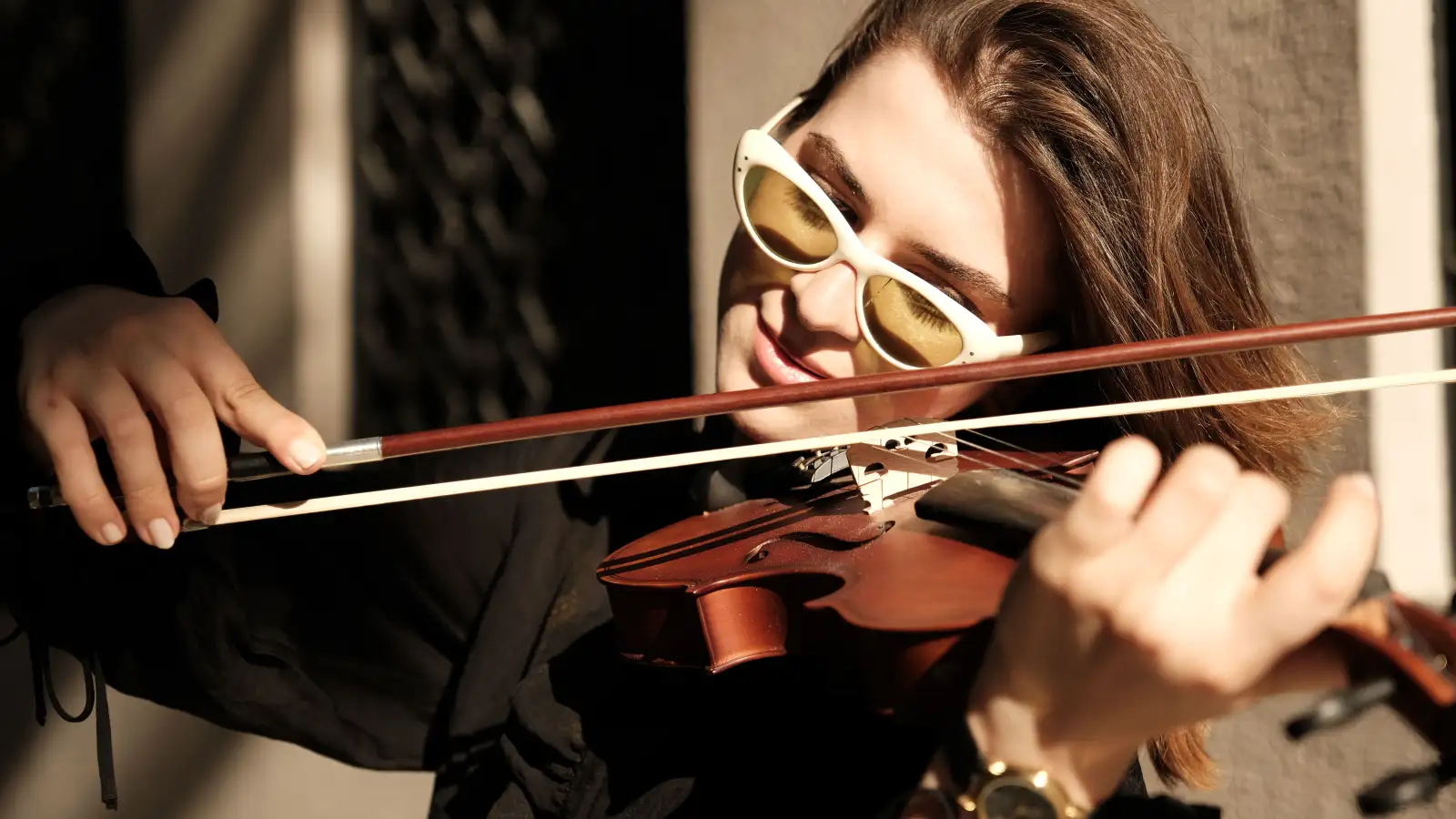
Rosin hardness, not its color or the name on the cake, is what decides whether your bow grips the string or skates across it. Cold, dry air calls for a softer, stickier rosin that gives the hair enough tack to start the string cleanly; hot, humid air calls for a harder, drier rosin that keeps the bow from grabbing so hard it chokes the tone. The useful question is rarely "light or dark." It is what the air in your practice room is doing to the cake in your hand right now.
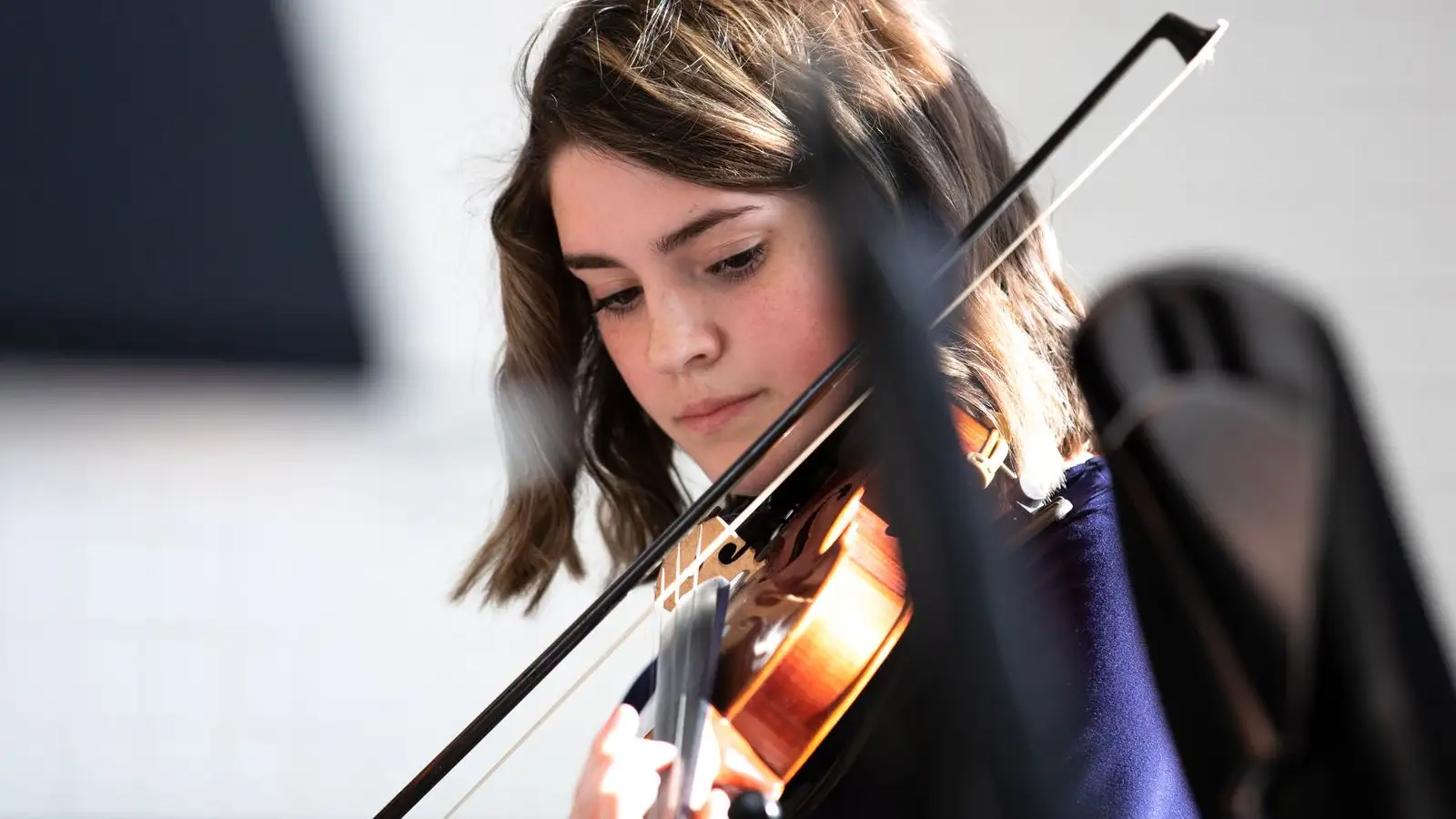
I keep two cakes in the pocket of my case. Not because I'm a gear person, I'm not. I keep two because the room I practice in is a different room in January than it is in August, and one cake can't cover both.
Here's what that looks like on the bad nights. Second week of January, the heat has been running since October, and the little hygrometer I stuck to the music stand reads 24 percent. I draw the bow across the open A and nothing catches. The string doesn't speak, it hisses. There's a thin whistle under the note and the bow feels like it's sliding on glass. I lift the bow, run my thumb along the hair near the frog. Slick. Dry. Almost polished.
That is not a technique problem and it isn't a bad bow. That's a hard cake meeting air with no moisture in it. Rosin works by friction, and friction depends on the surface getting slightly soft and tacky at the point of contact. Cold, dry air keeps the cake too hard, so the hair never really bites.
So I switch. I set down the pale cake, pick up the dark one, and draw the bow across it maybe three or four slow strokes, tip to frog. Then I tap the stick once against my palm to knock off the loose dust and play the same open A. There's the bite. The string starts clean, the whistle is gone, and the bow feels like it has teeth again.
Now flip it to August.
Same room, same violin, dew point around 70, the window unit running hard and losing. The dark cake that saved me in January now grabs too much. The bow crunches. Rosin builds up in a grey stripe along the string where the hair crosses, and the tone goes from warm to muffled and faintly gritty, like there's felt under the string. I wipe the strings down, switch to the pale cake, and the sound opens back up.
That loop, listen and feel the hair and switch cakes, is the whole system. Everything else is vocabulary.
Heat and Humidity Are the Real Variables
Every rosin has a working range. Below that range it behaves like glass: hard, slick, and it skates. Above that range it behaves like gum: sticky, smearing, and it over-grips. Your job is not to find the "best" rosin. It's to find the cake whose range overlaps the room you actually play in.
Temperature matters, but less than people expect. Indoors it swings maybe fifteen or twenty degrees over the course of a year.
Humidity is the one that moves. Forced-air heat in winter can pull indoor relative humidity down into the teens and twenties. Summer across much of the country sits between 55 and 75 percent, and if you're anywhere near a coast or a Great Lake, higher. That's a swing of forty or fifty points, in the same room, on the same violin, with the same bow.
A weather app is not your room. A kitchen with a pot of water boiling, a basement studio, a bedroom with the bathroom door open. Those are three different climates inside one house. The number that matters is the one at your music stand during the hour you practice. If you don't own a hygrometer, get one. It costs less than a set of strings and it will explain things you've been blaming on your bow arm.
What Light, Amber, and Dark Actually Tell You
The convention is simple enough: darker tends to mean softer and stickier, lighter tends to mean harder and drier, and amber sits in the middle. That convention exists for a reason, and most of the time it holds.
But it's a convention, not a specification. Color comes partly from how the resin was processed and partly from what got mixed in. Rosins carry additives, metallic compounds and waxes and other agents, that shift friction and the softening point independently of how dark the cake looks. I've handled dark cakes that behaved harder than pale ones, and pale cakes that were surprisingly grabby. Two cakes that look identical side by side can feel completely different under a bow.
So color is a starting guess, not an answer. It tells you where to begin looking. It does not tell you what your bow is going to do at 24 percent humidity in February. And it certainly says nothing about quality. A dark cake is not a lesser cake, and a pale one is not a finer one.
Reading a Cake With Your Hands
Here's what I do before I trust anything, and none of it requires a label.
The thumbnail test. Press the pad of your thumb into the flat surface. A soft rosin dents and leaves a faint tacky print that takes a second to fade. A hard rosin resists, feels cool and glassy, and sometimes leaves a chalky mark on your skin instead of taking one. A very hard cake can chip at the edge if you press wrong, which is its own kind of information.
The dust test. After a few strokes, look at the powder that falls. Soft rosin dust is clingy. It clumps, it sticks to the string, and it leaves that grey line along the contact path. Hard rosin dust is drier and more powdery and tends to fall away instead of collecting.
The hand-warm test. Hold the cake in your palm for a minute. A soft rosin gets noticeably tacky against warm skin. A hard one barely changes.
And the one that actually counts: play a slow open string and listen. Clean start, no whistle, no crunch, a ringing sustain that doesn't decay into fuzz. If you get that in the room you're standing in, the cake is right. If you don't, it isn't, no matter what shade it is.
Where Most Beginners Land
If you're an adult beginner or a parent setting up a kid's first violin, you almost certainly need one cake, not a collection. A medium or general-purpose rosin handles a climate-controlled house through most of the year in most of the country. Start there. Play for a few months before you decide you need anything else.
The case for a second cake shows up only when your conditions genuinely swing hard: forced-air winters paired with humid summers, a school orchestra room with no climate control, outdoor playing, or a house where the practice space changes with the season. That's when having one softer and one harder cake stops being a hobby and starts being a fix.
When the Rule Bends
Climate is the strongest single predictor of whether a rosin will work for you. It isn't the only one.
Bow arm weight matters. A player who leans into the string already produces more friction, and a soft rosin on top of that turns into gunk on the strings fast. A light, cautious beginner touch often needs more tack than the humidity alone would suggest.
Bow hair matters. Older, glazed, or over-rosined hair grips differently than fresh hair, and it can make a perfectly reasonable cake seem wrong. If your hair looks shiny and dark near the frog, that's usually buildup, not a rosin problem.
So here's the honest version. Climate gives you your starting range, and then your hands and your ear finish the job. If you keep getting a grey gunk stripe on your strings after twenty minutes of playing, you're either over-rosining or your cake is too soft for the room. If your sound stays glassy and whistly no matter how many strokes you take, the cake is too hard for the room, and adding more of it will only make it worse. Wipe your strings with a dry microfiber cloth after every session either way. Rosin buildup deadens the string, and no cake choice fixes that.
The two cakes in my case aren't a collection. They're a winter coat and a summer shirt. Most of the year, you need one of them. Most of the year isn't the whole year.