Rosin is a friction material, not a coating, and that single reframing solves most of the confusion beginners have about it. The cake of resin in your case exists to make bow hair grab the string, drag it sideways, and let it snap back — over and over, hundreds of times a second — and everything else about rosin follows from that one job. Which type you pick, how many strokes you draw, how much you use before a session, how you clean up afterward, how you store the cake: those are not separate tips. They are one system. When the bow feels different on Tuesday than it did on Monday, the answer is somewhere inside that system.
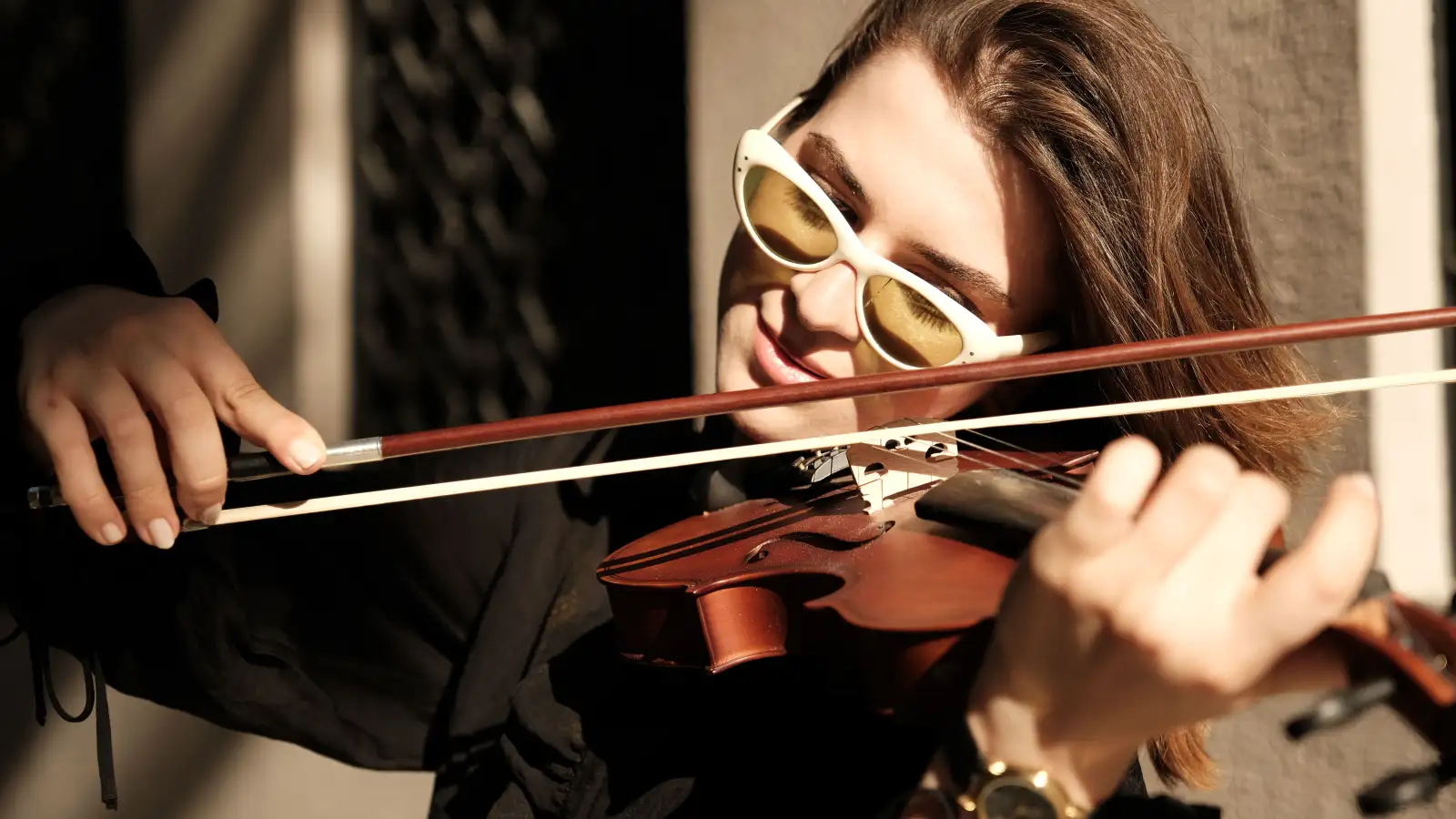
Here is the moment I want you standing in. Violin up, bow hovering, you draw it across the A string, and instead of a note you get a thin, breathy hiss. You press harder. Now it crunches. You look at the bow like it insulted you.
I have watched this happen at my own kitchen table more times than I can count. The bow isn't broken. The hair isn't dead. You aren't doing anything wrong with your arm. You have a grip problem, and rosin is the tool that fixes grip problems.
What is actually on the cake
Rosin is tree resin, mostly from conifers, heated, filtered, and poured into a mold. What turns plain resin into usable rosin is the additives — waxes, oils, and sometimes fine mineral or metal powders that tune how hard the material sets and how tacky it stays against hair.
That tuning is the entire product. A cake can be formulated to grip hard and release reluctantly, or to grip lightly and let go early, and the difference comes out as tone.
The mechanism is worth understanding because it explains everything downstream. Rosin creates controlled friction. The hair catches on the string, pulls it a fraction of a millimeter out of line, and lets go. The string snaps back, overshoots, and gets caught again. That stick-slip cycle is the sound. Your bow speed, arm weight, and contact point steer it. Rosin sets the terms of whether it can happen at all.
Too little friction and no cycle starts, which is your hiss. Too much and the cycle turns ragged, which is your grit — a scratchy edge no amount of bow control will smooth out.
Light, amber, dark, and why the label only gets you halfway
You will see rosin sold as light, amber, or dark, and the general rule behind those categories is real: darker cakes tend to be softer and stickier, lighter ones tend to be harder and drier. Soft rosin grips eagerly. Hard rosin grips cleanly.
But "tend to" is carrying a lot of weight in that sentence. Some very dark rosins are hard. Some pale ones are tacky. And the same cake behaves differently in a dry, cold house in January than it does in humid August air. Soft rosin in a warm room goes gummy and drags. Hard rosin in a dry room turns glassy and the bow skates.
So I stopped buying by category a long time ago. I test by feel, on the instrument, in the room where I actually play. Three things tell me almost everything.
The sound. Clear and ringing on all four strings, with the bow starting without a shove, means the grip is right.
The dust. A light, fine film is normal. Thick dark clouds mean too much material is coming off the cake at once — usually a cake that is too soft for the conditions, or simply too many strokes.
The hair. Run a thumb lightly along the ribbon. It should feel faintly grippy, not slick, and not sticky like tape. Slick means starving. Sticky and dark means oversaturated, which is its own problem, because caked hair chokes the stick-slip cycle instead of feeding it.
Drawing it on
Application is short, even strokes along the full length of the hair, frog to tip, with the cake laid flat so it contacts the whole ribbon. Not scrubbing in one spot near the frog. Not a fast sawing motion.
Before you start, bring the bow up to playing tension. If the hair is slack and sagging, the cake only touches the middle of the ribbon, and you end up with a bow that grabs in the center and whispers at the ends. That one detail accounts for more "my bow sounds uneven" complaints than anything else I know.
New hair needs more. Fresh hair, or a freshly rehaired bow, has nothing on it and will drink rosin for a while — work in a dozen or so strokes, test the sound, add more if the bow still slides. Hair that is already coated needs very little: two to four strokes before a session is plenty, and skipping a day entirely is fine.
One thing nobody tells beginners: rosin glazes. The surface of the cake goes shiny and glassy and stops depositing anything, and you will stand there drawing strokes and getting nowhere. Scratch the surface lightly — a coin edge or a bit of fine abrasive — and it comes back to life. That is not a brand problem or a quality problem. It is just what resin does when it sits.
How much, and how to tell
The honest answer is less than you think, and the way you know you have it right is that you stop thinking about it. Clear tone on all four strings. Immediate response when the bow touches down. Minimal dust. Fingers that are not sticky after handling the hair.
If you find yourself reaching for the cake mid-session, check the other suspects before you add more. The strings may be loaded with old rosin and skating underneath your bow. The cake may be glazed. The hair may be old. Bow hair genuinely wears out — it loses the surface texture that grips — and no amount of rosin restores it. Regular players commonly rehair about once a year. That is a real cost and a real variable, and it is worth knowing that rosin simply cannot compensate for worn hair.
The part that actually protects your instrument
Rosin dust is abrasive and mildly acidic, and it does not want to leave. It settles on the strings, the fingerboard, the top under the strings, and around the bridge, and over months it bonds to varnish in a way that cannot be wiped off without risk to the finish.
Every session at my house ends the same way, and it takes twenty seconds. Loosen the bow. Wipe the strings, the top beneath them, and the fingerboard with a soft dry cloth — microfiber works, an old soft cotton shirt works. Wipe the stick, not the hair. Keep your fingers off the hair entirely, because skin oils are the other thing that quietly ruins grip.
If dust has been sitting for a long while, a dry cloth will not touch it, and that is not the moment to start improvising with solvents on a finished instrument. That job belongs to someone who knows exactly what is on the wood.
Storing the cake
Rosin is a resin, and resin is temperature-sensitive in both directions. Heat and direct sunlight soften it — a cake left on a car dashboard or a sunny windowsill will slump and fuse to whatever it is lying on. Cold makes it brittle, and a dropped cake cracks. A cracked cake still works fine; you just have to keep the pieces from skittering across the floor. Mine lives in the case pocket, wrapped in its cloth, which handles both extremes and keeps dust off it.
What ends a cake's life is time. A very old piece dries out, oxidizes, and goes chalky and pale on the surface. Scratch it and see if it revives. If it is still pale and powdery after that, it is not transferring anything and it is time to let it go.
Why the bow changes from one day to the next
Back to that Tuesday-versus-Monday feeling. Almost every time it happens, it is not the bow. Run it in order.
Is the room hot and humid, or cold and dry? That alone changes how the same cake behaves, sometimes within the same week.
Did you over-rosin last time? Caked hair feels sticky, sounds gritty, and refuses to respond the way you expect.
Is the cake glazed? Scratch the surface.
Are the strings dirty? Rosin buildup on the strings makes the bow skate, which makes you think the hair is starving when it is not.
Is the hair old? Past a certain point, nothing you put on it will help.
That is the system. Rosin is one variable inside it rather than the whole answer, and once you can name which variable moved, the hiss and the crunch stop feeling like a mystery and start feeling like information.