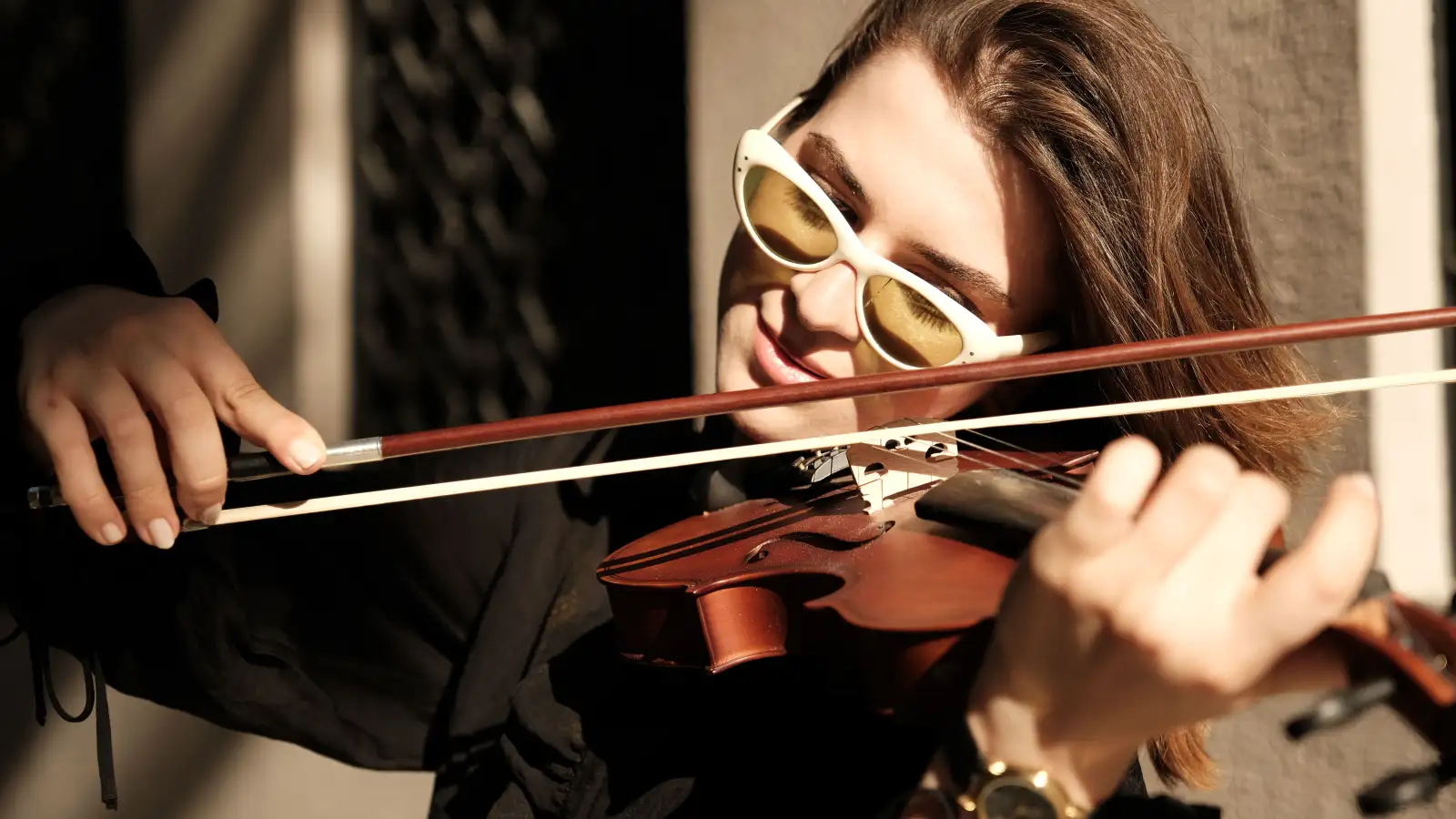
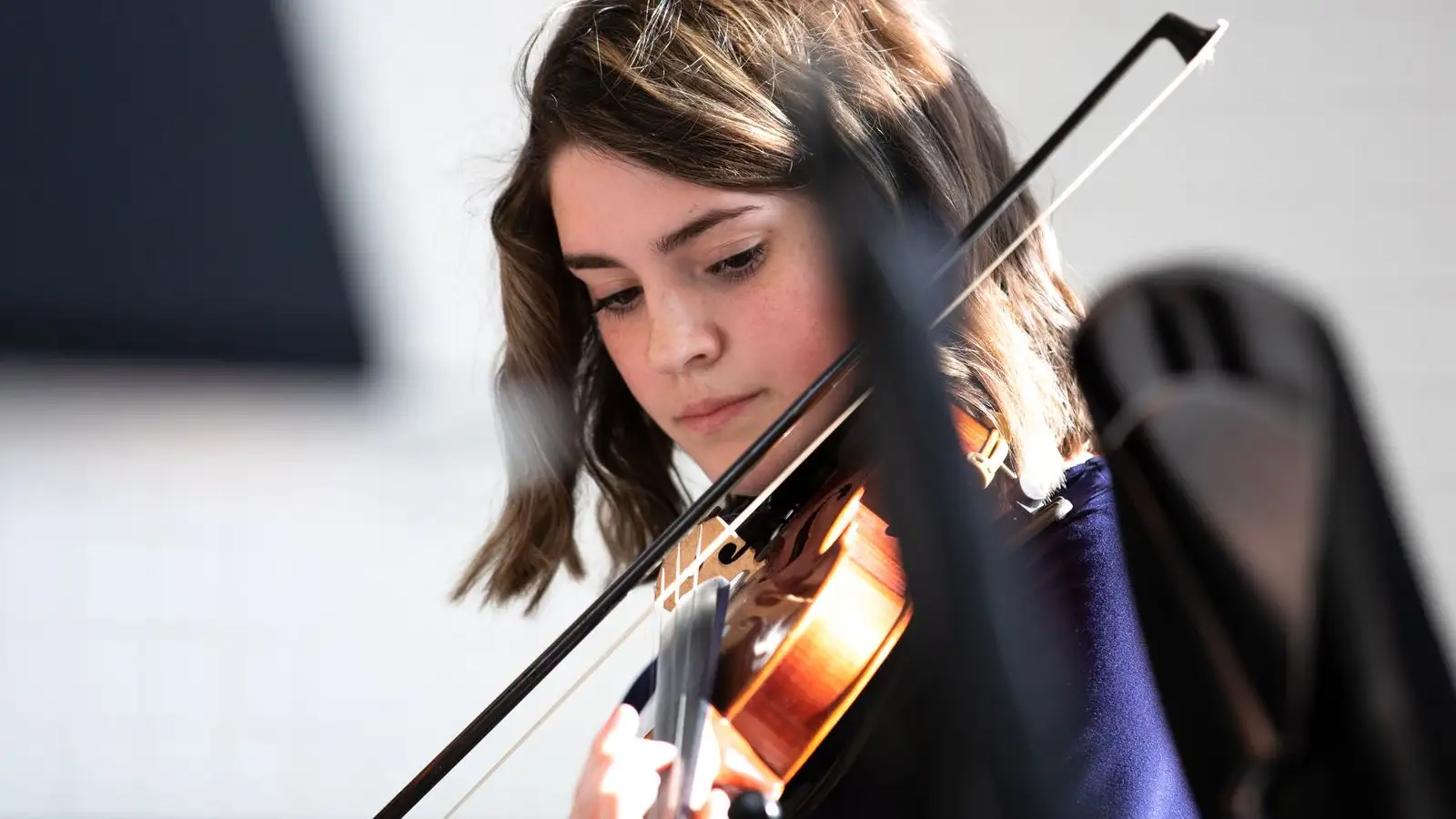
A violin bow needs rosin because bare hair sliding across a metal or synthetic string barely moves it. Rosin changes the friction at that single point of contact so the hair alternately grips the string and lets it snap free, hundreds of times a second, and that grip-and-release cycle is what puts the string into audible vibration. The bow is not pulling sound out of the string. It is tripping the string into motion, over and over, fast enough that your ear hears one continuous note.
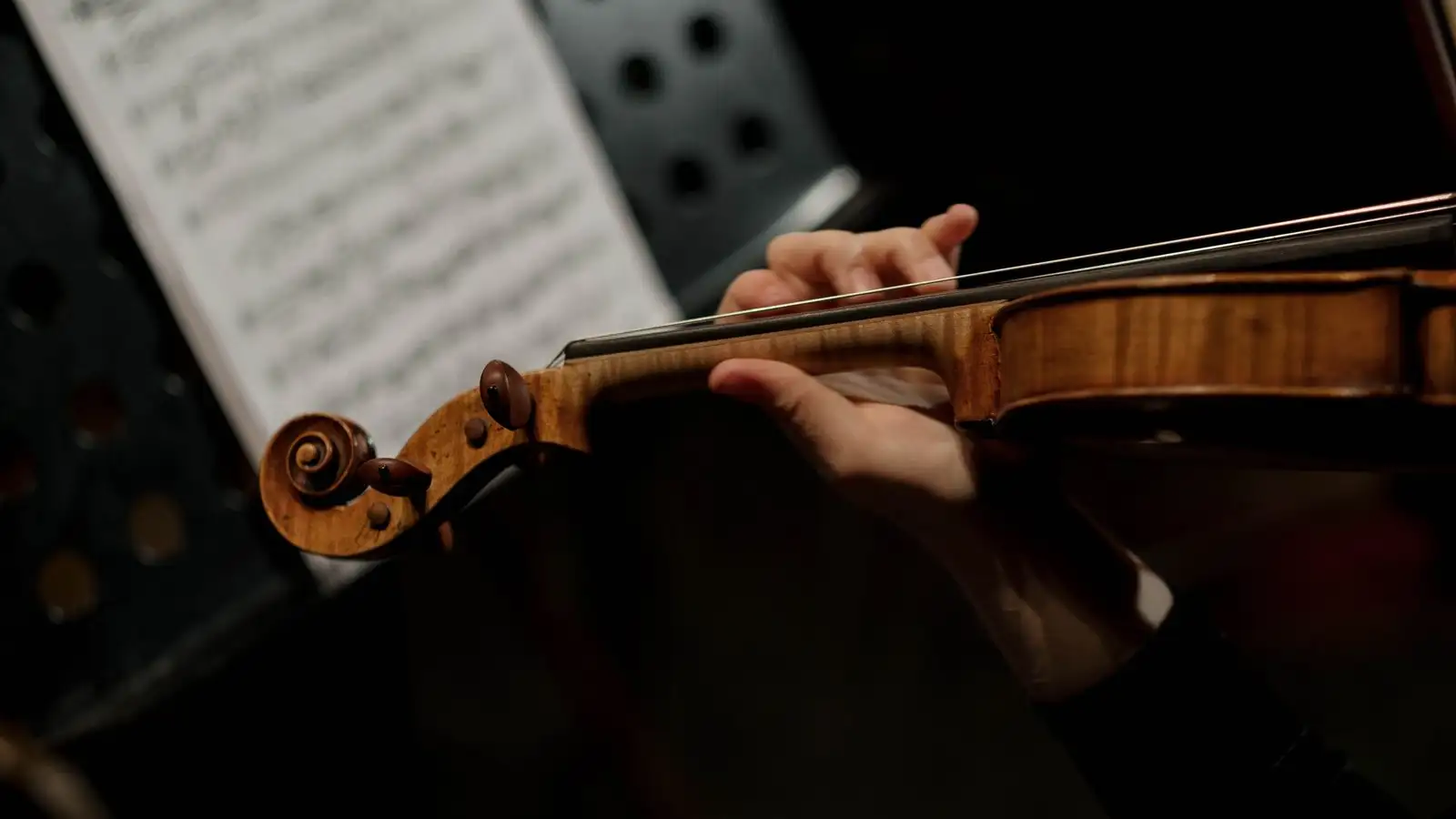
I want you to feel that difference, because the explanation lands much harder once your hand knows it. Take a student bow with hair that has never been rosined. Hold it at the frog, set the hair flat on the open D string about halfway between the bridge and the fingerboard, and draw a slow, even down bow. You get a thin, breathy hiss, like air escaping a tire valve. The string wobbles a little and gives up. Nothing in that sound has a pitch.
Lift the bow and look at the hair. It looks perfectly fine, which is the part that confuses everybody. Brand-new hair is glossy, smooth, and completely useless on its own.
Now pick up the rosin cake. Mine sits in a little wooden channel, and when I touch it, it feels like a bar of hard soap with a faint pine smell. Drag it along the hair, frog to tip, slowly. Four passes. Five. Watch what happens to the hair: the shine goes first, then the ribbon starts to look dusty and matte, and somewhere around the third or fourth pass the block stops gliding and starts to bite, the way a dry bar of soap drags across your palm. That change under your fingers is the whole mechanism announcing itself.
Set the bow back on the D string and draw again. Same bow, same string, same hand pressure, and now there is a note. Not a great note, maybe, but a real one, with a pitch you could name.
What the hair is actually doing to the string
The string is a piece of wire held under tension. The bow is a bundle of hair moving across it. If friction between them is low, nothing interesting happens: the hair slides, the string gets nudged, and you hear wind.
Rosin makes the contact point grippy enough that the string sticks to the hair instead of sliding under it. The hair drags the string sideways, away from its resting position. The string resists, because it is under tension, and that restoring force builds the further it gets pulled. At some point the pull wins, the string tears free, snaps back past center, overshoots, and the hair catches it again.
That is stick-slip. Stick, drag, release, snap back, catch. Repeat.
The rate of that cycle is not random. A string's pitch is set by its length, tension, and mass, and the stick-slip cycle locks onto that same rate. Play the open A string and it is gripping and releasing about 440 times every second. The string is not doing something the bow forces on it. The string is telling the bow how fast to slip, and the bow follows, because the friction drops the instant the surfaces start moving against each other.
More stick than slip, or more slip than stick
Here is what gets lost when people describe rosin as sticky. Stickiness by itself is not the goal, and it would actually ruin the sound. If the hair gripped with pure glue-like force, the string would just get dragged sideways and stall, and you would hear nothing but a scrape.
What rosin has to do is hold hard at the moment of contact and then let go cleanly. Both halves matter. Too little friction and the hair skates across the string. Too much and the string cannot break free on schedule, which shows up as a squawk, a crunch, or a bow that suddenly will not move because it feels welded to the string.
There is a rhythm to it. The rhythm is the sound.
Why the rosin in the cake matters
Rosin is not one uniform substance. Different cakes differ in hardness and tack, and that is a friction difference, not a branding difference.
Softer, darker rosin is tackier. It bites sooner, which helps in cold, dry conditions when the hair and string are slick and resisting. Harder, lighter rosin is less tacky and releases more cleanly, which helps in a warm, humid room where a soft cake would go greasy under your hand. That is the general convention players use to choose a cake, and it matches what I have felt in my own case: the rosin that feels perfect in January can feel gluey in July.
The string matters too. Wound steel strings present a slick metal surface and need more grip before the stick-slip cycle will start. Synthetic-core and gut strings grab more readily and tend to speak with less rosin. If you switch string types and suddenly feel like you are fighting the bow, the cake you liked may simply be mismatched to the new surface.
Hair condition matters just as much. New hair carries oils from manufacturing and handling, which is why a fresh rehair drinks up rosin and may need a heavier first application. Older hair gets worn and glazed exactly where it crosses the string, and glazed hair holds rosin poorly. Fingers are the enemy here: skin oil on the ribbon creates slick spots that never take rosin evenly, which is why the hair should only ever be handled at the frog and the tip.
Why too much rosin makes things worse
More grip sounds like it should mean more sound. It does not work that way.
Past a certain point, excess rosin cakes onto the hair and fills the space between individual hairs. The bow starts to feel draggy and heavy, the string response goes gritty, and you get a fuzzy, crunching edge sitting on top of every note instead of a clean core. You will also see white dust puffing off the contact point with each stroke.
That dust does real damage over time. It settles on the top plate and the fingerboard, and if it is not wiped off, it works into a sticky film that is genuinely hard to remove from varnish. Meanwhile the excess on the strings deadens them; a string caked with rosin loses the brightness and clarity you paid for.
The fix is boring. Add rosin gradually. Two or three slow strokes, test with a long tone, stop when the string speaks cleanly. A properly rosined bow does not need a fresh coat every time you open the case, no matter how it looks. A bow that has been sitting untouched for three weeks might need two strokes.
Weather changes your setup while you play
Rosin is a resin, and it responds to the room. Warm air softens it and makes it tackier, so the same bow can feel grabby on a humid summer afternoon. Cold, dry air hardens it, and a bow that played fine yesterday can suddenly skate.
Humidity also changes the hair itself. Horsehair absorbs moisture and its length shifts with the weather, which changes hair tension and, in turn, how much arm weight you need to get the string moving. That is why a violin that just came in from a cold car often sounds thin and unresponsive for the first ten minutes and then settles.
The practical takeaway: when your bow suddenly feels wrong, check the room before you check your technique.
What I do at the stand
The routine I have settled on is short.
Rosin the bow when the hair looks glossy again, or when the tone gets weak and the bow feels slippery. Five slow strokes, frog to tip, light pressure, then play a slow open string and listen.
Wipe the strings with a dry soft cloth after every session, and wipe the top plate too, before the dust gets worked in.
Never touch the playing surface of the hair with bare fingers.
Trust feel over appearance. A bow with visible rosin dust sitting on the hair is usually overdone, not underdone.
If you have rosined the bow and the sound still will not come, the problem is usually something else: too little bow speed, too much arm weight, or hair that has gone smooth and needs a rehair.
And accept that the right amount moves around. A player digging into a fiddle tune can carry more rosin than someone playing a quiet slow movement, and the same bow behaves differently in a dry living room than in a humid hall. The amount is not a number. It is whatever keeps the string catching and releasing cleanly, thousands of times a minute, without you ever feeling the catch in your hand.