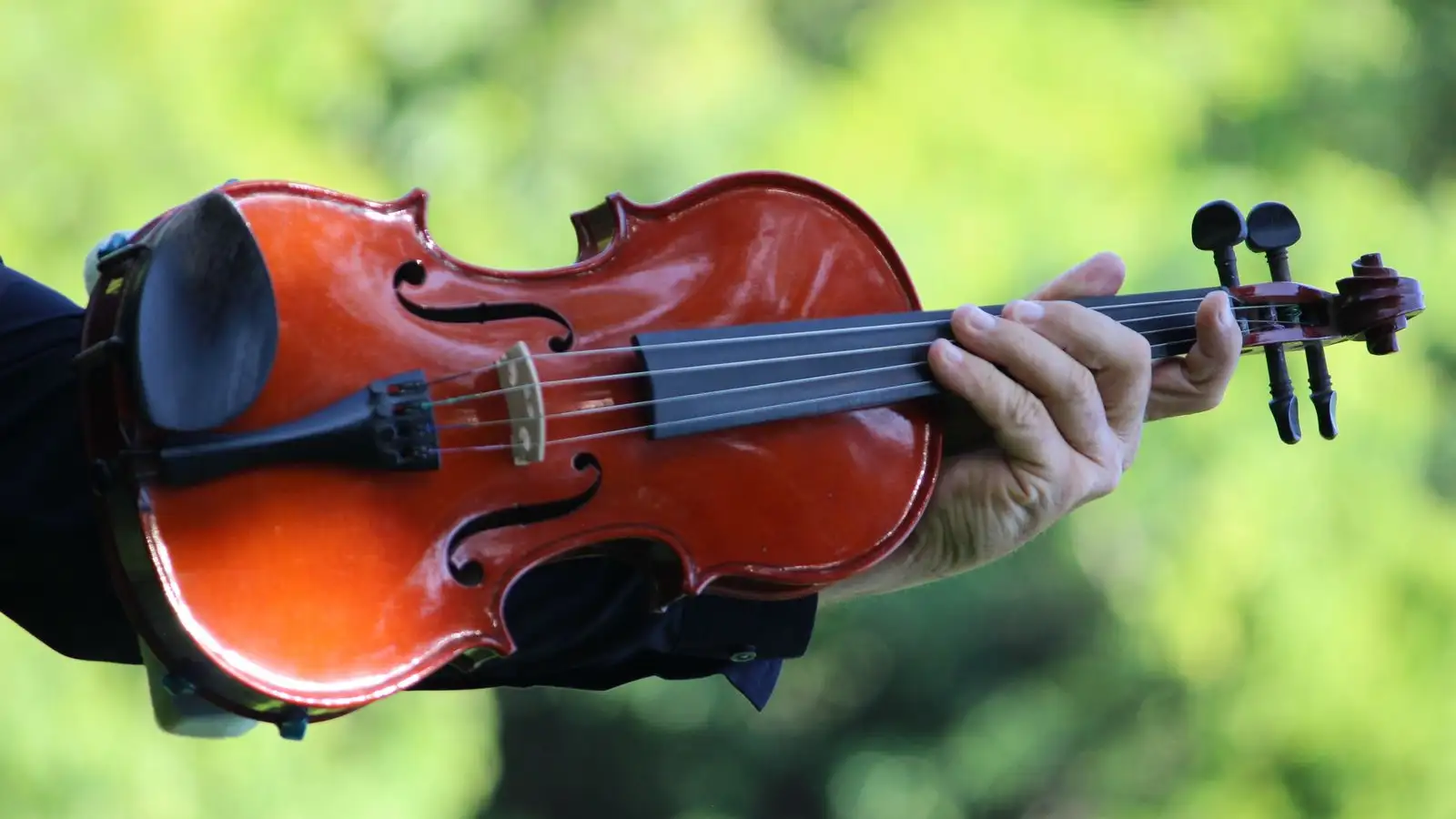
A shoulder rest that sits too high lifts the violin off the collarbone, and the body answers by bending around it: the chin drops to meet the instrument, and the left arm reaches farther under to find the strings. That is a gear setting, not a posture failure. Lower the rest first, then look at where the head and the left hand actually land, and change only one thing before judging anything else.
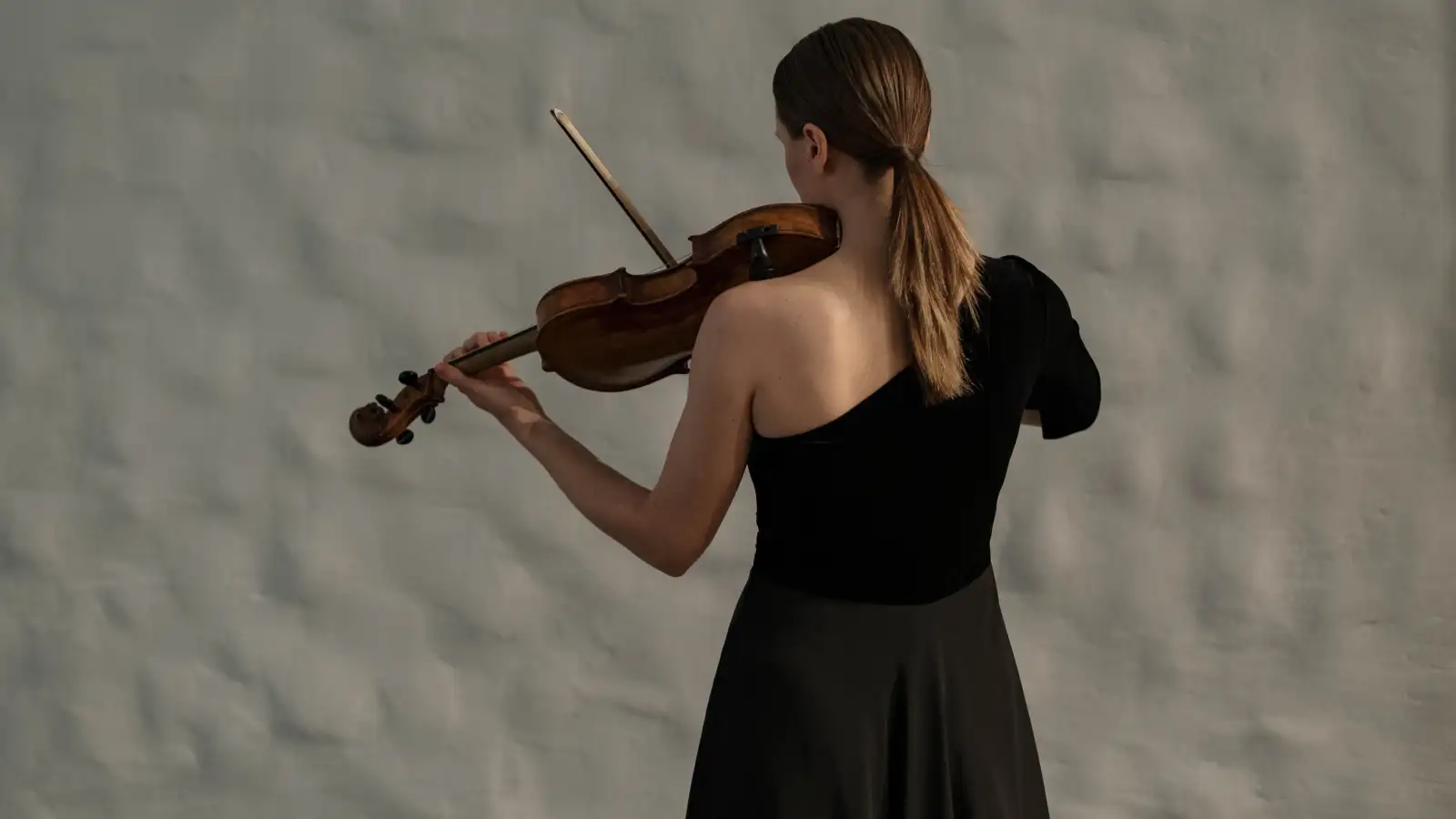
I learned that by being wrong about it for months.
My setup lived in the corner of a spare room: a music stand, a folding chair, and a violin that always felt like it was floating a little above my shoulder. I would stand up, put the instrument on, and my chin would slide down the chinrest until it found a spot it liked. I thought that slide was me settling in. It was my neck paying a bill the shoulder rest had run up.
Here is the ten-second test I use now, and you can run it before you read another word.
Put the violin up the way you always do. Then freeze. Do not adjust anything. Look at the back edge of the chinrest and ask a single question: did your chin land there, or did it drop to get there? If it dropped, the rest is holding the violin above the height where your head naturally sits, and everything from your jaw to your bow arm is now working around that number.
The second half of the test is the left arm. Look at your left hand. Look at your elbow. If the elbow has swung forward and the hand is doing a long reach to get around the neck, that reach did not start in your wrist. It started at the shoulder rest.
Why tall and short fail in opposite directions
A shoulder rest exists to fill the space between the collarbone area and the back of the violin so the instrument sits level without the player lifting the shoulder. That is the whole job. When the space is filled correctly, the violin rides on the collarbone and the shoulder stays down where it belongs.
When the rest is too tall, the violin gets pushed upward. The head has to tilt down to meet a chinrest that has risen, and the left arm has to reach farther under the instrument because the neck of the violin is now higher and farther from the hand. Nothing feels obviously broken. The chin finds a spot. The hand finds the strings. But the head is doing work all practice long that the rest should have absorbed.
When the rest is too short, or missing entirely, the failure runs the other way. The instrument sinks toward the chest, and the left shoulder hikes up to hold it in place. You get that lifted, braced feeling in the shoulder girdle that never quite relaxes, and the head tips in the opposite direction, chasing a violin that keeps sliding down.
Both errors get misread as bad posture. They are the same posture, just pushed past the setting it was built around.
The tilt nobody adjusts
The rest attaches by its feet, which contact the back of the instrument near the lower bout edges. Those feet should grip firmly and stay put. If the rest shifts while you play, you have not finished fitting it yet, because every measurement you just took gets erased the moment the rest walks.
Beyond height, there is tilt. A flatter rest holds the violin closer to level, so the instrument points less toward the floor. An angled rest drops the scroll, so the violin points downward more. That changes how much the instrument points down and, with it, the path your bow arm travels across the strings. Tilt it down and the bow arm takes a different line; flatten it and the bow tends to travel closer to parallel with the floor. Some players discover their bow arm problem in the tilt setting, not the height setting, and then spend a week trying to fix it with the left hand.
Height and tilt are separate decisions. Treat them that way.
Change one thing, then look at your head
Shoulder rest adjustment is posture adjustment. That means it obeys the same rule as any other change you make to a playing position.
Set the rest where it is now. Take a photo from the side with your phone, or use a mirror, and stand in the same spot each time so the comparison means something. Play a short passage. Then change exactly one thing.
If the chin is dropping, lower the rest one step. One. Not two. Put the violin up again, take the same photo from the same spot, and look only at the head. The goal is a chin that rests on the chinrest rather than reaching down or pressing in. Do not evaluate your left arm yet. You have not earned the right to judge it until the head is quiet.
Once the head angle looks passive, look at the left arm. If the hand still has to travel a long way around the neck, the next thing to move is tilt, not height, because tilt changes how far the instrument presents itself to the left hand. Move it a little. Look again. Same two checkpoints: head angle, then left hand position.
Then check that the rest still grips. A loose rest ruins a good setting faster than a bad setting does.
One more thing that speeds this up: deliberately build the wrong version once. Raise the rest a couple of steps and play a scale, and notice how hard the chin has to press down. Then drop it a couple of steps and feel the left shoulder climb. Your hands and neck learn the difference between too high and too low in about ninety seconds, and after that you can feel a bad setting instead of having to photograph it.
Where this stops working
Neck length and the slope of the shoulder line vary a lot from person to person. So does the shape of the chinrest, which is a separate piece and a separate fit. A long neck over a sloping shoulder genuinely needs more height than a short neck over a square shoulder line, which means the setting that is right for one player is wrong for the other. There is no universal number.
Children are the extreme version of this. A fit that was correct in the fall can be too tall by spring, because the body underneath it changed. The signal is the same one you already know how to read: the chin starts dropping again.
And a shoulder rest cannot fix a hand position problem, the same way a hand position problem will not be fixed by a shoulder rest. If you lower the rest, re-check the head, and the left hand still looks and feels the same, the rest is no longer the variable. That is a good moment to bring the instrument to a teacher and let another set of eyes look at the left hand itself.
Give a corrected setting a few short sessions before you decide it is wrong. If you have been compensating for years, the right height will feel strange at first, and the temptation will be to raise it back to where your body already knows how to fight it.
The rest is not a cushion. It is a measurement. Measure the head, then measure the arm, and change one number at a time.