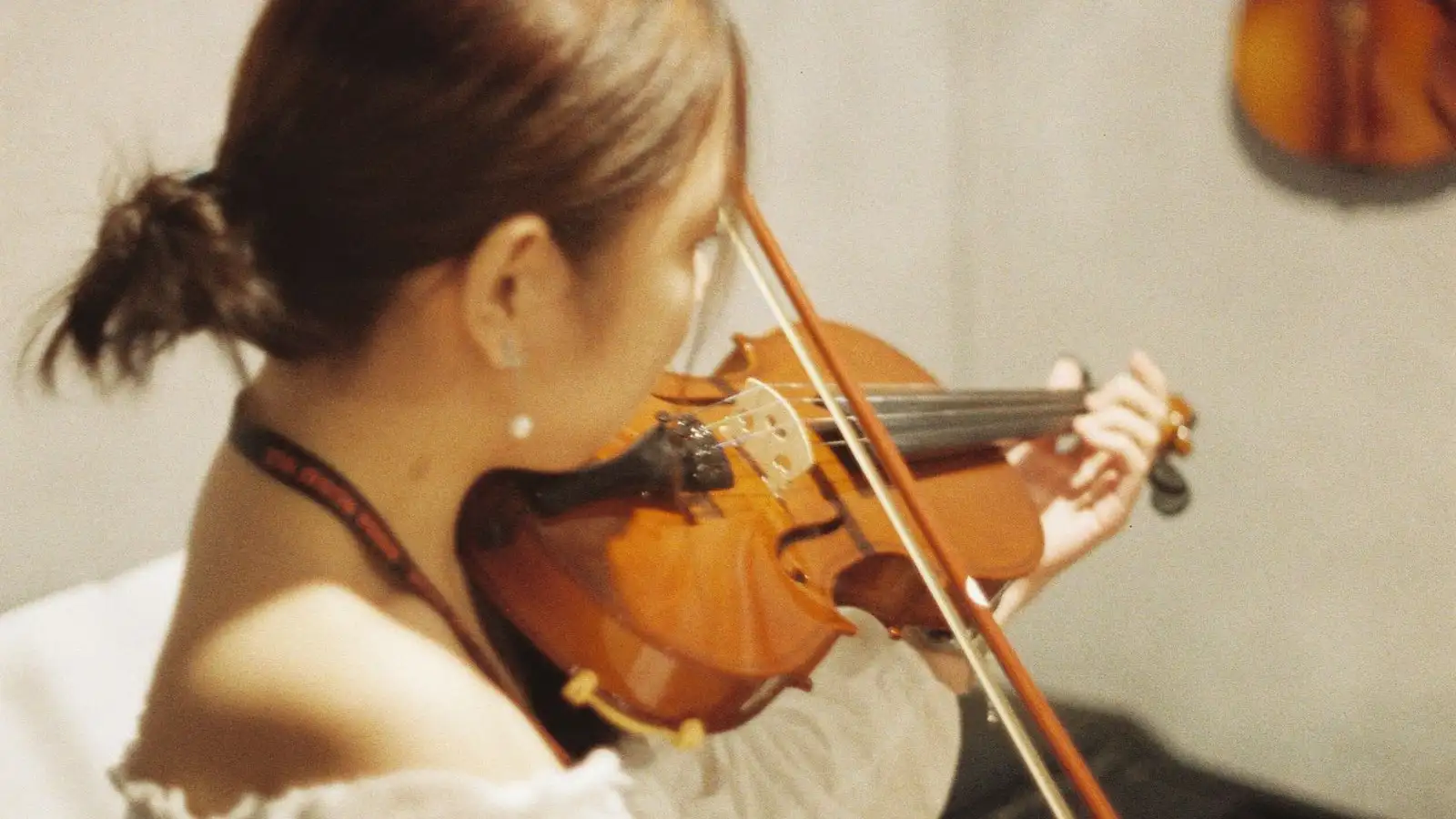
A shoulder rest does two jobs, and only one of them is about propping the violin up. The first is filling the gap between the back of the violin and the collarbone and shoulder, so the instrument can sit level instead of tilting away from the body. The second is carrying the weight of the violin so the left hand doesn't have to, which is what lets that hand travel up and down the neck without also holding anything. Because both jobs depend on the shape of one specific body, a shoulder rest isn't a purchase you get right once and file away. It's a setup you tune, and then re-tune as padding flattens and rubber feet wear down.

Here's what I want you to do before you read another sentence about it. Pick up your violin, put it under your chin the way you normally hold it, and look down at the space between the back of the instrument and your shoulder.
Some people find almost no space there. The back of the violin is essentially resting on the shoulder already. Others find a gap wide enough to slide a hand through. Same violin, same chinrest, two completely different pictures, and that gap is the entire reason the accessory exists.
Now set the violin down on the table and look at it lying flat. This is where I see people go wrong, and I've done it myself. The rest looks perfect on the table. The feet sit square against the back, the curve matches the edge, it looks like it was machined for this instrument. Then you lift the violin to your shoulder and it sits somewhere else entirely. The table doesn't have a jaw, a collarbone, or a slope running from the neck out to the shoulder. Your body does. I've stopped judging any shoulder rest setup until the violin is in playing position, because that's the only place the answer exists.
The two jobs, and why they pull against each other
Filling the gap is the obvious one. Level matters more than most people realize. If the violin tips down toward the floor, the bow has to travel across strings that aren't where your arm expects them, and the geometry of the whole bow arm gets built on a slope. A rest that fills the gap evens that out.
The second job is quieter. Something has to hold the violin up. If nothing does, the left hand does it, and a hand that's holding the instrument can't move freely along the fingerboard. You can feel this in the thumb. When the violin is well supported, the thumb is a guide. When it isn't, the thumb is a clamp, the base of the index finger presses into the neck, and the hand glues itself to first position because letting go means dropping the violin.
That's the part people miss. Those two jobs pull in different directions. A rest set high enough to fill a deep gap can push the violin up so far that the chin has to reach down to find the chinrest. A rest set low leaves the gap half empty and lets the shoulder do the carrying. The goal isn't to find the perfect rest. It's to get both jobs done well enough that neither one is being done by your hand.
The rest doesn't work alone
The shoulder rest and the chinrest are a pair. Together they create the two contact points that hold the violin, one under the jaw and one against the shoulder or chest, and the instrument hangs between them the way a hammock hangs between two posts. Change one and you change the other.
I've watched someone swap a chinrest and then blame the shoulder rest for a week. I've watched the reverse too. If the chinrest sits too far to one side, the shoulder rest has to make up the difference with height, and now the violin is too high. Neither piece can be judged on its own, which is why changing parts one at a time, slowly, tells you far more than changing everything at once.
The variables you actually own
When people talk about shoulder rest fit, they usually talk about which rest to get. I think that's backwards. Once you have something in your hands, there are a few things you can change, and they matter more than the object itself.
Height is the first one, and that's the gap-filling job. Tilt is the second, a little rotation so the rest meets the slope of your shoulder instead of fighting it. Position along the lower bout is the third, and the one people touch least. Slide the rest a half inch toward the tailpiece or toward the neck and the violin can feel like a different instrument, because you've changed where it pivots.
Then there's how much contact you want. Rigid adjustable frames with feet tend to concentrate support in a couple of spots. Foam or sponge wedges held on with rubber bands spread it over a wider, softer area. Inflatable pads let you dial firmness up or down. Shoulder cushions take a different route entirely: they change the surface rather than the height.
I'm deliberately not ranking those. What matters is that each one distributes weight differently, and the one that suits you is the one that lets your left hand stop working. If you keep re-gripping the neck, the rest is either not filling the gap or not carrying enough of the load, and you can usually tell which by looking at two things: whether the violin is sitting level, and whether your thumb is hanging on.
Not everyone needs one
The violin existed for centuries without a shoulder rest. I hold onto that, because it means the accessory is a response to a condition, not a required part of the instrument. If your neck and shoulder leave almost no gap, and if you can hold the violin level without your left hand doing anything, you may not need to add anything at all. Some very good players use nothing but a cloth over the shoulder. Some use a rest and would hate playing without it.
This isn't about skill level. It's about neck length, shoulder shape, and how you hold the instrument. A long neck over a flat shoulder creates a different problem than a short neck over a high, sloped shoulder, and those two players can end up with completely different setups while working on the same piece.
When a rest that worked stops working
One more thing, because it's the most common situation I run into and the least discussed. The parts wear out.
The rubber feet are usually the first to go. They harden, flatten, or lose their grip, and the rest starts sliding or sitting at a slightly different angle than it did a year ago. The padding compresses and goes flat, which quietly changes the height you dialed in months back. Nothing about the design changed. The setup did.
Before you go looking for a different rest, check the one you have. Pull the feet off and look at them. Squeeze the pad. I've solved a fit problem more than once by doing nothing except replacing a pair of feet.
If you take one idea out of all of this, take the one about the left hand. The reason to care about the gap between the violin and your shoulder is that every bit of support your body provides is a bit of support your hand doesn't have to provide. A well-tuned rest is one where the violin sits level, stays there through a shift, and leaves your thumb free to be a guide instead of a clamp.
That's a moving target. It shifts when you change chinrests, when padding wears down, when you start working in a different position or with a different shoulder. It isn't a decision you make once and never revisit. It's a piece of your setup, and setups get tuned.