The count doesn't fall apart on the notes. It falls apart at the bow change, because the bow change is itself a rhythmic event: a reversal that has to be arrived at, turned around, and departed from inside the time of the beat. The fix is not to count harder. The fix is to decide where in the bow each change happens, give the reversal a slice of time you actually budgeted for, and then count the change out loud the same way you count a note.
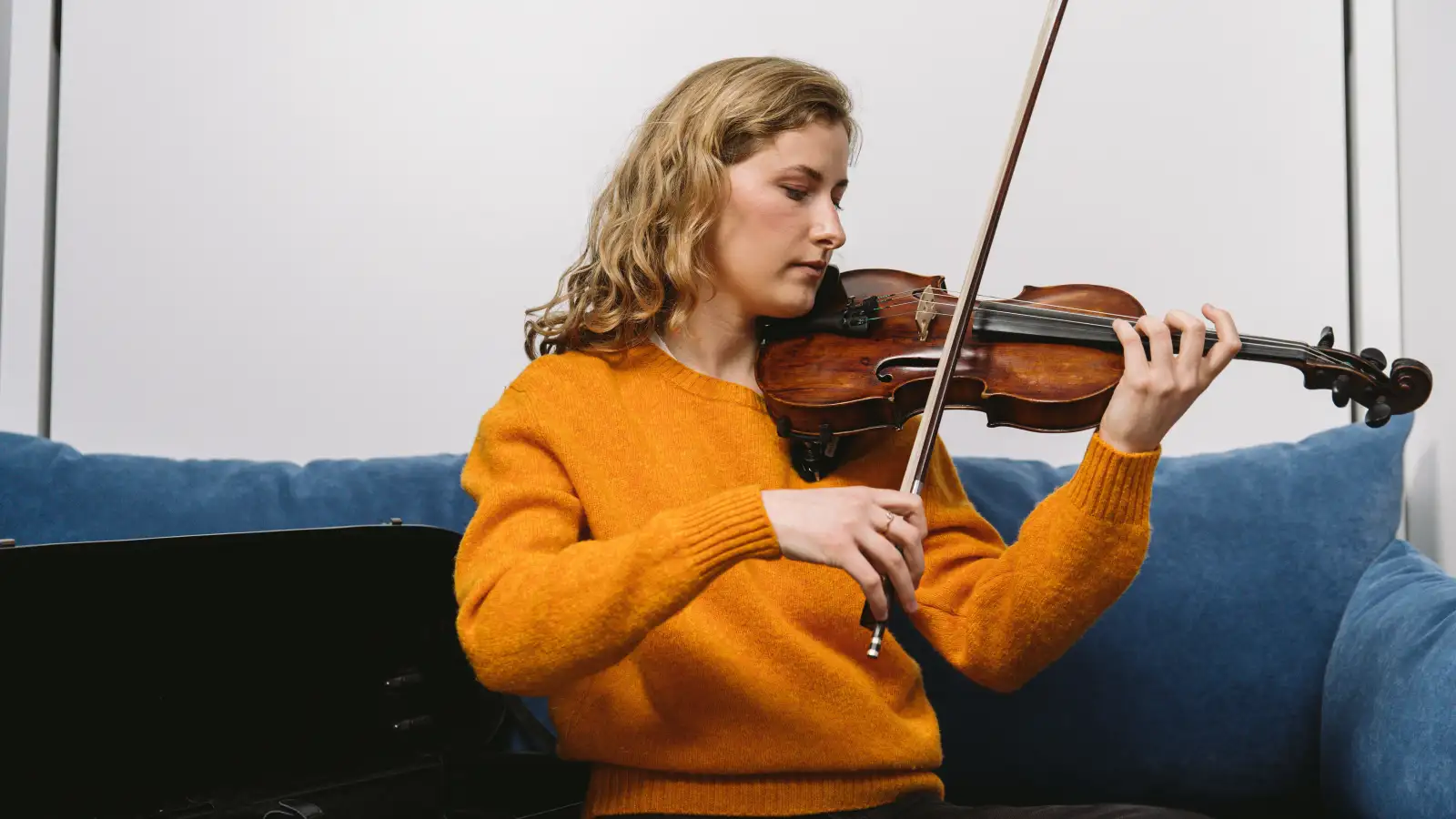
I found that out the unglamorous way. Dining chair, metronome app at 60, open D string, four quarter notes per bow, four downs and then four ups. By the third pass the fourth down-bow was running out of bow before the beat arrived, so the arm kept pushing into the string, and the up-bow started somewhere after the click. My foot and my arm were doing two different songs. I shut the metronome off, played the same thing, and it sounded fine.
That's the tell. If it only breaks when the click is running, your ear isn't the problem. You never gave the reversal any room to happen.
The reversal has three parts, and beginners only practice one
Arriving at the end of the old stroke. Reversing. Leaving on the new stroke.
Most of us rehearse the third part. We know the note we're about to play, so we lean toward it, and the arrival happens by accident somewhere near the frog with the elbow still drifting. That accident has a price. At 60 beats per minute a quarter note is one full second. The reversal itself eats maybe a tenth of that, which isn't much, but if you never budget it you borrow it from the note before or the note after. Both borrowings show up as a stumble.
What I do instead is count the change as a subdivision. If the change lands on beat 3, I say and on the second half of beat 2, and I aim to be finished with the old stroke right there. When the turn has a word attached to it, my arm stops treating it as a surprise.
The bow hand absorbs the change, so a tight grip wrecks the timing
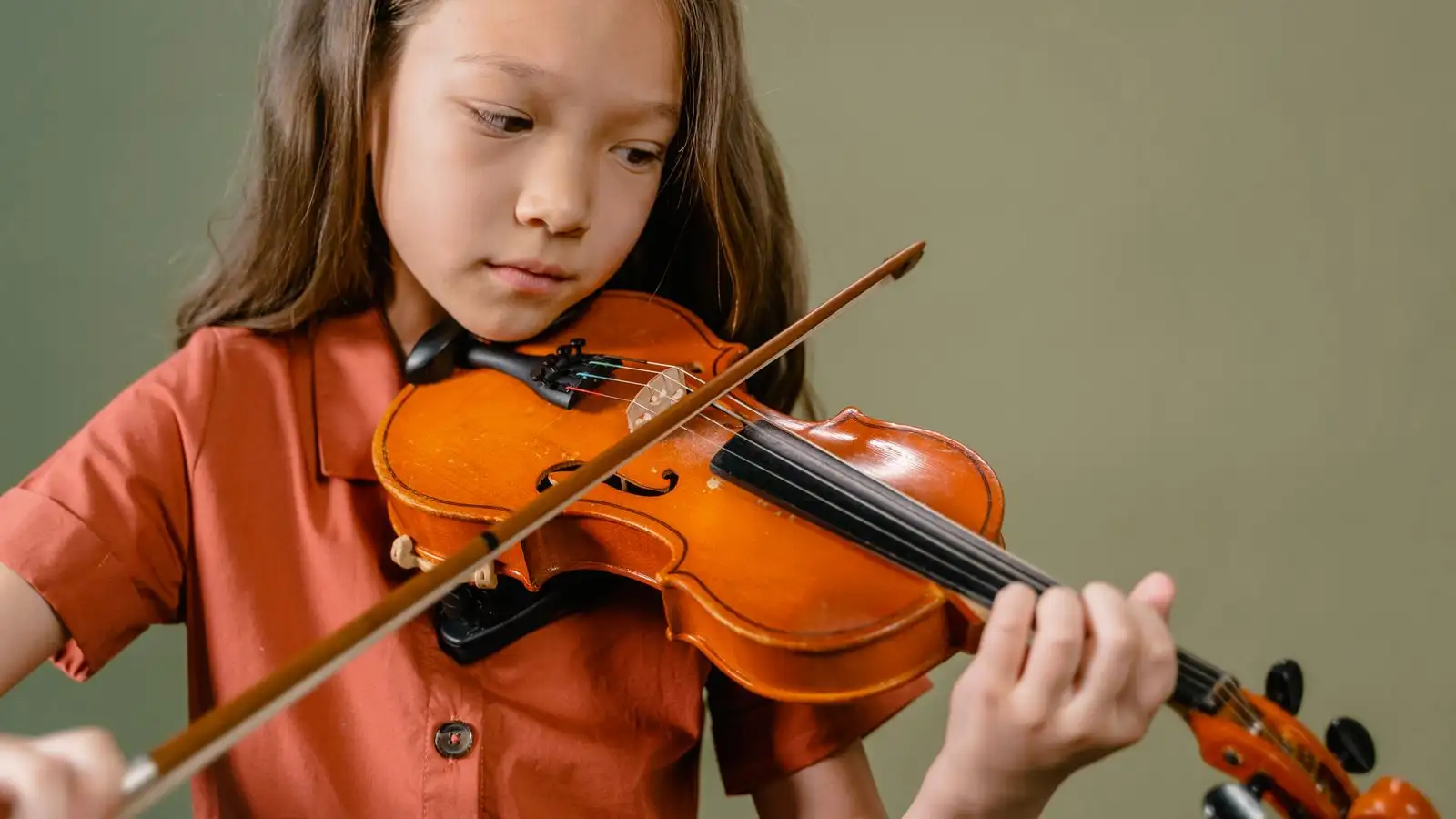
Watch your fingers on the bow at the moment of reversal. In a relaxed hand they flex a little. The bow keeps moving for a fraction of a second after the arm has decided to stop, and the fingers take up that slack. That's where a quiet change comes from.
If the hand is locked, the bow and the whole arm have to stop together and then restart together. That's a bigger, slower event, and it's the one that drags the note off the beat. A lot of what feels like being unable to count and bow at the same time is really a stiff bow hold making every direction change into a small collision. Loosen the fingers before you touch the metronome.
Bow distribution is a budget, and the change point is where you spend it
Bow distribution means how much bow you use per note, and it has to match how long the note lasts. A half note gets roughly twice the bow of a quarter note. If your half note gets the same two inches the quarter got, the stroke ends early, the change arrives early, and you spend the rest of the measure waiting for the music to catch up.
So decide the change point before you play. Three zones matter: near the frog where the bow is heaviest in the hand, the middle, and near the tip where it's lightest. Pick one spot and use that same spot on every repetition. If the change point wanders, the timing wanders with it.
One illustrative case, and the reason I actually mark change points in pencil: a four-beat measure of two quarter notes and then a half note that ends near the tip leaves your next down-bow starting at the tip with very little weight to work with. The sound thins, most people speed up to compensate, and the next count is gone. Starting that measure closer to the middle keeps the weight available when you need it.
The other half of this is knowing where the bow will be when the beat arrives, not just where it is right now. Before you play a measure, count how many strokes it takes and roughly where each one leaves you.
Slurs move the change, so recount the measure
A slur groups two or more notes under one bow stroke, which means the direction change moves somewhere else in the measure. Two quarter notes slurred, then two quarter notes slurred, in 4/4: the changes land on beat 1 and beat 3, right on the strong beats, which is the most exposed place in the bar to hide one.
Two things go wrong. First, people keep the old count running in their head and the arm shows up a beat early. Second, bow speed inside the slur goes uneven. If you spend the same amount of bow on a slurred pair as you did on a single quarter note, the second note of the slur gets chewed short and the next beat starts late. Slower bow, less distance, steady speed through both notes.
Down-bow on the strong beat is a habit, not a law
A lot of beginner material puts down-bows on the strong beats and up-bows on the weak beats, and as a default that's useful. It gets you hearing the meter in your arm. It is not universal, and it stops being true the moment you have a pickup, an odd number of notes in the phrase, or a slur. Then the strong beat gets an up-bow and it feels like the music is wrong.
It isn't. The direction was never the point. The plan was. If you can say out loud where the changes fall in a measure, direction becomes a detail you can adjust instead of a rule you're breaking.
Open strings, one measure at a time
This is the whole practice and it's short.
Set the metronome at 60. Open A. Four quarter notes per bow, all down, then all up. Count out loud. The mouth doesn't wait for the arm, which is exactly why counting out loud exposes what silent counting hides. Then two-note slurs: down for beats 1 and 2, up for 3 and 4. Then a mixed pattern, down-down-up-up. Do it for a minute, record it on your phone, listen back, and find which beat limped.
Do not raise the tempo until the change is quiet. A change that thuds isn't a timing problem yet, it's a bow-hold problem, and speed just buries it under noise.
One honest limit: some passages deliberately displace the change. Syncopation, off-beat accents, a phrase that simply doesn't fit the default. That isn't a counting failure either. It's the same skill pointed the other way, and it still has to be planned rather than survived.
Counting and bowing aren't two skills stacked on top of each other. Counting is the plan; bowing is the plan being executed, beat by beat. The bow change is where you find out whether the two agree, and when they don't, you can hear it in the note right after the change every time.