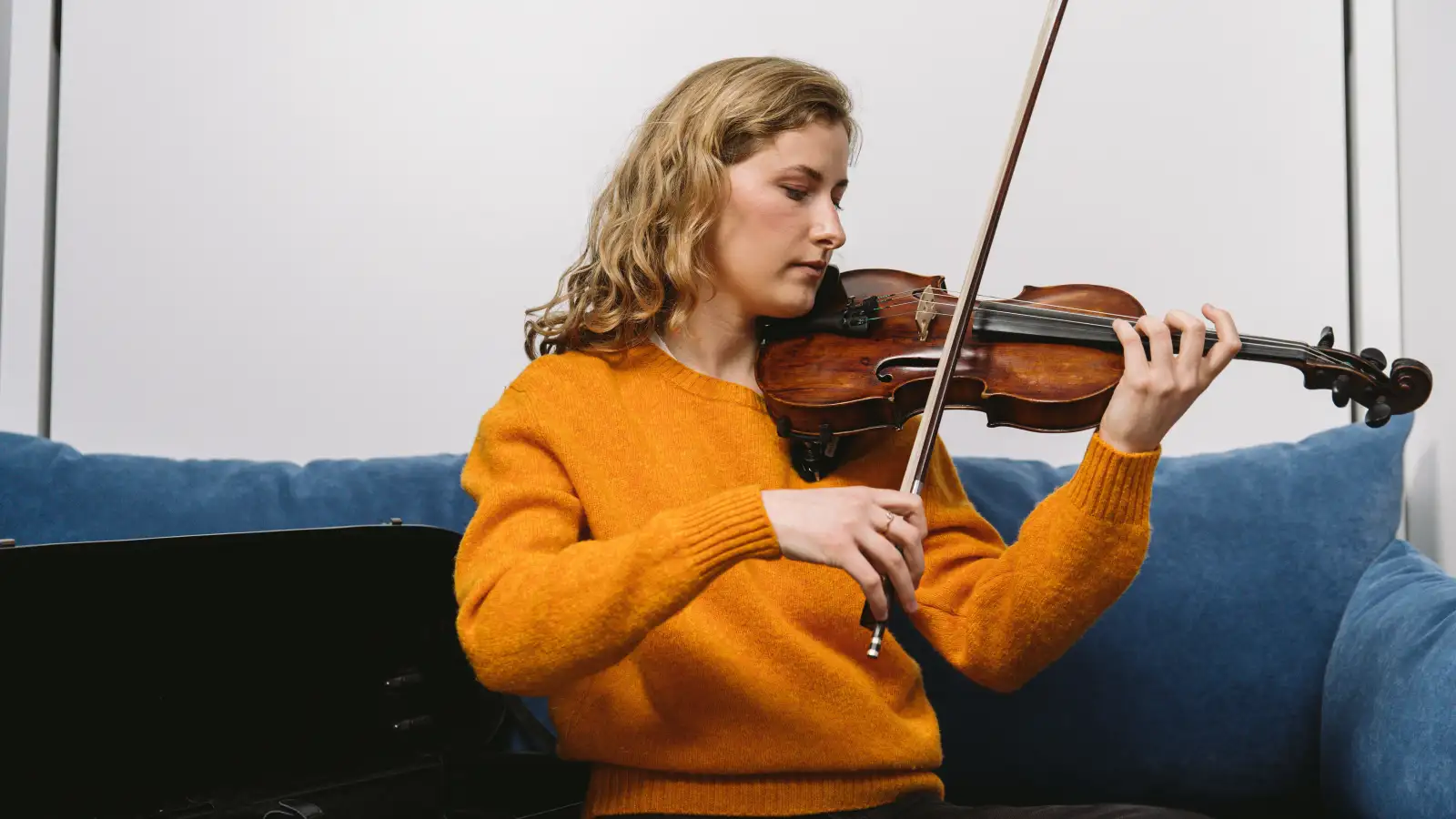
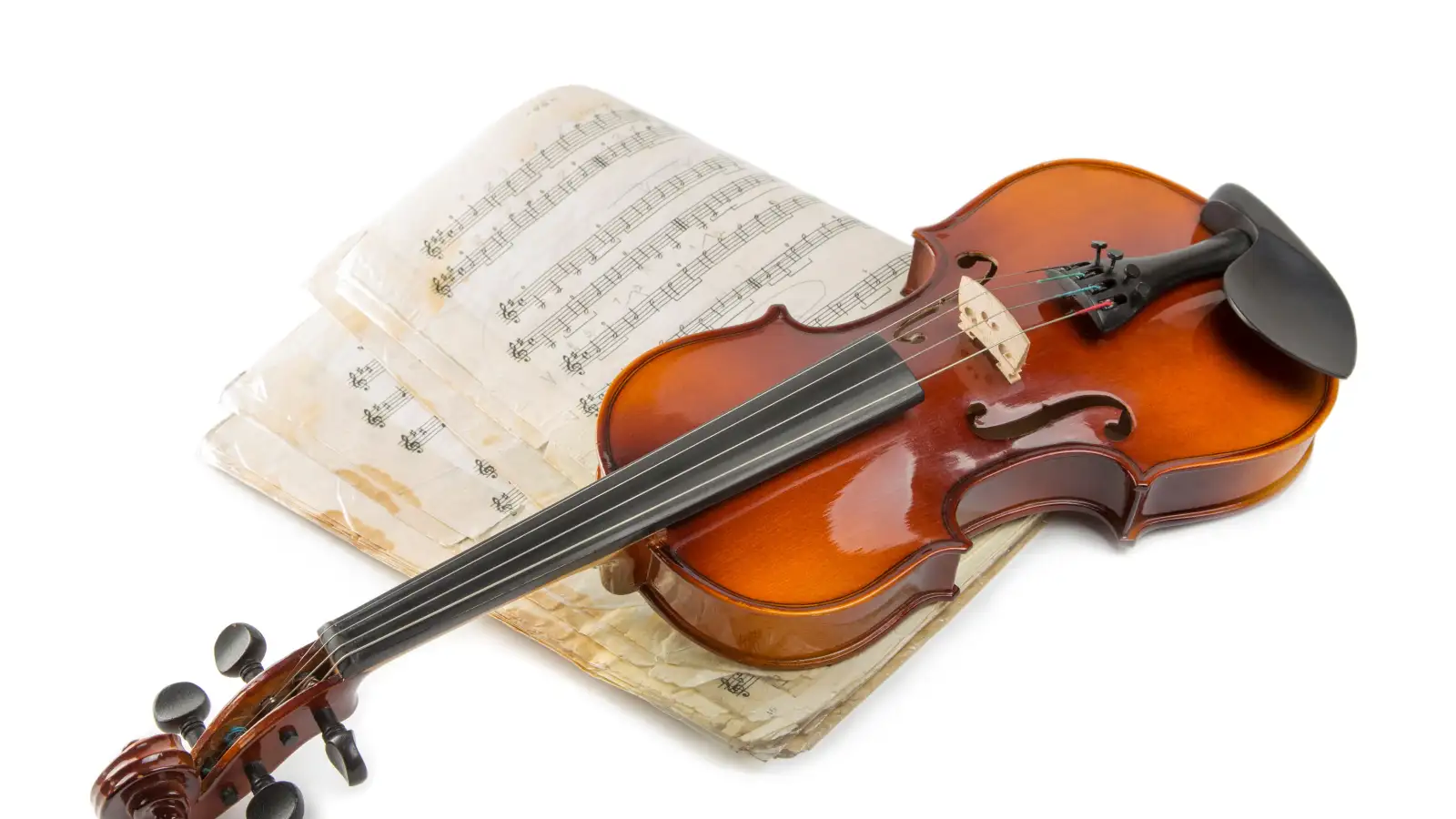
Rhythm mistakes in adult beginner violin practice are rarely playing mistakes. They are counting mistakes that playing disguises, and the fastest way to find them is to separate counting from playing — speak or clap the passage first, with the instrument down, before the bow ever touches the string. Do that once and the real errors surface inside thirty seconds: fast notes rushed, long notes dragged, rests skipped, eighths landing wherever they land. Each one has a written fix, made in pencil on the page, that lasts longer than the memory of having heard the problem.
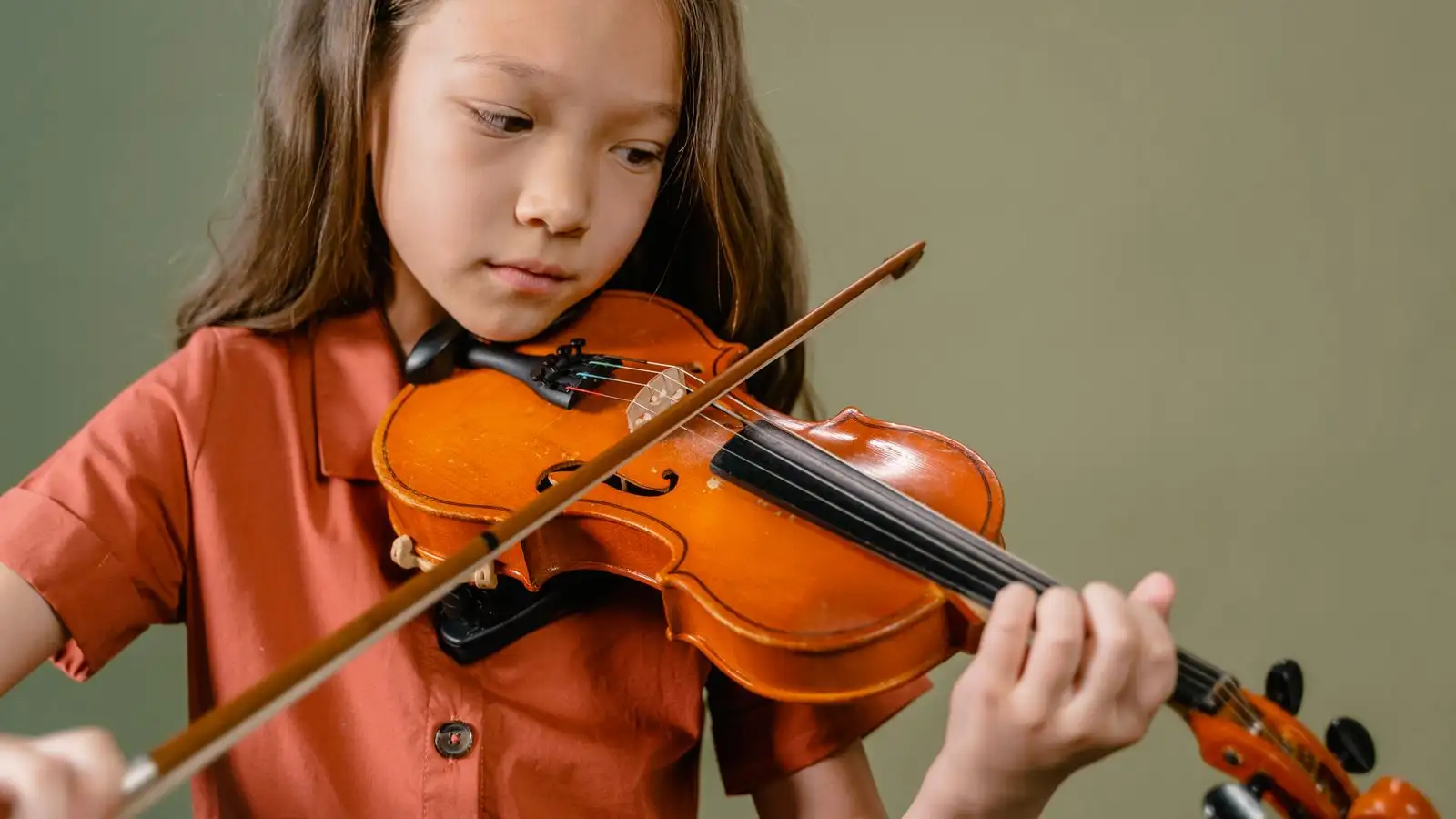
I keep a stub of pencil on the music stand and an eraser worn down to nothing, because a good share of my practice time is not playing at all. It is writing. Numbers under notes, dashes where I hold, small plus signs where the subdivision falls. Playing comes after.
Here is the scene that taught me the difference. It is late, the house has gone quiet, and I am sitting with the violin on my lap instead of under my chin. The metronome is ticking somewhere in the sixties. I am saying the rhythm out loud — "one-and-two-and, one-and-rest-rest-rest" — and clapping it against my knee. And it is wrong. Not subtly wrong. Wrong in a way I had played past for six days without hearing. The rest I was certain I was observing was getting two beats instead of three. The run of eighths I was certain was even was starting half a beat early, every single time.
Six days of playing had hidden all of it, because a bowed string makes a continuous sound, and continuous sound is extremely forgiving.
Why playing hides the mistake
When you play, you are tracking three things at once: the note you hear, the feel of the bow in your hand, the map of the fingerboard under your fingers. Rhythm gets dropped first, because it is the only one of the three with no physical sensation attached to it. A wrong note announces itself — you wince. A wrong rhythm just sounds like the piece, played slightly worse, and slightly worse is what every beginner sounds like on a Tuesday, so nothing feels off.
That is the hidden cost. Not that you learn a piece wrong, but that you spend weeks polishing a version that contains an error you cannot hear. The error hardens into the version you know, and then it takes twice as long to unlearn as it would have taken to catch.
What follows is what I find on the stand most often, and what I write down to kill it.
The four I keep meeting
The busy measure gets rushed, the empty measure gets dragged
There is usually one measure with a cluster of sixteenths and one with a whole note or a long rest, and the internal pulse speeds up in the first and stalls in the second. This is less a counting failure than an unsteady pulse — the tempo is tied to the difficulty instead of being independent of it.
The pencil fix: write the beat number under the first note of every beat in both measures, then rewrite the busy one as its subdivision on a sticky note. Four sixteenths become "1 e + a." Eighths become "1 + 2 +." Say the busy measure out loud, then say the empty one out loud, and notice whether you are going the same speed. Mine almost never is. Then clap the two measures back to back, instrument down. The tell is that your clapping accelerates. You will feel it in your wrist before you hear it.
The rest you didn't count
Rests get treated as silence rather than as time, and that is where early entrances come from. An entrance that arrives a beat early is almost never a note problem. It is a rest that got quietly deleted.
The fix is literal. Pencil the counts into the blank space on the page: "(2 3 4)" in an empty measure, "– 2 – 4" under a half rest and a half note. Then speak the rests in the same voice you speak notes. Most people whisper them or mouth them, which is functionally the same as not counting them at all. If you cannot say "three" out loud at the exact instant you are supposed to be making no sound, you do not have the rest. You have a pause, and pauses drift.
The test: play the four measures and stop the instant a note enters early. Go back one measure, count the rest aloud three times, try again. The entrance fixes itself and you never touched the notes.
Eighths that limp
Uneven eighths — da-DUM da-DUM, or a long-short sway — come from counting beats instead of subdivisions. You are saying "one, two, three, four" and hoping the notes in between behave.
The fix: write the "+" under every offbeat before you play. For a pass or two, set the metronome to click the subdivision instead of the beat, so you hear eight clicks per measure in 4/4. Then, when you can say "one-and-two-and" steadily at that rate, switch the click back to the beat. If the evenness survives the sparser click, the subdivision is yours. If it collapses, the click was doing the work and you were borrowing it.
Beat one goes missing
It happens after ties, after rests longer than a beat, after anything that interrupts the pattern. The measure stops being four beats and becomes a vague stretch of time with notes in it.
The fix: put a small pencil dot above beat one of every measure in the phrase. Then count through the tie out loud — "one-two-three-four" across the barline — so the barline stops being a wall and becomes a number. Once the dots are there, you can see the phrase's skeleton from a foot away, which is the whole point of writing them.
When the count is right and it still wobbles
Not every unstable phrase is a counting problem, and it is worth knowing the difference before you spend a week counting something that was never the issue.
If your counting is exact and the rhythm still reads as unsteady, look at the bow rather than the numbers. Uneven bow speed — a quick half bow on the short notes, a slow whole bow on the long ones — changes the attack and the sustain enough to make a correct rhythm sound lopsided. So does losing bow and rushing the last few notes to get back to the frog. Recording yourself once a week on your phone is the cheap way to tell which one you are dealing with: if the recording wobbles and your counting felt fine in the moment, the numbers are not the problem.
There is a second case. Sometimes what sounds like a late entrance is a reading hesitation — you are not sure of the note yet, so the bow waits a moment before it moves. Counting aloud will not fix that. Reading the passage slowly enough to name every note will.
And a fair warning about counting aloud itself: it has a tempo ceiling. On a slow passage you can say every subdivision. On a fast one you will manage the beats and nothing else, and past a certain speed you cannot say anything without derailing the bow. That is not the method failing. That is the method telling you it has done its job and it is time to move up the ladder.
The ladder
Four steps, written on a sticky note stuck to the corner of the stand:
- Speak the counts out loud, instrument down, clapping against your knee.
- Speak the counts out loud while playing, slow enough that your speaking does not lag behind the bow.
- Play while mouthing the counts silently, metronome on the beat.
- Play with no counting at all, with the pencil marks left on the page as the record of what you decided.
Only step four is the piece. Steps one through three are how you find out what step four is going to sound like.
If you are sitting with a child, the same ladder works and it works faster. Ask them to clap it before they play it and you will watch them find their own error in about ten seconds, usually with a look of genuine surprise. Kids hide rhythm mistakes with playing as effectively as adults do. They just look more indignant when the clapping gives them away.
Erasing is the last step, not the first. I leave the numbers on the page long after I can play the passage, because the marks are how I check whether I am actually counting or just remembering. When a passage has been clean for a week with the marks still there, they come off. Not before. The cost of not counting aloud is measured in weeks of polishing the wrong thing. The cost of one more pencil mark is nothing.