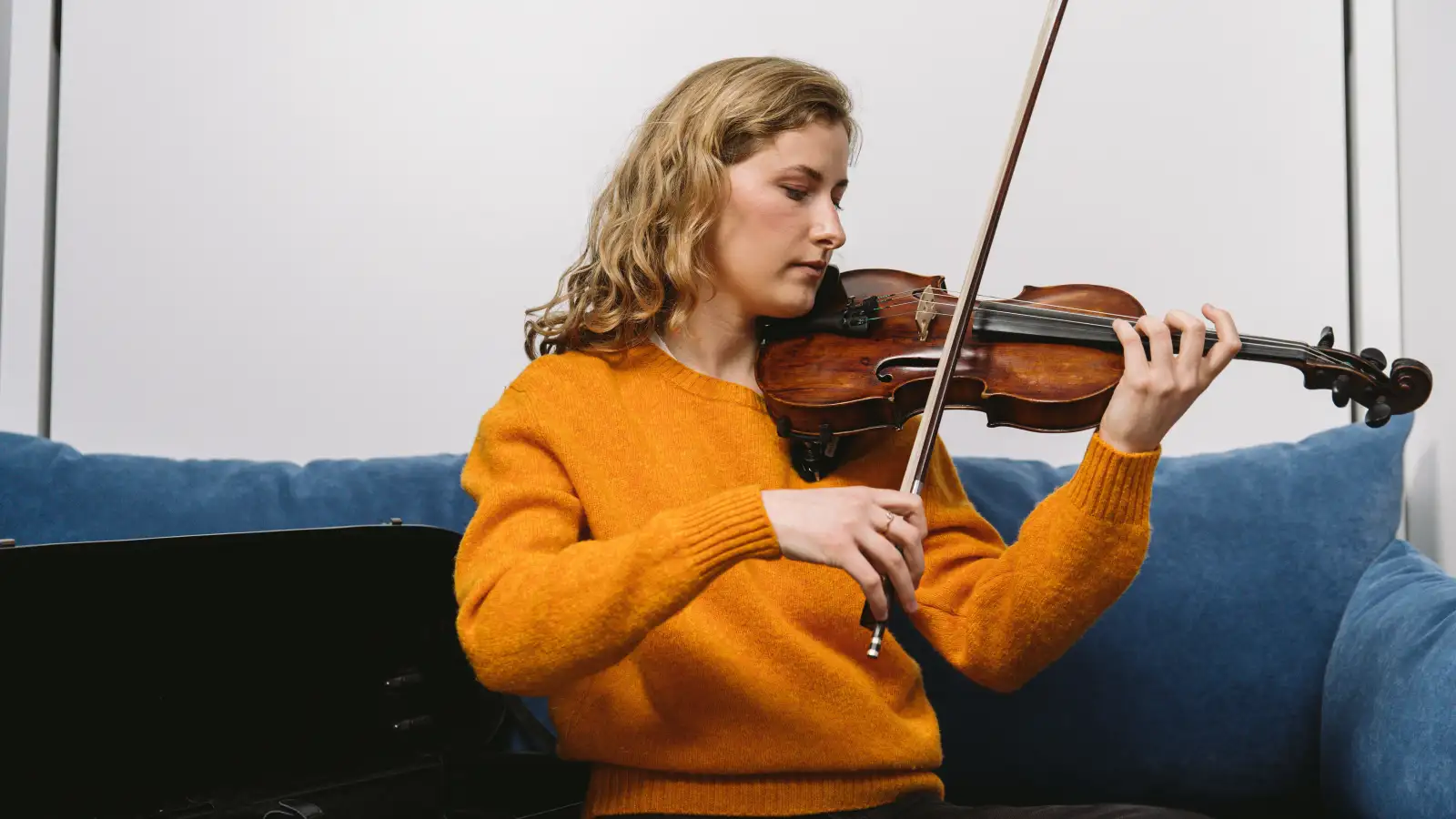
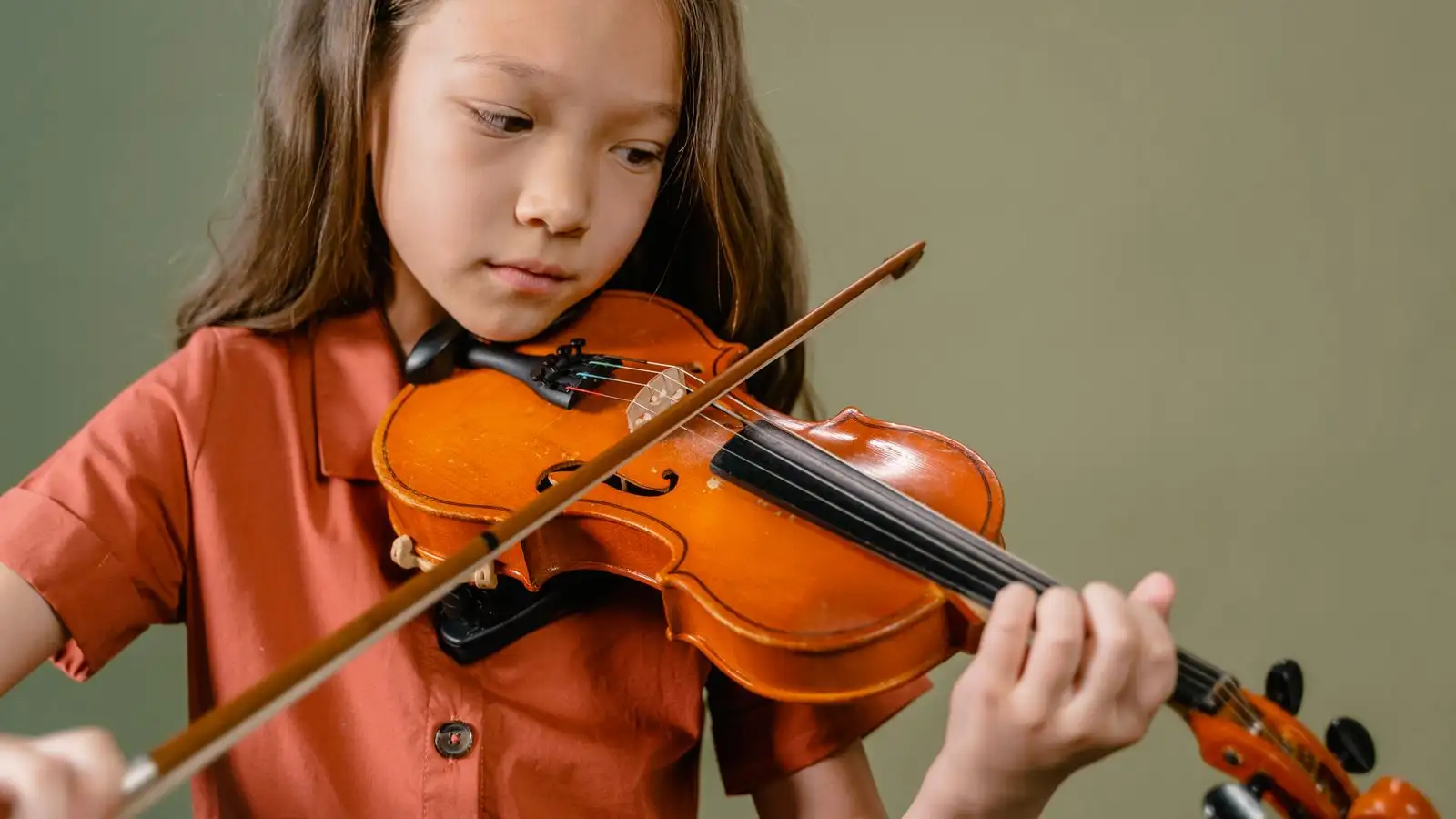
A metronome stops feeling like a judge the moment it's set slower than the tempo you can actually play and each click is treated as a measurement instead of a deadline. Set it well below your comfortable speed, loop two bars instead of running the whole piece, and listen for where your note lands relative to the click: early means you rushed, late means you dragged, and both are information rather than verdicts. The rushed feeling is rarely the metronome's fault. It usually means the tempo was chosen for the piece instead of for the player.

I found that out the obvious way. Mine was set to the printed tempo on the page, a confident 96, and by the fourth bar my bow arm was arriving ahead of the click and then waiting, which felt exactly like being late. Let me put you in the chair for a few minutes, because this is easier to feel than to explain.
Before you play a note, listen to eight clicks
Start the metronome at 60 and don't touch the violin. Just listen and clap on each click. Eight in a row is plenty.
What you're checking is not whether you have rhythm. You're checking whether you can find the click without hunting for it. The sound is short, a tick rather than a tone, and it lands and it's gone, which is exactly why it feels urgent. If you can clap eight clicks in a row without drifting, you have a pulse reference. If you can't clap it, you can't bow it, and no amount of bowing will fix that. So clap first, then play open strings, one full bow per click, until the bow change and the click happen at the same instant.
That step sounds too basic to matter. It matters because half of the rushed feeling is just attention. When the click is the only thing in the room making a sound, your ear grabs it, and your hands try to keep up with your attention instead of with the beat.
Find your collapse tempo, then go below it
The number that matters isn't printed anywhere. It's the fastest speed at which you can play the passage three times in a row with no wrong note, no stumble, and no pause to think. That's your collapse tempo. Whatever it turns out to be, 72 or 58 or 44, drop roughly ten percent from it, which usually means four to eight beats, and start there.
It will feel insultingly slow. That's the point. Slow enough to play accurately means slow enough that you can hear your own intonation and your own bow contact while the click goes by, instead of hearing only the click. If it doesn't feel slow, you haven't gone low enough, and you'll be back to chasing.
One trap: don't use the metronome to discover the tempo. Set the tempo, then play. If you're adjusting the dial mid-phrase, you're negotiating with it, and negotiating is what makes it feel like a judge.
Loop two bars, not the whole piece
Running an entire piece with the click is a performance with a referee. You spend it managing mistakes instead of measuring them. Pick a two-bar window, usually the one that falls apart, and stay in it.
Four bars is fine too, but the loop has to be short enough that you can hear the whole thing at once. Inside that window, the click is telling you about a specific spot. "I rush the third bar" is usable. "I'm bad at rhythm" is not.
Main beats first, then subdivisions
Work in this order and the click rate never surprises you.
First, the click on the main beat. In 4/4 at 52, that's one click per quarter note, and you play quarters, halves, whole notes, anything whose landing point is a beat. Sit here until it's boring.
Then keep the tempo exactly where it is and set the click to eighth notes. Nothing about the music changed. The tempo is the same 52. But now each quarter note gets two clicks, and your ear reports faster. It isn't faster. That gap between click rate and tempo is the single most common reason a beginner turns on subdivisions and immediately feels rushed.
The fix is counting out loud. Say "one and two and three and four and" while the clicks go by. The click on the "and" is not a new beat, it's half of the same beat, and your voice is what keeps it attached. Without counting aloud, eighths turn into a stream of separate events and the phrase accelerates on its own. The metronome reveals a rhythmic problem; it was never meant to be the thing that solves it for you.
Same idea in compound meter, with one adjustment: in 6/8 the eighth note is the beat, not a subdivision. Setting the click to eighths there is setting it to the pulse, and you'd subdivide to sixteenths if you needed to. Getting that backwards is a reliable way to make a jig feel frantic.
Read the click as data
Once you're at a tempo you can actually play, the metronome becomes useful, because now it's revealing rather than pushing. Three readings cover most of what you'll run into.
You arrive before the click. That's rushing, and it's almost never a counting problem. It's usually the previous note being cut short so the bow can get to the next one. Fix the bow, not the tempo.
The click arrives before your note. That's dragging, and it usually means the bow is still traveling somewhere in the middle of its stroke, or your eyes have moved on and your hands are catching up.
You're solid for two bars and drift in the third. Most of the time that isn't a rhythm problem at all. It's a string crossing, a shift, or a bow direction change, and the metronome just pointed at it. Mark the spot on the page with a pencil. Where the drift happens matters more than the fact that it happened.
When the metronome is the wrong tool
It can't hear tone, and it has no opinion about bow distribution or intonation. A passage with intentional rubato will sound wrong against a click, and that's correct, it should sound wrong, because the elasticity is the point.
It also doesn't replace a person. Playing with a click is not playing with an ensemble; the click never adjusts to you, and nothing comes back except the pulse. Use it as a check, then turn it off and play the phrase again without it. If it holds, you own it. If it collapses the second the click stops, you were tracking the click, not the rhythm.
And a slow metronome can genuinely be harder than a fast one. There's more space between events, and space is uncomfortable. If you've been playing everything at speed, slow practice exposes that, which is the reason to do it and also the reason it feels bad the first week.
A ten-minute session that actually works
Short, with one rhythmic goal, beats an hour of clicking along to the whole piece.
- Thirty seconds: listen and clap, no instrument.
- Thirty seconds: open strings, one bow per click at 60.
- Two-bar loop at your collapse tempo minus ten percent, click on the main beats.
- Same loop, counting aloud.
- Same loop, click moved to the subdivisions, still counting aloud.
- Same loop, click on the off-beats only. If your playing survives the click sitting on the weak part of the beat, the rhythm is yours.
- Write down the one place that broke, and start tomorrow there.
Don't bump the tempo inside those ten minutes. Speed is a separate session with a separate goal. If you raise the dial every time something goes right, you've turned the metronome back into a target and yourself back into someone being graded.
The click isn't keeping time for you. It's telling you what time you're already keeping. Once you've heard yourself arrive early twice in a row and fixed the bow that caused it, the tick stops sounding like a countdown and starts sounding like a question. Most days now I can answer it.