Does Your Left Hand Position Fail Because of Your Thumb?
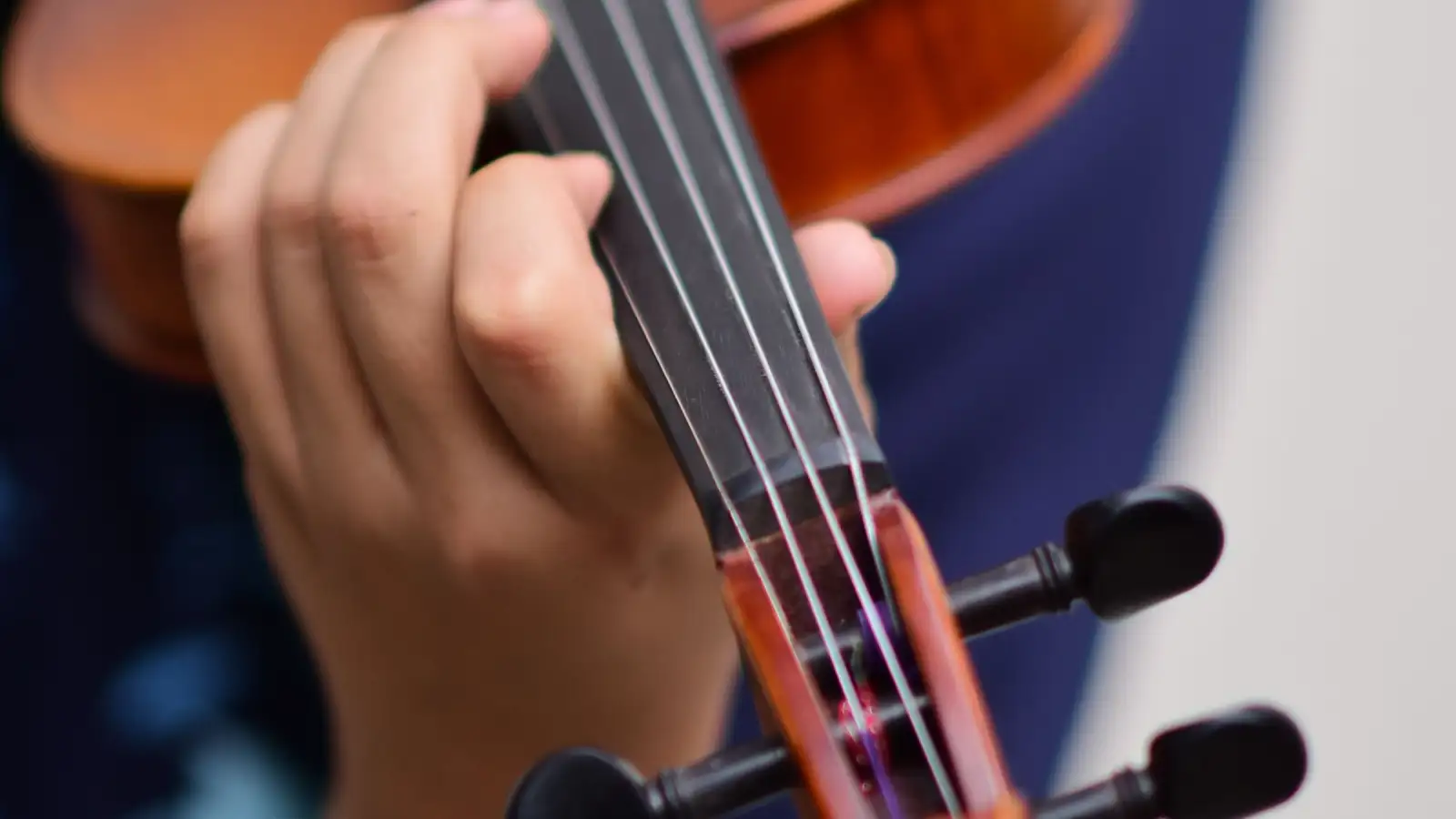
Your violin left hand struggles might come from a tense thumb. Learn to release the grip and find a light, mobile thumb placement for better intonation and comfort.
Text-based primers on the first skills every adult or parent beginner must develop—bow hold, straight bowing, left-hand shape, finger placement, posture, and tone.
Your violin left hand struggles might come from a tense thumb. Learn to release the grip and find a light, mobile thumb placement for better intonation and comfort.
Ranked from mirror guides to pure feel, these 5 silent drills train your bow arm to move straight—without the violin. Choose the right one for your practice space and level.
A crooked violin bow robs you of resonant tone. Learn the 3 hidden mechanical faults—locked wrist, rigid thumb, over-reaching arm—and get a 60-second fix.
Slumped shoulders collapse your ribcage, restrict your bow arm, and drain resonance. Learn the exact chain and a 3-point long-tone self-audit that restores tone.
A weak pinky makes the bow tilt and wobble. Learn the tactile cues that engage your pinky as a counterbalance and keep the bow straight — no mirror needed.
Learn the exact finger-by-finger sequence to transition from a rigid bow hold to a fluid, expressive grip. Realistic milestones for adult beginners — not a distant skill.
A collapsing left wrist causes intonation drift and hand fatigue. Use this 3-minute wall test to spot the problem before it becomes a permanent habit.
A tense shoulder muffles violin resonance. Learn the one posture adjustment that releases the collarbone and jaw for a fuller, richer tone. Step-by-step checklist inside.
Train your left hand to find the correct violin position every time with silent and listening exercises. No teacher required—just your ears and body awareness.
A tense bow hold doesn’t just hurt your hand — it destroys your tone. Learn exactly how death grip, collapsed thumb, and stiff wrist choke your violin’s sound and how to fix them fast.