Yes — if you're wondering whether your bow hold is too tight, it probably is, and the fix is not to try harder to relax. Grip tension is a measurement problem. The muscles that do the gripping are the same ones reporting back to you about the grip, so "this feels about right" is not a trustworthy reading while you're playing. What works is running two or three quick physical tests on your own hand, getting a plain yes or no, and then letting the hand reset itself instead of ordering it to loosen up.
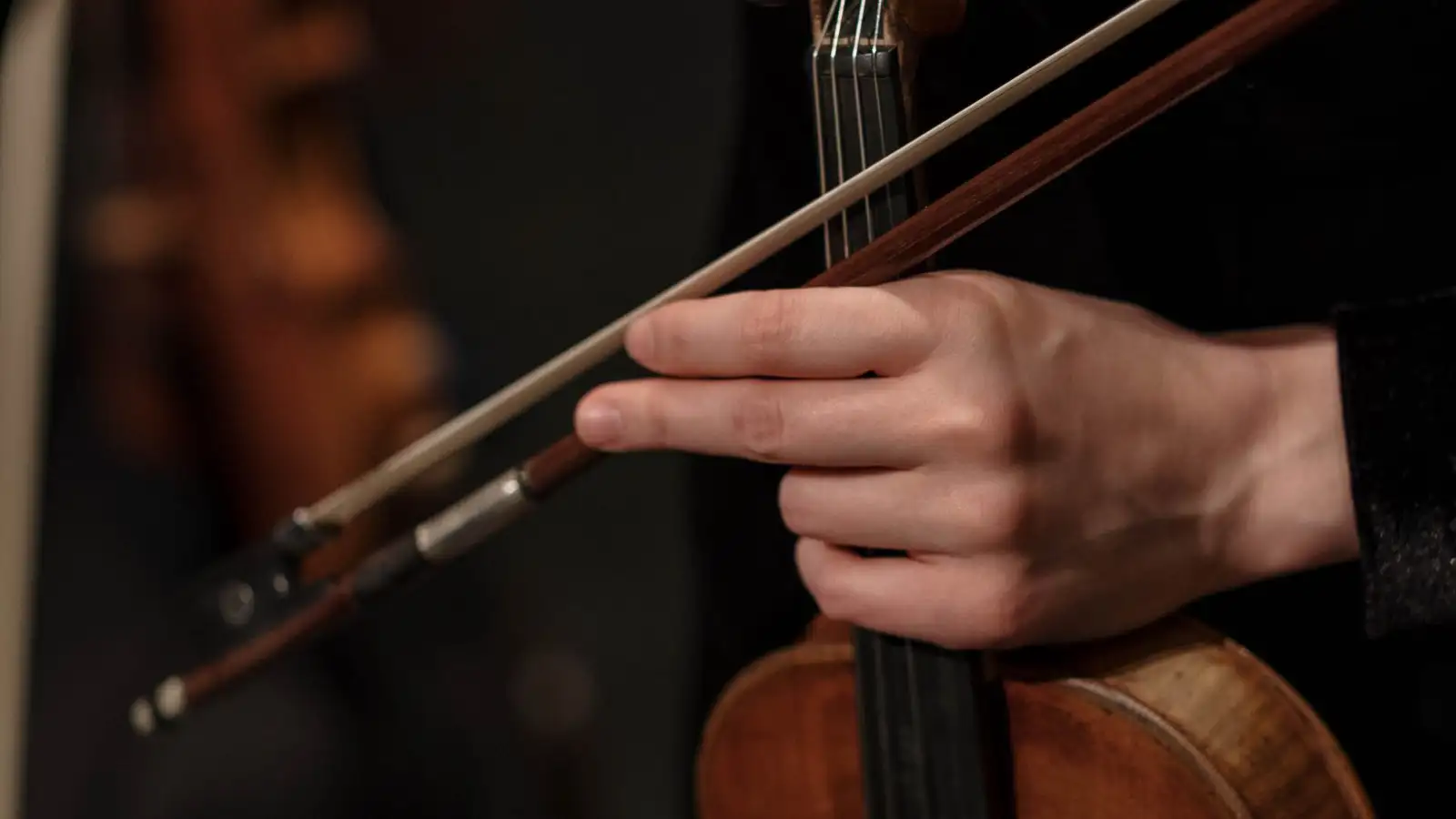
Here is the version of that I wish someone had handed me in my first month. Take the bow out of the case, sit on the edge of a chair, and don't play anything yet. Set the bow into your hand the way you normally do — thumb on the frog, fingers draped over the stick — and then look at it. Not feel it. Look.
Start with the pull test
Hook two fingers of your other hand over the stick near the tip, not on the hair, just the stick. Pull straight away from you, slow and steady, over your lap or over a bed so the bow has somewhere soft to land.
On a relaxed hold, the stick slides out through your fingers and your fingers trail along behind it. The only thing you register is weight leaving your hand. On a tight hold, the bow stops dead, and about half a second later your forearm wakes up to help you hold on. That second pull is your readout. Do it again and notice which muscles join the fight.
If there's another person around, their pull is better than your own. Your left hand already knows what your right hand expects, and it pulls politely. Somebody else pulls like they mean it, which is exactly the information you need.
The pull test gives you a yes or no in about six seconds. That's the whole point. You are not trying to feel whether you're tense. You are measuring whether the bow comes free.
The thumb locks before anything else does
When I check my own hand, the thumb is the first place I look, because it's the one finger that opposes all the others. It's the clamp. If the thumb presses, the fingers press back to keep the bow from tipping, the wrist stiffens to hold the fingers, and the forearm tightens to hold the wrist. It travels in that order, out from the thumb.
So before you play a note, look down at your bow hand and check four things in this order:
- Is the thumb bent at its joint, or has it gone straight and locked?
- Are the knuckles on the back of the hand pink, or white?
- Does the bow tip shiver when you play a slow bow, instead of drawing one clean line?
- Does the hand ache inside a minute of playing?
A mirror on a music stand is genuinely useful here, because it lets you watch the tip travel while you play. A tip that trembles is usually a hand that's carrying the bow rather than guiding it. None of these things are about your hand being weak. They are just dials you can read.
One honest caveat: a hand that aches is telling you about effort, not about anything else, and I'd rather you treat it as a signal to check your thumb than as a reason to push through.
Squeezing harder makes less sound, and here's why
The reason this matters is that squeezing feels like it should work. It doesn't. Loudness on the violin comes from three things: bow speed, where the bow sits between the bridge and the fingerboard — the contact point — and the weight of your arm arriving through the bow. Pressure from your fingers is not on that list.
Worse, squeezing pushes in the wrong direction on all three. When you press down at the frog, the stick bends slightly toward the hair, the hair flattens against the string in one spot, and the string's vibration gets choked instead of rolling freely. At the same time your hand and wrist stiffen, which puts a speed limit on the bow just when you need speed. So you get a smaller, thinner sound and more work in your forearm.
You can check this in about twenty seconds. Play one long note your usual way. Then play the same note with your hand as light as you can manage, but move the bow noticeably faster and a touch closer to the bridge. The second note will be louder, and you'll be less tired at the end of it.
There is a real minimum of firmness, by the way. The fingers need to be organized enough that the bow doesn't wobble, and that minimum is different for a heavy bow than a light one, and different for a small hand than a large one. The target isn't zero. It's the smallest amount that keeps the bow under control.
The reset: open the hand instead of fixing it
When you catch yourself gripping, don't try to gently re-apply a lighter pressure. That's just squeezing with better manners. Open all five fingers, let the hand hang loose for a beat, and then let the fingers settle back onto the stick. Let gravity place them. Then play two or three slow bows and stop — stop before the grip creeps back, which at first might be after only three or four seconds. That's normal. You're building the ability to return to a light hold, not the ability to hold one forever.
Rest the hand between those short repetitions. Ten seconds of doing nothing is not wasted time; it's the part that lets you feel the difference between the two holds. If you skip the rest, they blur together.
Once the hand is organized, the bow's own weight does most of the work. The stick has a balance point a few inches above the frog, and when you're in playing position that weight is already sitting on the string. Your fingers are a hook that guides the bow, not a fist that carries it.
Checking a smaller hand, and checking yours again next week
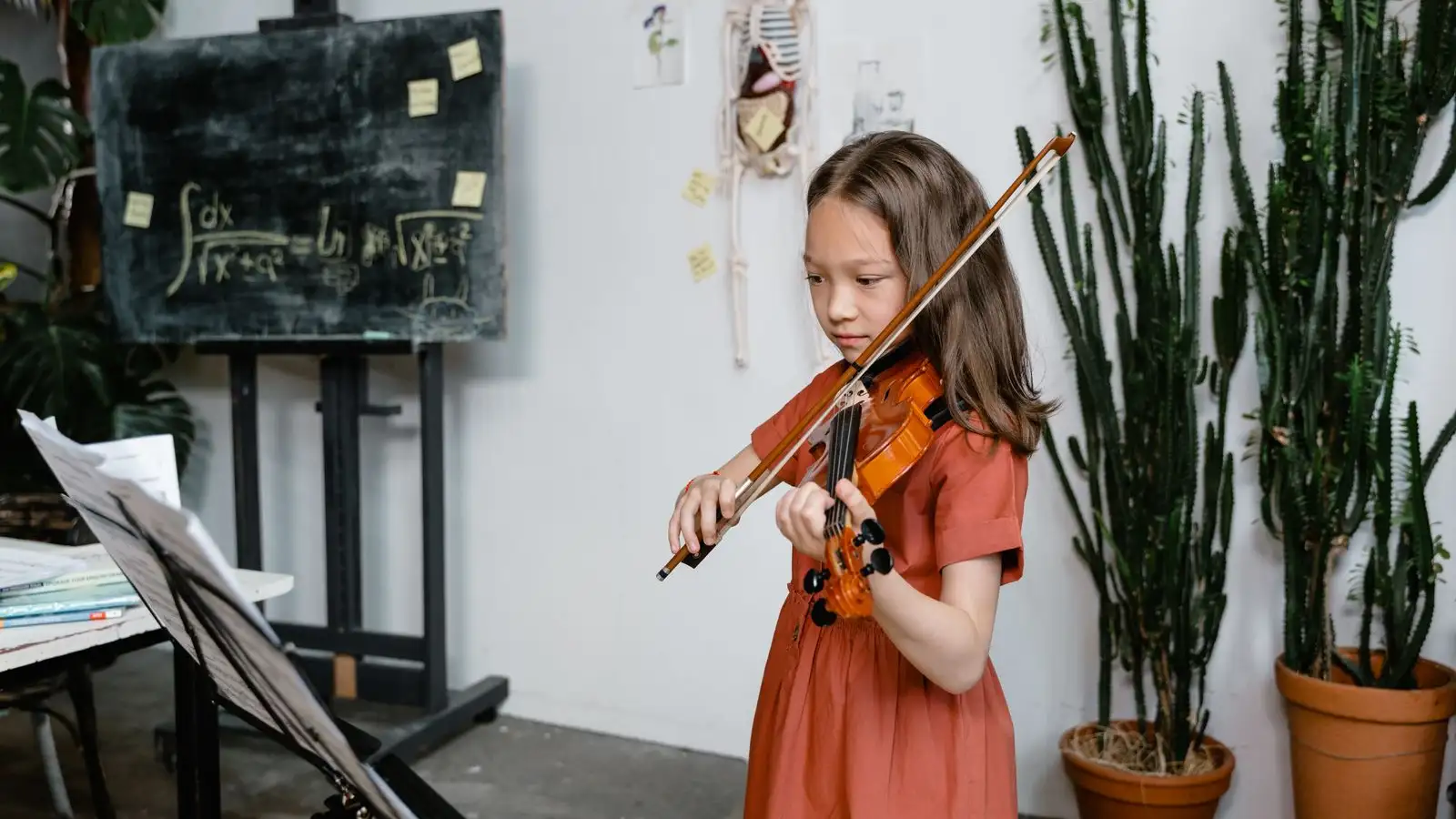
If you're helping a younger player, do the pull test on their hand rather than asking how it feels. A kid can't usually report on their own grip, but they can tell you whether the bow came out easily, and they will absolutely tell you if you yanked it. Then have them open all five fingers and let them fall back onto the stick. It's the same reset, and it works better than saying "relax" five times, which means nothing to a seven-year-old.
Expect the tightness to come back. It always does, usually right when you start concentrating on the notes instead of the hand. Mine returns whenever I'm learning something new and the music gets a little harder than I'd like. So the useful habit isn't a perfect bow hold. It's a thirty-second check, maybe once a week: pull test first, thumb second, and trust the measurement over the feeling.