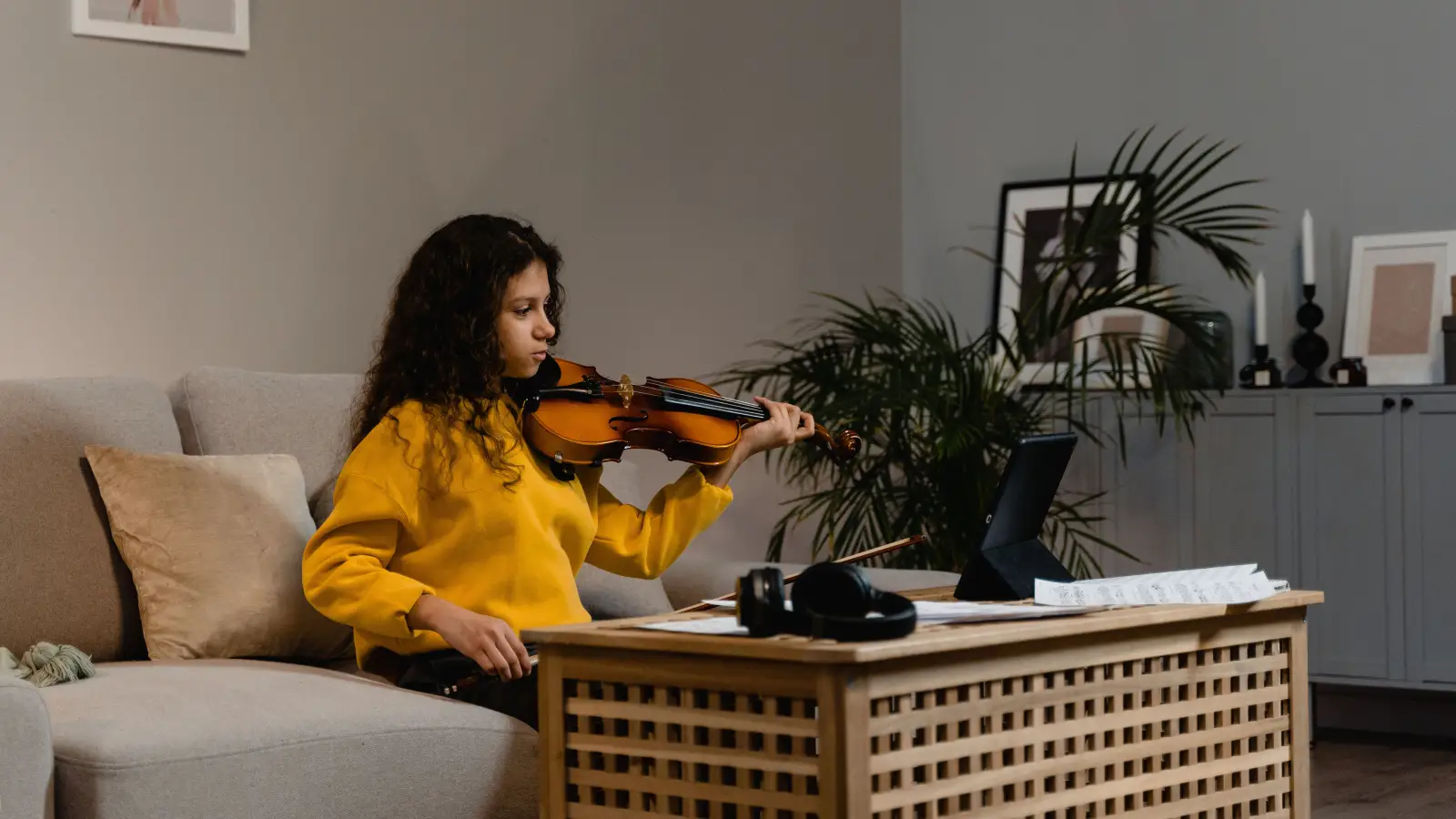
The rent-to-own versus monthly rental question for a beginner violin boils down to a single bet: how long will this person stick with it? Parents of a six-year-old who might quit by October almost always come out ahead with a basic monthly rental. An adult who has been wanting this for years and already carved out practice time, though, typically pays less and plays a better instrument by choosing rent-to-own. That’s it—the rest is just fine print.
Two scenarios that push these plans in opposite directions
| Scenario | Winner | Why |
|---|---|---|
| Young child (age 4–7), first instrument, uncertain commitment | Monthly rental | No long-term financial tie; you can swap sizes or walk away cheaply. |
| Adult beginner, committed to practicing, planning to keep the instrument | Rent-to-own | Monthly payments build equity; you end up owning a quality violin at a lower total cost than buying outright later. |
When the violinist grows faster than her commitment level
A six-year-old beginner often tears through three or four fractional violin sizes before their hands settle on a full-size. Rent-to-own plans love to ignore this. Most contracts lock your equity to the specific instrument—like that 1/8-size violin they’ll outgrow in six months. When they need the next size, you start over: new contract, zero credit, wasted money. Even if the shop allows upgrades, you’re usually paying a fee or resetting the purchase timeline. It’s a terrible bet for a kid who might also lose interest.
Monthly rental sidesteps all that. Pay a flat fee, swap sizes for free, return it whenever you want. Over a year, the total cash is often $50–$100 less than the rent-to-own path once you factor in forfeited equity. The supposed “investment” never materializes, so you’re better off keeping it simple. Yes, you give up the dream of building toward ownership—but for a beginner with a high quit rate, that dream is just a marketing hook.
When you've already decided this is a long-term project: why rent-to-own fits the adult beginner
An adult beginner who has spent weeks researching instruments and blocking out practice time hasn’t just “started”; they’ve already committed. That flips the rental math. With rent-to-own, 50–70% of each monthly payment piles up as equity toward the purchase price. In 18–24 months, they own a decent violin—one that retails for $400–$800—and they’ve been playing it the whole time. Some shops even give a discount for early buyout.
Contrast that with buying a cheap $150 violin outright that constantly fights your bow hold. Rent-to-own lets you learn on a better instrument while spreading the cost, and you walk away owning it. The trade-off is an exit penalty: if you quit after a year, you’ve paid more than a simple rental and have nothing. Someone who already knows they’ll keep playing isn’t betting on quitting, so that risk barely registers.
What doesn't change no matter which plan you pick
Stop obsessing over rentals that include free string changes or “loaner” instruments. Almost all shops bundle the same maintenance, trial periods, and instrument quality into both rent-to-own and monthly rental plans. These features are industry standard, not a secret advantage of one plan. Move on—your money will be tied up in the length of the contract and the size swaps, not in bow rehairs.
- Maintenance and basic repairs. Most shops include complimentary adjustments, bow rehairing, and minor repairs under either plan. Coverages are practically identical.
- Trial and exchange windows. Both options let you test the instrument at home and swap it if the tone or feel isn’t right. No structural edge lives here.
- Instrument quality. Shops typically assign the same tier of student violin to both rental types; a monthly rental violin is not inferior to a rent-to-own violin from the same shop.
When one plan is automatically off the table
Some requirements simply close the door. Check for these first, then calculate the rest.
- You need a fractional-size instrument that isn’t available under rent-to-own. If the shop only offers rent-to-own on full-size violins and your child needs a 1/4 or 1/8, you’re stuck with a monthly rental.
- You plan to switch instruments. Thinking violin now, viola or cello later? A rent-to-own contract ties you to that specific instrument; walking away trashes your equity. Monthly rental lets you hand it back without a financial hangover.
- You want a guaranteed buyout price. Rent-to-own spells it out upfront. Many rental-only programs either don’t offer a purchase option at all or calculate a mysterious buyout later that can surprise you.
If any of these hard limits apply, the choice is already made.
How the monthly bills actually compare
The numbers don’t lie, but they do depend on sizing consistency.
A monthly rental at $20–$30 a month for a year might total $250–$360, with nothing to show but the experience. A rent-to-own plan at $25–$35 a month with 60% equity would cost $300–$420 and leave $180–$250 in credit—if you’re still holding that same instrument a year later. For the child who sizes up twice, that credit evaporates each time, making the spend worse than a simple rental. For the adult on a single violin, that equity cuts the eventual purchase price to a fraction of retail. After two years, a final balloon payment of $100–$200 can own a violin that would retail for $600. That’s why the commitment question is the only lever that shifts the dollar outcome.
Questions that come up after you've crunched the numbers
Can I switch from a monthly rental to a rent-to-own plan later on the same instrument?
Rarely without penalty. The months you already paid? Gone. You’ll start equity from zero. If you even suspect you might buy, jump directly to rent-to-own.
What happens if the instrument gets damaged while I'm renting?
Most agreements cover everyday accidents—cracked bow, popped string, scratched finish—as part of the monthly fee. If your child uses the violin as a step stool, expect a bill. Always confirm what “normal wear and tear” covers before signing.
Isn't rent-to-own always the better deal if I'm sure I'll buy?
Not if you find a killer deal on a used instrument. But rent-to-own lets you test-drive the exact violin for months before committing, which is priceless if you’re picky about sound and feel.
For the six-year-old whose passion might not outlast the rental agreement, monthly rental wins every time. The single question that decides this is: can you, with near certainty, picture this same beginner still practicing a solid year from now?