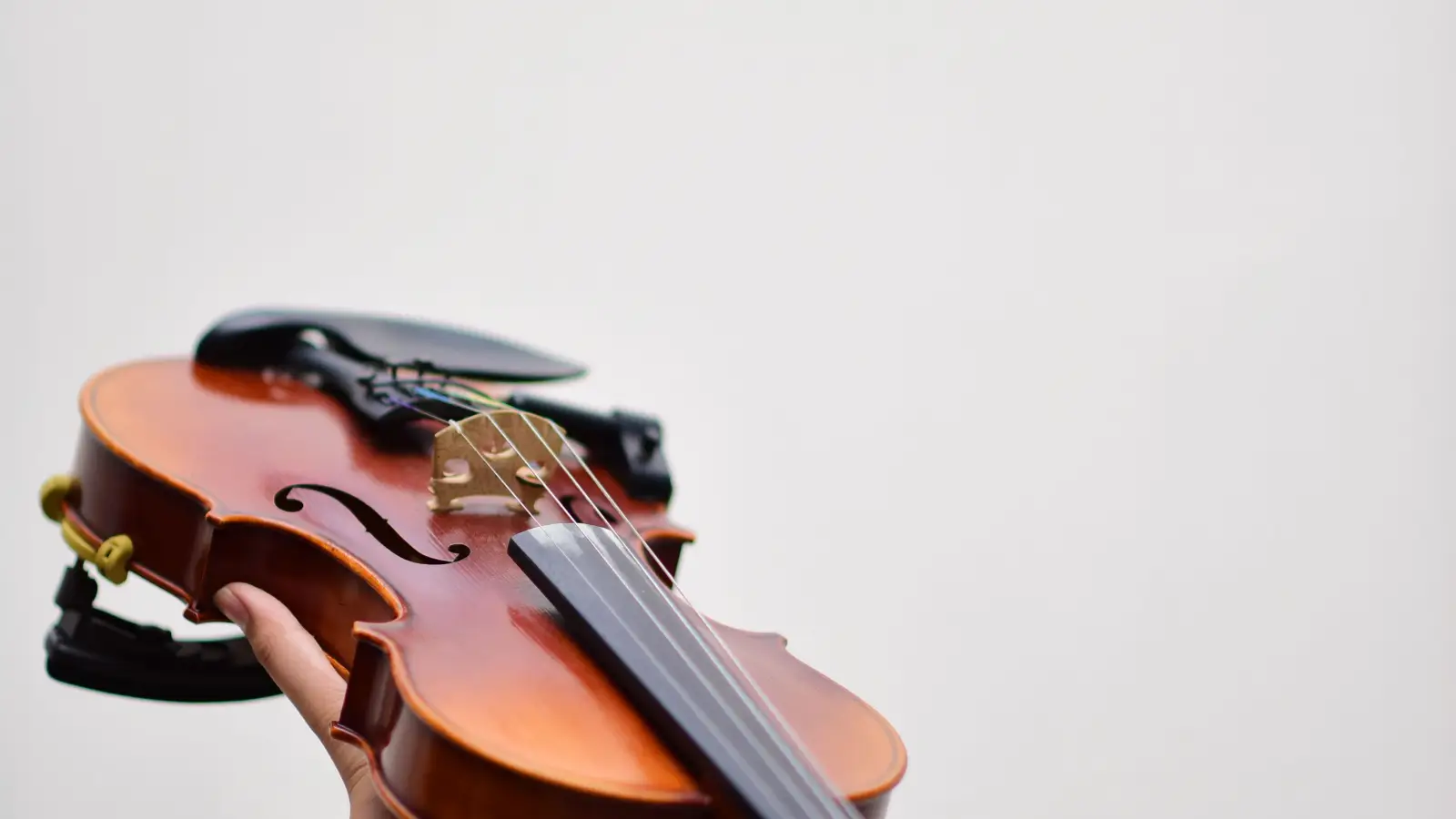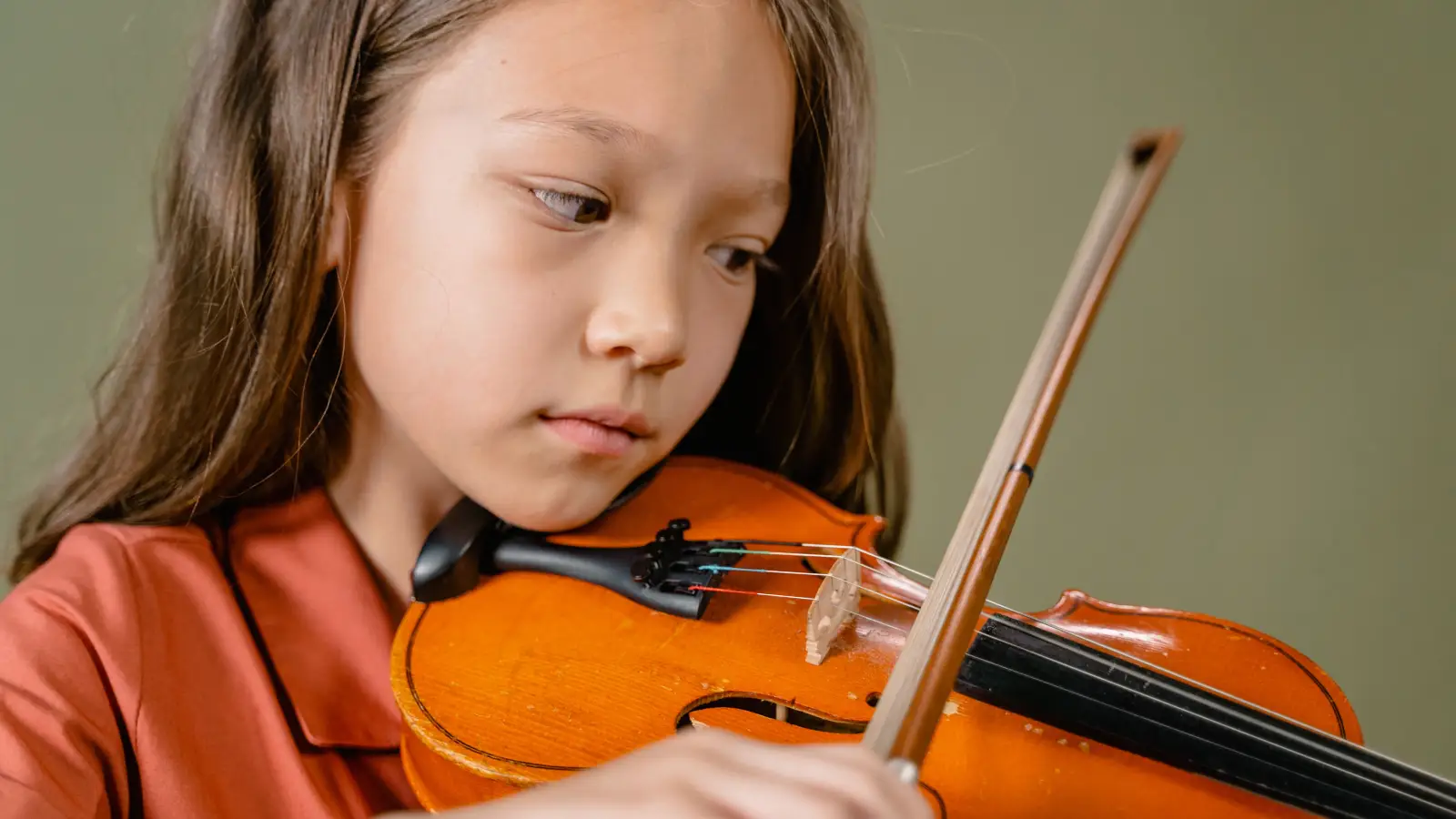
When a violin doesn't fit, practice becomes a grind. A too-large instrument forces your bow arm inward and stretches your left hand into uncomfortable positions. A wrong bow makes control harder. The five errors below cause the most common mechanical roadblocks—fixing them restores your playing.
What You're Struggling With, and What It Points To
Match your main frustration to the size problem that usually causes it.
- Your bow arm pulls inward and your elbow tucks during straight bows. You fight to keep the bow parallel to the bridge.
- Your left wrist bends backward sharply; your fingers feel stretched reaching notes. The fingertips can't land correctly, the wrist collapses.
- Your neck and shoulder ache, or the violin wobbles unless you clamp it. You're constantly adjusting shoulder rests or chin pressure.
- Intonation stays flat, and you misplace fingers across the board. Every note feels like a reach, your hand drifts toward the scroll.
If one of these clicks, the sections below walk you through the cause and the fix.
Bow Arm Collapsing? Your Violin Is Forcing It
A collapsing bow arm makes crooked bowing and poor tone. The setup pushes the elbow inward.
The Violin Is Too Large
A too-large instrument sits farther from your body. To contact the strings, the elbow folds in and the arm pulls toward your side instead of moving from the shoulder.
Confirm it: Extend your left arm straight forward, palm up. Measure from the base of your neck (where it meets the shoulder) to the middle of your palm. For a full-size (4/4) violin, you need at least 23–24 inches. If your measurement is shorter, the violin is oversized.
Fix it: Get a fractional violin that matches that number. Typical ranges: 1/2 size fits 20–21 inches, 3/4 fits 22–23 inches, 7/8 fits many small adults. Don't buy a violin to "grow into"—the wrong size builds wrong muscle memory.
Result: The bow arm moves straight from the shoulder without tucking.
The Bow Is the Wrong Length or Weight
Bows and violins go together by size. A fractional bow on a full-size instrument, or a bow noticeably heavy for the arm, makes the elbow compensate.
Confirm it: A 4/4 bow measures around 29–30 inches and weighs about 60 grams. A bow two inches shorter or significantly heavier than standard will throw off your stroke. Measure from frog to tip.
Fix it: Match the bow length to your violin. Test several in a shop; balance matters as much as length.
Result: The bow moves in a natural arc; the elbow stays relaxed.
The Shoulder Rest Sets the Instrument Too High
A high shoulder rest pushes the violin outward, forcing the arm to reach farther and the elbow to collapse.
Confirm it: Look in a mirror while playing. The violin should sit roughly horizontal. If the scroll drops or you feel you're reaching up and over, the rest is too thick.
Fix it: Lower the shoulder rest or switch to a thinner model. Combine with a shorter chinrest if necessary. The goal is the violin sitting level with light chin contact.
Result: The bow arm path straightens immediately.
Wrist Collapsing? The Instrument Is Too Long
When the left wrist bends back sharply in first position, the scale length is beyond your hand's comfortable span.
The Scale Length Exceeds Your Reach
A healthy left hand in first position forms a gentle "C" curve with a straight wrist. If the wrist buckles backward to get the pinky on the fingerboard, the violin is too long.
Confirm it: Set your hand in first position on the D string. Check the wrist angle and whether fingers land on fingertips or flatten. A full-size violin body is about 14 inches. If your arm measures under 23 inches, that length will force a stretch.
Fix it: Move to a 3/4, 7/8, or smaller fractional size. For adults with shorter arms, a 7/8 makes a significant difference.
Result: The wrist stays neutral; fingers fall accurately without strain.
The Fingerboard or String Setup Worsens the Problem
Wide fingerboards or high strings can mimic the strain of an oversized violin. If the body length is right and the wrist still collapses, check the setup.
Confirm it: Have a luthier measure string height at the nut and bridge.
Fix it: Lower the nut slots or replace the fingerboard if needed.
Result: Reduced left-hand fatigue, even during long practice sessions.
Neck Pain? Your Chinrest or Shoulder Rest Isn't Working
A wrong combination forces you to hunch, tilt, or grip, straining neck and shoulder muscles.
The Setup Doesn't Match Your Neck Length
A short neck needs low chinrest and shoulder rest; a long neck needs more height. When the gap isn't filled, posture compensates.
Confirm it: Stand normally with the violin. Is your shoulder hunched? Does the instrument slide unless you clamp your head? Measure the gap from your collarbone to your jawline.
Fix it: Swap the chinrest—try taller or shorter. Many shops keep a box of spares. Pair with different shoulder rest heights. Custom chinrests exist.
Result: The violin stays secure with minimal pressure; neck and bow arm relax.
Flat Intonation Everywhere? The Overall Length Is Off
Consistently flat notes across first position mean your hand can't reach the correct placement.
Oversized Violin Makes You Reach Back
A too-large body forces the arm to extend and the hand to stretch backward, landing flat. The sensory feedback never stabilizes.
Confirm it: Play a D major scale. If the wrist bends backward and fingers pull toward the scroll, the violin is too long.
Fix it: Downsize to the next smaller size based on arm measurement.
Result: The hand sits forward comfortably; intonation centers.
A Too-Small Violin Can Also Cause Flat Notes
Cramped hand position leads to off-center finger placement, sometimes flat, sometimes unstable.
Confirm it: Your arm measurement exceeds the size's upper limit and fingers feel bunched.
Fix it: Move up a size.
Result: Fingers have space; intonation settles.
Quick Checks That Uncover Most Sizing Problems
Before swapping instruments, run these two resets. They rule out the biggest offenders.
Re-measure with the Arm Straight
Many people measure with the elbow bent, which gives a shorter number and leads to buying a violin that's too small. Extend the arm fully, palm up, measure neck-to-palm. Use that number in a sizing chart that ignores age.
When it helps: Nearly always if you've been guessing or relying on age guidelines.
When it just wastes time: If you've already measured correctly and symptoms persist—then move on to bow or chinrest adjustments.
Swap the Bow for the Correct Size
Borrow a bow that matches your violin. Watch your arm in a mirror while bowing open strings. If the elbow stops tucking, the bow was the culprit.
When it helps: When the violin size checks out but the bow arm still collapses.
When it just wastes time: When the violin is obviously too large—no bow change will erase the fundamental reach issue.
Stop Sizing Mistakes from Coming Back
Sizing isn't a one-time decision, especially for growing players. Build these checks into your routine.
- Check arm length every 3–4 months for children under 12. A growth spurt can change the required size fast.
- Use an arm-length chart, not age or height. Keep a copy in the case.
- Match the bow to the violin when you change sizes. A new fractional violin often demands a new bow.
- Film yourself playing a simple scale twice a year. Look for wrist collapse, elbow tucking, and neck tension.
- If something feels forced, act on it. Bad habits formed during a mismatch can persist for years.
Common Questions About Violin Sizing
How do I measure my arm for violin sizing correctly?
Stand straight, extend your left arm fully to the side at shoulder height, palm up. Measure from the base of your neck (where it meets the shoulder) to the middle of your palm. Do not bend your elbow. Use a flexible tape. Inches guide the size: under 16" = tiny fractional, 16–18" = 1/8, 18–20" = 1/4, 20–22" = 1/2, 22–23" = 3/4, and over 23" generally fits a 4/4. When in doubt, pick the smaller violin.
My child's arm lands exactly between sizes—should I go up or down?
Go down. A slightly small violin encourages healthy hand shape and bow path. A slightly large one causes strain and crooked bowing that's hard to correct later.
Can a small adult learn on a full-size violin?
If your arm is under 23 inches, a full-size will likely create left-hand strain and a collapsed bow arm. A 7/8 or a well-set-up 3/4 makes practice more productive. Playability matters more than tradition.
Does bow length really matter, or is weight the only issue?
Both matter. A bow that's too long forces the elbow in to keep strokes straight. Extra weight makes the arm work harder, building tension. Use the correct length, and choose a weight your arm can handle comfortably.
I changed sizes but my left wrist still hurts. What else could cause it?
Check the chinrest and shoulder rest combination—poor neck fit twists your spine and strains the left arm. Also check string height; high strings require more finger pressure, which tires the wrist faster.
Nothing Worked? Next Steps
If you've matched the violin size, bow, and shoulder setup and the problem remains, collect the following before consulting a teacher or luthier:
- Your exact arm measurement and current violin size.
- A video showing both arms and your posture from the front and side.
- A note on which symptom persists and when it started.
A teacher can identify posture habits that mimic sizing errors. A luthier can adjust chinrest, scroll weight, or string setup to fine-tune the fit.