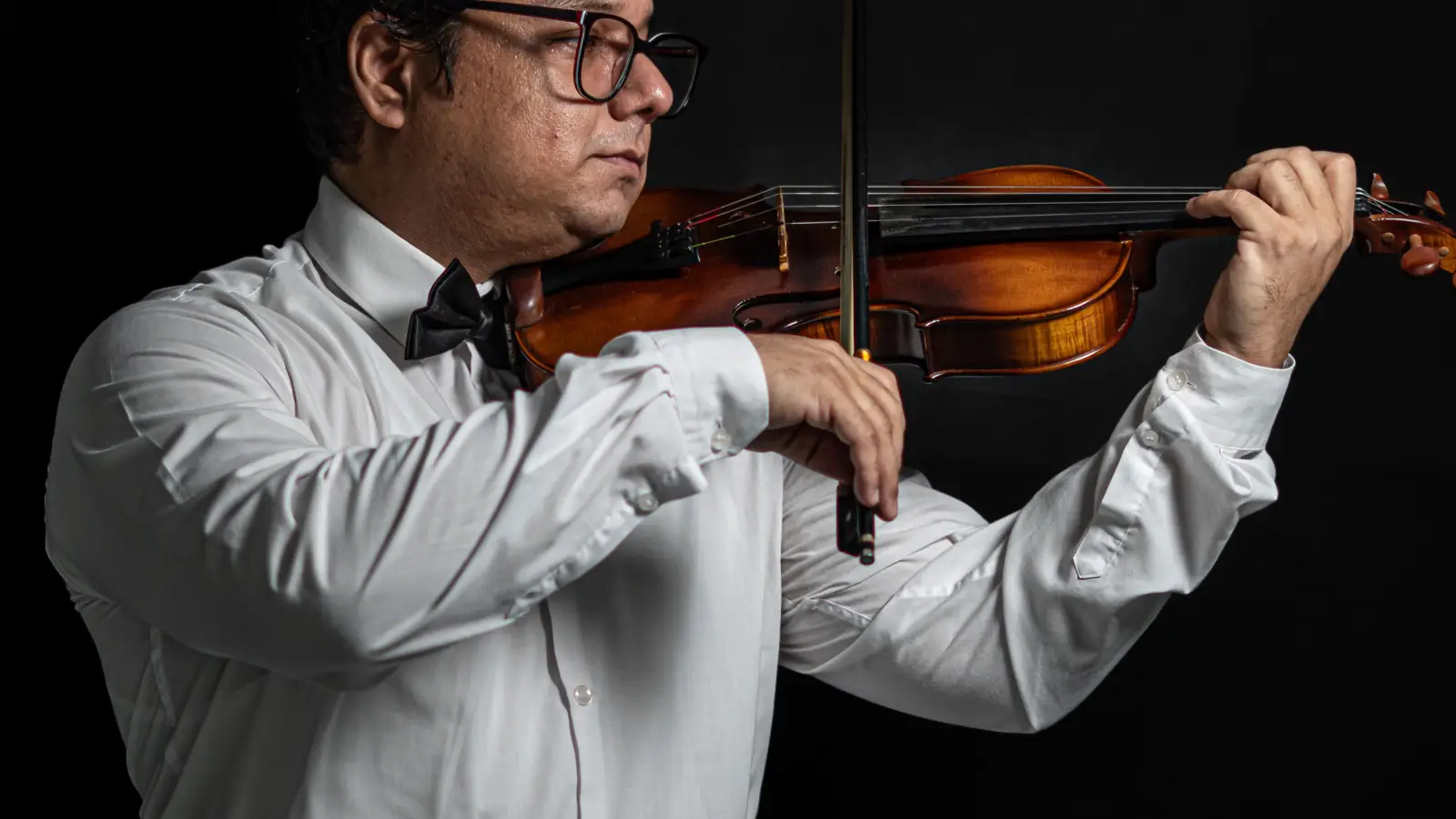
The professional violin bow hold is a dynamic system of weight distribution, flexibility, and controlled release. It is not a set of finger positions you memorize from a photo. This guide tells you exactly how to build a bow hold that works.
What a Professional Bow Hold Looks Like—And What It Actually Does
At first glance, a correct bow hold follows a familiar pattern: the thumb rests on the stick across from the middle finger, the pinky curves on top, the index finger wraps around the grip. But a still photograph ignores everything that happens once the bow moves. A functional bow hold continually redistributes weight, flexes at the finger joints, and releases tension so the bow speaks cleanly. Without this dynamic layer, even a technically accurate grip produces scratchy, inconsistent sound.
The standard setup starts with the thumb bent and placed between the leather grip and the frog, opposite the middle finger's tip joint. The index finger drapes over the grip between its first and second joints, the middle finger rests on the frog's silver ferrule, the ring finger follows naturally, and the pinky sits curved on top of the stick near the screw. This arrangement is the starting point. Nothing more. A teacher or a photo can show you where each finger goes—only training your hand to move turns that arrangement into a working bow hold.
Why a Static Grip Fails—Even When It Looks Right
Beginners memorize finger positions and then clamp down to keep everything in place. The result is a frozen hand that cannot respond to direction changes or varying pressure needs. When the thumb and fingers are tense, the bow bounces irregularly or skids across the string. The pinky, for example, can only act as a counterweight if it stays flexible and responsive. A static hold forces the arm to do all the work. That means effortful, uneven tone and quickly fatigued muscles.
A bow hold that looks polished in a lesson mirror can become useless the moment the bow leaves the string. Take a well-placed pinky that never moves. On an up-bow near the frog, that pinky must accept weight to balance the bow tip. If it's locked straight, the bow wobbles away from the bridge. The dynamic alternative trains the hand to adjust constantly: release tension at the right moment, shift weight between fingers, and let the wrist and fingers act as a suspension system.
The Three Dynamic Principles Professionals Rely On
1. Weight, Not Grip Strength, Produces Sound
Professional violinists do not squeeze the bow into the string. They channel the natural weight of a relaxed arm through the hand—specifically through the index finger on down-bows and the pinky as counterbalance on up-bows. The amount of weight varies with dynamics: more for loud passages, less for soft ones. A grip that is too tight blocks this weight transfer. The sensation is one of leaning into the string, not pressing.
To feel it, hold the bow lightly without any downward pressure. Let the full weight of your right arm sink through the shoulder, elbow, and into the index finger where it contacts the bow. That sinking sensation—not finger squeeze—creates a full, resonant tone.
2. Flexibility: A Bow Hold That Breathes
Watch a pro's hand during a long bow stroke. The fingers flex and extend visibly. The thumb joint opens and closes, the index finger rolls forward slightly to increase pressure, and the pinky lifts off entirely on aggressive down-bows at the frog. This flexibility works as a shock absorber, smoothing out bow changes and preventing the dreaded crunch at direction switches. It also keeps the bow in contact with the string during crossings, when the hand angle shifts naturally.
Without finger flexibility, every bow change becomes a jerk. The thumb must bend and straighten slightly. The pinky must lift and re-place. An adult beginner who has years of gripping pencils or steering wheels may find this looseness counterintuitive. Nevertheless, it is the single biggest physical shift that separates a working bow hold from a decorative one.
3. Control Through Release, Not Constant Tension
The more you try to control the bow by gripping harder, the less control you actually have. True bow control uses an economy of tension—engage only the muscles needed for a split second, then release. The thumb provides just enough counterpressure to stabilize the bow, never squeezing. The middle two fingers act as passive stabilizers, not active clamps. When the hand is relaxed, the bow responds instantly to the slightest intention from the arm or wrist. String changes and bow distribution become seamless.
Try this: hold the bow in playing position and have someone gently slide the bow out of your hand. If you are gripping, the bow will resist and jerk. If your hold is properly relaxed, the bow slides smoothly while your fingers keep enough contact to maintain control.
Common Mistakes That Look Right but Sound Wrong
The Frozen Thumb
A thumb locked straight or overly bent cannot absorb bow changes. That creates a stiff, jolting motion. The correct thumb is bent, but the tip joint remains supple. It should flex slightly when the bow changes direction. Test yours: can you wiggle the bow stick slightly while keeping the hand relaxed? If not, the thumb is too fixed.
The Collapsed Pinky
A straight, locked pinky on top of the stick looks acceptable in a photo, but it cannot act as a lever. On up-bows near the frog, the pinky must bear weight to keep the bow balanced. A flexible, curved pinky is essential. If the pinky collapses or locks, the bow wobbles. Practice placing the pinky tip on the stick and then tapping it up and down without moving the rest of the hand.
Over-Gripping with the Index Finger
Squeezing the bow between the thumb and the base of the index finger over-engages the large forearm muscles and forces a rough tone. Professionals wrap the index finger lightly and use it to direct weight, not to clamp. The grip should rest near the first joint's crease, not deep in the web of the hand.
Ignoring the Wrist's Role
The wrist is not part of the bow hold itself, but a rigid wrist forces the fingers to overcompensate. The bow hold must work with a flexible wrist that leads the stroke. When the wrist is stiff, the fingers' dynamic adjustments become impossible. Bow an open string while watching your wrist in a mirror. The wrist should lead the direction change, not remain frozen.
Exercises to Build a Dynamic Bow Hold From Day One
Windshield Wiper Movement
Hold the bow vertically in front of you, fingers in playing position. Without moving the arm, rotate the wrist so the bow tip moves left and right. Feel the fingers and thumb adjust to maintain contact. This teaches finger flexibility.
Pinky Taps
Hold the bow horizontally in playing position. Gently tap the pinky on top of the stick without moving the other fingers. Then, on a real down-bow, consciously let the pinky lift off the stick at the frog and return during the up-bow. This builds the pinky's independent motion.
Weight Transfer Slides
Place the bow on the string near the frog. Without any extra pressure, let the weight of the arm sink through the index finger to produce a smooth tone. Slowly draw a down-bow while paying attention to the transfer of weight from the pinky to the index finger. Reverse on the up-bow. This exercise turns the static hold into a weight-management system.
String-Crossing Creep
Play open strings in a slow, continuous bow stroke, crossing from G to E and back. As you cross, observe the subtle rotation of the hand and the finger adjustments. Do not grip harder. Let the fingers adapt. This develops flexible control across string levels.
Key Takeaways
- A professional bow hold is a dynamic system of weight distribution, flexibility, and controlled release—not a rigid finger configuration.
- Tone quality depends on channeling arm weight through the hand, not squeezing the bow.
- Flexible fingers and thumb absorb bow changes and string crossings, preventing scratchiness.
- Common mistakes like a frozen thumb, collapsed pinky, or over-gripping index finger undermine sound even when the hand looks correct.
- Daily exercises focusing on wrist and finger mobility turn the bow hold into a responsive, functional tool.
Spend the first five minutes of every practice session on the exercises above, one dynamic principle at a time. A bow hold that works from day one isn't about perfect finger placement. It's about training the hand to move with the bow, not against it.