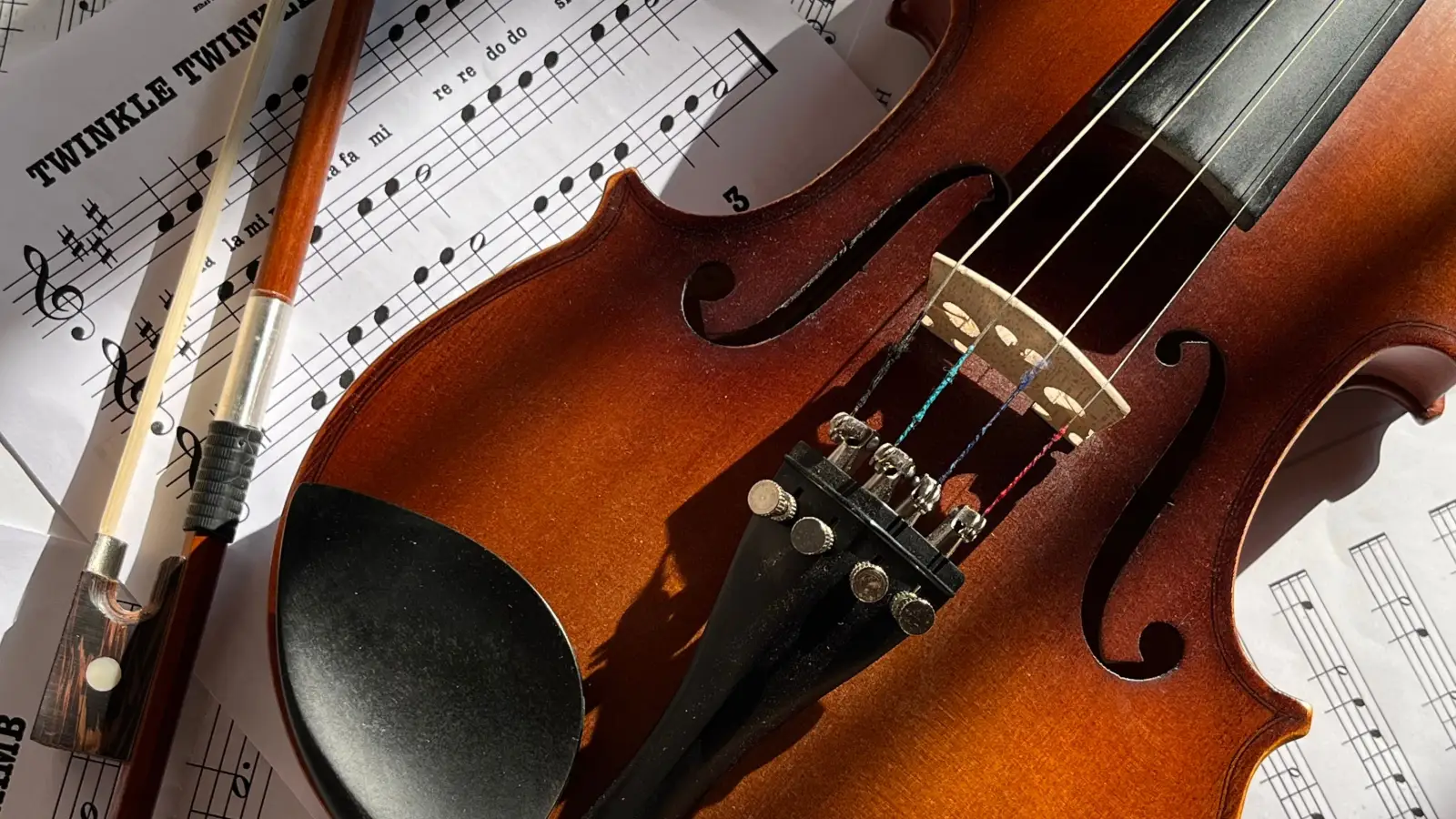
Fine tuners aren't a mark of inexperience. They're a precision tool that working professionals depend on every day — for the E string that refuses to settle, for a cello's stubborn low tensions, for saving precious seconds between pieces. If you've been told that using fine tuners means you haven't mastered the pegs, that advice overlooks how real musicians operate.
The partnership between pegs and fine tuners is one of rough work and fine detail. When a violinist in a professional orchestra reaches for that tiny screw at the tailpiece, nobody thinks less of them. The audience only hears a note that lands where it should. This is the practical reality worth holding onto as you read.
Four Ways You Might Be Thinking About Fine Tuners Right Now
Depending on why fine tuners are on your mind, what you need to take from this article shifts slightly. Here are the most common starting points:
- The Adult Learner: You picked up an instrument later in life and worry that fine tuners will make you look like a novice. Route ahead: See how pros use them daily, and why they're actually a sign of smart, efficient practice — not a crutch.
- The Traditionalist Student: Your teacher insists on peg-only tuning, but every attempt leaves you anxious and sharp. Route ahead: Learn how pegs and fine tuners were designed to work together and how using both can turn tuning into a calm, two-step habit.
- The Concerned Parent: You're choosing a first violin for your child and notice that student models always come with four fine tuners. You wonder if that will hold back their progress. Route ahead: Understand why fine tuners support early learning and at what point some players choose to remove a few.
- The Upgrading Player: You've invested in a better instrument and someone suggested ditching the fine tuners to improve tone or look "serious." Route ahead: Discover what professionals actually do, then decide with confidence — not pressure.
The Simple Mechanics Behind Those Tiny Screws
Fine tuners are small lever mechanisms mounted on the tailpiece. Turning the screw moves a hook or arm that changes the string's speaking length by a hair, shifting the pitch by mere cents. They're built for the final touch after the pegs have already brought the string close to the goal.
They cannot replace pegs. If a string sits more than a half step away, a fine tuner will bottom out or loosen to its end before you reach the correct pitch. That's why gross adjustments still belong to the pegs.
Concrete action: Tune a string roughly with the peg, then switch to the fine tuner for the last cent or two. Feel how much more controlled that small movement is compared to the peg's larger arc.
Ready to move on? You can explain the difference between gross and precision tuning without hesitation — and you've felt it in your own hands.
How the Pros Actually Use Fine Tuners (and Why You Can Too)
Walk into any orchestra rehearsal and glance at the violins. Almost every single player will have a fine tuner on the E string, at minimum. Steel E strings are thin and sensitive; a tiny peg nudge can send the pitch soaring past the target. A fine tuner gives them the fractional control steel demands.
Cellists almost universally keep fine tuners on all four strings. Their strings are heavier, peg tuning is physically demanding, and the lower pitch register makes precise intonation critical in ensemble settings. Violists and bassists use fine tuners in configurations that match their string type and personal comfort — there is no single "professional" standard that involves zero fine tuners.
The real lesson: fine tuners aren't a badge of beginner status. They're a sign that someone prioritizes accuracy and time.
Concrete action: The next time you watch a professional performer, even in a video, look at the tailpiece. Count the fine tuners. You'll rarely see none.
Ready to move on? You no longer equate fine tuners with a lack of skill, and you can name a practical reason professionals keep them.
Choosing Your Setup Without the Guilt
Student instruments frequently arrive with four fine tuners. This harks back to classroom efficiency — it lets young musicians tune with minimal peg stress. As players advance, they sometimes reduce the count. The thinking is that each metal fine tuner adds a little mass to the tailpiece, which could theoretically soften the resonance. In practice, the difference is subtle and most ears cannot detect it outside of a solo, quiet hall.
Many advancing violinists settle on one fine tuner for the E string. Violists often keep one on the A string. Cellists usually retain all four. The choice comes down to what helps you tune quickly and accurately in your real playing life, not what looks serious.
If your tailpiece uses removable fine tuners, you can experiment. Add or remove one and play for a week. Pay attention to how tuning feels. If removing a fine tuner makes tuning a chore, put it back. There's no virtue in struggle.
Concrete action: Look at your instrument's tailpiece. If it allows it, try living with one fewer fine tuner for a while and see if tuning becomes harder. The answer will tell you what matters most.
Ready to move on? You can state why your specific fine-tuner count makes sense for your strings and your playing situation, without feeling the need to apologize for it.
Tuning with Both: A Sequence That Reduces Stress
Here's a pattern that works for nearly everyone, from a first-year student to a seasoned principal player:
- Turn the peg to bring the string close to pitch. Listen for approximate accuracy — you don't need perfection yet.
- Switch to the fine tuner for the final cent or two. Turn slowly and listen for the beating between notes to disappear.
- If your fine tuner reaches its limit before you're in tune, back it all the way out. Then use the peg to bring the string slightly sharp, and tune down with the fine tuner. This resets your range.
This approach makes string breakage less likely and keeps the whole process unhurried.
Concrete action: Run through this sequence on every string the next time you tune. Time yourself; with practice, you will get faster and calmer.
Ready to move on? You can tune your instrument in under two minutes without panic, using pegs for the big moves and fine tuners for the pinpoint finish.
Signs You've Moved Past the Fine-Tuner Stigma
- You can describe gross tuning vs. fine tuning without hesitation.
- When you see fine tuners on a professional's instrument, you interpret them as a smart choice, not a shortcut.
- You can justify your own fine-tuner setup based on your instrument and the strings you use.
- You tune with a relaxed rhythm: pegs for rough, fine tuners for exact.
- You no longer worry that someone will judge your skill by how many tiny screws are on your tailpiece.
Concerns Worth Deferring Until They Genuinely Affect Your Sound
- "Fine tuners dampen the sound." On a very responsive, high-end instrument played solo in a quiet space, a heavy tailpiece with multiple metal fine tuners can slightly mute overtones. For most home practicing, lessons, and ensemble playing, the effect is negligible. This concern becomes real when you're a conservatory student or professional performing unaccompanied recitals — and even then, many keep at least one fine tuner.
- "They add too much weight and change the balance." Again, this matters only at the margin where every gram of tailpiece mass might be tweaked. At your current stage, the benefit of reliable tuning far outweighs a barely perceptible change in resonance.
- "You should learn to use only pegs so you don't rely on a crutch." Pegs are essential, but fine tuners are not a crutch — they are a tool. The goal is to be in tune, not to prove you can tune the harder way. In rehearsal, no one asks how you got the A; they just need it to be right.
Questions That Come Up When You Stop Apologizing for Your Setup
Do fine tuners affect sound quality?
They can, but the effect is usually extremely subtle. The added mass of metal fine tuners on the tailpiece may slightly dampen upper overtones, but this is only noticeable on fine instruments under ideal listening conditions. For most players, the advantage of precise tuning outweighs any marginal tone change.
How many fine tuners should a violin have?
Beginners often start with four for convenience. As skill develops, many players keep one for the E string. Cellists typically keep four at any level. There is no universal rule — it's a practical choice.
Can I remove fine tuners once I get better?
Yes, if your tailpiece allows removable fine tuners, you can take them off. But ask yourself whether removing them actually improves your playing experience. Many advancing violinists keep at least one because the E string remains difficult to tune with pegs alone.
Why do some violins have four fine tuners and others none?
Student instruments often come with four to make classroom tuning faster and less stressful. Older or higher-end instruments may have none, but their owners frequently add a single fine tuner for the E string after purchase. The presence of fine tuners says more about the instrument's intended use than the player's ability.
Where You End Up When You Trust the Tool
Confidence looks like walking onto stage or into a lesson and knowing you can touch up your tuning in seconds, without stress. The first action: if peg-only tuning has been a battle, add a fine tuner for the string that gives you the most trouble — often the E — and feel what precision tuning really offers.