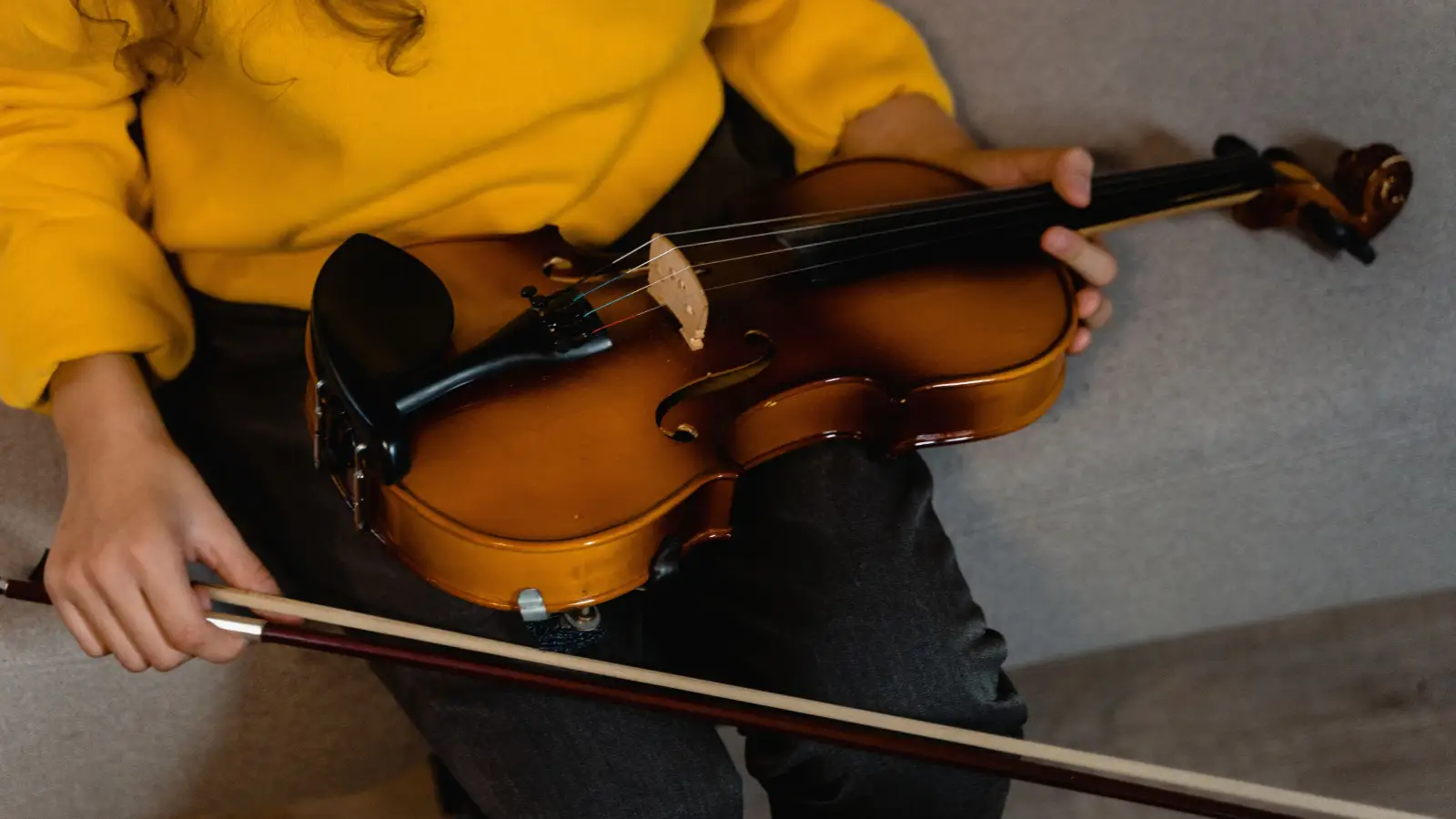
Forget the glossy photos that make every violin look the same online. Your beginner violin budget isn’t buying a prettier shade of varnish—it’s buying three distinct levels of playability that you’ll actually feel in your hands and hear in your ears: factory student, workshop step-up, and handmade. The most sensible takeaway right now is that a workshop step-up ($500–$800) hits the balance point where tone, tuning stability, and responsiveness finally stop working against a beginner. A factory outfit at $200–$400 is a low-stakes trial, and a handmade one at $1,000–$2,500 is a long-term bet for people who already know they’re committed. Notice the pattern: each tier costs roughly twice the one below it, and that pattern is the spine of this whole article.
What Each Tier Costs and Delivers—Side by Side
| Factory Student | Workshop Step-Up | Handmade | |
|---|---|---|---|
| Approximate price (outfit) | $200–$400 | $500–$800 | $1,000–$2,500 |
| Key features | Machine-made body, basic fittings, factory strings | Partially hand-finished, better fittings, upgraded strings | Hand-carved by a single maker, premium aged wood, high-quality fittings |
| Performance (tone and response) | Dull, boxy sound; limited dynamic range; slow bow response | Clearer, more resonant tone; better projection; quicker response | Complex, nuanced voice; wide dynamic and color range; articulate response |
| Ease of use | Tuning pegs often slip; action can be high; prone to buzzing | More stable pegs; comfortable setup; fewer mechanical frustrations | Effortless to play once adjusted; pegs hold pitch well; minimal setup surprises |
| Best for | A first few months when you aren’t sure violin will stick | Students who have started lessons and want an instrument that won’t hold them back | Serious adult beginners, advancing teens, or anyone treating violin as a long-term pursuit |
The $200–$400 Factory Student Violin—What You’re Really Getting
These are the violins that show up in glossy starter kits with a case, bow, and rosin, and they’re built on assembly lines, not benches. The wood is often lower-density, the nut and bridge are generic shapes rather than adjusted for comfortable string height, and the soundpost may be stuck in there without much thought. None of that makes them unplayable out of the box, but it guarantees that a beginner will have to muscle through obstacles they didn’t create.
Where factory outfits earn their keep is in the sheer accessibility they provide. For an adult who can’t decide if violin is a passing whim or a real obsession, dropping $200–$400 is a sane gamble. The real trick is to get a good shop setup afterward—a luthier can reshape the bridge, adjust the soundpost, and fit the pegs properly, and suddenly a $300 box becomes a decent starter instrument. Skip that step, and the player struggles with tuning that never sticks, strings that feel like they’re fighting back, and a tone that makes every bow stroke sound like punishment. Many walk away convinced they have no talent, when the truth is the instrument was sabotaging them from day one.
One critical nuance: a lot of factory outfits are rebadged versions of the same Chinese workshop template. They’re inconsistent rather than inherently awful. If you’re going this route, expect to spend an extra $50–$100 on setup, and only buy from a shop that actually checks the instrument before shipping—not from a random internet listing that ships directly from a warehouse.
The $500–$800 Workshop Step-Up—Where the Instrument Stops Fighting Back
Step-up violins sit in that sweet spot where the extra money doesn’t just buy a nicer label; it buys real improvements in playability. They’re still made in workshops, but the plates are graduated with more attention, the scroll often gets hand-finished, and the fittings are genuine ebony instead of painted softwood. The wood itself is at least a bit better selected and aged, even if it’s not decades old.
For a beginner, the shift is visceral. The tone gains body and warmth, and it doesn’t collapse when you try to play quietly or dig in for a forte. The bow grabs the string more predictably, so you get less scratch and a more even voice across all four strings. Tuning pegs are fitted rather than press-fit, which means they hold their pitch instead of slipping every ten minutes. The bridge is shaped so that string heights feel natural under the fingers, cutting down on fingertip pain and annoying buzzing.
This is also the tier where the instrument starts giving useful feedback. A factory violin often makes every note sound more or less the same, robbing the player of the audio clue that says “that was a good bow stroke.” A step-up violin actually rewards small adjustments in speed and pressure, which speeds up ear training and bow control. For a student taking weekly lessons, that difference can be the line between sounding like noise and sounding like music—and that’s a huge motivator.
No, it’s not a forever instrument. Serious players will eventually move on. But it’s the point where the violin stops being a problem to overcome and starts being a tool that actually helps.
The $1,000–$2,500 Handmade Violin—Buying Potential
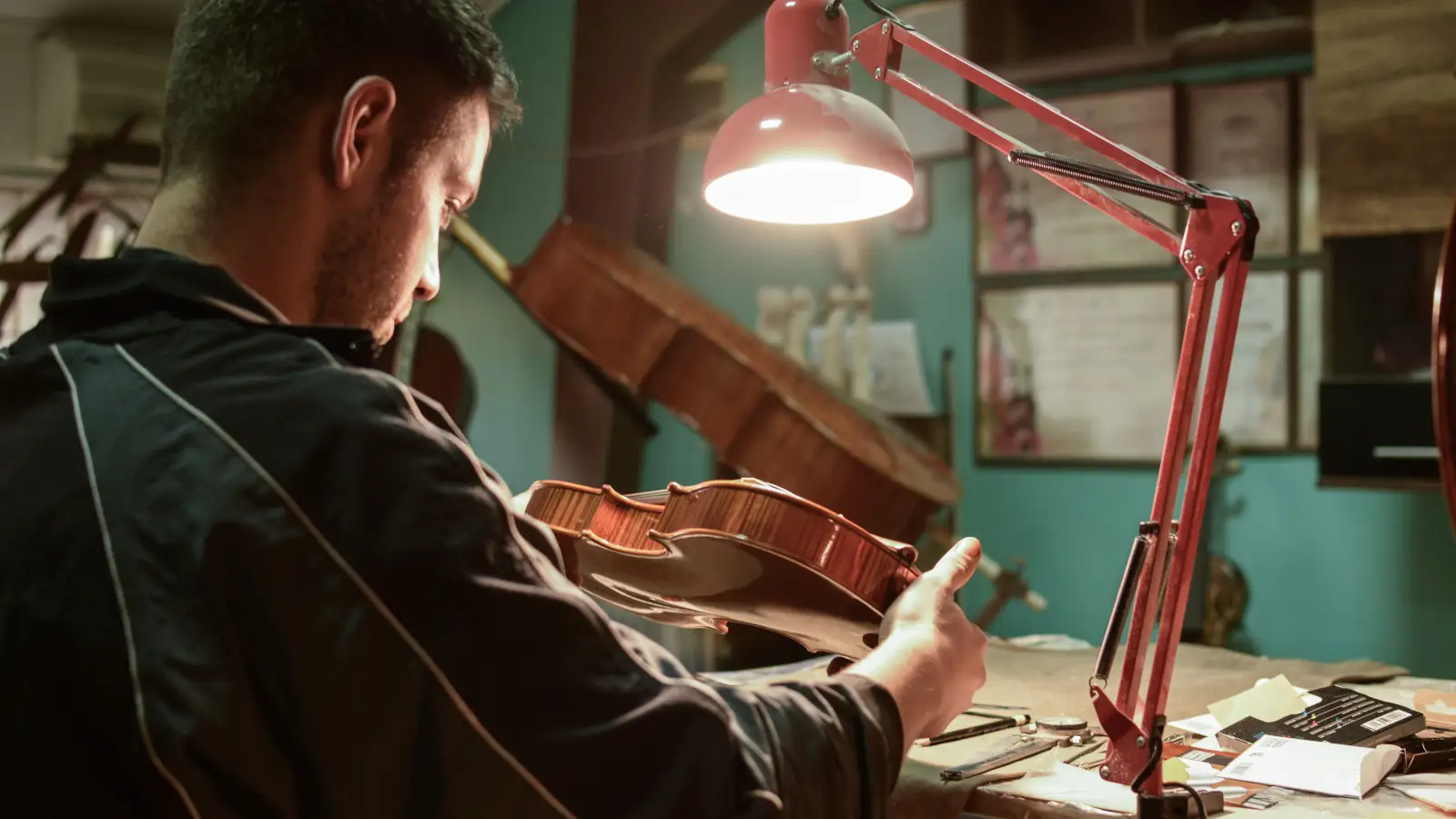
Handmade beginner violins are built by a single luthier, often with traditional methods and wood that’s been seasoned for five, ten, or more years. They’re not always labeled “professional,” but they’re student instruments built to a standard that respects the player’s future ability. The difference is structural: the arching, graduation, and bass bar are optimized for a specific tonal personality, not just glued together to pass a quality check.
What you hear is a voice with layers. You can play pianissimo with a silky texture and still project across a room. You can lean into a phrase and feel the instrument open up instead of choking. The strings respond to the lightest bow stroke, which reduces the physical effort needed to produce sound. For an adult beginner, that low-effort responsiveness directly combats the shoulder and wrist tension that comes from fighting an unresponsive violin.
Intonation also gets easier—not because the violin magically fixes your finger placement, but because a well-voiced instrument resonates so clearly that it shouts at you when you’re a millimeter off. A factory violin can hide pitch errors behind dullness; a handmade one won’t let you hide. That honest feedback is a fast-track learning tool.
The obvious tradeoff is cost. Spending a grand or more before you can play a scale is a big leap. That’s why handmade instruments often serve adults treating violin as a serious hobby, or families upgrading a gifted child who’s already outgrown a factory model. They also hold resale value far better—a well-maintained handmade violin from a known workshop can often sell for a significant portion of its original price, while most factory instruments depreciate like used furniture.
Tone, Setup, and Longevity—Where the Tiers Actually Separate
When you line up these three categories side by side, the gaps aren’t equal. The biggest practical leap for a beginner is from factory to step-up. The jump from step-up to handmade is more about depth and expressive headroom.
Tone quality: Factory violins are thin and nasal, especially on the A and E strings. Step-ups add warmth and a clearer core. Handmade violins produce complexity—multiple harmonics that blend into a sound that feels alive, not flat.
Setup and reliability: The step-up tier is the first where you can reasonably expect the instrument to show up ready to play from a reputable shop. Factory outfits usually need post-purchase work; handmade ones are typically set up meticulously by the maker.
Learning feedback: The step-up shines here. It rewards good technique and punishes sloppy technique just enough to correct you, while a factory instrument punishes everything indiscriminately. A handmade violin gives the richest feedback, but that level of detail isn’t essential for the first year or two.
Longevity: A factory violin will serve maybe one to two years before its limitations cause real frustration. A step-up can carry a student through middle school or several years of adult study. A handmade violin can last a lifetime and, with maintenance, improve with age.
Resale: Step-up and handmade violins hold value better, with handmade the clear winner. If you plan to upgrade later, you can recoup part of the investment.
Matching the Tier to Your Situation
If you’re testing the waters and have a hard budget ceiling: Get a factory student outfit from a shop that includes a setup, or rent first. The upfront cost is low, and you can walk away without regret if violin doesn’t stick.
If you’re a committed beginner taking lessons: The workshop step-up is the pragmatic sweet spot. The extra few hundred dollars buy playability that keeps you progressing—and, just as important, keeps you interested. You’ll spend less time wrestling with the instrument and more time actually learning.
If you’re an adult with a clear goal or a parent of a highly motivated student: The handmade tier makes sense when you already know violin will be a multi-year pursuit. It’s especially worth considering for adults, because a responsive instrument reduces the physical strain that comes from compensating for an ungiving violin.
If you’re shopping for a child who might outgrow the instrument size but not the passion: Go step-up. The resale market for fractional-size violins is alive and well, so you can often sell and move up without taking a huge loss.
What Each Price Bracket Unlocks in a Beginner Violin
The doubling pattern—each tier roughly twice the previous—isn’t a marketing gimmick. It’s a reflection of labor and materials.
A $200 violin pours most of its cost into basic components: wood, fittings, strings, case, bow, and shipping. Very little goes into human time. At $600, a meaningful chunk pays for skilled hands: carving, graduating, fitting pegs, shaping a bridge, adjusting the soundpost, and play-testing. At $1,200 and above, the majority of the cost is the luthier’s time and expertise, plus premium aged tonewood and superior fittings.
That transition from commodity to craft shows up in playing friction. A cheaper violin can make sound, but that sound comes with resistance—the bow feels sluggish, the strings fight back, and the tuning drifts. Each price jump strips away a layer of that resistance, until the instrument feels like an extension of your intent rather than an obstacle.
Common Questions Beginners Ask About Budget and Quality
Can you actually learn on a $100 violin?
You can, but you’re learning on hard mode. Many $100 violins are violin-shaped objects, not functional instruments. Pegs slip, bridges are too high, and strings are painful to press. You’ll spend more time tuning and fighting noise than making progress. If money is that tight, hunt for a used step-up or join a rental program.
Is renting smarter than buying a cheap violin?
Frequently, yes. Rental programs at violin shops often put you in a well-set-up step-up instrument for $15–$40 a month, and many apply some portion of that rental toward a later purchase. You get a better initial experience without committing to an instrument you’ll outgrow.
How do I spot a well-set-up violin?
A properly set up violin has strings that press down easily, a bridge that sits flush against the belly, pegs that turn smoothly and hold pitch, and no buzzing on open strings. If the instrument constantly fights you, it probably needs a luthier no matter what the price tag says.
Will a more expensive violin make me sound better overnight?
It won’t replace practice, but it will stop punishing you for problems you didn’t cause. A step-up or handmade violin reveals your tone honestly, which helps you improve faster. Beginners often notice an immediate improvement simply because the instrument stops adding extra noise.
Stop Thinking of It as a Purchase; Think of It as a Learning Partner
A violin does more than sit in a case—it actively teaches you sound. Every practice session, it either supports your technique or fights it. A factory violin can get you started, but it’s also quick to wear out its welcome. A workshop step-up respects your effort and reflects it back. A handmade instrument invests in future growth. For the vast majority of beginners, the step-up tier is the clear, rational choice: it costs enough to be taken seriously, yet delivers enough to keep you playing long enough to matter.