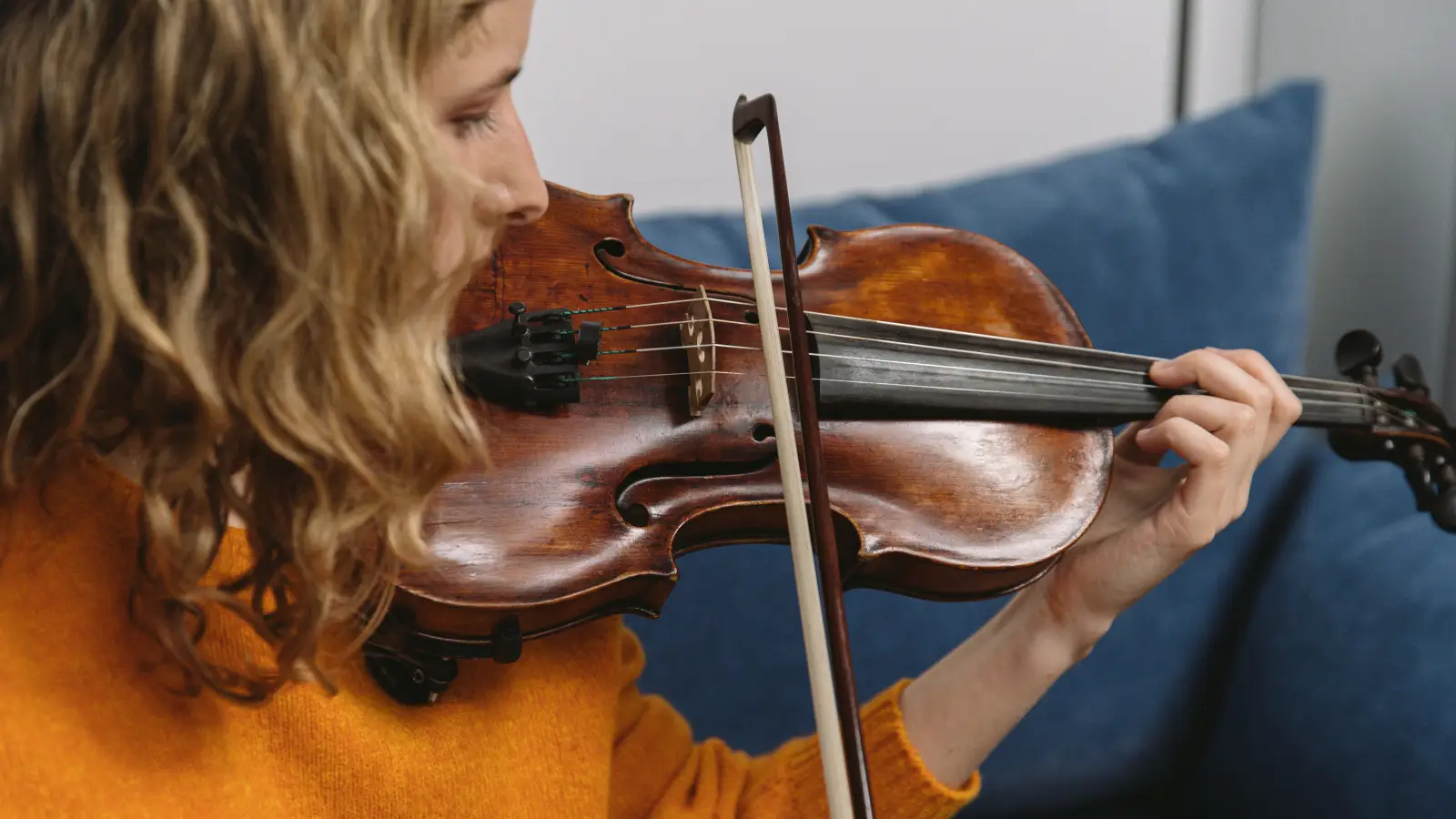
You searched for “counting while playing violin” because rhythm falls apart the moment the bow moves. Notes clump together, the beat vanishes, and the teacher keeps telling you you’re rushing. The usual advice—shout the counts out loud from the very first note—isn’t just unhelpful; it’s often the thing that’s throwing you off. Out‑loud counting hijacks the brain’s timing loop, forcing the hands into a stiff, unmusical stutter. The fix isn’t counting harder. It’s a layered method that starts with silent internal time, moves to a whispered subdivision, then syncs full voiced counting to bow direction—without ever letting the voice become the boss of the hands.
What Properly Synchronized Counting Feels Like
When the pulse lives inside the player instead of being pasted on top by the voice, a simple quarter‑note line turns into one continuous, smooth motion. Bow changes happen without a hitch, left‑hand fingers land right on the stick, and eighth‑note figures have an easy, breathing swing instead of a robotic click. You stop “counting” and just sense where every subdivision sits inside the bow stroke. That internalized feel is the destination.
The 5‑Step Silent‑to‑Bow Counting Method
These steps build the hand‑ear link without ever letting counting become a roadblock. Check off each one as you lock it in.
- Lock the beat inside your head without moving a muscle first.
- Whisper the subdivisions, keeping the pulse louder than the voice.
- Match bow direction to fully voiced subdivisions, one note per syllable.
- Fade the voice to a bare murmur as the bowing locks in.
- Return to silent mental counting and self‑check for sync errors.
Step 1: Anchor the Beat Silently Before Any Sound
Pick a metronome at a comfortable tempo—60 bpm is a solid starting point. Listen to four clicks in silence, then switch the metronome off. Keep the pulse going in your head; a light foot tap is a backup only, never the main timekeeper. Mentally count “1‑2‑3‑4” with no outward motion. This typically takes one to two minutes of focused repetition. The biggest mistake: stomping the foot or letting the foot drive the counting. The brain latches onto the physical motion and ignores the internal clock. That split will show up later as rushing.
Step 2: Whisper the Subdivisions, Keeping the Pulse King
With the silent pulse solid, add a whispered “1‑and‑2‑and‑3‑and‑4‑and” right on top. The whisper must stay softer than the mental beat—picture the numbers as a steady drum and the “ands” as the drum’s echo. Keep the foot still if you can. About two minutes is enough. The common failure: letting the whisper grow into a shout that muscles out the internal beat. When the voice gets too confident, the brain decouples the beat from the body, and the hands will rush through the easy notes.
Step 3: Voice the Subdivisions Fully and Attach Each Syllable to a Bow Direction
Now speak the subdivisions at a normal volume, but pin a bow stroke to every syllable—“1” is down‑bow, “and” is up‑bow, “2” is down‑bow, and so on. Even long notes that stretch across several subdivisions get a bow‑direction assignment on each syllable. Start on open strings only; a G‑major scale with a bow change at every syllable boundary works well. Practice this for three to five minutes. The most damaging error: letting the voice chase the bow rather than lead it. The voice is the driver; the bow is the passenger.
Step 4: Fade the Voice to a Murmur as the Hands Take Over
When the voice‑and‑bow alignment starts feeling automatic, drop the volume to a faint murmur—barely there. Keep your eyes on the music, not on the bow. If the bow stumbles, jump back to full voice for that bar. This stage needs another three to five minutes usually. The classic skip: going straight from full counting to silence. That leaves a gap where the hands haven’t learned to carry the subdivision without the auditory crutch. The result is a quiet but destructive desync.
Step 5: Return to Silent Counting and Self‑Diagnose
Stop the voice completely. Count mentally, just like in Step 1, but now with the bow moving. Record twenty to thirty seconds of playing and listen for two specific faults: (a) the first note after a bow change comes late, or (b) eighth‑note pairs are uneven. If either shows up, drop back to Step 3 for that passage. The most frequent error: believing silence equals success. Without the recording, you can’t actually hear the tiny hesitations that the full‑voice counting hides.
Quick Sync Check Before You Move On
- The beat holds steady when the metronome is off during silent counting.
- Whispered subdivisions never overpower the internal pulse.
- The voice leads the bow, never trails it.
- Murmured counting still produces even bow changes.
- A short recording reveals no late bow changes and no uneven rhythms.
Common Questions Beginners Ask About Internal Counting
Do I still need a metronome?
A metronome is a calibration tool, not a crutch. Use it in Step 1 to set the tempo, then switch it off. Leaning on a metronome through the whole layered sequence trains your eye to chase a blinking light instead of training your internal clock.
What if my whispered counting gets softer or disappears?
That’s a signal the brain is offloading the subdivision to the hands too early. Go back to full voice for two bars, then drop to whisper again. Consistency comes from rebuilding the bridge, not from forcing silence.
Can I tap my foot while using this method?
Tapping disrupts the auditory‑motor loop that the silent‑to‑voice layering builds. Beginners often tap without realizing it, which creates a second “master clock” that fights the mental one. Keep foot taps limited to the silent‑pulse stage, and even there treat them as emergency backup.
How long before I can count silently with any piece?
With ten focused minutes a day, most students get through all five layers on a straightforward scale within a week. Applying it to repertoire takes longer because the left hand adds complexity, but the layered sequence stays exactly the same.
Is it wrong to count out loud during lessons?
Not wrong—but it can become a dependency. Many teachers ask for out‑loud counting to pinpoint where the rhythm breaks. The real objective is to graduate to silent counting so the student owns the pulse, not just echoes it.
Where to Go from Here
When the layered method feels comfortable on open strings and scales, take it straight to a four‑bar phrase of whatever piece you’re working on. The logic doesn’t change: silent pulse, whispered subdivision, full voice with bow, murmur, silent. If you play along with a backing track or in an ensemble, you’ll likely notice new sync gaps, because now your internal pulse has to line up with an outside reference—exactly the skill the silent‑to‑bow sequence builds. Next time you practice, start with one minute of totally mental counting before you even open the case. That single minute rewires your ear faster than any amount of shouting “1‑2‑3‑4.”