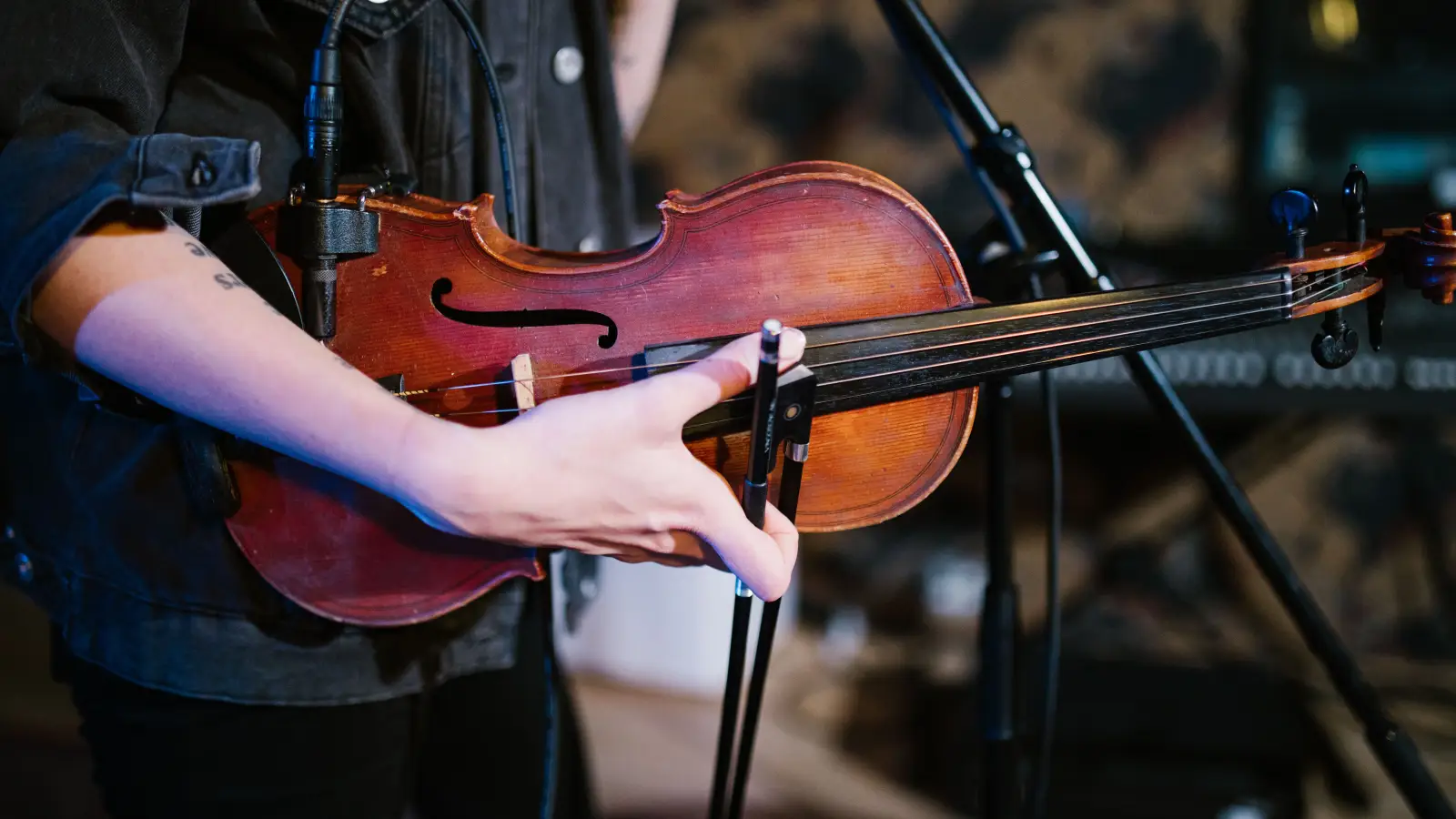
If your tone is thin, scratchy, or glassy despite solid left-hand work, the problem isn’t your fingers—it’s what’s on your bow hair. These five rosin habits—over-rosining, under-rosining, choppy application, glazed cake, and skipped cleanup—create distinct symptoms you can identify and fix in under ten minutes. Stop guessing; start with exactly what you see and hear.
Quick Self-Diagnosis: Which Sound or Mess Matches Yours?
Pick the description below that fits your practice session. Each points to a dedicated fix.
- Symptom A – Snowstorm: A cloud of white powder puffs off the strings every time you set the bow down. Dust covers the fingerboard, bridge, and instrument top after a single session.
- Symptom B – Glass Slide: The bow glides across strings with almost no resistance, producing a hollow, lifeless tone that slips at the start of every new stroke.
- Symptom C – Scratch and Cake: A harsh, gritty sound, especially during string crossings, and there is thick white or yellowish buildup concentrated at the leather grip and winding near the frog.
Find your symptom, then go to its section.
White Powder Snowfall After Every Practice Session
Excess rosin is the culprit. Two causes dominate.
Applying Too Much Rosin, Too Often
How to confirm: Tap the bow stick gently on your palm over dark paper. If a visible deposit falls after one tap, loose rosin is caked in the hair.
Fix:
- Wipe the strings with a soft, dry cloth from bridge to fingerboard.
- Brush the bow hair lightly with a clean toothbrush or rosin brush, going frog to tip. Do nothing sideways.
- Skip rosining for 24 hours. Play scales on the clean hair. If grip and clarity return, you were simply topping up too often.
- Apply rosin only when the tone starts slipping—typically every 8–15 playing hours, not daily.
Result: The snowfall stops. Tone regains warmth without the constant dust mess.
Your Rosin Is Too Soft for the Humidity
How to confirm: Feel the rosin. Is it tacky like a soft eraser? Does it leave a greasy streak on paper? Soft rosins (often “light” or low-dust formulas) over-deposit in warm, humid air.
Fix:
- Switch to a medium-hard or dark rosin built for your climate. In summer humidity, dark options like Bernardel or Pirastro Oliv often outperform light blends.
- Store the rosin in its case, in a cool, dry place—not in an un-air-conditioned room.
- Deep-clean the bow hair before applying the new rosin.
Result: Rosin transfers in a controlled amount. The powder cloud vanishes.
Glassy, Slipping Tone with Zero Grip
When the bow hydroplanes, rosin isn’t reaching the string—either because there isn’t enough, or because it cannot transfer.
The Rosin Cake Has a Hard Glaze
How to confirm: Run a fingertip across the rosin surface. If it feels slick and leaves no powder, a glass-like layer has sealed the cake.
Fix:
- Score the surface gently with fine sandpaper (400–600 grit) or the rough metal side of a rosin case until it looks dull and slightly pitted.
- Use long, even strokes from frog to tip to apply the refreshed rosin—three to four full passes.
- Test. Still slipping? Add one more pass. Pressure is not friction; avoid mashing the bow into the cake.
Result: Instant grip and a warmer, fuller tone.
Dirty Hair Can’t Hold Rosin
How to confirm: Examine the hair ribbon under good light. Are there dark, shiny strips near the frog or tip? Run a fingernail along the hair; if it feels slick instead of rough, the microscopic scales are clogged with sweat, oil, and dust.
Fix:
- Wipe the hair carefully with a lint-free cloth dampened with denatured alcohol. Keep alcohol away from the stick’s varnish—work in a ventilated space.
- Let the hair dry completely (about ten minutes), then rosin as if starting fresh.
- If the hair remains slick, it is time for a rehair. Bow hair that has lost its scale structure cannot recover.
Result: Rosin adheres evenly, and the bow grips the string properly.
Scratchy, Harsh Sound and Rosin Caking at the Frog
Often blamed on technique, this symptom is rosin physics. Concentrated rosin near the frog creates uneven friction—scratchy on one side, slipping on the other.
Short, Choppy Rosin Strokes
How to confirm: Watch your rosin motion next session. Are you rubbing the bow in rapid, inch-long back-and-forth strokes near the middle? That piles rosin onto a small zone, which then migrates toward the frog via string contact.
Fix:
- Hold the rosin flat against the full hair ribbon at the frog.
- Draw the bow across the rosin in one continuous, two-second pass from frog to tip. Repeat in the opposite direction without hesitation.
- Rotate the rosin a quarter turn every few strokes to avoid grooving.
- After rosining, wipe the underside of the hair once with a dry cloth to remove loose chunks.
Result: Even friction across the entire bow. Scratchy patches and caking clear up.
Buildup Trap at the Winding
How to confirm: Slide a soft, dry toothbrush along the hair where it meets the leather grip and winding. A puff of white means you’ve found the reservoir.
Fix:
- Loosen the bow hair slightly.
- Use a soft-bristle brush (clean makeup brush or bow brush) to flick the hair upward near the frog, releasing caked rosin.
- Wipe the winding and stick’s underside with a microfiber cloth to remove any sticky residue.
Result: The harsh edge at the frog disappears; string crossings become clean.
The Universal Resets: When They Work, When They Waste Time
Two actions solve most rosin-related tone problems regardless of your symptom. Their value depends entirely on your bow hair’s condition.
- Deep-cleaning the hair: This works if the hair is under six months old and has never been cleaned. A careful alcohol wipe followed by a full re-rosining restores grip. It is wasted on hair older than a year, brittle, or breaking—scales don’t regenerate.
- Scraping the rosin cake: Refreshing a glazed surface solves most transfer failures instantly. It does nothing if the rosin itself has expired. Rosin several years old can turn brittle and lose all tack; then you need a new cake, not sandpaper.
Try these resets before the targeted fixes. If they don’t work in ten minutes, move on.
Prevention: Three Habits That Stop Problems Before They Start
- Wipe strings after every session. A dry microfiber cloth removes rosin before it hardens. This alone eliminates most powder buildup and delays string corrosion.
- Rosin in long, single-pass strokes. Full-length strokes distribute rosin evenly, preventing deposits at the frog or tip.
- Rotate and store rosin correctly. Turn the cake periodically to avoid grooves. Keep it in its case, away from heat and humidity. Replace it every two years—or sooner if the powdery surface disappears.
Frequently Asked Questions
How often should I rosin my bow?
Every 8–15 hours of active playing is a reliable range. Rosin only when grip weakens, not on a schedule. A beginner practicing 30 minutes daily might rosin once every 10–14 days.
Can too much rosin damage my violin?
Yes. Excess rosin builds up on the varnish, attracts dust that dulls the finish, and accelerates string wear. Frequent inhalation can irritate the respiratory tract. Wipe down the instrument after playing to prevent long-term harm.
What rosin type is best for beginners?
A medium-light rosin like D’Addario Kaplan Light or Pirastro Schwarz works well in most indoor settings. It provides enough grip without being sticky and forgives application mistakes.
How do I clean rosin off my strings and violin?
Use a dry microfiber cloth for daily string cleaning. For the violin body, a cloth barely dampened with water removes stubborn dust. Avoid commercial cleaners that may leave a film unless a luthier directs otherwise. Never use alcohol on varnish.
When Nothing Else Works
If every diagnostic path fails, gather this data: bow hair age (months since last rehair), rosin brand and type, average humidity in your practice space, and a phone video of the sound. Take everything to a violin shop or luthier. Sometimes the real culprit is not rosin—aged or warped hair, a slipping bow grip, or a poorly set soundpost can mimic rosin symptoms. A professional will identify that in minutes.