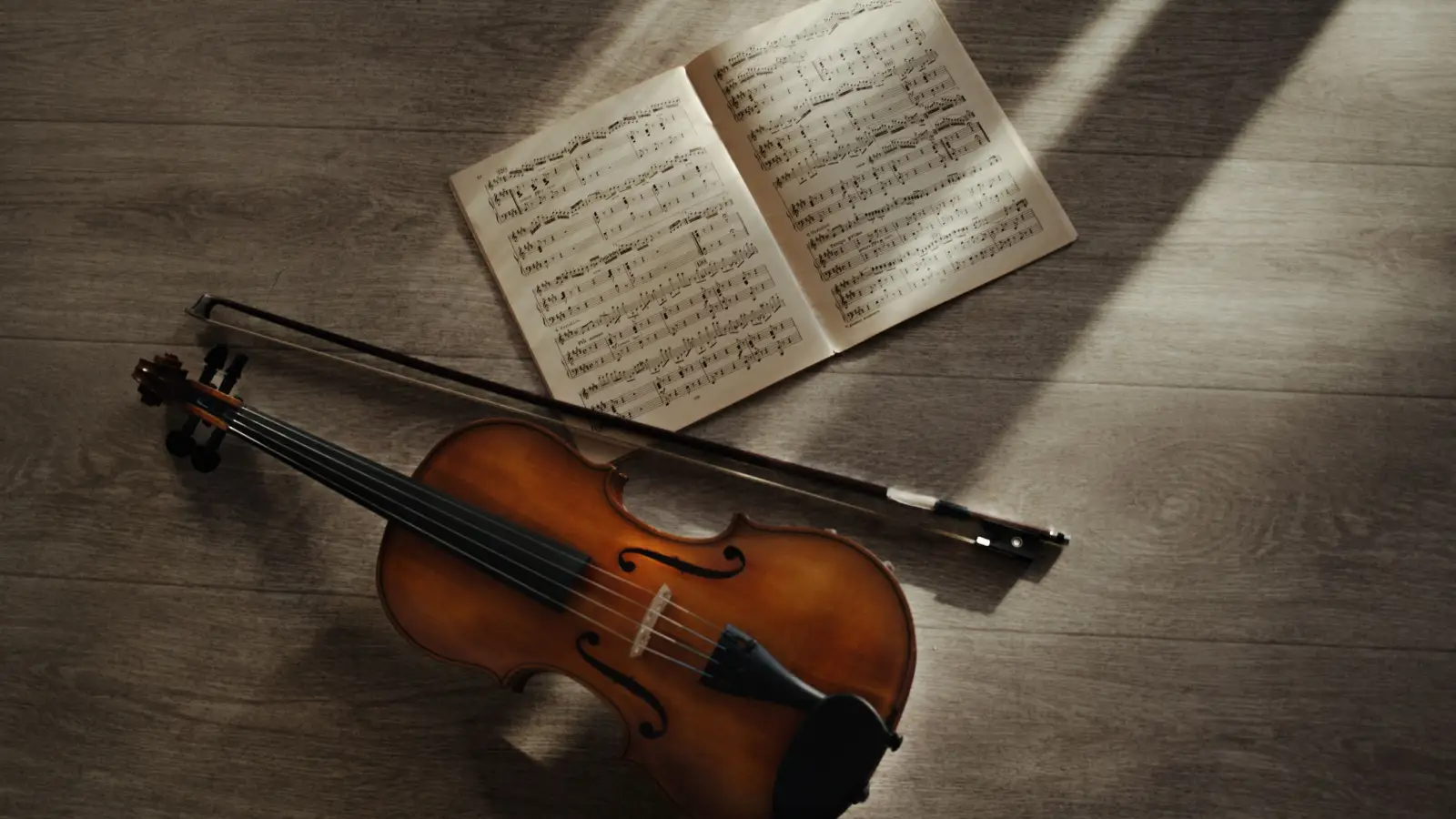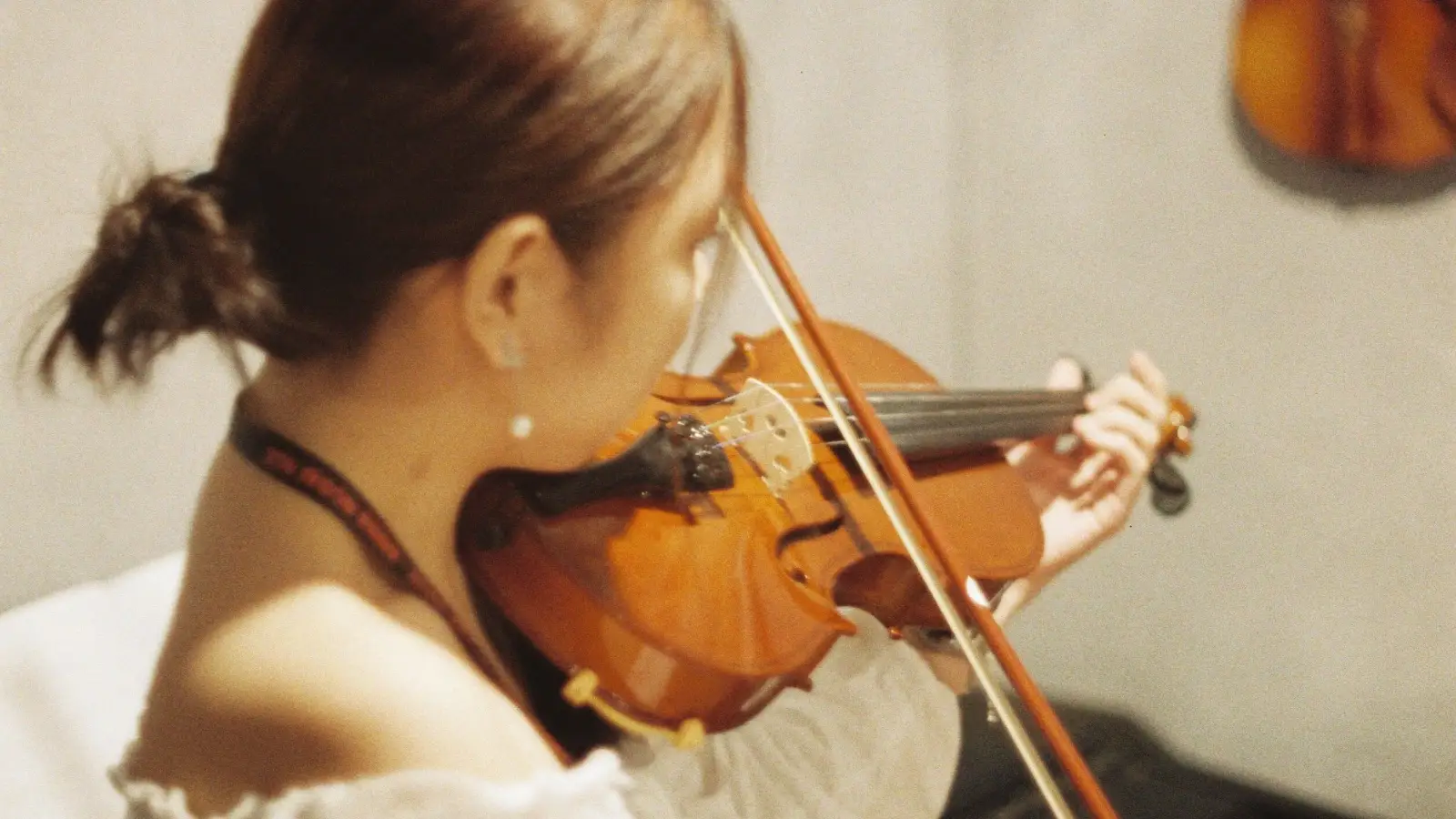
The violin bridge is a mechanical converter, not a shelf. It twists asymmetrically—driven by horizontal string vibration—to push one foot down while the soundpost holds the other almost still. That uneven movement pumps the top plate vertically and produces sound. Without this coupling, your instrument stays quiet, no matter how hard you bow.
A Plucked A String Shows the Real Job
Pluck the open A string and watch the bridge. The bass-side foot dips. The treble-side foot barely moves. That’s not a problem; it’s the whole point. The asymmetry is the mechanism, and seeing it makes the concept stick immediately.
What’s Actually Happening
Horizontal Pull Rocks the Bass Side First
The A string pulls horizontally on the top of the bridge because it’s offset from the center. That tug creates a twisting force. The bass foot, on free plate, drops. The treble foot, right over the soundpost, can’t follow. One side pumps; the other locks.
The Soundpost Creates a One-Way Lever
The soundpost sits tightly under the treble foot and acts as a fulcrum. String energy pushes the top of the bridge forward; the post resists on the treble side. The bridge rotates around that fixed point. Horizontal input becomes vertical output on the bass side.
The Top Plate Pumps Air
That downward bass-foot motion drives the top like a drumhead, but critically the movement is single-sided and large. Both feet moving evenly would cancel the pumping effect. The soundpost’s restriction forces a concentrated deflection that radiates through the f-holes.
Where You’ll Notice the Coupling at Work
Bridge Lean: The First Sign of a Misaligned Couple
When the bridge tips forward from tuning, the lever geometry changes. String angle flattens, mechanical advantage drops, and tone gets thin. Straightening the bridge restores the correct pivot and power.
Getting a New Bridge Fit
A new bridge must match the top arch and soundpost location exactly. Poor foot contact or wrong thickness bleeds energy before it can convert to vertical plate motion. A well-cut bridge maximizes the coupling’s efficiency.
Soundpost Adjustments Change the Pivot
Moving the soundpost—closer to or farther from the bridge—alters stiffness and leverage. Too tight chokes the top; too loose lets the lever collapse. Skilled adjustment improves response and volume. Always leave this to a luthier unless you’re trained.
The One Thing People Get Wrong
“The bridge just holds the strings.” That’s the most damaging misconception. If it were passive, both feet would move in unison when you pluck. They don’t. The stationary treble foot and the dipping bass foot are evidence of the asymmetric coupling. Treat the bridge as a dynamic component, not a spacer, and you’ll handle it correctly.
FAQ
Why does my bridge lean after tuning?
Tuning pulls the strings forward, gradually tipping the top toward the fingerboard. The feet stay put but the angle changes, weakening the coupling. Checking and straightening after every tuning session prevents this.
Can I straighten my own bridge?
Yes, with care. Brace the instrument, grip the bridge firmly with both hands, and pull the top back until the back face is perpendicular to the top. If it’s stuck or you’re unsure, go to a luthier—a crack isn’t worth the risk.
Does moving the bridge change the sound?
Absolutely. Position shifts string length (intonation) and pivot geometry. Even a millimeter changes bridge-to-soundpost distance, which alters volume, tone color, and response. Mark the correct position with a pencil and check it regularly.
Why is the bridge unglued?
String pressure alone holds the bridge firmly enough. Glue would prevent the micro-movements needed for energy transfer and make removal impossible without damage. The friction fit is a feature, not an oversight.
Remember the Twist
You can check your bridge’s health with a pluck and a glance. The bass foot should move, the treble foot should stay. That rocking motion is the engine. Straight bridge, correct string angle, properly set soundpost—these three factors keep the coupling working. If one is off, the gate stays closed.