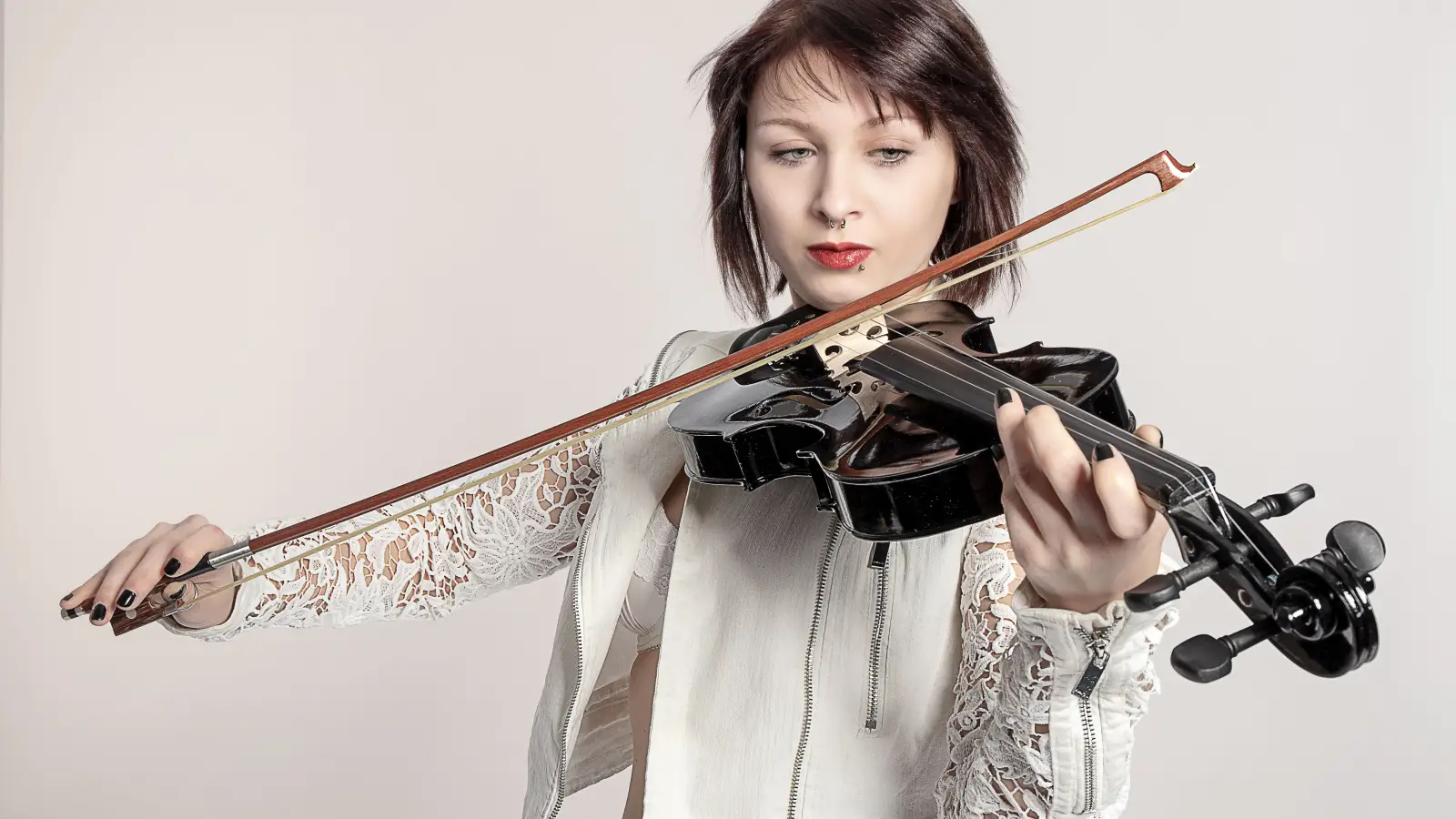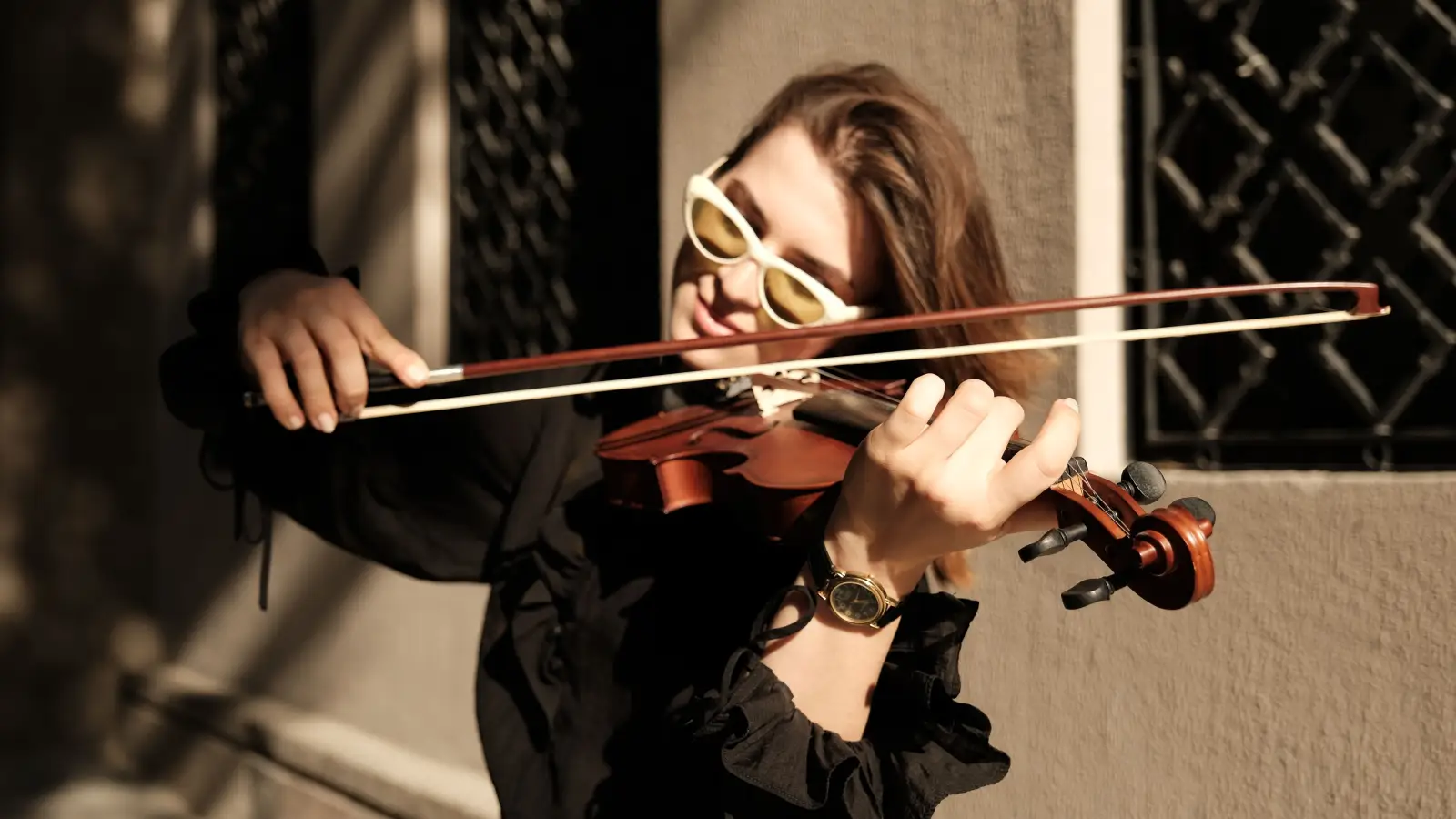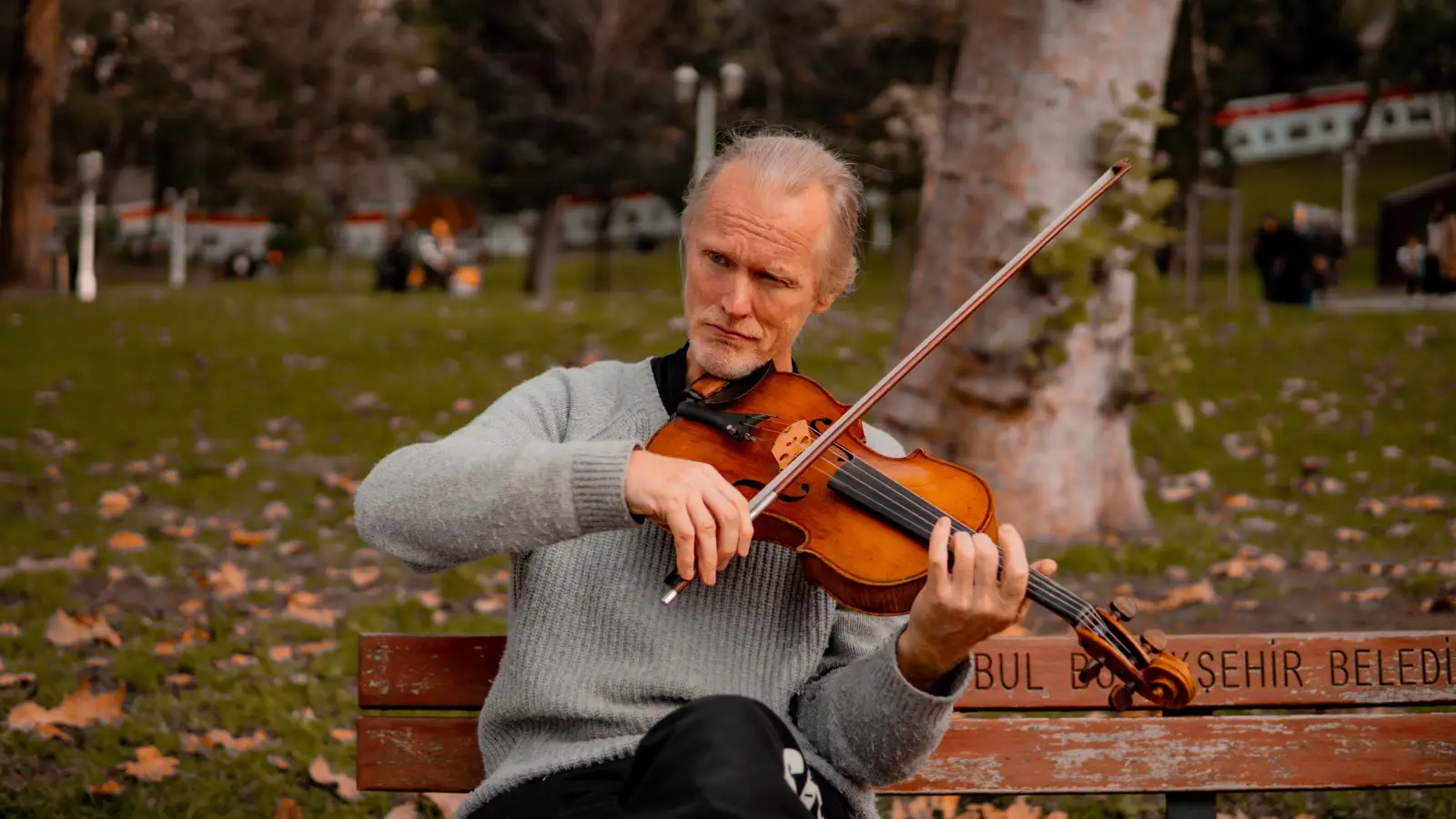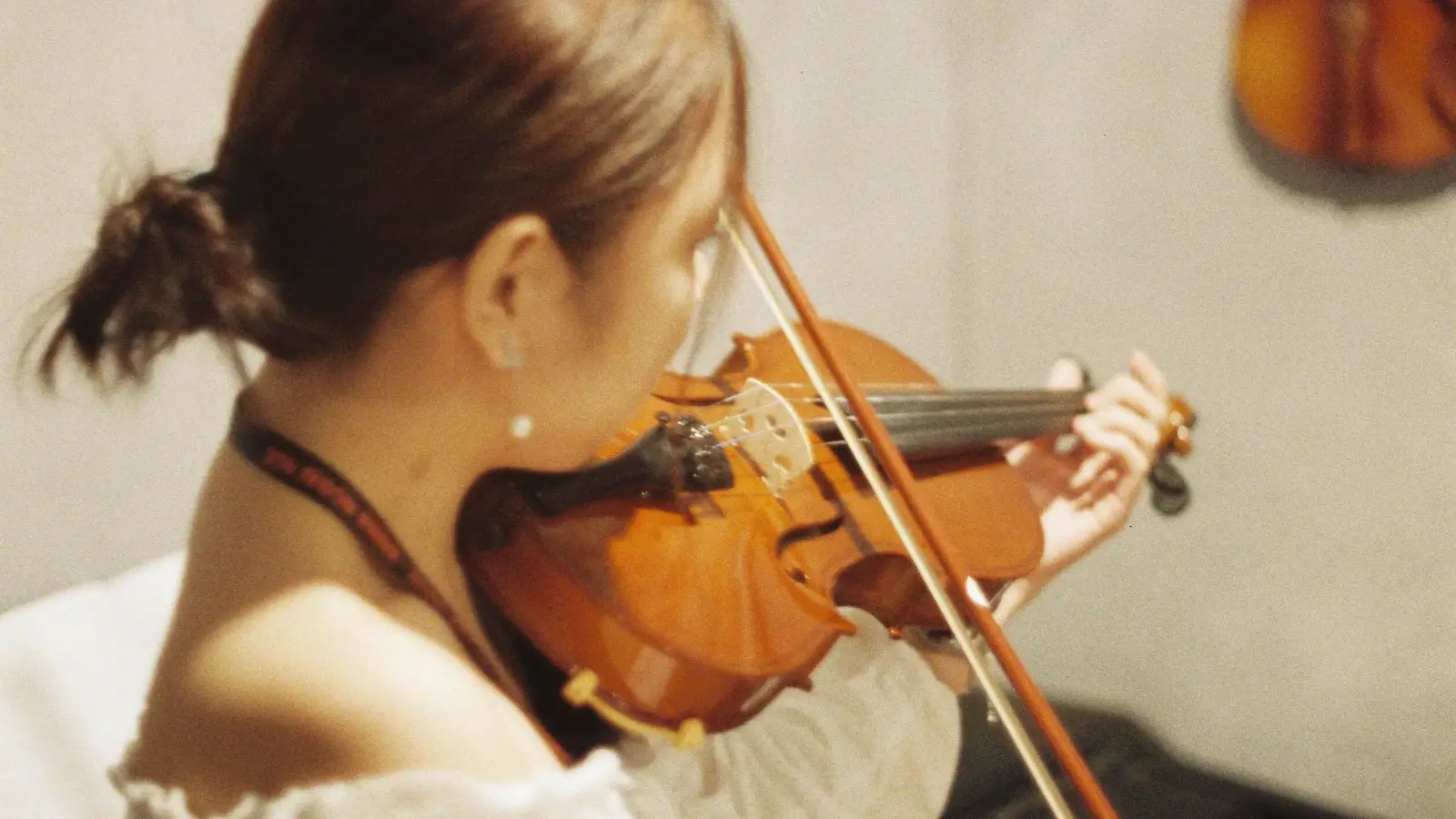
You don’t clamp a violin between your chin and shoulder. It stays by resting its weight on your collarbone; your jaw only needs light contact to keep it from sliding. No squeeze.
Freeing that grip lets your left hand move without bracing, your head turn without the instrument shifting, and your breathing stay unforced. The support comes from the collarbone — not from locking your neck.
What the Collarbone-Supported Hold Feels Like
The violin sits on the collarbone, jaw barely touching the chinrest. You can turn your head side to side and the instrument stays put. The left wrist and fingers feel loose, ready to place notes. The shoulder remains low — no hunching, no lifting.
Checklist: From Grip to Skeletal Support
- Find your collarbone shelf
- Place the violin on that shelf — jaw stays off for now
- Let your shoulder drop completely
- Rest your jaw on the chinrest as if you could slip a paper through without resistance
- Lift the left hand slightly: the violin shouldn’t drop
- Walk a few steps and see if it slips
- Breathe deeply; the hold shouldn’t tighten
Locate Your Collarbone Shelf
Feel with one hand along the top edge of your collarbone, close to the hollow of your neck. That bony ridge is where the lower bout of the violin belongs — not out toward the shoulder tip. The common mistake is placing it too far outward, which forces the shoulder up and the jaw down. Time: 10 seconds to find.
Place the Violin Without Jaw Contact
Set the instrument on the collarbone shelf and hold it lightly at the neck with your left hand. Keep your jaw away. If it tips forward immediately, adjust the tilt until the weight is solid on the bone. A typical error is clamping the jaw first, which makes the hold dependent on neck pressure. Time: 20–30 seconds to find a stable angle.
Release the Shoulder First
Before lowering your jaw, let the shoulder blade drop and the upper arm hang. A lifted shoulder tilts the collarbone forward and destabilizes the hold, triggering clamping. Most beginners raise the shoulder as they add jaw pressure — fix it by dropping the shoulder first and keeping it low. Time: 5 seconds; recheck during practice.
Make the Jaw Contact Feather-Light
Rest your jaw — not your chin — on the chinrest. Test by sliding a piece of paper: there should be no resistance. The jaw only stops rotation; it doesn’t pin the violin down. If your neck muscles feel tight or your head pushes down, ease off until you can keep the instrument stable with minimal force. Time: 15–30 seconds to dial in.
Test the Hold with a Left-Hand Lift
With the jaw lightly in place, raise your left hand barely off the neck. The violin should stay cradled on the collarbone. If it drops, go back to the previous steps — the collarbone contact isn’t solid or jaw pressure is too high. Run this check periodically to break the habit of using the left hand as a prop. Time: 5 seconds per test.
Walk and Breathe to Confirm Freedom
Take slow steps; no tension should appear in the neck or shoulder. Then inhale deeply — if the grip tightens with your breath, you’re still bracing. An unworried, easy breath means the weight is on the skeleton, not on muscle. Time: 20–30 seconds.
Final Check: Is the Grip Really Gone?
- Head turns fully left and right — no violin shift?
- Left hand glides along the neck freely?
- Shoulder blade stays low after half a minute?
- Can you hold it without discomfort while standing still?
All yes? You’ve traded the clamp for skeletal support.
Trust the Collarbone, Not Your Neck
A stable hold comes from balancing the violin’s weight on the collarbone with the lightest possible jaw contact. Once that’s in place, your left hand moves more fluidly and the sound opens up. For a quicker return to that feeling next session, spend the first ten seconds settling the violin, dropping the shoulder, and breathing out — the jaw will release on its own.