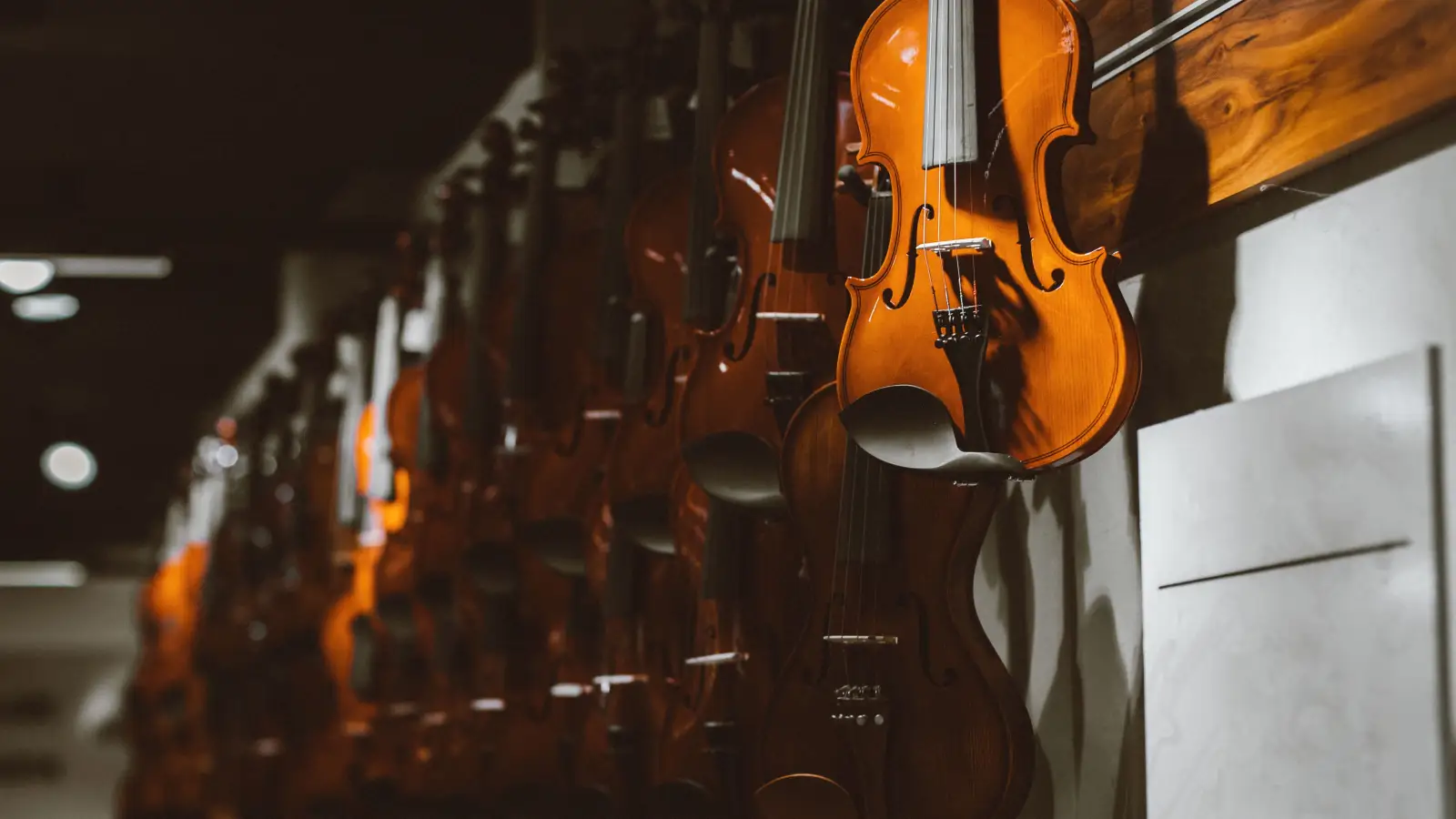
If you're reading this, one of two things just happened: either you bought a violin for roughly the price of a pizza and it sounds like a distressed seagull, or you're about to and you want to know if the bargain is too good to be true. It is. And not because the violin will fall apart—though it might—but because it will make you want to stop playing. That is the real price. Not the fifty bucks. The fact that you will put it in a closet and never know if you could have been a violinist.
A cheap violin is the most expensive choice a beginner can make. The instrument costs money; quitting costs the money and the future. By the time someone figures this out, the window for a return has usually closed, and the damage has moved from the wallet to the psyche. What follows is not a lecture on craftsmanship. It is a map of exactly where these instruments fail, how to recognize the failure before you scream, and how to avoid paying the hidden tuition that comes with every $50 violin.
The Symptom That Tells You It's Not You
The violin won't stay in tune. Not just once—every five minutes. The pegs feel like they were borrowed from a child's toy. The bridge is thick under the E string and paper-thin under the G, and it leaves the strings high enough to hurt fingers by bar 4 of anything. The bow? It seems allergic to rosin, and the sound that comes out is less music and more a cat discovering a hairbrush.
These are not beginner problems. These are signs that the instrument was not built to be played. It was built to be photographed for a listing. The root cause is straightforward: a violin that costs less than a tank of gas left the factory without a single minute of skilled human setup. The bridge was never fitted to the fingerboard. The sound post was jammed in by a machine or not placed at all. The pegs and holes are two different sizes pretending to be a pair. Every one of these defects conspires to make the instrument impossible, and a beginner has no way to tell that the problem is the tool, not the student.
Three Steps That Cut the Bleeding Right Now
If you already own this thing, here's the logic to follow before you do anything else:
- Check the return policy. If you're within the window, send it back. Even if you eat a shipping charge, you will come out ahead of the repair bill that's coming.
- Get a luthier to give you a setup quote. Not a music store that sells guitars and keyboards—a string shop. Ask what it would cost to fit the bridge, adjust the pegs, set the sound post, and install real strings. In the vast majority of cases, that number will be higher than what you paid. This is not a judgment on the luthier; it's the moment the false economy becomes a line item on an estimate.
- If you're stuck with the instrument and can't afford a setup, replace the strings and the bow first. A set of synthetic-core strings (D'Addario Prelude, for example) and a basic carbon-fiber bow with horsehair can take the edge off the misery. It won't fix the underlying geometry, but it might let you survive long enough to plan an exit.
The lesson is this: the price tag on a violin is never the full cost. With a cheap online buy, the missing setup labor is transferred directly to the buyer, with interest.
Pegs That Slip, Stick, and Sabotage Every Practice
Why it happens: Factory pegs are mass-produced cylinders pushed into holes that are not quite conical or not quite round. Add a humidity change, and the fit degrades further. Sometimes the pegs are actually tapered in the wrong direction, which means they will never seat correctly no matter how hard they are jammed in.
How to know it's the pegs, not you: Turn a peg while pushing in gently. If it slides with almost no friction, it's too loose. If it requires a hard crank that makes you wince, it's too tight. Either extreme means the surface contact between peg and hole is poor.
What to do: A luthier will ream the peg holes to a true, consistent taper and then fit new pegs or reshape the old ones to match. Peg compound and half-hearted sanding are not sufficient. For anyone still trying to practice on a bad set, constant tuning is the thief that steals the first ten minutes of every session, and eventually steals the will to begin at all.
That Screech? It’s Likely the Bow, Not Your Arm
Why it happens: The bow that comes with a $50 violin is usually a warped stick strung with something that may technically be hair. Paired with the rosin disc that feels like a hockey puck, the result is a sound that suggests the violin is being played with a utility knife.
How to confirm: Give the bow a thorough rosining—enough to see a fine white dust on the strings—and play a long, slow open-string downbow. If the tone cracks, squeaks, or drops out completely, and you see a puff of powder instead of a smooth draw, the bow or rosin is the problem.
What to do: Start with a $10 cake of decent rosin (Bernardel or Pirastro Goldflex). Sometimes that alone clears up the noise. If it doesn't, buy a basic carbon-fiber bow with genuine horsehair—roughly $50-$70. That single change can turn an unplayable mess into something that at least sounds like a violin, and more importantly, it stops you from developing bowing habits that assume constant friction is normal.
Here the deeper cost shows up: a player using a terrible bow does not just sound bad; they learn to press, to compensate, to brace. That muscle memory does not go away when they finally get a real bow. It must be unlearned. The cheap violin charged tuition twice.
The Bridge That Hurts Before the Music Starts
Why it happens: Cheap bridges arrive as blanks that are far too tall and completely flat on top. Without being shaped to match the fingerboard's curve, they leave the strings so high that the player must press through a suspension bridge just to get a note to speak. The force required causes fingertip pain, blisters, and—ironically—pushes the string sharp because of the added tension.
How to know: Sight from the scroll toward the bridge. The gap between the strings and the fingerboard should be small—about a credit card's thickness under the E at the nut end, slightly taller at the bridge end. If you can slide two cards in and still have room, the action is too high.
What to do: A luthier can cut the bridge to the correct height and contour, and sometimes the nut needs deepening as well. The parts cost almost nothing; the skill costs around a hundred dollars. This is not a DIY project for someone who just learned what a sound post is. When fingers hurt after five minutes, practice stops. When practice stops, the new player drifts away. The violin didn't just take fifty dollars; it took the practice habit, and that is much harder to replace.
The Sound Post That Gives Up
Why it happens: Inside every violin is a little wooden dowel held in place by nothing but friction. On a cheap instrument, it is often cut too short, too long, or placed in the wrong spot entirely. A light bump or even the tension of the strings can knock it loose, and once it falls, the violin sounds like a cardboard box with strings.
How to know: Sudden hollow, thin tone with no resonance. Shine a light into the f-hole; if the post is lying horizontally inside, you have your answer.
What to do: A luthier can reset it with a specialized tool, but on a cheap violin, the top and back plates are often too thin or warped for the post to stay in place. At that point, a professional might gently suggest that the money for the repair would be better spent on a violin that can hold a repair. It's the financial equivalent of a totaled car: the cost to make it run exceeds the value of the vehicle.
The pattern across all these failures is the same: cheap violins were not designed to endure the daily cycles of tuning, playing, and temperature change. They fail, and they fail quickly, right when a beginner's motivation is most fragile.
When the Violin Itself Makes You Sick
An uncommon but serious edge case: some extremely cheap violins are finished with industrial coatings that outgas for months. The smell is not just unpleasant; for some players it causes skin irritation on the chin and neck, or headaches during practice. This happens because the manufacturer used a furniture-grade finish on something that sits against bare skin for long periods.
The fix in this case is simple but harsh: do not keep the instrument near your face. No luthier can strip and refinish a violin for less than the cost of a decent beginner outfit. If a new violin smells like a hardware store after a week out of the box, or if a rash appears where the chinrest touches, the safest move is to return it or set it aside permanently.
The VSO That Learned to Tune—and Still Fails
There is a special kind of trap: the cheap violin that stays in tune, doesn't screech, and yet, as soon as a player shifts out of first position, notes become fuzzy or disappear. This points to a poorly graduated top plate or an incorrectly carved bass bar. The inside of the violin lacks the thinning and shaping that lets it vibrate evenly across its range.
No reasonable repair fixes this. A luthier could open the instrument, regraduate the wood, and replace the bass bar, but that work costs more than a well-set-up student violin. This is the false economy in its most devious form—an instrument that doesn't obviously fail, so the player blames themselves for months, thinking they simply can't play in tune, until someone finally identifies the violin as the wall they've been hitting.
How to Never Pay This Price Again
If the violin hasn't been bought yet, avoiding the trap is straightforward.
Rent from a string shop, not a general retailer. A violin that comes from a shop that only handles orchestral strings has been set up and checked. Many shops apply rental payments toward a future purchase. The monthly cost is less than a streaming subscription and comes with a guarantee that the instrument works.
Budget for the outfit, not just the wood. A ready-to-play beginner outfit—violin, bow, case, rosin, and the labor to set everything up—starts around $300 to $500 in the United States. Anything priced well below that should trigger immediate skepticism, no matter how glossy the photos look.
Do not let a marketplace algorithm choose your first violin. Sites that sell everything from bedding to blenders ship violins exactly as they left the factory. No one opens the box to check the bridge. The buyer becomes the quality-control step, and that is not a job a beginner can do.
Chase playability, not flame. A pretty back does nothing for intonation. When comparing options, ask two questions: Was this set up by a luthier? Does the shop offer a trial period or warranty? If the answer to either is no, move on.
What to Do When You've Already Lost the Battle
The most common path to this article is a player who bought the cheap violin, discovered it was a fight, and is now holding an object that feels like a mistake. The next step is not to hide it in a closet and quit. The next step is to take it to a violin shop—a real one, not a store with a trumpet in the window—and ask for a frank assessment. In five minutes, a staff member can tell you whether the instrument can be saved or whether it's cheaper to let it go.
From there, begin a rental or locate a used student violin that was maintained properly. Forums and communities like r/violinist or The Fingerboard are full of people who have walked this exact road and can suggest options based on location and budget.
The point of all this is not that the violin is an expensive instrument to play. It's that the entry cost, when paid correctly, is what separates a beginner from a violinist. Pay the wrong way, and you pay twice: once in money you'll never recover, and once in the chance to find out what you were capable of.
FAQ
How can I tell if my violin is just a violin-shaped object?
A VSO typically has pegs that refuse to hold, a bridge that looks like a block of wood left unsanded, strings that feel like wire, and a sound post that rattles inside or is missing entirely. If a luthier cannot make it playable for less than the cost of a new student outfit, you have a VSO.
Is it ever worth fixing a cheap violin?
Almost never from a financial standpoint. The cost of a full setup, new strings, and a decent bow almost always exceeds the price of a complete beginner outfit from a shop that already includes that labor. Exceptions exist only for sentimental reasons, where the investment is emotional, not economic.
What's a realistic budget for a first violin that actually works?
In the US, plan on $300 to $500 for a complete, professionally set-up outfit, usually through a rental that applies payments to purchase. Drop below that threshold and the risk of landing a VSO rises fast.
Why does my violin keep going out of tune even after new strings?
New strings stretch for a day or two. After that, persistent tuning issues point to poorly fitted pegs or strings catching in the nut slots. A little graphite in the slots can help, but slipping pegs require professional attention.