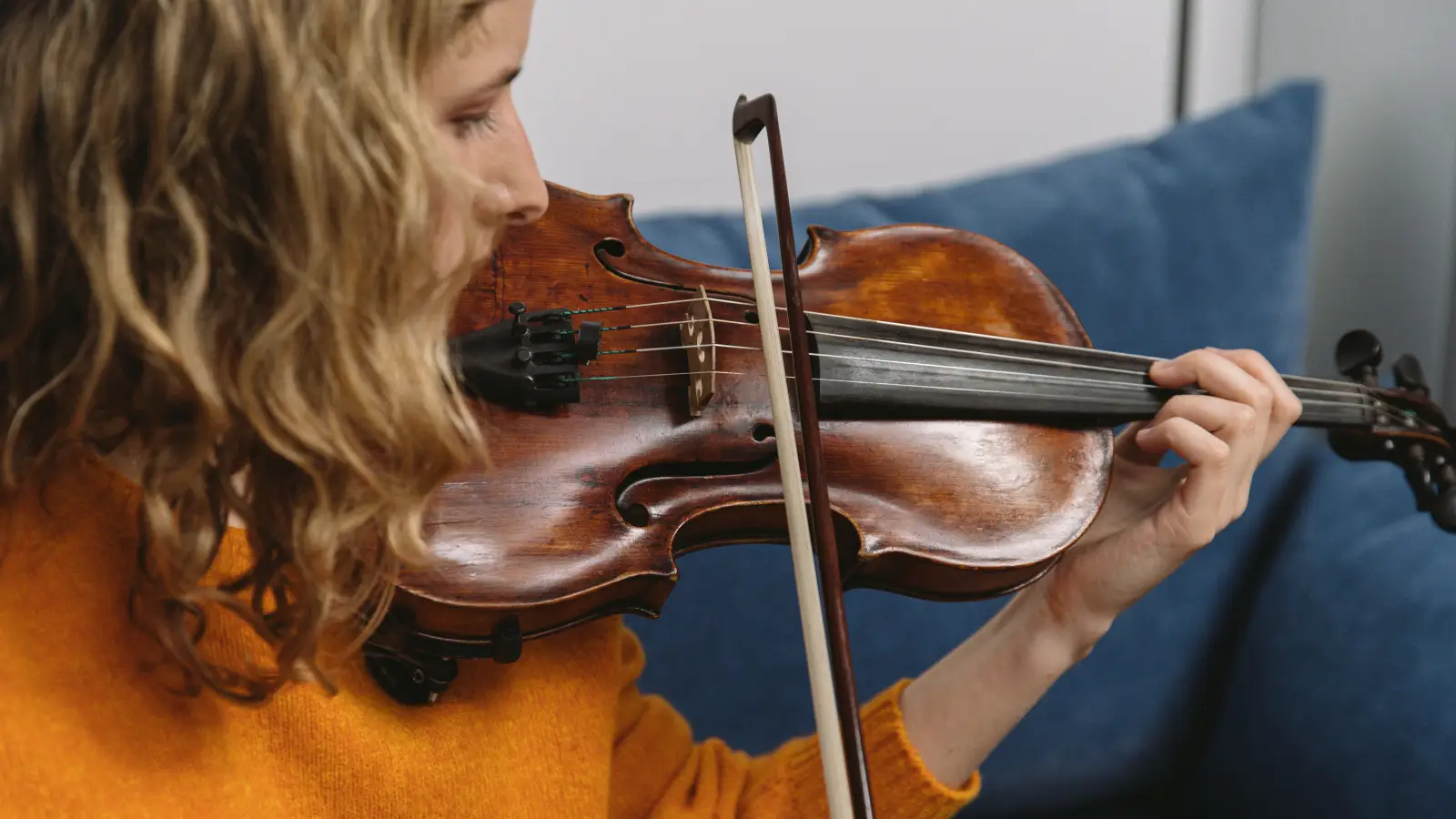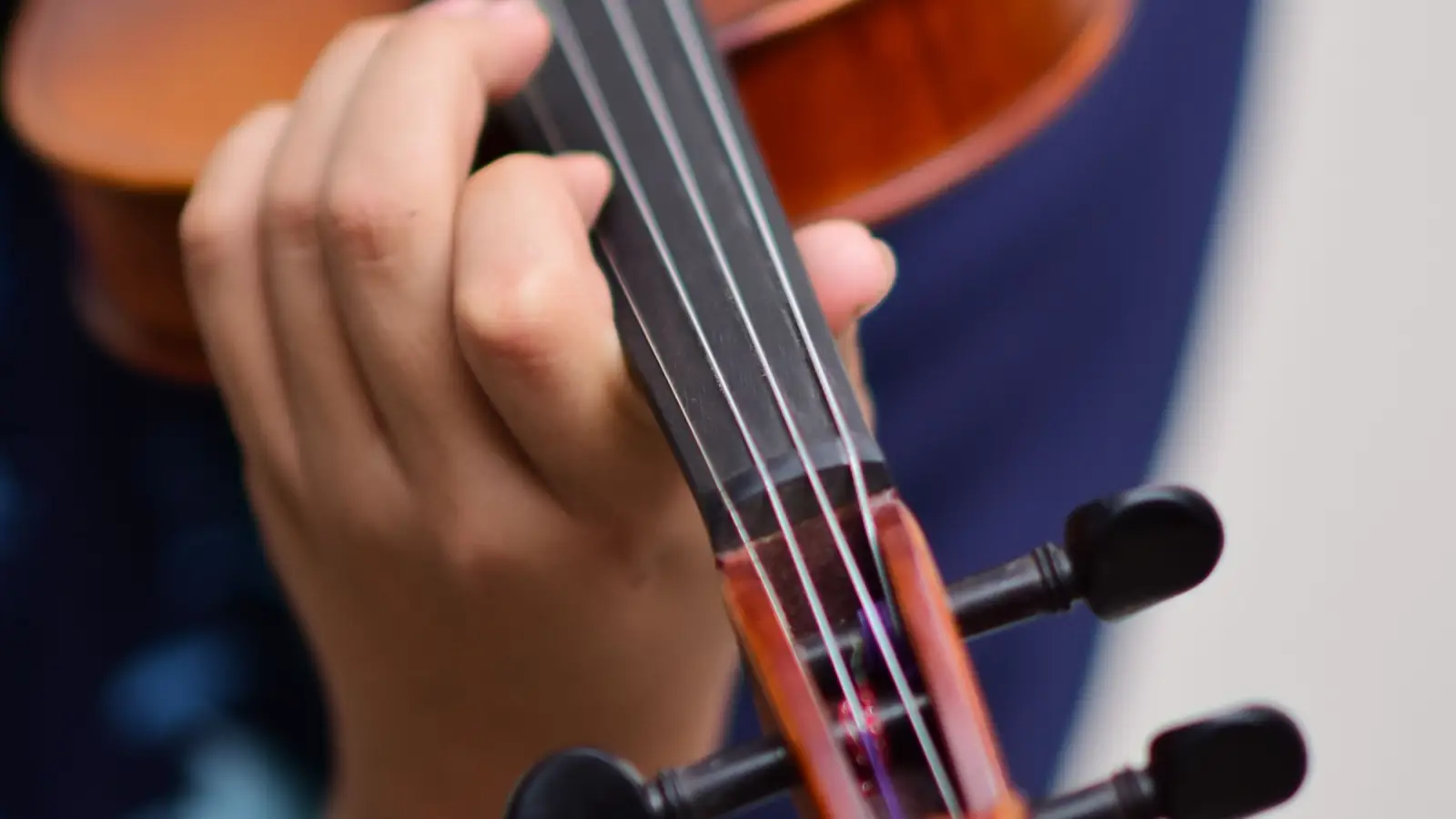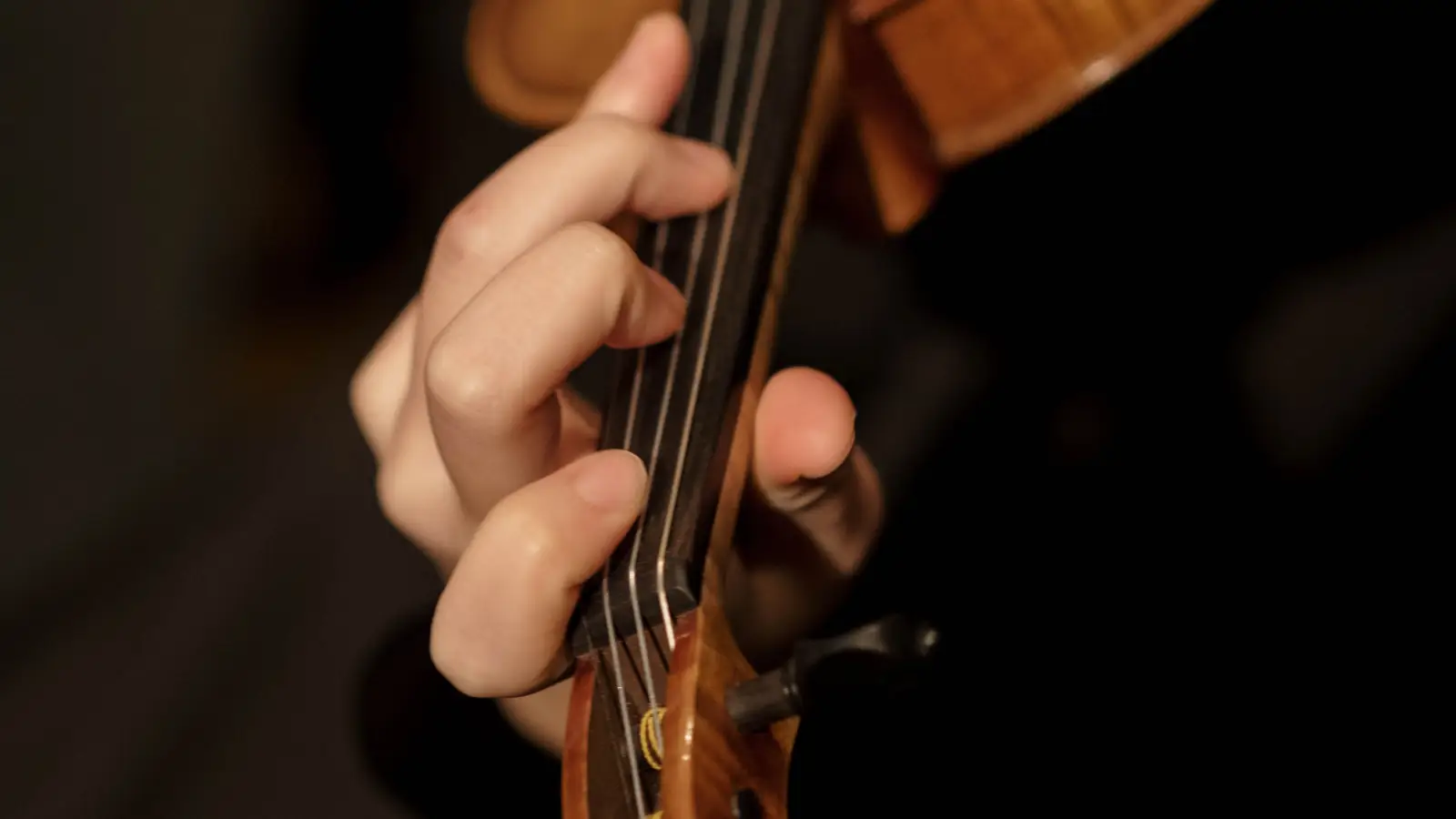
A conservatory-ready rhythm drill strips away the violin for weeks—specifically, the count-clap-tap-play sequence that builds a physical sense of pulse before a beginner ever draws the bow. The rationale is straightforward: when the brain isn't managing fingering, posture, and sound production simultaneously, the body learns steady time as a separate, ingrained motor skill. Once that skill is wired, bow control follows with far less conscious work.
After Four Weeks: What a Rock-Solid Pulse Feels Like
A beginner who completes this progression plays a simple melody without the tempo wobbling on string crossings or easy passages. The bow changes direction because the arm already knows where the beat sits. Counting out loud stays even and unforced. The result is a baseline right-hand security that turns every future piece into a rhythm problem already half-solved.
The Week-by-Week Count-Clap-Tap-Play Sequence
Check each week off only when it feels truly automatic.
- Week 1: Count aloud while clapping steady quarter notes with a metronome.
- Week 2: Speak the rhythm of your piece while clapping it and tapping your foot on the pulse.
- Week 3: Tap the rhythm on your bow arm with a bow hold—no violin in hand—while counting.
- Week 4: Bow open strings while counting, then play a simple melody with the same counting.
Drill-by-Drill Guidance for Each Week
Week 1: Count and Clap Steady Quarter Notes with a Metronome
Set the metronome to 60. Count "one, two, three, four" aloud and clap on each click. The standard is evenness, not speed. Five to ten minutes daily locks this in. The most common error is subtle drift—claps creeping ahead of or behind the click without the player noticing. Recording a short clip and listening back exposes the drift immediately.
Week 2: Speak the Rhythm While Clapping and Tapping Your Foot
Take one phrase from the piece. Speak the rhythm syllables (or counting numbers) and clap each note attack. At the same time, tap one foot on every main beat. The foot anchors the underlying pulse; the claps ride the rhythm. Practice until foot and voice never fight. Skipping the foot tap is the mistake that leaves the pulse abstract. A physical, motor-level beat is the whole point of this week.
Week 3: Tap the Rhythm on Your Bow Arm—No Violin Yet
Hold the bow in a correct right-hand setup and extend the arm forward. Use the left hand to tap the rhythm on the underside of the right forearm. Count aloud throughout. This step connects the physical rhythm directly to the arm that will produce sound. Five to ten minutes a session suffices. The error to watch for is a stiff arm or a bow hold that collapses under the tapping. Keep the hand relaxed but structured—ready to draw a tone.
Week 4: Bow Open Strings and Play a Melody While Counting
Pick up the violin. With the metronome running, bow open strings using the exact counting pattern already internalized. Keep the bow speed uniform; the pulse drives the arm now. Once open strings feel steady, add left-hand fingers while counting aloud. Expect tone quality to dip at first. The absolute priority is the count. Rushing to produce a polished sound before the rhythm is secure undoes the previous three weeks. Stay disciplined.
Final Check: Are You Ready to Move Forward?
Before declaring the drill complete, verify these five points:
- Can you clap quarter notes to a metronome without drifting for two minutes?
- Does your foot stay steady when you speak a dotted rhythm?
- Can you tap a rhythm on your bow arm while keeping a soft, correct bow hold?
- When playing open strings with a metronome, does the bow change direction exactly on the click?
- Does counting out loud still happen automatically while you play a simple melody?
If any item isn't solid, circle back to that week's practice immediately.
Your At-a-Glance Practice Sheet
Print this condensed version for daily sessions.
- Wk 1: Count + clap, 60 bpm, 5–10 min
- Wk 2: Speak rhythm + clap + foot tap, one phrase, daily
- Wk 3: Tap rhythm on bow arm with bow hold, count aloud, 5–10 min
- Wk 4: Open strings with counting, then full piece, keeping tempo
Frequently Asked Questions When the Violin Goes Silent for Rhythm Work
Why not just practice rhythm with the violin from the start?
Violin playing demands posture, left-hand precision, and bow coordination all at once. That cognitive load sidelines rhythm for most beginners. Pulling the instrument out forces the brain to treat pulse as its own skill. Once internalized, the body plugs that pulse into the bow arm without a struggle.
How long should daily practice last?
Five to ten focused minutes per day is the efficient range. Short, daily repetition encodes the pulse faster than a single long session where fatigue blurs the focus.
What if the metronome click feels unnatural?
Walk in place to the click first—full-body movement often syncs the pulse more naturally than a mental count alone. Once stepping feels synchronized, return to clapping.
Can an adult beginner use this drill, or is it only for children?
Adults benefit at least as much. Without the neurological wiring built through childhood playing, adult beginners need this explicit isolation to secure steady time. The weekly checkbox approach also matches an adult's self-directed learning style.
Beyond the Drill: Keeping Time for Life
The internal pulse doesn't disappear after four weeks—it becomes the foundation. The bow arm now moves with physical certainty. To make the next cycle faster, record a short video at the start of any new piece and compare it one week later. That before-and-after contrast in pulse stability is the most honest feedback a beginner will ever receive.