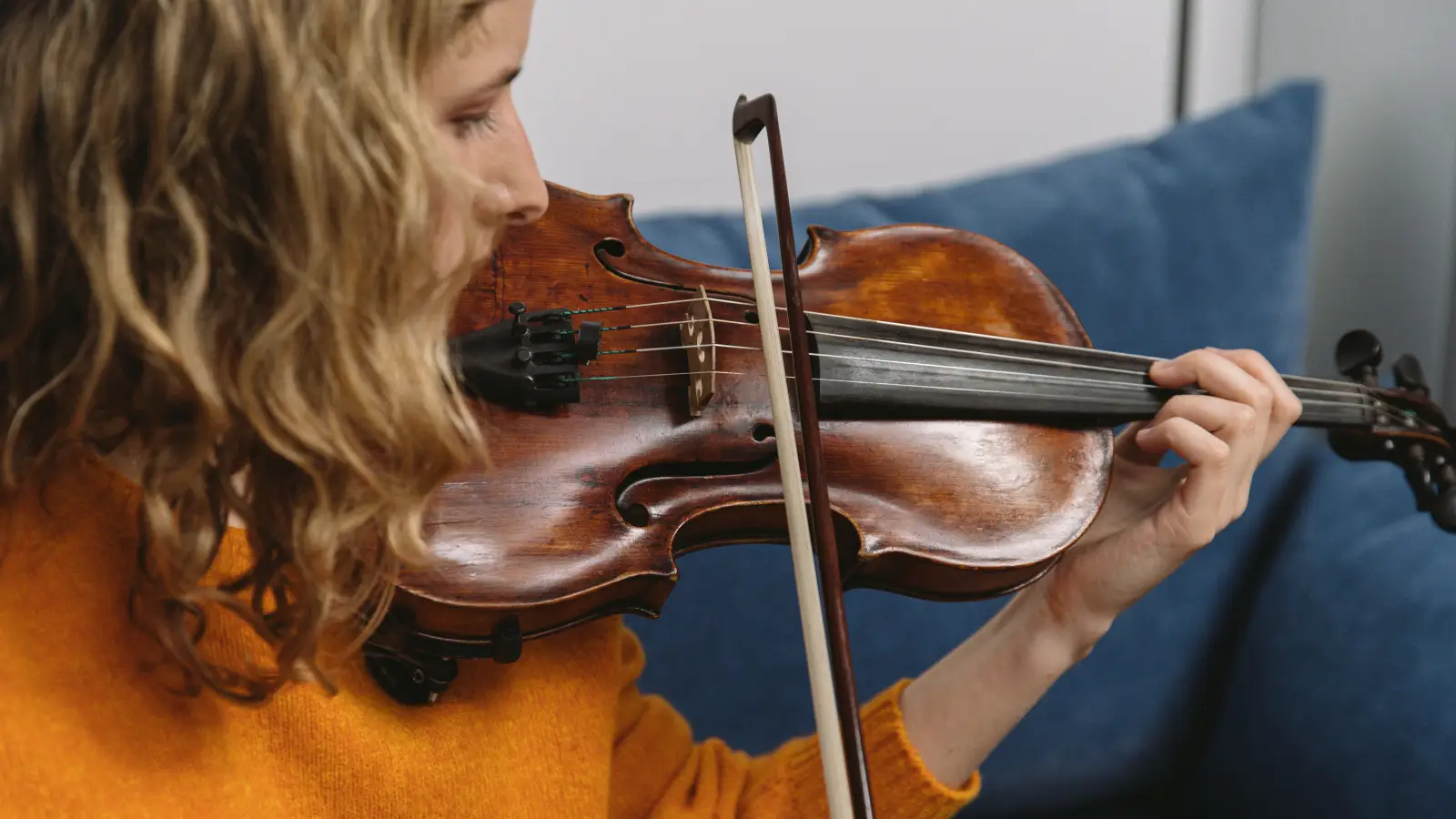
It’s easy to push rhythm practice aside when the violin session already feels full. The rhythm sandwich method gives you a way to build timing into the practice you’re already doing, without carving out extra minutes. Two short bookends—one at the start, one at the end—hold a simple pattern that you carry through scales and pieces, so the whole session reinforces a steady pulse.
What a Rhythm-Solid Practice Feels Like
When the sandwich habit settles in, scales hold their tempo through string crossings, bow changes arrive right on the beat, and pieces sound grounded even during tricky sections. It’s not about robotic metronome tracking; it’s about feeling the groove from the first open string to the last note.
Your 3-Minute Rhythm Sandwich Checklist
- Choose one simple rhythm pattern and set your metronome to a comfortable tempo
- Perform the opening rhythm drill for 30 seconds on an open string
- Weave the same pattern into your scale practice for two minutes
- Apply the pulse to repertoire, focusing on one rhythmic challenge
- Close with the identical 30-second drill to lock in the feel
Start with a Metronome and a One-Measure Pattern
Pick a rhythm pattern no longer than a single measure—quarter note, two eighth notes, quarter note is a safe, familiar place to begin. Set the metronome to a tempo that lets you play the pattern cleanly without rushing. A common stumble: reaching for a complicated rhythm or a quick tempo right away, when the brain should be settling into the practice, not racing. A simple pattern is a helper, not a test.
Open Your Session with a 30-Second Groove
Play the pattern on an open A or D string for exactly 30 seconds. Let your attention rest on matching the click and keeping the bow speed even. This quiet opening wakes up your internal clock before any scale or piece gets under your fingers. The most frequent mistake is racing through these 30 seconds as if they don’t count. Slow down enough to notice the moment your bow changes lock in with the pulse.
Weave the Rhythm into Scales—Not Just Notes and Bowing
During your regular scale work, layer the chosen pattern onto every note. If the pattern is quarter-eighth-eighth-quarter, apply it to each degree of the scale while keeping intonation and tone steady. This turns the warm-up into a rhythm builder without adding extra time. The pitfall: letting the pattern crumble when shifts or string crossings demand more left-hand focus. If that happens, lower the metronome tempo, but don’t let go of the rhythmic thread.
Let Rhythm Lead Your Repertoire Practice
Find one passage where the pulse wavers—maybe a fast run that rushes or a dotted rhythm that blurs. Play it three times through, using the same pattern you’ve been carrying all session. This step doesn’t add a new exercise; it puts the piece under the same rhythmic lens you’ve already tuned. Skipping this step because the music “sounds fine” is the gap that lets timing slip. Even beautiful tone needs a steady backbone.
End with the Same 30-Second Drill to Seal It In
Return to the open-string drill you used at the beginning. Play the pattern for another 30 seconds, and listen for how much steadier it sits compared to the start. This closing bookend tells your brain that rhythm was the thread running through the whole practice. The most common slip: dropping the closing drill because time got tight. Even ten seconds of the pattern is better than skipping it—the ritual matters.
Did Your Sandwich Hold Together? A Quick Check
Before you close the case, glance through this mental list:
- Metronome stayed on and steady through every drill
- Opening drill lasted a true 30 seconds without interruption
- Scale work kept the rhythm pattern through shifts and crossings
- At least one repertoire passage got focused rhythmic attention
- Closing drill mirrored the opening exactly
Save This Routine for Tomorrow’s Practice
You can print or copy this sequence and leave it on your music stand. The pattern and tempo can change from week to week, but the sandwich structure stays the same. A familiar framework removes the small daily decisions that can quietly block rhythm work before it starts.
Frequently Asked Questions About the Rhythm Sandwich
Do I need a metronome for every step?
Yes, especially in the early weeks. The metronome acts as a steady reference point and trains your ear to hear when the bow and click align. Once you can hold the pattern without drifting, you can alternate metronome and non-metronome days.
What if I can’t keep the rhythm pattern steady even at a slow tempo?
Step away from the violin and clap or speak the pattern first. Separating rhythm from bow hold and left hand gives your body a chance to learn the subdivision before adding the instrument. Then return to the open-string drill at a slower tempo.
Can I use different patterns for the opening and closing drills?
Using one pattern for the full session works better. A single pattern creates a clear before-and-after comparison, which helps you hear small improvements—and those small wins build the confidence to keep going.
How often should I change the rhythm pattern?
Once a week usually works well. It gives enough repetition to solidify the feel without becoming stale. If you’re preparing a piece with a specific tricky rhythm, borrow that figure for a few days.
The One Tip That Makes Tomorrow’s Session Faster
When you bookend practice with the same rhythm drill, you create a daily pulse checkpoint that costs almost no extra time after the first session. For an even faster start tomorrow, jot today’s pattern and tempo on a sticky note and leave it on your stand. No second-guessing, no delay—just pick up the violin and begin.