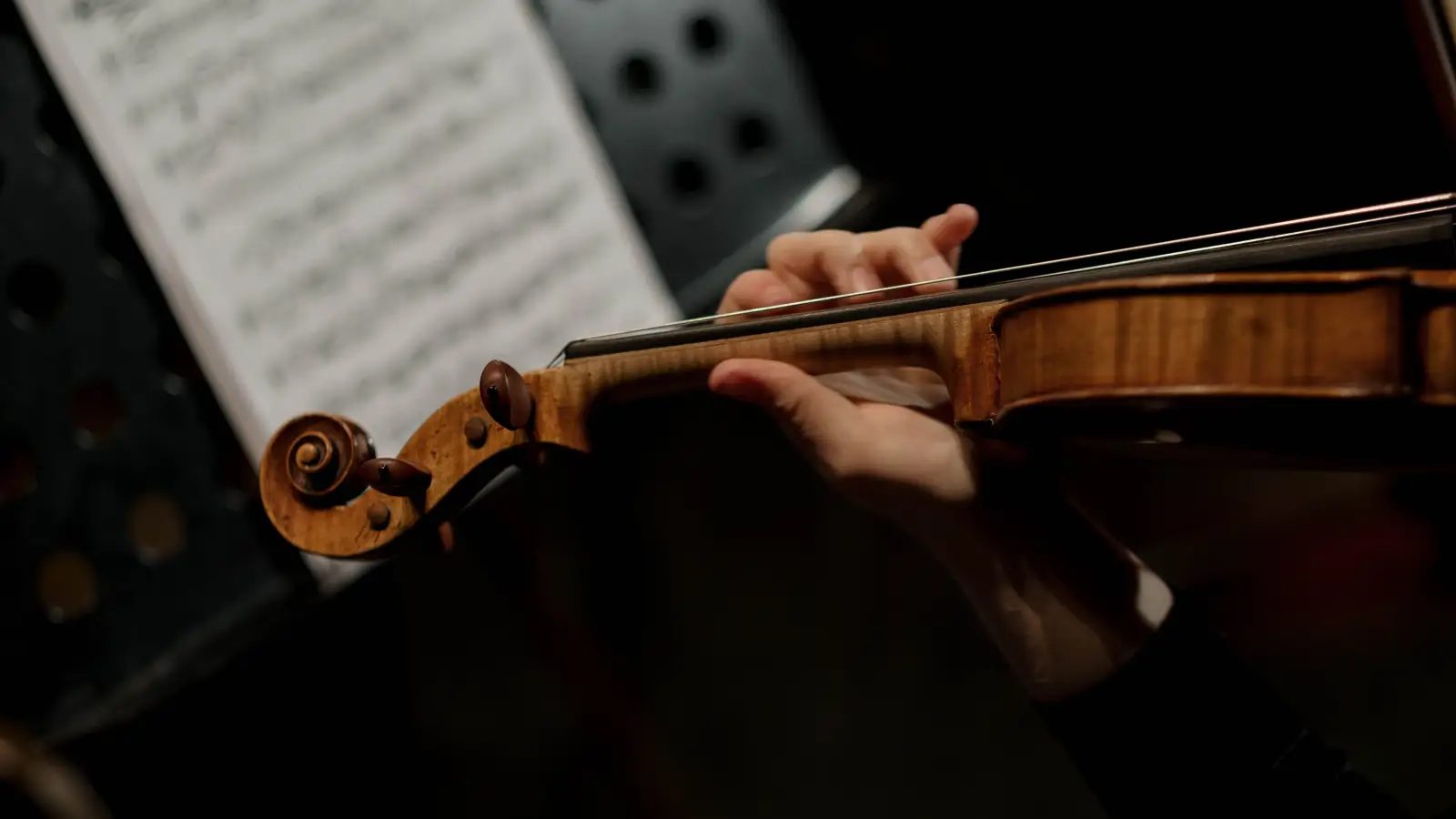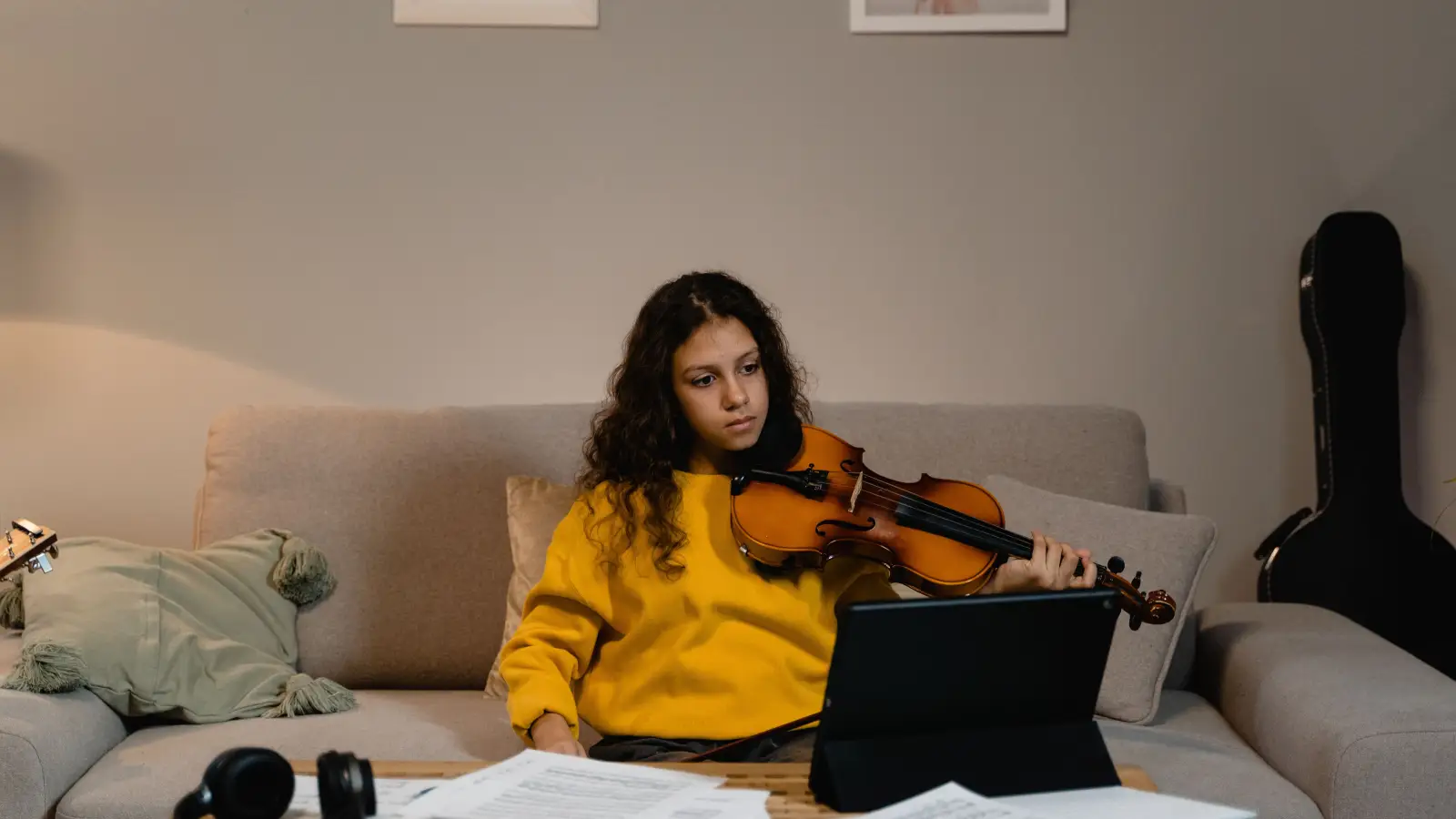
The first move in any teacher’s violin checklist is measuring arm length to lock in the correct size. Sizing dictates whether the instrument should be a 1/10, 1/4, 1/2, 3/4, or full 4/4, and ignoring it guarantees a violin that is awkward to hold and physically uncomfortable. This guide maps that entire decision sequence—sizing first, then the outfit, bow, rosin, shoulder rest, and the handful of accessories that actually count at the beginning—so nothing gets skipped.
Teachers do not hand out a random shopping list. They follow a specific order because each item depends on the one before it. That framework is the reason this article exists: instead of a disjointed set of tips, it is a sequential path that mirrors how a first-time buyer actually progresses from measuring a player to sitting down for a productive first lesson.
Three First-Violin Scenarios: Find Your Starting Point
- Parent buying for a young child: Sizing is the whole game early on. Everything flows from getting the fractional size right, so your route moves methodically through measurement, outfit selection, and the accessories a small child needs.
- Adult beginner buying for themselves: Full size is the typical answer, but arm length can push that toward 3/4. Your route moves quickly through the sizing checkpoint into the bow and shoulder rest details that affect an adult posture.
- Buyer who already has a used violin: Checklist completeness is the goal. Verify the size, confirm the bow and rosin are present, and fill in the missing pieces. Your route bounces between stages to close gaps without starting over.
Measure Arm Length to Lock In the Correct Size
Sizing is the decision that cannot be corrected with a shoulder rest or a different chinrest. An oversized violin stretches the left arm and forces the jaw to clamp; an undersized one crowds the bowing arm. Teachers check this first because it sets every other specification.
How to Measure Without a Violin in Hand
Have the player stand with the left arm extended straight to the side, palm facing up. Run a flexible tape measure from the hollow at the base of the neck (the collarbone notch) to the center of the palm. That number is the only reliable input for fractional sizing.
Fractional Size Reference
- Under 14 inches (35.5 cm): 1/10 or 1/8 size, typical for ages 3–5.
- 14 to 15.5 inches (35.5–39 cm): 1/4 size.
- 15.5 to 17 inches (39–43 cm): 1/2 size.
- 17 to 18.5 inches (43–47 cm): 3/4 size.
- Over 18.5 inches (47 cm): 4/4 full size.
When a measurement lands near a cutoff, lean toward the smaller instrument. A player outgrows a violin quickly; fighting an oversized one erodes motivation.
Ready to move on: The size is recorded as a concrete fraction (not an age range), and the measurement supports it.
Select a Complete Violin Outfit, Not Just the Instrument
A violin without a bow, case, and rosin is an incomplete tool. Outfits bundle those three pieces together, which is why teachers recommend them: the bow matches the violin size, the case fits, and the gamble of mismatched components disappears.
What a Standard Outfit Includes
- Violin in the chosen size.
- A bow of the same fractional size.
- A suspension case that protects the instrument from bumps.
- Rosin—sometimes included, but always verify.
Outfits sold by violin shops or dedicated string dealers typically include setup from a luthier: the bridge is cut, the soundpost is positioned, and the pegs turn smoothly. That shop setup prevents the constant tuning struggles that discourage beginners.
Renting vs. Buying for the First Size
Children outgrow fractional sizes fast, often in 12 to 18 months. Renting from a shop that applies payments toward a future purchase is the logical path. Adults starting on a full size may buy outright, but a short-term rental still eliminates risk if commitment wavers.
Ready to move on: An outfit in the correct size is either reserved for rental pickup or ordered as a complete package—no piecemeal bow or case that might not match.
Match a Bow to the Violin Size and the Player’s Build
Even within an outfit, the bow rewards a separate inspection. Its weight and balance govern how the right hand learns to hold it. A bow that is too heavy or warped works against the player from the beginning.
What to Check on the Bow
- Weight: A full-size bow hovers around 60 grams. Fractional bows should feel proportionally light in the hand.
- Stick material: Brazilwood and fiberglass are the common beginner options. Fiberglass resists warping better, which matters for small children who forget to loosen the hair.
- Hair: The ribbon should be full and even, free of gaps or debris. The screw should tighten and loosen without catching.
Straightness Test
Loosen the hair completely and look down the length of the stick. It must be straight or show only a very gentle, even curve toward the hair. Any sideways bend or sharp kink means the bow will never track evenly, and it should be returned or exchanged.
Ready to move on: The bow is the correct size, operates smoothly, and passes the straightness check. Rosin goes on next—do not let a new bow touch strings dry.
Add Rosin and a Shoulder Rest That Work From Day One
Rosin gives the bow hair grip; the shoulder rest gives the violin a stable platform. Both are non-negotiable, and both have straightforward beginner versions that avoid early overinvestment.
Rosin: Light or Dark?
Light rosin suits most climates and is the default beginner choice—less sticky, easier to manage. Dark rosin, being grippier, works in colder, drier conditions but can feel tacky in humidity. The small cake included with an outfit handles the first months without any need to compare brands.
Shoulder Rest: Sponge vs. Shaped Rest
A foam pad or shaped sponge secured by a rubber band is enough for the earliest lessons. Many teachers begin this way to build neck and jaw awareness before introducing an adjustable rest. When the player advances to a shaped rest, bring the violin to a shop for a fit check, because the rest must match both the back of the instrument and the curve of the shoulder.
Ready to move on: The bow is rosined to the point of clean tone production on an open string, and the violin sits level on the shoulder with minimal gripping.
Finish the Checklist with an Essentials Kit and Music Stand
These last items are small, but their absence creates friction that a teacher notices within the first five minutes of a lesson.
Care Items That Belong Inside the Case
- A lint-free cloth for wiping rosin dust off strings and varnish after every session.
- A spare set of strings, identified by size and brand as soon as the teacher makes a recommendation.
- A pencil—always pencil, never pen—for marking music.
- A tuner or tuning app for older students who can tune under guidance; younger students rely on the teacher for tuning.
Why a Music Stand Matters
Music propped on a bed or table forces a downward head angle that collapses the posture. An inexpensive folding wire stand corrects that immediately and keeps the instrument and bow arm aligned. It is the quiet anchor of a practice space.
Ready to move on: The case holds cloth and pencil, spare strings are on order, and a music stand waits at the practice spot. The violin is either tuned or will be tuned at the start of the first lesson.
Readiness Signs Recap: The Full Checklist in Order
- Arm measurement recorded and violin size set—never guessed by age.
- Complete outfit (violin, bow, case, rosin) selected in that size.
- Bow checked for size match, smooth mechanism, straightness, and then rosined.
- Shoulder rest added—sponge or fitted—that allows a relaxed, stable hold.
- Case stocked with cleaning cloth, pencil, and a plan for spare strings.
- Music stand available where practice happens.
Three Things Beginners Should Not Worry About Yet
Delay these until the trigger appears; tackling them early wastes money and adds layers that distract from learning.
- Upgrading the bow: The stock bow in a student outfit is built to carry a beginner through the first year or two. The trigger is when a teacher points out that bow control has outpaced the stick’s response, often at the move to a full-size instrument.
- Trying different rosins: The included rosin works. Differences across brands surface only after a player can produce a consistent, steady tone. Trigger: daily practice reveals that the rosin runs out quickly or a teacher suggests a switch for climate reasons.
- Buying an electronic tuner or humidifier: Tuning is the teacher’s job at the start. A free phone app handles later home tuning. Humidifiers matter in regions where indoor humidity stays below 30% for long stretches, but the trigger is visible instrument distress—open seams or a fallen soundpost—not a calendar date.
Ways to Move Faster Without Cutting Corners
These shortcuts lean on someone else’s expertise to cut out guesswork.
- Rent from a violin shop that measures the player on site. Staff hand over the correct outfit, often apply the first rosin, and the rental credit accumulates for a later purchase.
- Ask a teacher to size the player before the lesson even starts. Five minutes with a tape measure at the school eliminates the risk of a wrong-size purchase.
- Buy a complete outfit from a dedicated string retailer, not a general marketplace. The setup quality and component matching reduce time wasted on returns and swaps.
- Choose an adjustable shoulder rest that grows with the player, especially for children who move through fractional sizes quickly.
Frequently Asked Questions About the First Violin Checklist
What size violin does a five-year-old need?
Most five-year-olds measure into a 1/10 or 1/8, but the only method is arm length. A measurement under 14 inches (35.5 cm) points to those smallest sizes. Some larger five-year-olds may need a 1/4. Never buy by age alone.
Can an adult use a 3/4 violin?
Yes. Adults with shorter arms or smaller hands often find a 3/4 more comfortable. The decision comes from a measurement in the 17–18.5 inch (43–47 cm) range, not from a default assumption of full size.
Is it better to rent or buy a first violin?
Renting wins for children on fractional sizes because they outgrow instruments quickly and rental fees often convert to purchase credit. Adults starting on a full size may buy outright, but a rental trial period still removes financial risk.
How often should rosin be applied to a new bow?
A new or re-haied bow needs a heavy initial rosining—roughly 5–10 minutes of slow, firm strokes. After that, two to three swipes before every other practice session are enough. Over-rosining produces a scratchy, powdery sound.
Do I need a shoulder rest if I’m just starting?
Yes, because a violin without support slides down and forces the player to tense the shoulder and jaw. A basic foam sponge or pad is sufficient for the first weeks while the teacher evaluates the best long-term rest.
The First Lesson Starts Here
With the checklist complete, a beginner arrives at the first lesson holding a properly sized violin, a bow that grips the string, a shoulder rest that stabilizes the instrument, and a practice space with a stand—ready to think about bow hold and tone, not what they forgot to buy. The immediate first action for a parent or adult beginner is to measure arm length and write down the corresponding size before shopping either online or in a store.