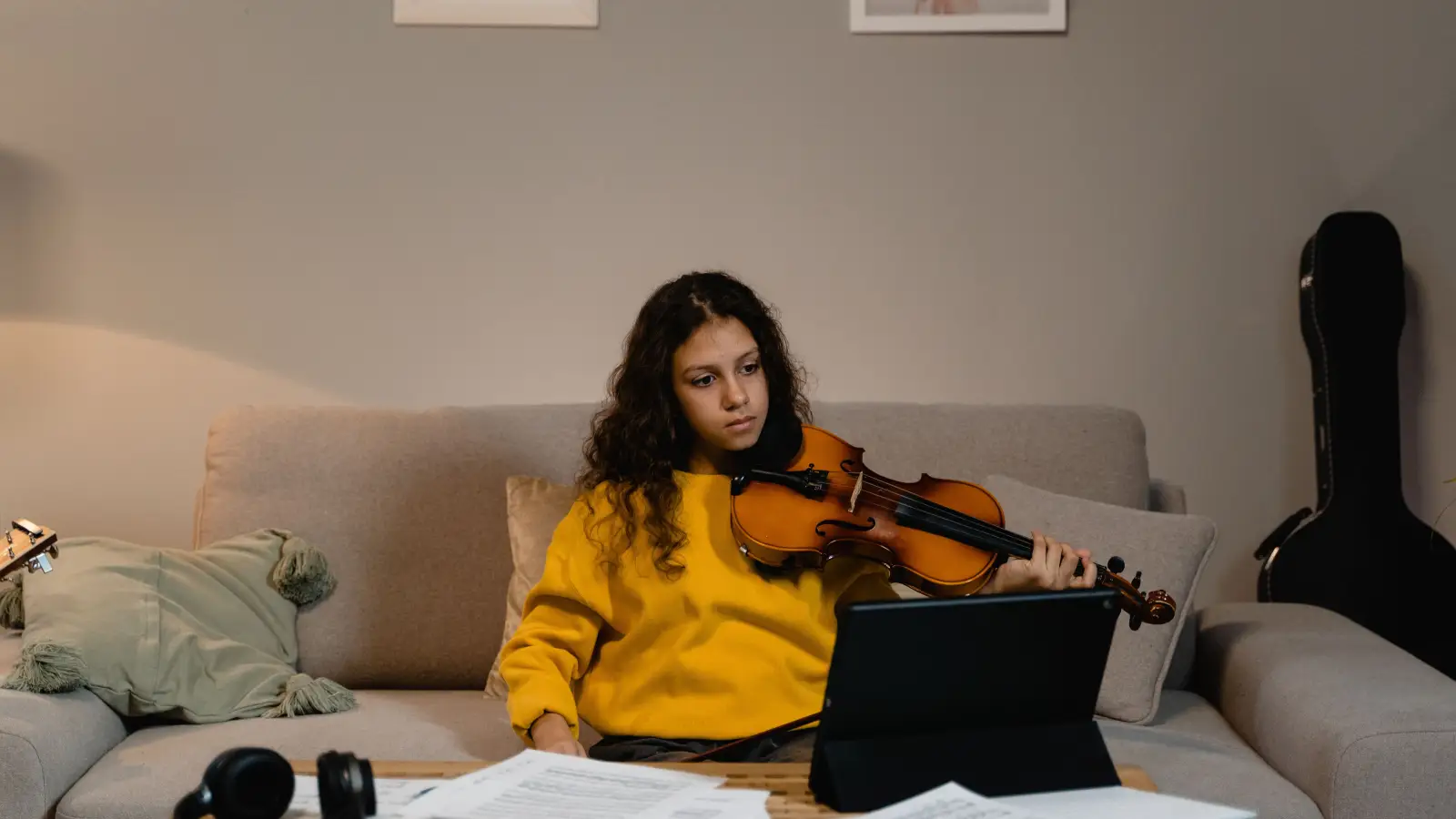
What stops more adult beginners than anything else isn’t a weak second finger or bad bow hold—it’s a neighbor banging on the wall. For an apartment-dwelling new violinist, the ability to plug in headphones and disappear into practice without a single complaint is the difference between sticking with it and quitting in three weeks. An electric violin gives you that; an acoustic, even muted, doesn’t. The choice isn’t really about rock versus classical. It’s about whether your walls have ears.
Parents and late-starting players know the real constraint: the only free hour is after everyone’s asleep. An acoustic violin under a practice mute still leaks enough sound to wake a light sleeper. A headphone-equipped electric solves that before it ever becomes a fight. If you can’t make noise on your own schedule, no amount of acoustic tone will save you.
Your Practice Setting Decides the Winner
| Scenario | Winner | Why (One Line) |
|---|---|---|
| You live in a shared space and need quiet practice | Electric | Headphone output eliminates all sound complaints. |
| You want to develop a traditional violin tone from day one | Acoustic | The unamplified resonance teaches bow control and sound production. |
| You travel frequently or have limited storage | Electric | Compact bodies and solid designs travel safely. |
| You plan to perform unamplified in small settings soon | Acoustic | Projection without an amp is essential. |
When Silence Is Non-Negotiable
If your main need is soundless practice, the electric wins without a close second. You plug in headphones, hear a full stereo violin, and the outside world gets nothing but the faint tap of unamplified strings—quieter than a TV set to mute. That unlocks midnight sessions, naptime drills, and practice in a studio apartment without losing a security deposit.
What you sacrifice is the body vibration that a wooden acoustic feeds back to your chin and left hand. That feedback is a live tutor: it tells you, in real time, whether your bow is drawing cleanly. An electric replaces that with a pickup signal, which feels less direct. A beginner can still learn finger placement, rhythm, and bow holds, but the early tone-building phase takes more deliberate attention—recording yourself becomes non-negotiable.
When Tone Quality Drives Your Motivation
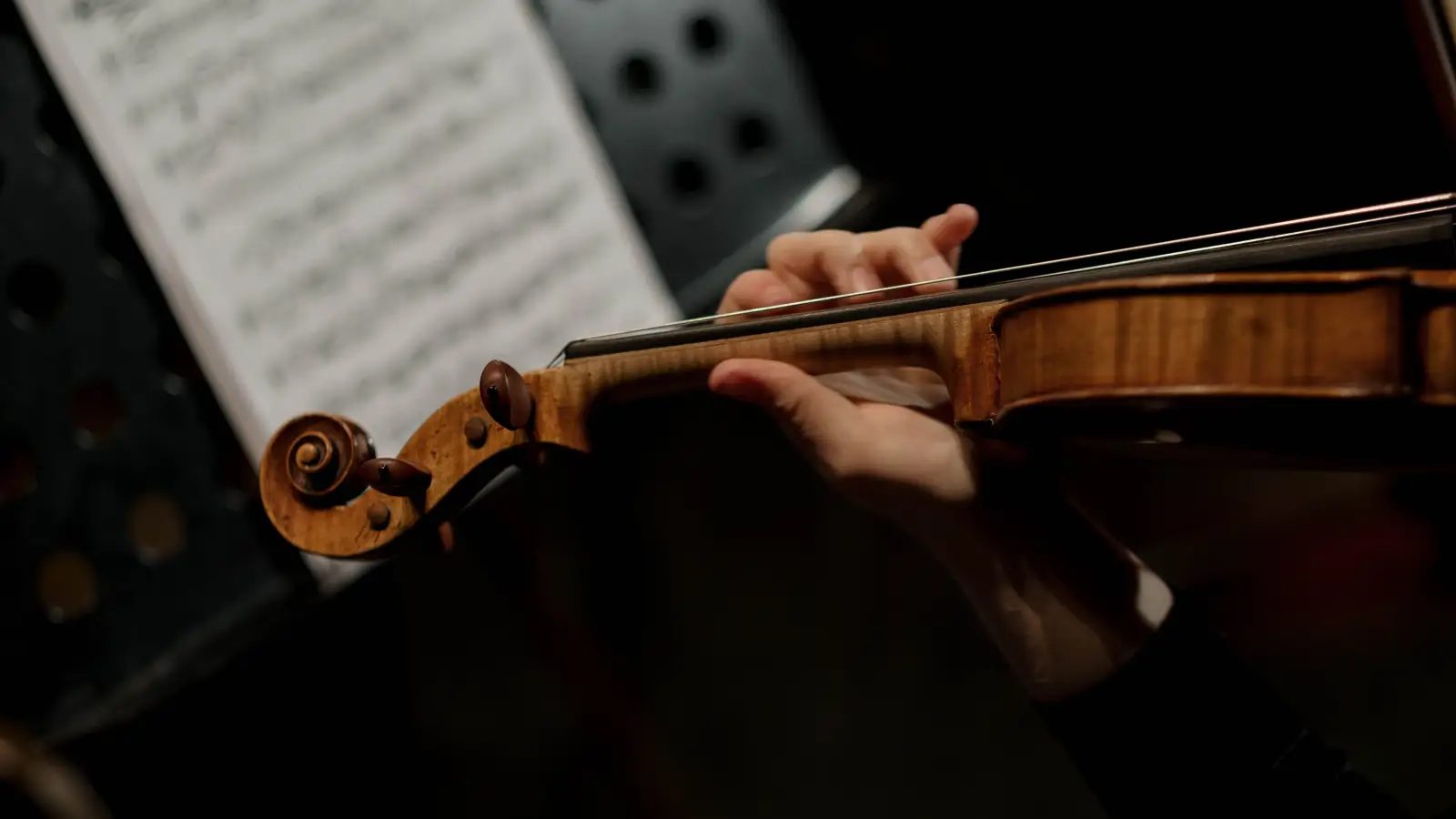
There is a kind of beginner who stays inspired because the instrument itself sounds beautiful. They itch to hear that ring under their ear, and that daily reward pulls them through the squeaks. For that person, the acoustic violin is the right tool. The way a wooden box responds to the slightest bow change can’t be faked by a piezo pickup and headphones.
The cost is that this magic only works if you can practice out loud. In an apartment, you either schedule around tolerant neighbors or clamp on a heavy metal mute that flattens the very overtones you’re chasing. A beginner who lives with a mute practically bolted to the bridge ends up learning a muted instrument, not the one they thought they bought. If your tone goal lives inside a mute, the electric starts looking a lot more honest.
Where Differences Fade Into the Background
Stop weighing these points—they matter so little for a first violin that they just add noise:
- Reading sheet music and finding the right finger positions is identical on both.
- Ear training for pitch works the same; both tune to A440.
- Basic bowing exercises—straight bow, string crossings—don’t lean on resonance the way advanced articulation does.
- Maintenance is nearly equal: strings, bow rehairs, and routine checks. Electrics skip the soundpost adjustment, but the difference is minor.
- Price: decent electric starter outfits sit around $150–$400; acoustic starter outfits run $200–$500. Overlap eats the distinction.
The One Thing That Immediately Rules One Out
There are hard brakes that stop the debate cold:
- If you must make no audible sound during practice—a sleeping baby, a thin-walled apartment with a noise clause—the acoustic violin is off the table. Even the best practice mute cuts volume by roughly 30 dB, leaving a thin whine that still slips through walls.
- If you need unamplified projection right now (school orchestra, community ensemble), the electric is out. Unplugged, it’s barely louder than humming; carrying an amp to every rehearsal isn’t realistic at the beginner stage.
What About Price?
Price won’t make the decision for you. Starter electrics and acoustics compete in the same budget range. The bigger cost comes later if you stack an amp, cables, and better headphones onto the electric—but at the beginner point of entry, both paths demand a similar outlay.
FAQ
Can I start learning violin on an electric instrument?
Yes. Many teachers now accept electric violins, particularly when silent practice is the only way a student can log hours. The core skills map directly; switching later requires short adjustment, not a restart.
Does an electric violin sound like an acoustic violin when unplugged?
No. Unplugged, it’s a thin, whispery sound with no projection. Through headphones or an amp, it can approximate a violin tone, but it remains an electronic interpretation, not a replica.
Is it harder to learn bow technique on an electric violin?
Slightly, because the body’s resonance isn’t there to guide your right hand. The workaround is consistent recording and a teacher who knows how to coach without that feedback. It’s a manageable gap, not a wall.
Can I switch to an acoustic violin later if I start on electric?
Definitely. Every skill transfers. The main adjustment is learning to project without electronic help—a short learning curve, not a reset.
The Shortest Advice
For a beginner whose practice space won’t tolerate noise, the electric violin with headphones is the choice that keeps the bow moving. Ask yourself one thing: “Can I practice anytime I want without someone else hearing?” If the honest answer is no, start electric.