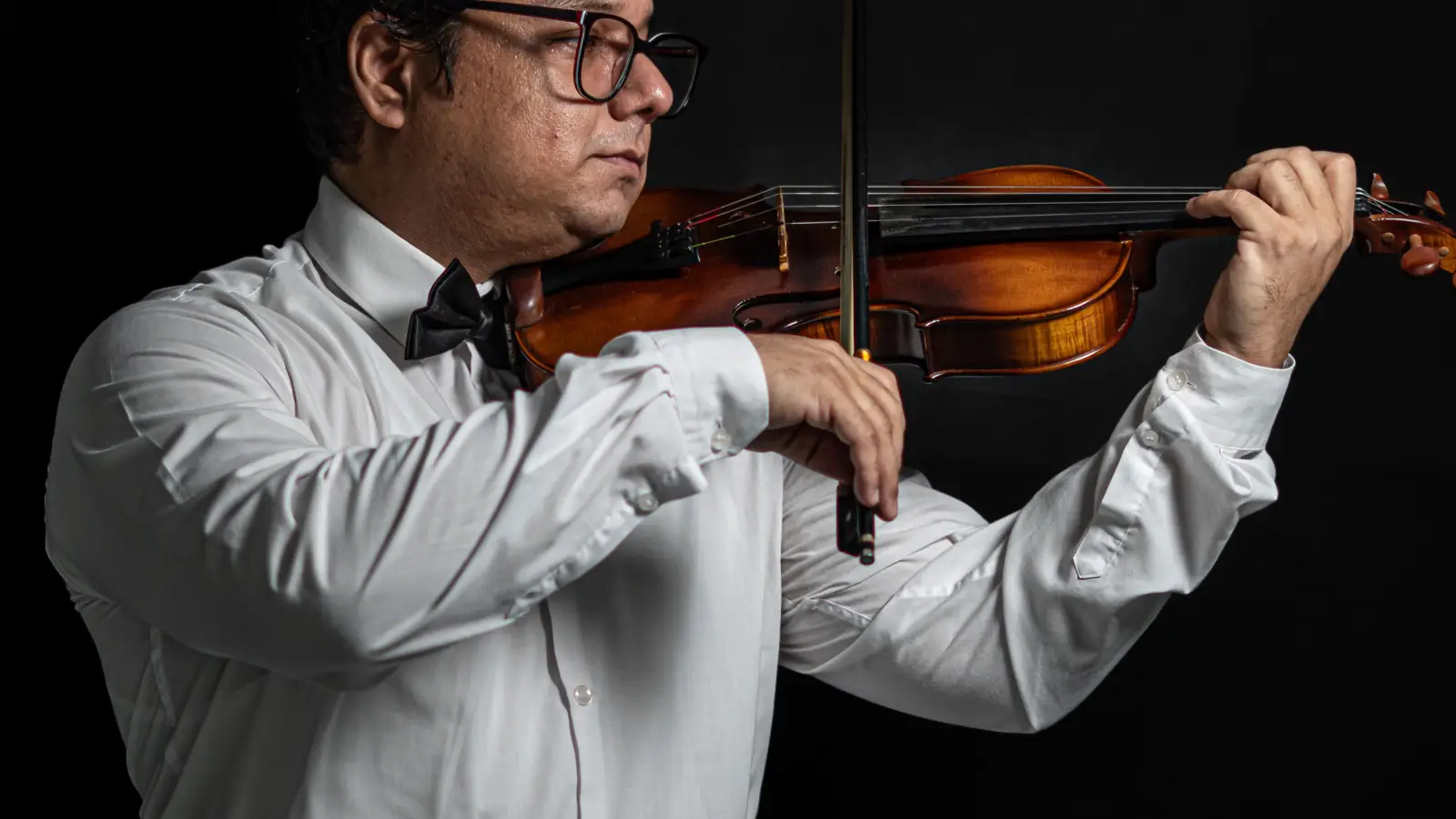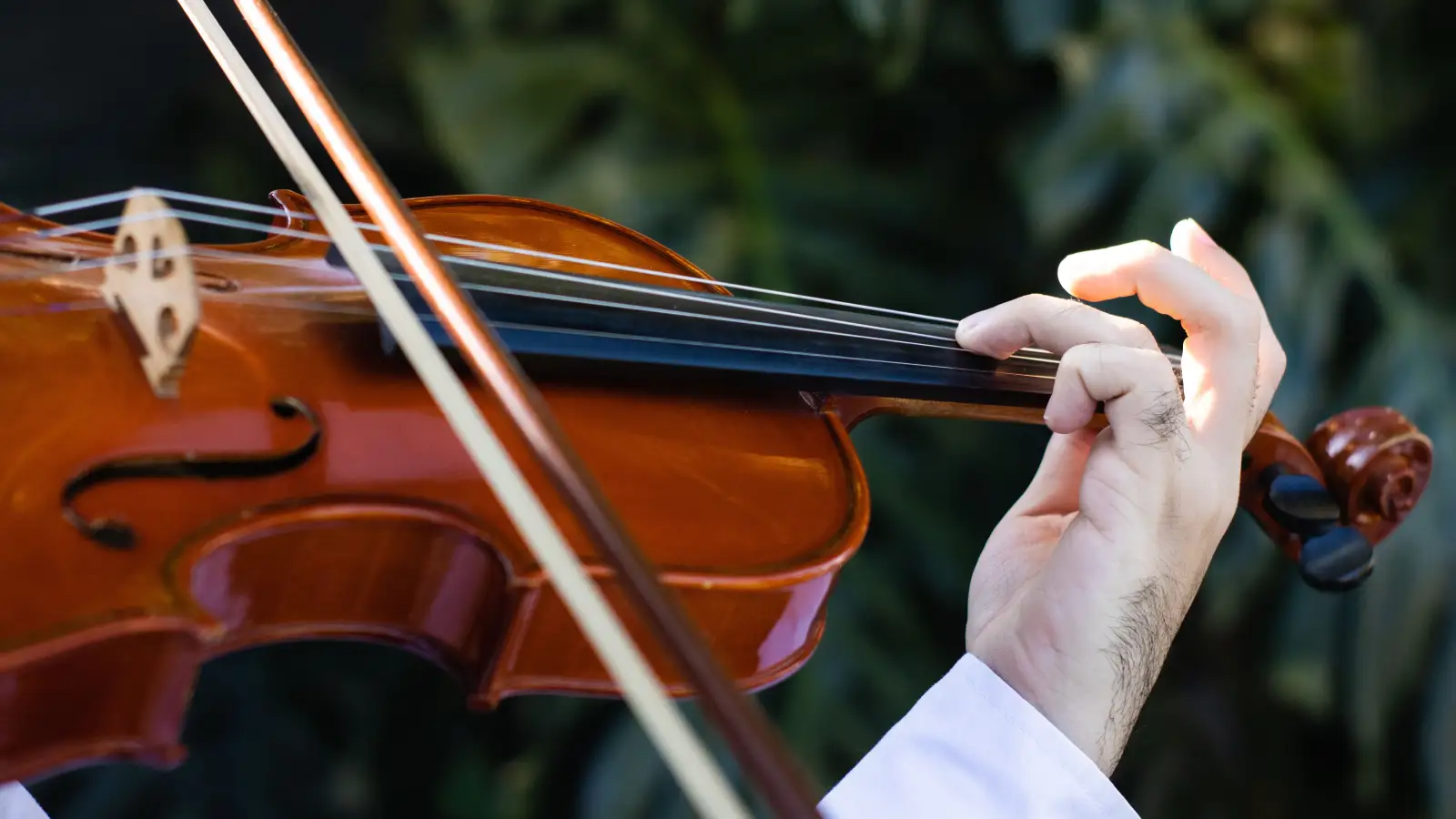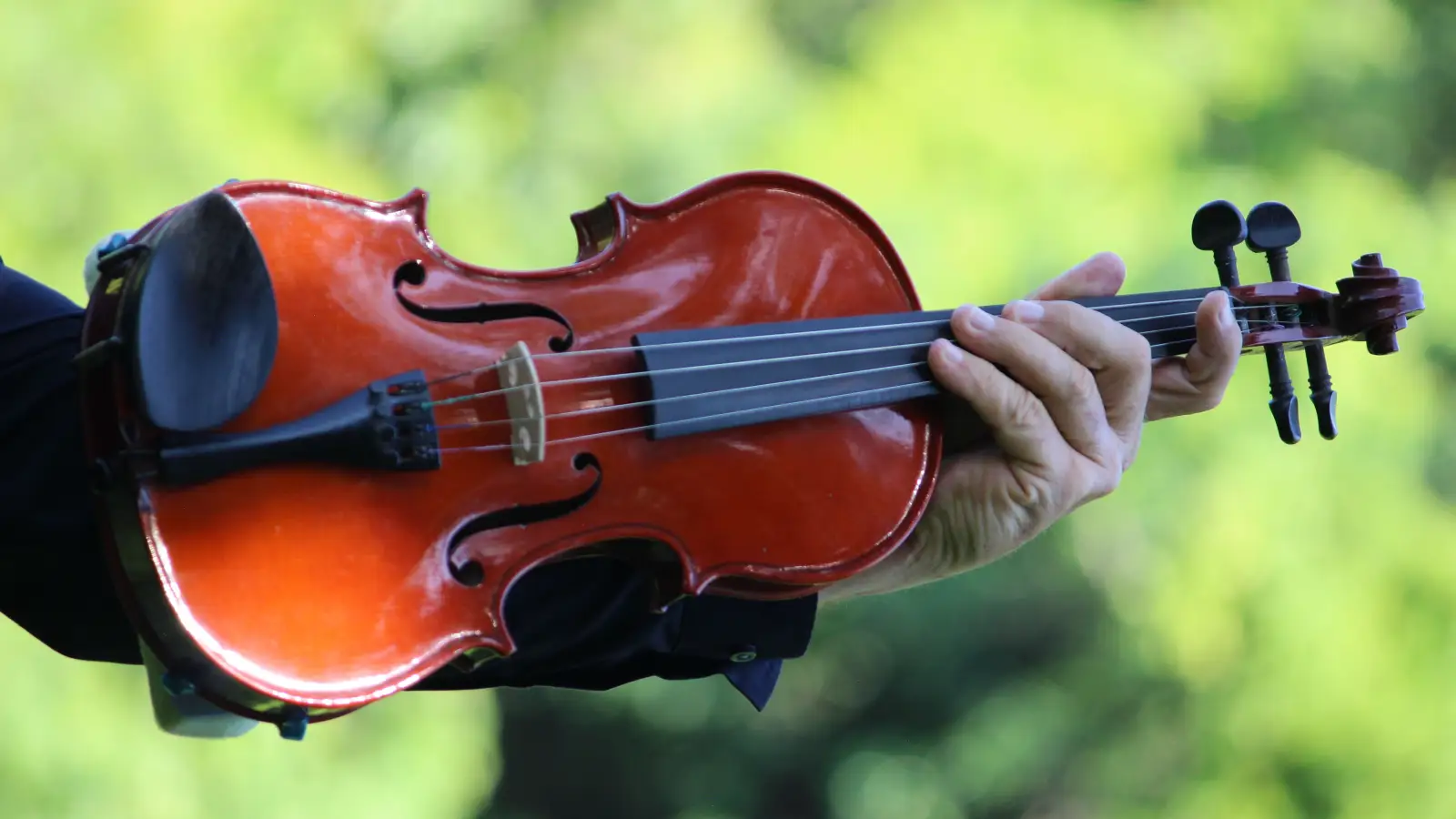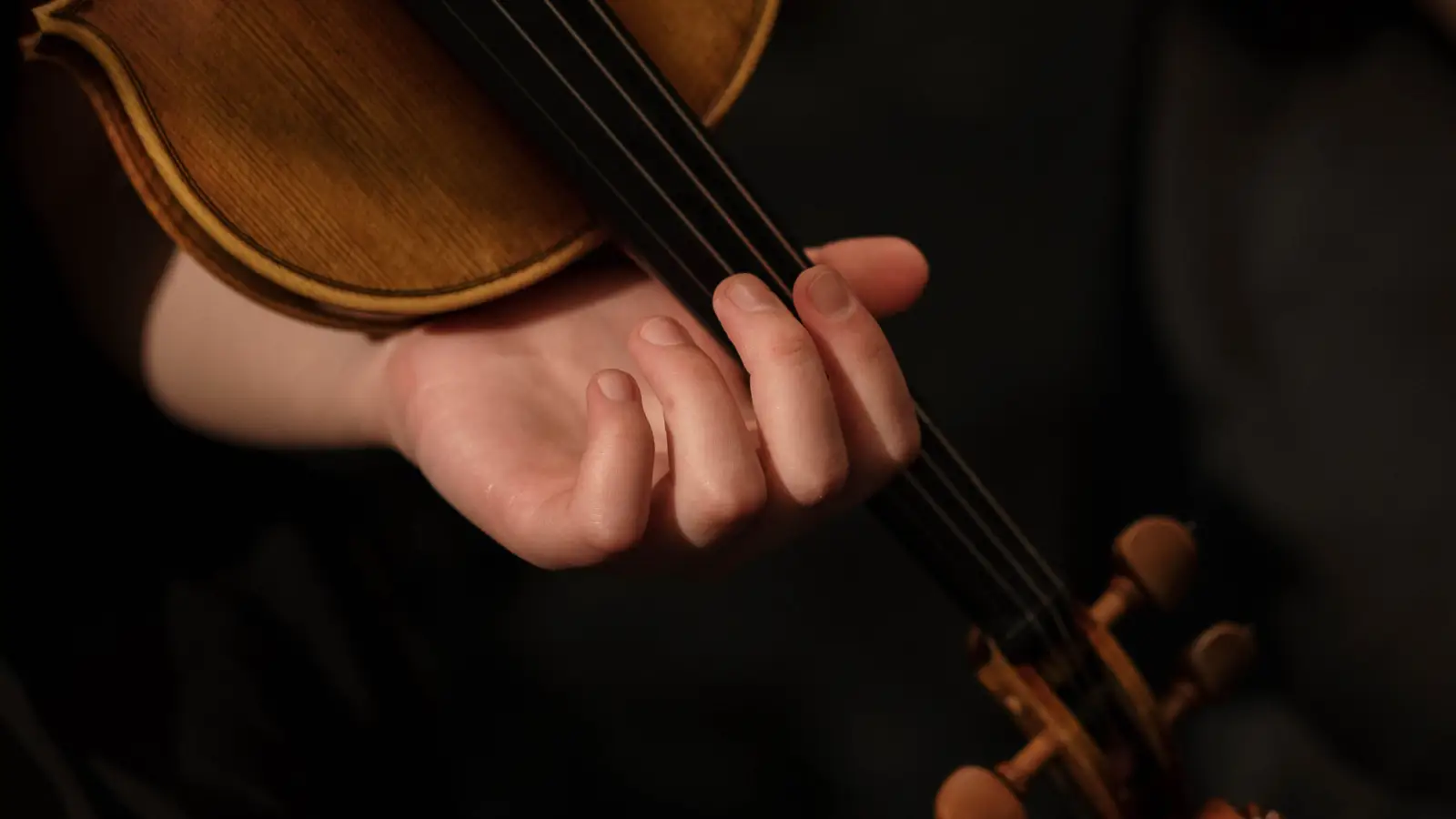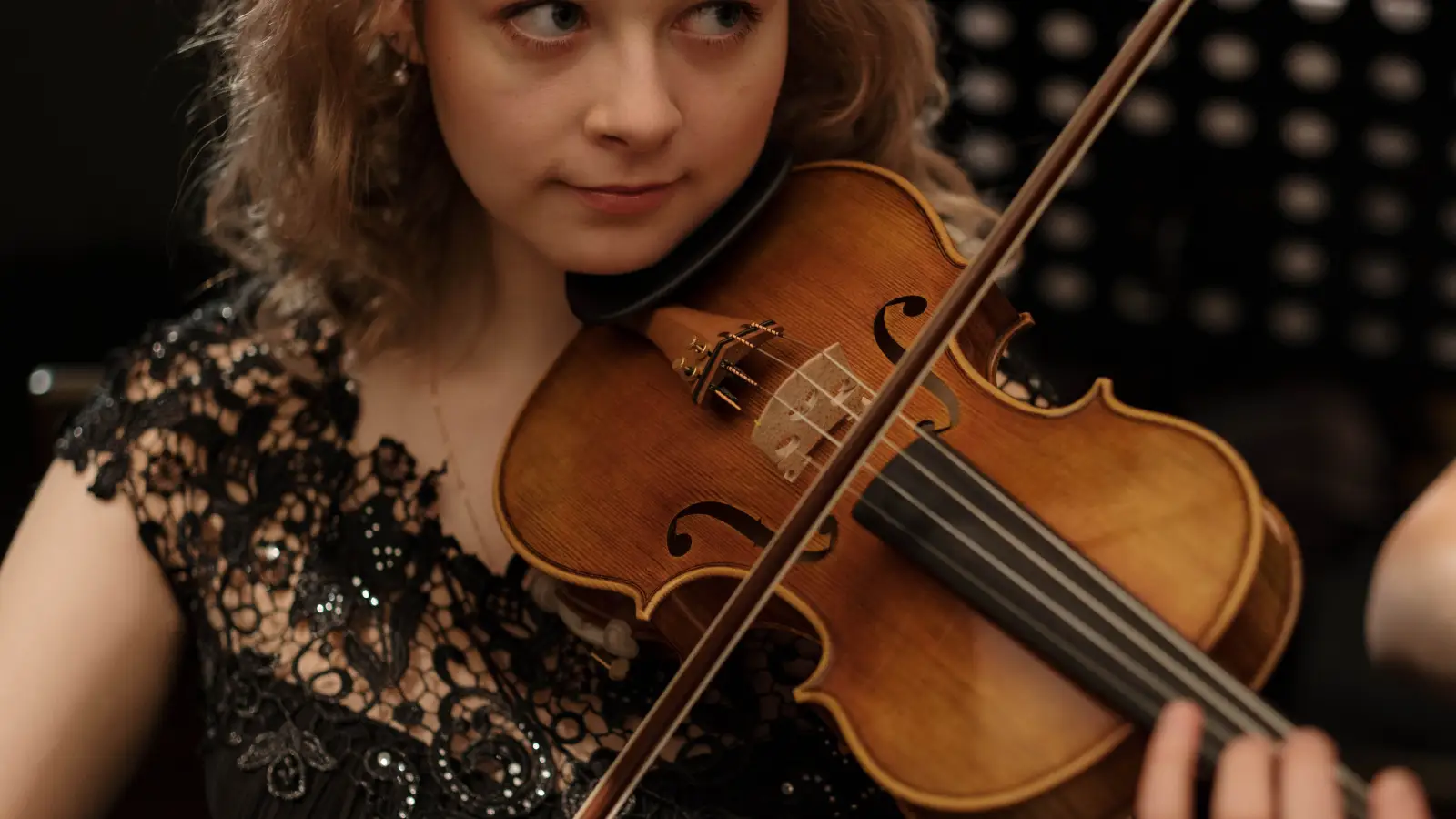
When the bow wobbles or leans mid-stroke, the trouble usually sits in a pinky that hasn’t yet been asked to do its real job. While many beginners fixate on the index finger’s hook, the pinky quietly holds the other end of the seesaw. It counters the index finger’s leverage so the bow stays parallel to the bridge through sensation, not staring. With the right placement, you’ll feel the bow tip respond to tiny pressure changes under the pinky pad — straight bowing becomes something the hand knows, not something the eyes chase.
The 5-Step Pinky Counterbalance Setup
- Settle the pinky tip on the top of the stick, directly above the frog.
- Shape the pinky into a soft, springy arch — never locked straight.
- Lift the bow at the frog using only pinky pressure; feel the weight transfer back into the thumb.
- While drawing a slow stroke, gently press down with the pinky to correct tilt, without looking at the bow.
- Practice whole bows at different speeds, noticing how pinky pressure naturally increases at the frog and releases toward the tip.
How Each Step Trains the Counterbalance Instinct
Settle the Pinky Tip on the Top of the Stick
Placing the pinky on the uppermost surface of the stick — not draped over the side — gives it a direct, vertical line of force. That line opposes the index finger’s hook and allows the pinky to instantly arrest any unwanted rotation around the thumb. It takes only a minute or two to nudge the pinky into this spot if you’ve been accustomed to a side grip. The common misstep is letting the pinky slide sideways; on the edge of the stick, it loses all leverage and becomes a passenger that can’t steer.
Shape a Soft, Springy Arch
A pinky locked straight acts like a rigid strut, telegraphing every twitch of the hand into the bow. A gentle curve — roughly the arc you’d use to hold a pencil — creates a spring that absorbs those small movements and delivers pressure with nuance. The physical adjustment is immediate, but the feel often takes a handful of sessions to sink in. The pitfall is pushing so hard that the joint collapses into a sharp angle; a cramped pinky loses its ability to modulate force and stops feeling like a spring.
Lift the Bow at the Frog with Pinky Pressure Alone
Set the bow on the string near the frog. Without shifting the wrist or forearm, push down through the pinky tip. The stick should rise off the string, and you’ll sense the weight shifting backward into the thumb. This isolates the pinky’s job as a lever and underscores how small the movement really is. Thirty seconds at the start of a practice is enough. The error most often made is flicking the wrist upward to lift the bow, which skips the pinky altogether and reinforces an arm-led motion.
Correct Tilt Without Looking
Start a downbow near the frog. Let the bow tip lean forward slightly — an intentional tilt. Without glancing at the bow or a mirror, press down gently through the pinky. The bow should return to parallel within a beat. This exercise builds a direct sensory link between pinky pressure and bow angle, which is especially helpful for adult learners practicing in the evening when a mirror isn’t handy. Two minutes a day on this is plenty. The snag is overdoing the press; a jabbing motion makes the bow bounce, so aim for just enough force to cancel the tilt.
Feel Pressure Changes from Frog to Tip
Pinky pressure is not constant across a stroke. At the frog, the bow is heaviest, and the pinky bears more weight to hold the stick level. Toward the tip, the bow lightens, and the pinky’s role recedes to a gentle stabilizer. Slow, whole bows — roughly ten seconds per stroke — give the hand time to map this changing pressure under the pinky pad. The mistake to guard against is keeping heavy contact all the way to the tip; that overbalances the bow and invites a wobble right when the arm is most extended.
Quick Balance Check: Confirm Control Without a Mirror
- With the bow resting on the string at the middle, lift the pinky off completely. The bow should immediately tilt forward.
- Place the pinky back and feel the bow level out.
- Play a few short strokes; if the bow sways, return to step four until the correction becomes automatic.
A pinky that works as a counterbalance turns straight bowing from a visual chore into something the hand can trust. When that sensation becomes reliable, the bow stays true across string changes and dynamic shifts without extra thought. To lock in the balance faster, spend the first two minutes of each practice on open-string whole bows, giving the pinky’s pressure your undivided attention — nothing else competing for focus.