When your violin bow sounds scratchy, you’re catching a harsh, brittle noise layered over the note you’re actually trying to make. That friction usually comes from the bow hair struggling to travel smoothly across the string, and if it hangs around, it can settle into your playing as a default texture you stop noticing. Rather than chase “scratchiness” as one big mistake, it helps to see it as a quiet signal your bowing is sending you—a series of small, testable things. A short checklist—how much bow hair is touching the string, how rosin sits on the strings, whether your string crossings surprise the bow—lets you diagnose and adjust on your own, without a teacher in the room. By the time you finish this article, you’ll have a diagnostic routine that turns scratchy practice into cleaner tone, one careful adjustment at a time.
What a Scratchy Bow Sound Is Trying to Tell You
Scratchy tone doesn’t just make your playing feel rough; it’s often the earliest clue that the bow isn’t coaxing a full, singing vibration out of the string. When the contact is too harsh or unpredictable, the string can’t spin freely under the hair. Most scratchiness comes from one of three places: too much horsehair pressing flat on the string, a layer of sticky rosin that won’t let go, or a jerky bow change that grabs a new string roughly. The reassuring part is that each of those can be checked and softened right where you sit, even if you’re an adult beginner who has never had weekly lessons. What follows is a step-by-step self-check that puts the quickest wins first, so you spend less time guessing and more time hearing the tone you’re after.
A Two-Minute Fix That Clears Up Most Scratch
If you need a fast solution before going deeper, try these three moves right now. They target the most common causes and often transform a scratchy sound immediately.
- Tilt the bow stick a little away from you so only about half the hair hugs the string. A completely flat bow—hair fully down—tends to grab the string too aggressively, especially on the lower strings. Keep that gentle tilt throughout each bow stroke.
- Wipe the strings and bow hair with a dry, soft cloth. Rosin that’s built up leaves a tacky surface that catches the string unevenly. A quick wipe of the strings and a light brush over the hair can restore a cleaner response.
- Smooth out your bow change at the frog and at the tip. Changes of direction often trip us up at the extremes. Practice reversing the bow with a continuous, rounded motion—think of tracing a gentle curve rather than punching to a stop—even when you’re playing very slowly.
These three steps address tilt, built-up rosin, and sudden direction changes. If the scratch still lingers, move into the full checklist.
The Scratchy Tone Checklist: Diagnose Each Cause on Your Own
Below, each possible culprit is broken into what’s really happening, how to confirm it’s the problem, and exactly what to adjust. Work through them in the order they appear; the earliest fixes often solve most scratch, so you likely won’t need the entire list.
Cause: Too Much Bow Hair Sitting Flat on the String
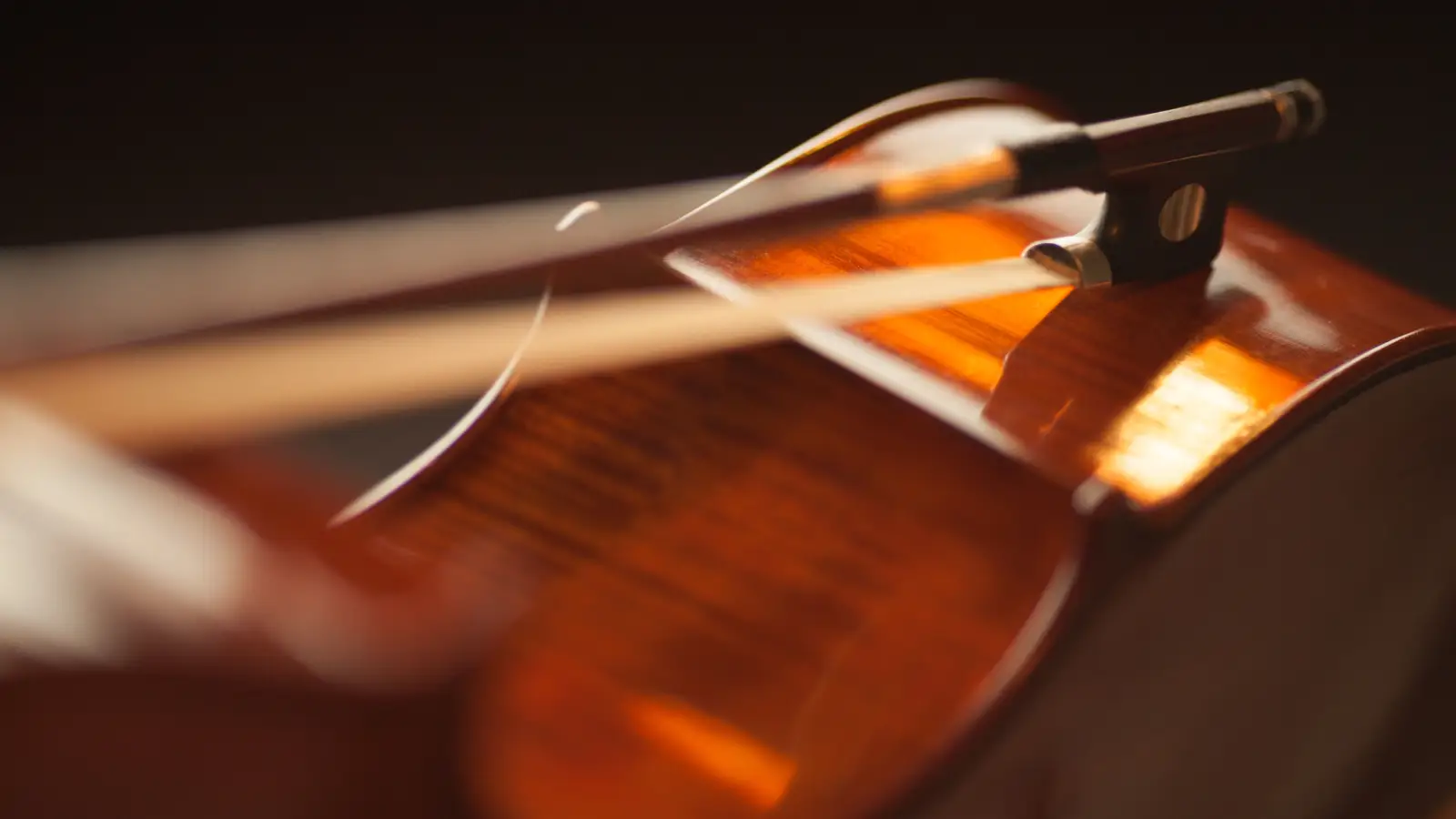
Many self-taught players let the bow stick stand upright, pressing the full ribbon of hair flat against the string. That direct, hard contact produces a coarse, breathy scratch—one you may hear clearly right under your ear—and it chokes the string’s ability to vibrate freely.
How to confirm: Bow a long, slow open G or D string with the hair fully flat. Then tilt the stick slightly toward the fingerboard so roughly half the hair contacts the string. If the scratch fades noticeably, this is your main issue.
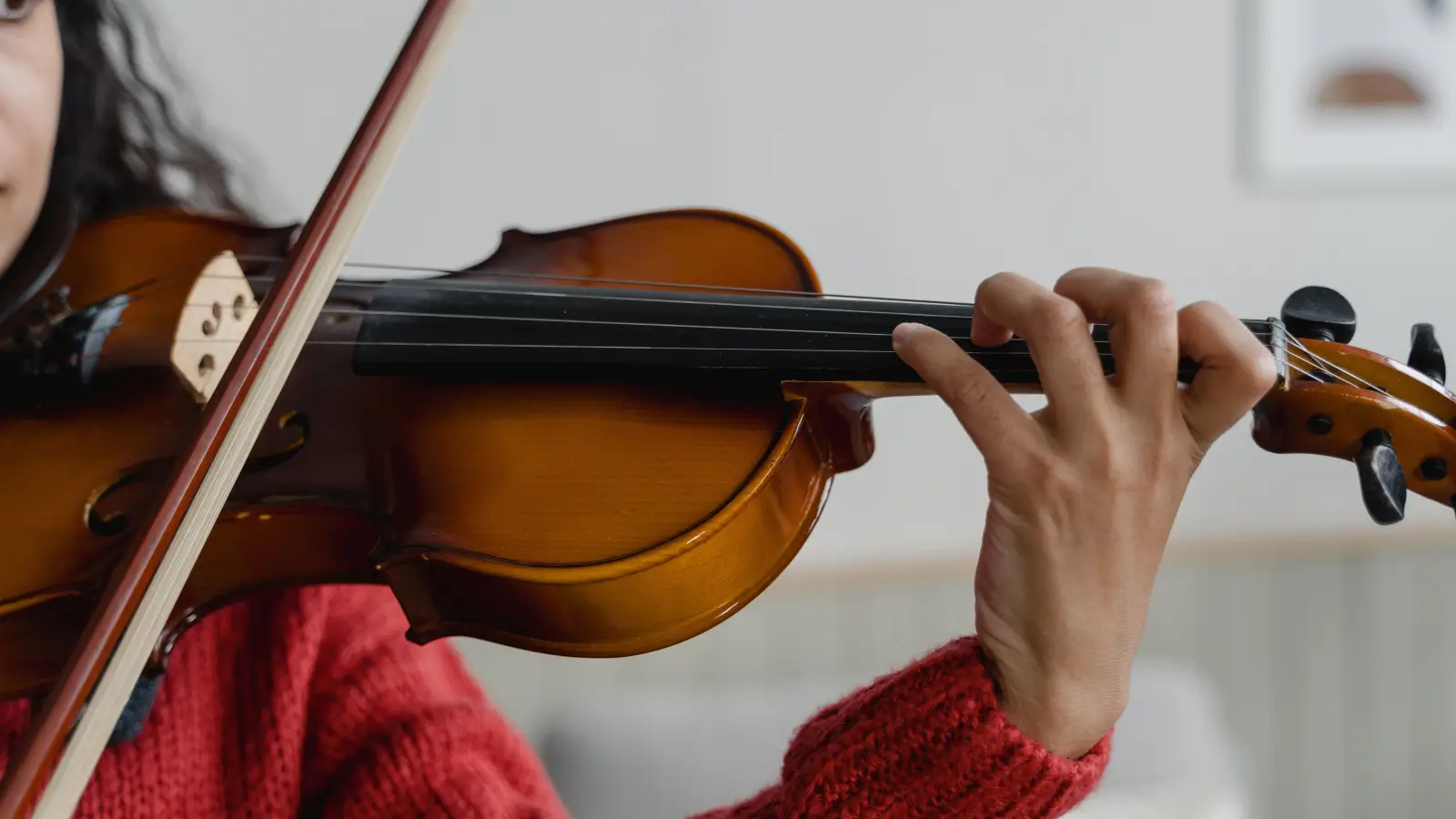
How to fix: Set your bow hand so the stick leans gently away from you (toward the fingerboard on violin and viola), aiming for about a 10-degree angle. Practice holding that tilt while drawing long, even bows, checking in a mirror that the angle stays steady from frog to tip. With less hair touching the string, the tone becomes warmer and more focused.
Cause: Rosin Build-Up That Clogs the String’s Response
Rosin is essential for grip, but too much of it leaves a tacky residue that creates a scratchy, glassy friction. Players who rosin before every session often pile up layers that the bow can’t settle into.
How to confirm: Look at the strings in good light—do you see a whitish, powdery film, especially where the bow goes? Run a dry fingertip along the string; if it feels rough or grabs your skin, there’s excess rosin. Also, after playing, does a small puff of rosin dust rise when you tap the bow hair? That signals over-rosining.
How to fix: Wipe the strings with a clean, dry cloth after every practice session. Once a week, use a slightly dampened cloth on the strings only (never on the bow or the instrument body) to lift stubborn buildup, then dry them immediately. For the bow hair, try reducing rosin application to once every few sessions, using three or four light swipes rather than sawing back and forth. A quality light or dark rosin suited to your climate helps—too soft a rosin in humid weather can worsen the gumminess.
Cause: Jerky Crossings When You Change Strings
A scratchy sound that spikes exactly during string crossings points to an abrupt or pressured bow change. The hair snags the new string before the arm has leveled out, creating a grating attack.
How to confirm: Play a simple open-string drone that alternates between two neighboring strings (D-A, A-E, G-D) in whole notes. Listen for a hiss or scratch right at the instant the bow leaves the old string and catches the new one. If the noise appears only at those transitions, string crossing is the trouble.
How to fix: First, practice smooth crossings away from any piece. Set your bow on the middle of the D string and slowly, without sound, tip the bow toward the A string until you feel the A string make contact; do this several times to feel how small the angle change really is. Then add sound, using a relaxed wrist and forearm pivot, not a shoulder lift. Let the elbow lead the crossing downward (from higher to lower strings) and upward (from lower to higher strings). Increase speed only after the crossing is silent.
Cause: Uneven Bow Pressure and Speed
Pressing too hard at the start of a note or slowing down unexpectedly can choke the string’s vibration, producing a scratchy, choked attack. On the flip side, a sudden burst of speed without matching pressure can create a superficial, papery scratch.
How to confirm: Play a whole-note scale on one string, watching the bow. Does the scratch appear at the beginning of each stroke, near the tip, or when you change direction quickly? Use a mirror or record yourself with your phone; both visual and audio feedback reveal pressure spikes.
How to fix: Prioritize consistent bow speed over expressive variation at first. For a full bow stroke, aim for the same travel speed throughout. Let the bow’s own weight do most of the work; your arm adds only a whisper of pressure. Practice long tones with a tuner or a drone note to hear when the pitch wavers—a sign of uneven pressure. A simple exercise: bow a single open string for 30 seconds, keeping the tone clear and steady without any scratches, then gradually stretch it to 60 seconds.
Cause: Playing Too Close to the Bridge or Too Far Over the Fingerboard
Each spot between the bridge and fingerboard has a different resistance and tone color. Bow too near the bridge, and the string’s tension fights back, creating a grainy, scratchy sound. Bow too far over the fingerboard, and the thin, airy tone can also develop an unfocused scratch.
How to confirm: Slowly draw the bow on an open string and move it from the fingerboard toward the bridge in one smooth stroke. Notice where the sound tightens and turns harsh. The optimal sounding point for a beginner is roughly halfway between the bridge and fingerboard, though it shifts a little depending on the string and note.
How to fix: Mark the sweet spot on the strings with a tiny piece of tape between the bridge and fingerboard if you need a visual guide. Practice keeping the bow parallel to the bridge and at that distance throughout long tones. As you improve, you’ll learn to adjust the contact point intuitively for different dynamics, but for now, staying in the middle lane prevents most scratch.
Cause: Tension in the Bow Hand and Arm
A tight, gripping bow hold sends rigidity into the bow stroke, which makes every tiny irregularity in the hair’s interaction with the string louder. The result is often a persistent, overall scratch that won’t go away with any of the other fixes.
How to confirm: While playing a long bow stroke, consciously relax your thumb and fingers; if the bow wobbles or you can’t maintain control, tension may be hiding an instability. Also, look at your hand after playing—if your knuckles are white or your thumb joint aches, you’re gripping too hard.
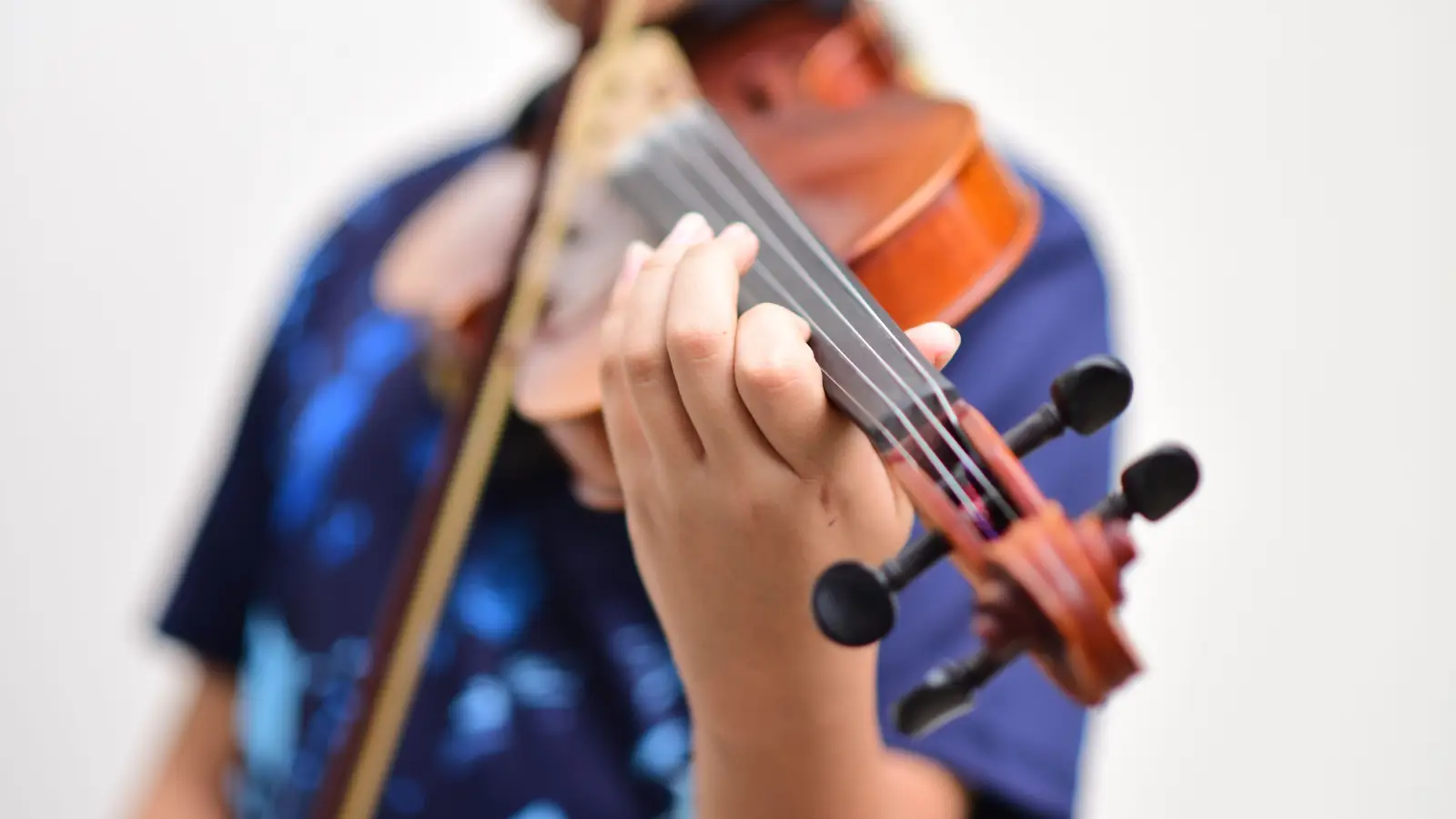
How to fix: Revisit the basic bow hold. Your thumb should be bent and placed on the stick at the frog, with the middle fingers draped over the stick, not squeezed. Practice holding the bow with just your thumb and middle finger, then add the other fingers one by one while keeping them rounded and soft. Do bowing exercises that bounce the bow on the string just from the hand and fingers’ reaction, not from the arm, to develop a relaxed springiness.
Cause: Worn Bow Hair or Old Strings
Physical wear can mimic a technique problem. Bow hair loses its ability to grip over time, leading players to compensate with extra pressure that adds scratch. Old, false strings develop irregularities that produce a raspy edge even when technique is good.
How to confirm: Inspect the bow hair—does it look shiny, flattened, or sparse? Clean bow hair has a slight texture; worn hair appears almost slick. For strings, listen for a dull thud underneath the scratch and check the strings under magnification for grooves or unraveling.
How to fix: As a general guideline, rehair a bow that’s used daily roughly every six to twelve months. Change strings about every three to six months, or sooner if they sound dead or won’t hold pitch. If you’re unsure, a luthier can evaluate both.
When the Usual Adjustments Don’t Clear the Scratch: Less Common Culprits
If you’ve worked through the checklist carefully and the scratch still hangs on, a few overlooked factors could be at play.
- A poorly fitted or very cheap bow: Some entry-level bows have an uneven camber or insufficient tension, making clean tone a constant struggle. Upgrading to a better student bow, even an affordable carbon-fiber model, can reveal that the instrument wasn’t the real limitation.
- Humidity and temperature swings: High humidity can make rosin gummy, while very dry air can make it too powdery and grip-less. Both extremes produce scratchy sound. A dehumidifier in the case or a humidifier in the practice room can help, as can switching to a rosin formulated for your climate.
- Instrument setup problems: A poorly cut bridge, a soundpost that’s out of place, or a buzzing tailpiece can introduce harshness. A luthier can rule these out.
Keeping the Scratch from Coming Back
Once you have a clear tone, build these habits so the scratch doesn’t quietly return.
- Start every session with a tone check: Before you launch into repertoire, spend two minutes on open strings. Listen for scratch and adjust tilt, pressure, and contact point until the sound is clean.
- Rosin with intention, not out of habit: Apply rosin only when the bow feels slippery—three light swipes, then test. Wipe strings after every session.
- Record yourself once a week: A phone recording picks up scratchiness that your ear, so close to the instrument, may filter out. Use it as your objective diagnostic tool.
- Practice string crossings daily: Isolate the motion with simple scales and arpeggios, focusing on silence during each transition.
- Stay relaxed: Regularly check your bow hand and shoulder for tension during long practice sessions. Subtle stiffness creeps back easily.
Quick Answers to Common Scratchy-Tone Questions
Why does my E string sound scratchy when the other strings are fine?
The E string is thinner and under higher tension, so it reacts strongly to even slight bow pressure and tilt changes. The same amount of pressure that feels comfortable on the G string can overdrive the E. Use a lighter touch, tilt a bit more, and experiment with a different rosin (lighter or darker) for that string, if needed.
Can too much rosin cause a scratchy sound?
Yes. Excessive rosin creates a sticky surface that grabs and releases the string unevenly, producing that glassy, scratchy texture. It also builds up on strings, making the problem worse. Wipe strings and reduce rosin.
Is a scratchy sound always a technique issue, or could the instrument be at fault?
Often it’s technique, but sometimes the instrument contributes. A poorly set up violin or a low-quality bow can make clean tone nearly impossible. If you’ve checked every technical factor and still struggle, have the instrument evaluated by a luthier.
How can I fix scratchiness during fast passages?
Fast bowing amplifies any slight unevenness in pressure or crossing. Slow the passage down until every note is clean, then gradually increase tempo, staying alert for the scratch. Focus on keeping bow hair contact light and the crossings smooth.
If Nothing Worked: Your Next Move
When you’ve tested every cause—tilt, rosin, crossing, pressure, placement, tension, equipment—and the scratch still clouds your sound, it’s time to bring in a second set of ears. Schedule a single lesson with a teacher, even just to diagnose the issue, or visit a luthier to check the instrument and bow setup. Sometimes an outside perspective notices what you’ve grown accustomed to hearing. Recording yourself and comparing your sound to reference recordings of good tone can also train your ear to identify the problem more precisely. The diagnostic checklist you’ve built here will keep serving you every practice session as your first step toward a richer tone. Keep using it, and the scratch will gradually fade from your default sound.