A thin sound at the tip happens because the bow loses speed and weight as it travels outward. The fix is to manage the bow precisely like a budget: assign a specific segment and speed to every note, using the bow as a ruler for tone. With a simple plan, you can get consistent, full sound from frog to tip in every passage.
The Goal: Consistent Tone from Frog to Tip
Players who come here with a thin tip almost always have a bow distribution problem. A phrase sounds rich near the frog but fades toward the end because no one planned how much bow each note actually gets. The goal is straightforward: produce the same quality of sound at every point on the hair by deciding in advance which bow zone and speed you’ll use for every note.
The Quick Fix Plan
- Divide the bow visually into three zones: lower third (frog to balance point), middle third, and upper third (tip area).
- Assign a specific zone plus a bow-speed target to each note in a short passage or scale.
- Practice an open-string exercise that holds a constant tone while moving through all three zones at different speeds.
- Budget bow length for scales, giving every note exactly the same amount of hair travel.
- Mark up a piece of music with zone numbers and planned bow speeds, then check consistency with a tuner or recording.
Step-by-Step: Turning Your Bow into a Tone Ruler
Mark the Three Zones on Your Bow
Place a small strip of low-tack tape at the bow’s midpoint and another roughly at the point where the stick straightens near the tip—about one-third from the end. You now have three workable segments. The lower third handles heavier, sustained notes; the middle third covers most passagework; the upper third demands deliberate speed to avoid thinning. If you use a carbon-fiber or older wood bow, the balance point can shift, so place tape based on how the bow feels rather than a perfect fraction.
Determine the Bow-Speed Budget for Each Note
Start with a simple phrase: four eighth notes on an open string. Decide that the first note gets the lower third, the second the middle third, the third the entire upper third, and the fourth a quick return stroke. The third note in the tip zone must use a full third of bow length to match the first note’s tone. If the tip note sounds weak, give it more speed. If it gets scratchy, cut the speed and add a bit more index-finger weight.
The Open-String Ruler Exercise
Set a metronome to 60. On the A string, play a whole note from frog to tip with a steady contact point between bridge and fingerboard. Repeat four times. Then play four whole notes using only the lower third, then only the middle third, then only the upper third. On the upper-third round, move the bow faster to match the volume you got in the lower-third round. Watch in a mirror or record yourself to be sure the bow stays straight at every segment.
Budgeting for Scales
Play a one-octave G major scale at two beats per note, using exactly one-third of the bow per note regardless of string crossings. Keep the contact point consistent. If a crossing makes you steal bow from the next note, stop and isolate those two moves. Every note gets the same treatment: same amount of bow travel, same lane, same target tone. By the time you reach the tip for the last note, it must sound as full as the first note at the frog.
Marking Up a Piece
Take a piece you can already play in tune but with uneven tone. Photocopy the part. Above each note or group, write a zone number: 1 for lower third, 2 for middle, 3 for tip. Below the staff, add a speed cue—fast, moderate, or slow. Play a few bars while watching the tape markers. If a note ends before you reach its assigned zone, you either started too far back or moved too slowly. Adjust and repeat.
Signs You’re on the Right Track
- The open-string ruler exercise produces the same core sound in all three bow zones with no audible drop-offs.
- In a G major scale using one-third-per-note budgets, the tip note sounds indistinguishable from the frog note.
- Your marked-up piece never forces you to cram notes into a tiny section of hair or leaves you out of bow before a phrase ends.
Common Pitfalls and How to Fix Them
The Tip Still Sounds Thin Even with Extra Bow Speed
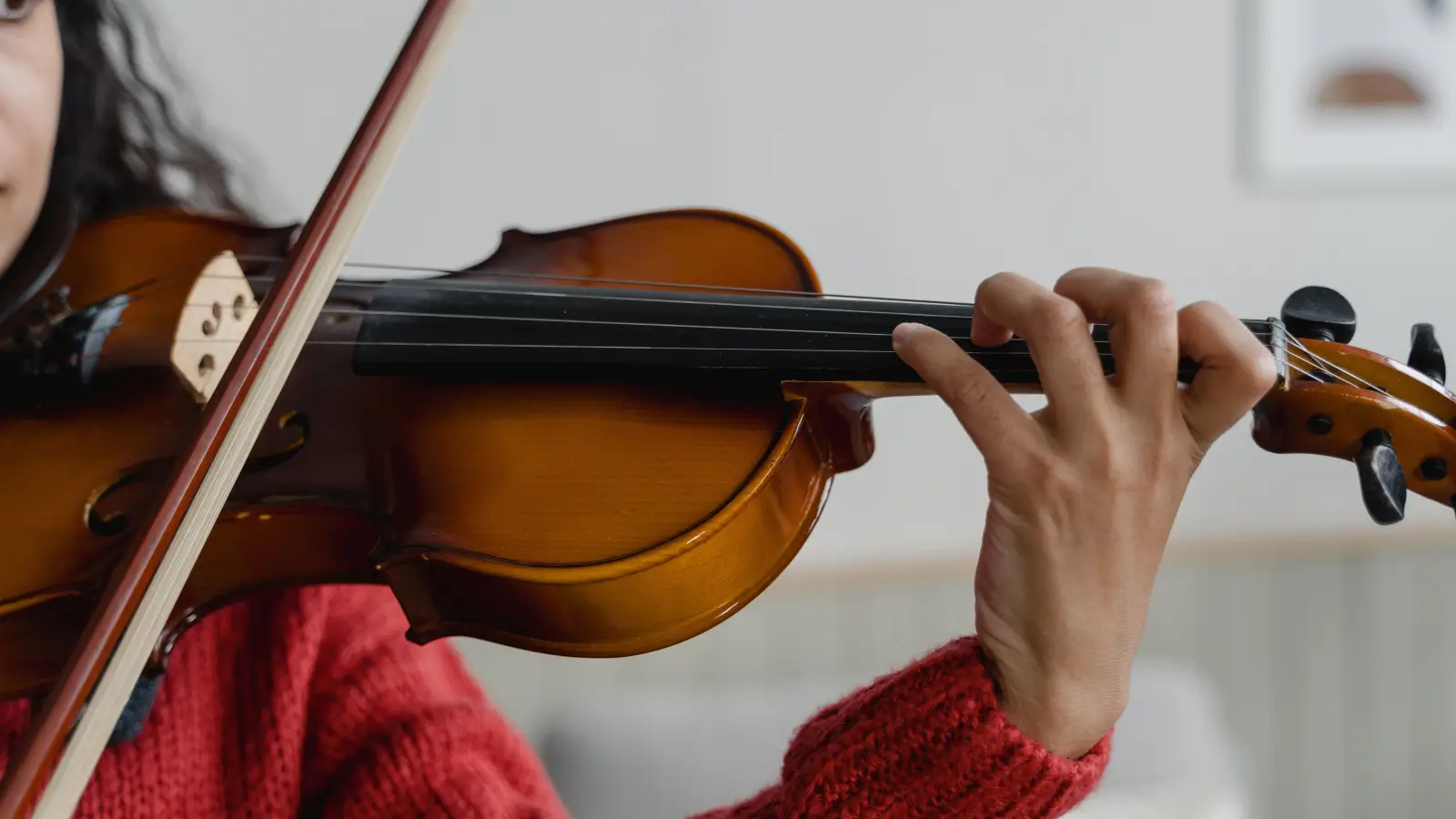
Check your bow tilt. At the tip, the hair must stay flat enough to keep contact. When the stick leans too far forward, only the edge of the hair touches the string—thin sound results. Flatten the hair slightly and let arm weight transfer through a relaxed index finger.
You Can’t Move Fast Enough at the Tip Without Scratchiness
Scratch usually comes from pressing too hard while you accelerate. Ease up on right-hand thumb pressure and smooth out the acceleration starting from the balance point. Practice the upper third alone on an open string at different speeds until the sound cleans up.
The Budgeting Makes Your Playing Sound Robotic
Real music needs shape. Once you have a solid even-tone baseline, vary the budget: give climactic notes more bow, passing tones less. The exercise builds a calibrated ear, not a formula that kills musical expression.
Where to Apply This Next
With stable tone from frog to tip, apply your bow-budgeting method to the longest sustained note in your current piece, planning zones and speeds for the approach and the note itself.
Frequently Asked Bow Budgeting Questions
How do I know exactly where to place the tape markers?
Measure thirds with a ruler if you like, but the consistency of the visual cue matters more than the exact spot. One mark at the bow’s balance point and another about four inches from the tip works. Use them for a week, then remove them when your eye knows the distances.
Does this technique work for fast passages too?
For fast passages, group four to eight notes into one bow and assign that group a specific zone. Your right arm eventually internalizes the mapping so you stop thinking note-by-note.
What if my bow keeps bouncing at the tip during the open-string exercise?
Bouncing usually means the bow moves too slowly relative to pressure. Increase bow speed first, then add a slight bit of index-finger weight if needed. Also confirm the hair is rosined and tensioned correctly.
Can I use this approach to fix a heavy, grinding sound at the frog?
Yes—the budgeting idea works in reverse. At the frog, use less bow speed and less weight. Think of the lower third as a delicate throttle. Slow, quiet strokes right at the frog retrain that zone.
How long before I hear a real difference in my playing?
With ten to fifteen minutes a day on the open-string ruler and scale budgeting, most players hear a clear improvement in tone consistency within two weeks. The ear adjusts quickly once the mechanics are correct.