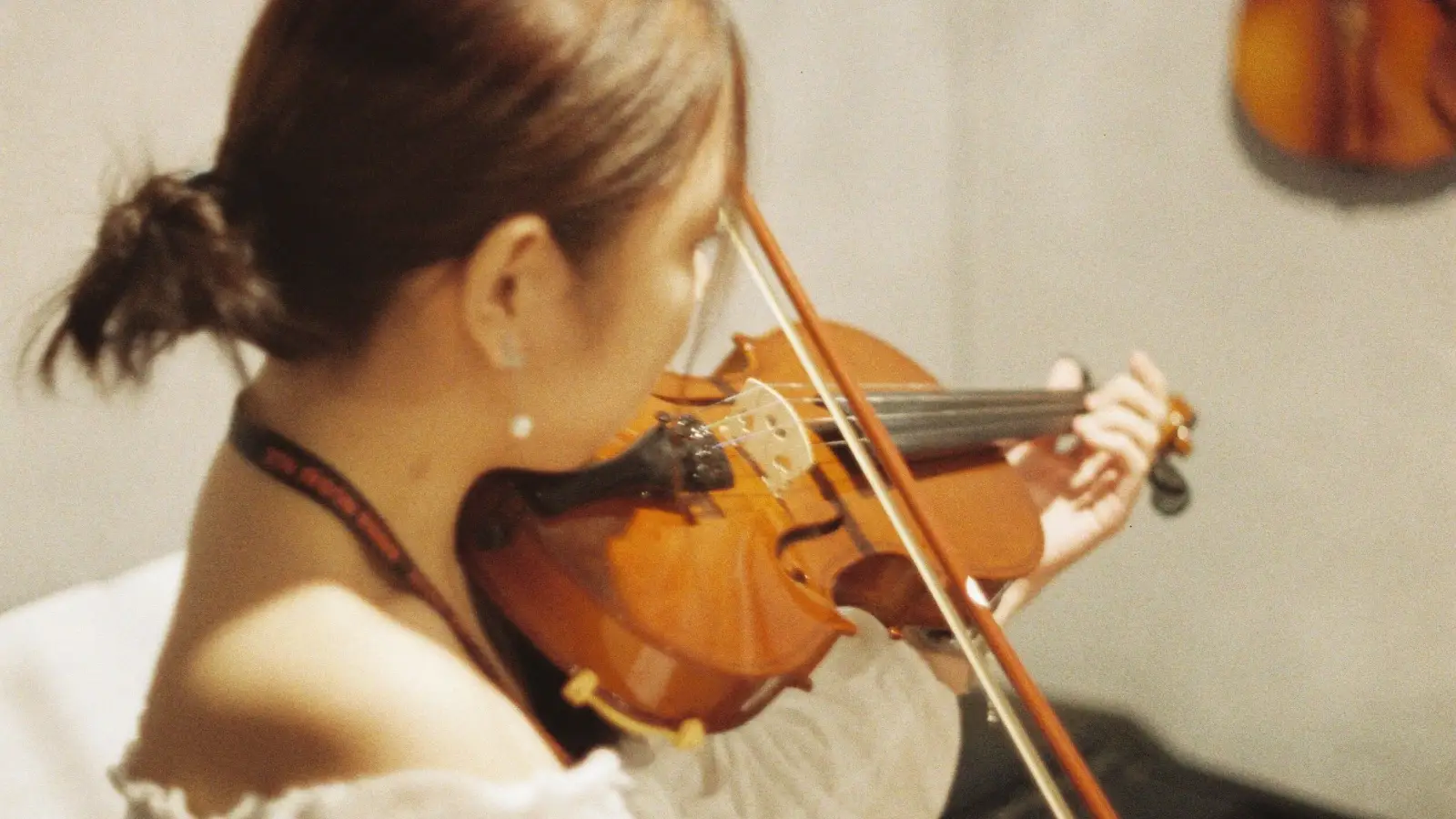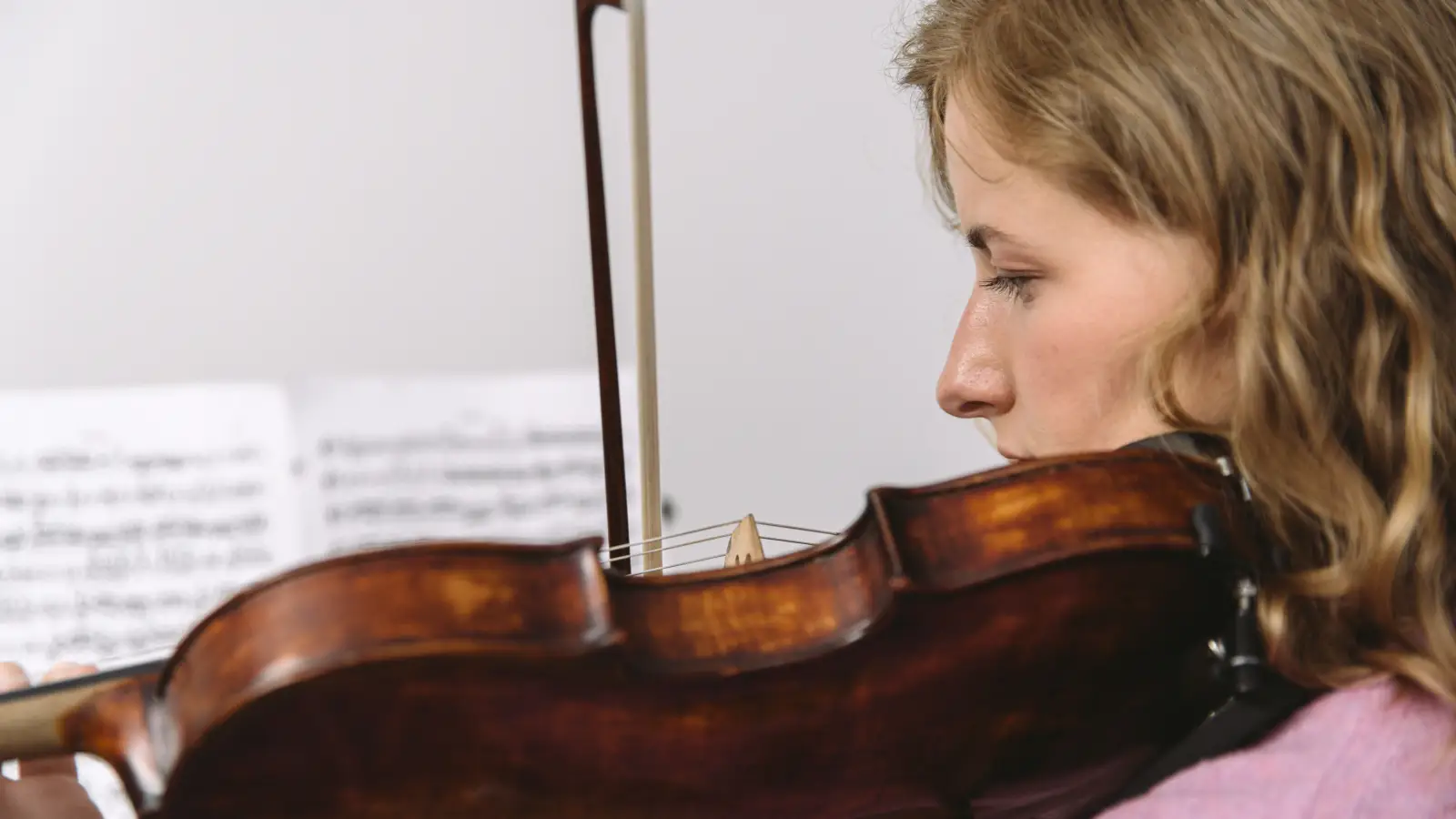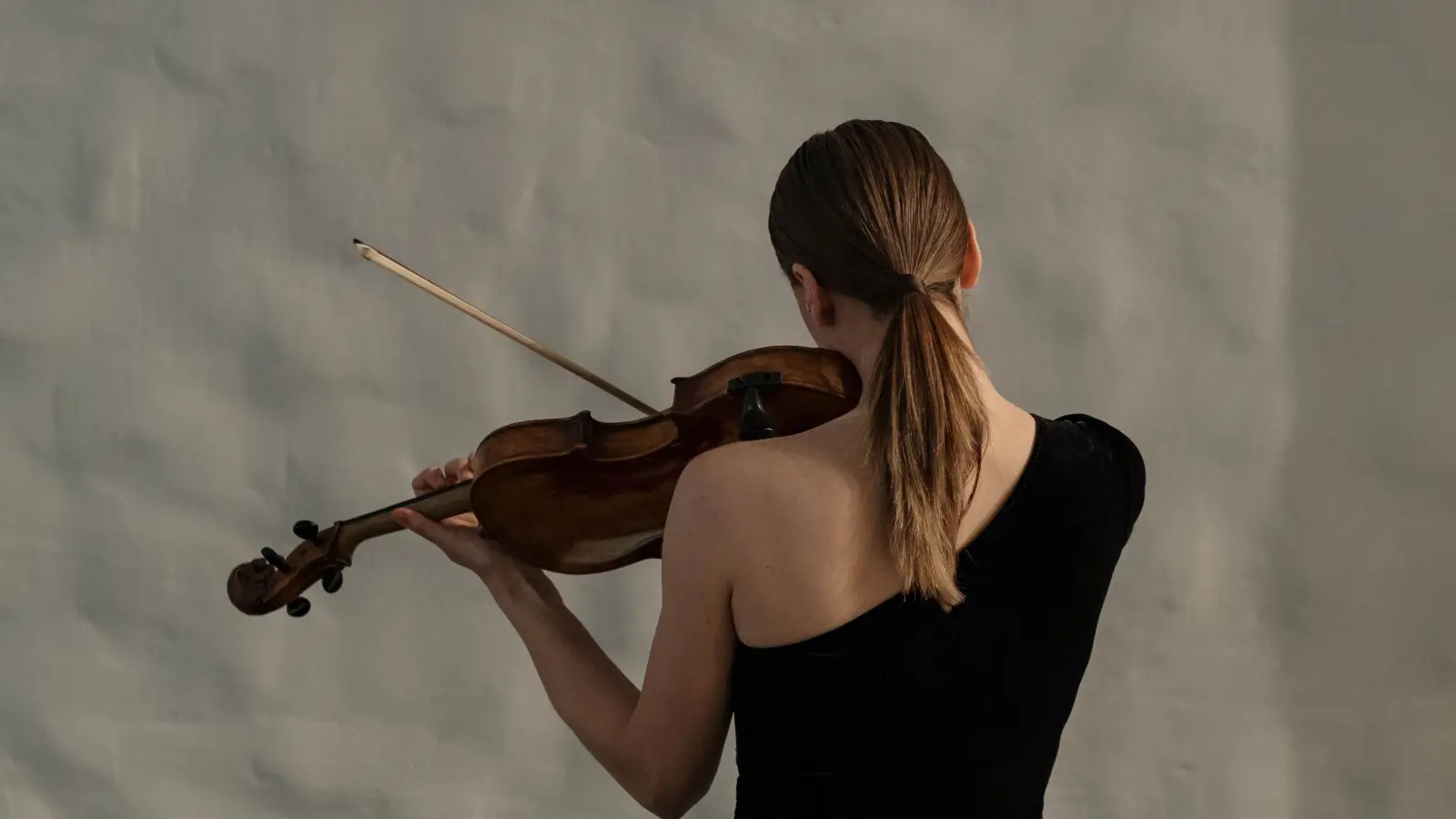
Your violin teacher goes to the shoulder rest first because its fit shapes everything that happens above it. The height, tilt, and placement of that rest set the working angles for the bow arm and the left hand, and a poor setup forces the body into patterns that technique alone cannot correct. After reading this guide, you will know how to measure and adjust those three variables so your instrument sits in a position that lets your arms move as they should.
Why a Shoulder Rest Is a Technical Tool, Not a Comfort Cushion
A shoulder rest bridges the gap between a curved wooden instrument and a curved human body. That bridge has a right height and a right angle. When either is off, the player’s posture compensates — the shoulder hikes up, the neck bends sideways, the wrist twists. These compensations feel like effort, and they corrupt the mechanics of both arms. The rest is not there to make the violin feel soft; it is there to lock it into a stable plane so the player does not have to.
How the Bow Arm Pays for a Bad Fit
If the rest props the violin too high, the bow arm must elevate from the shoulder socket to meet the strings. The upper arm tires quickly, and the natural weight that produces a full tone cannot drop through a lifted arm. If the rest is too low, the shoulder rounds forward and the elbow pulls back; the bow slides toward the fingerboard and string crossings turn jerky. The correct height places the bow arm in a neutral, hanging position where gravity does half the work and the elbow traces a smooth arc across the strings.
The Left-Hand Grip That Starts at the Collarbone
When the violin wobbles or tilts unexpectedly, the left hand instinctively clamps down on the neck. That clamp locks the thumb, stiffens the fingers, and makes shifting a series of jerks instead of a slide. A stable rest anchors the instrument so the left hand can leave the neck entirely — the thumb and fingers then work only on the notes, not on holding the instrument up. The teacher spots this tension right away and goes straight to the shoulder rest because no amount of left-hand drill will fix a grip that is a survival response to an unstable setup.
Height: The Adjustment Most Players Set Once and Never Recheck
Height is the space between the violin back and the rest pad when the rest is mounted and placed on the shoulder. It is a measurement that is rarely measured. Out of the box, many rests sit at a medium setting that fits almost nobody correctly. A rest that is too tall pushes the scroll up and forces the bow arm to fight gravity with every stroke. A rest that is too short collapses the whole frame — the neck cranes forward, the left shoulder scrunches, and the bow arm loses its range.
The useful test does not require a ruler. Stand straight with your bow arm hanging heavy at your side. Place the violin on your shoulder and let your chin drop onto the chin rest without pressing. If you can keep the instrument reasonably steady without a death grip from the left hand, the height is in the usable zone. If your left shoulder lifts or your head tilts sideways to close the gap, adjust the height — taller feet if the gap is too large, shorter if the body is scrunching.
Move in half-turns on the adjustment barrels. A difference of two or three millimeters changes the entire angle of the violin relative to your shoulder. After each adjustment, play long, slow open-string bows and watch for any tension that appears in the upper arm or neck.
Tilt: The Side-to-Side Lean That Dictates Bow Path and Wrist Angle
Once the height is set, the next point is the violin’s lean — whether the scroll tips toward the floor or toward the ceiling, and whether the treble side rolls toward the bow or away from it. Most shoulder rests allow tilt adjustment by bending the feet or rotating a barrel. The target is a top plate that sits roughly parallel to the floor when the player is in full playing posture.
A forward tilt (scroll dropping) rotates the string plane away from the bow, making the upper strings feel far away and the lower strings crowded. A backward tilt lifts the scroll and forces the bow arm to lift, sapping power from the down-bow. Tilt also affects the left hand: a violin that is too flat in the player’s frame angles the wrist awkwardly, especially for the fourth finger on the lower strings. A steep tilt makes shifting feel like climbing uphill.
Test tilt by playing a three-octave scale that crosses all four strings. In first position on the G string, your right elbow should not feel pinned to your side. On the E string, your left wrist should not have to contort to place the fourth finger. Adjust the tilt in small increments — a fraction of a degree — and retest. This single change often resolves fatigue that players mistake for weak muscles.
Placement: The Millimeter Decisions That Change Everything
Where the rest clamps onto the violin — its distance from the neck and its side-to-side bias — controls the pivot point. Move the rest too close to the neck and the instrument sits high and close to the face; move it too far toward the end button and the scroll dives. Off-center placement to the treble side tilts the violin bow-side down; to the bass side tilts it up.
Begin with the rest centered on the lower bout and test from there. The violin should feel balanced — not wanting to roll forward, backward, or sideways when you release the left hand. The chin rest matters here: a center-mounted chin rest usually pairs best with a centered shoulder rest, while a side-mounted chin rest may need the rest nudged slightly toward the bass side to level the instrument. The angle between the chin rest and the shoulder rest is what actually supports the violin, and if those two surfaces push at odd angles, the jaw clamps harder to stabilize things. That clamp travels straight down into the neck and shoulders.
The Left Hand’s Quiet Dependence on a Steady Platform
When the rest is off, the left hand compensates by gripping the neck. That grip is not a technique error; it is a reflex. Fix the platform, and the grip often disappears on its own. With a stable violin, the thumb rests light and the fingers press only as much as needed. Shifts glide; vibrato oscillates freely because the hand is not locked up trying to support weight.
A straightforward diagnostic: play a slow chromatic scale from first position up to fifth and back, pausing after each shift with the bow still on the string. If you notice your thumb pressure spiking during the shift, the violin is not stable enough. Go back to height and tilt, then test again. Repeat until the shift feels like a slide, not a lunge.
A Step-by-Step Sequence for Setting the Shoulder Rest
Making all the changes at once leads nowhere. One variable at a time, in order, produces a reliable result.
- Start without the rest. Set the violin on your collarbone and feel its natural position. Notice the string angle and the shoulder contact point.
- Set the height. Attach the rest and adjust the feet so the violin sits at roughly that natural position. Use half-turn increments.
- Level the tilt. Stand in front of a mirror in playing posture. Adjust tilt until the strings run parallel to the floor — or, for some body shapes, a fraction of a degree toward the bow side.
- Position the rest along the bout. Slide it forward or back until the violin feels balanced. Let go with your left hand; the instrument should stay put without grabbing.
- Test the bow arm. Play open A and D long bows. The bow should land at a consistent sounding point and your right shoulder should not rise.
- Test the left hand. Shift from first to third position across all strings. Focus on thumb pressure — if it increases, tweak height or tilt slightly.
- Give it a practice week. Muscles take time to accept a new position. Stay with the setup for several sessions before deciding it needs more work.
Key Takeaways
- A shoulder rest is a technical baseline; it exists to stabilize the instrument so both arms can work without postural compensations.
- Height that is off by a few millimeters forces the bow arm upward or compresses the neck and shoulder.
- Tilt controls whether the bow travels across the strings in a straight line and whether the left wrist can stay neutral.
- Placement on the violin determines its balance and directly affects the left hand’s need to grip the neck.
- When the rest is set correctly, the left hand’s grip lightens automatically, and shifting and vibrato become smoother.
- Adjust only one variable at a time, and test with open-string long bows and shifting exercises before locking in a change.
What to Do Next
The most useful next step is to film your playing from the side. A side view shows exactly what your body does to hold the violin — the head tilt, the right shoulder elevation, the left thumb creeping over the fingerboard. Any of those signals points back to the shoulder rest. Start with the height, because that is the adjustment most players get wrong without realizing it. Take the rest through the seven-step sequence above, work through one change per practice session, and let your body adapt to each new position. When the fit is right, both arms move with less effort and the tone opens up, because you are no longer devoting energy to propping the instrument up.