The feeling that creeps in—that maybe the rental has done its job and it is time to own—is worth paying attention to. But a hunch can lead to an expensive closet decoration. Six measurable signs turn that restlessness into a clear map, and each one is something the player earns through time and effort. The signs are: reaching full physical size, playing in tune more often than not, hearing a teacher say “you’re ready,” keeping a daily practice streak alive, having a performance in sight, and finally, setting aside real money for a step-up instrument. When those milestones stack up, the decision stops being a guess and starts feeling like the right reward.
The Logic That Orders These Six Signals
Two principles decide the order:
- Earned readiness: The milestone marks a physical or skill threshold that no amount of wishing can hurry.
- Practical timing: The sign directly influences whether waiting would slow growth or waste money.
What follows moves from the non-negotiable starting point to the welcome confirmations.
1. Full-Size or Fully Settled Growth
For a young player, this sign arrives when the arm measures around 23 inches from the collarbone to the center of the palm—usually somewhere between ages 11 and 13—and the left hand can span the fingerboard of a full-size violin without strain. For an adult, the milestone is simpler: posture and bow hold have stabilized, and no major physical shift remains that would change instrument setup.
Why it sits alone at the top: A violin that will be outgrown in a year is a poor investment, and worse, a poorly sized instrument forces technique into bad positions. The left hand cramps, the bow arm overreaches. Renting while the body grows is financially smart and physically safer. No other sign—no exquisite ear, no enthusiastic teacher—can override a body that still needs to grow. This is the gate that must open first.
2. Consistent Intonation Across Strings
When a player can hear that a note is slightly sharp or flat and the fingers make the tiny adjustment without a prompt, something has shifted. It is not about perfection; it is about the ear leading and the hand following most of the time. The telltale evidence: a scale played with only one or two questionable notes that self-correct before the next bow change.
Why this earns second place: A rental violin often masks intonation problems with a wooly, forgiving tone. Once the ear sharpens, that same rental becomes a ceiling. A better instrument—one that rings clearly and responds honestly—turns that new awareness into faster improvement. This sign ranks above a teacher’s opinion because, in truth, most teachers base their go-ahead on exactly this skill. It cannot sit at the top, because even the finest pitch sense cannot fix a violin that hurts a growing hand.
3. Your Teacher Says It’s Time
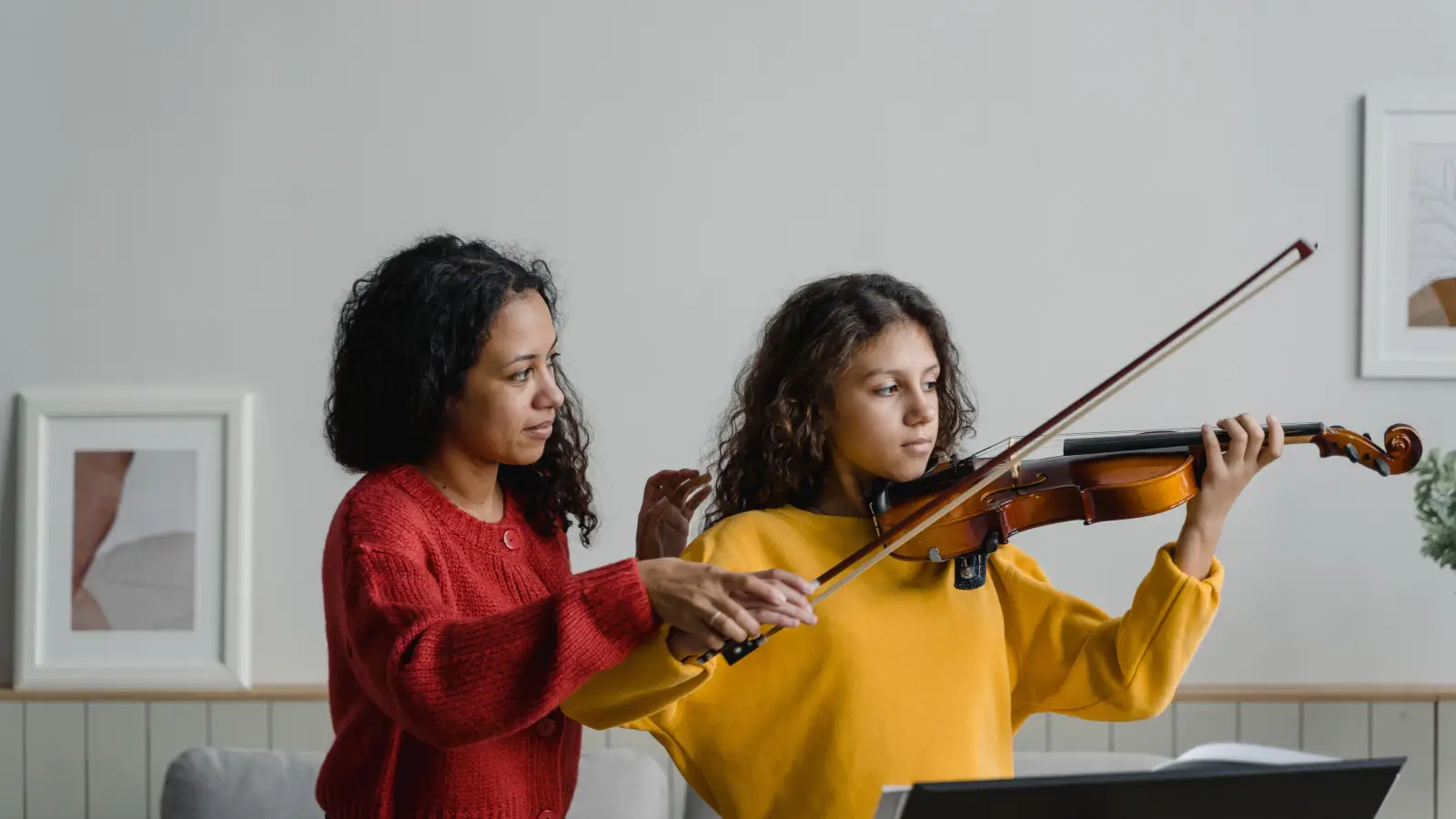
An experienced teacher sees the invisible: bow-arm tension that a heavier instrument would lock in, a left-hand position still too tight for a wider neck, or the first signs that repertoire demands a more colorful voice. When she looks up from the lesson and says “I think we should start looking,” that nod carries the weight of a hundred students who came before.
Why it lands here: This outside view is the most honest mirror the player has. A good teacher wants the student to own a violin when it will help, not flatter. Yet it is still a judgment call, and two capable teachers might set slightly different readiness lines. Intonation from a recording is more objective; a teacher’s green light, as valuable as it is, still lives in the world of interpretation. That is why it follows behind.
4. A Practice Streak That Has Lasted Months
Daily practice maintained through ordinary, busy weeks—homework, chores, tired evenings—says something a six-week burst cannot. A stretch of 90 days or more, with only rare misses, proves the instrument has become a habit, not a hobby.
Why it sits in the middle: A practice streak confirms that the violin will actually be used. A new instrument bought without this habit risks silence. But discipline alone does not fix bad technique, and it cannot replace proper sizing or a trained ear. That is why it takes the fourth spot: it turns the earlier milestones into something sustainable. It ranks above a performance goal because a streak is proof already on the page, not a promise written in a future calendar.
5. A Performance That Is Actually Coming
A recital date circled on the wall calendar, an audition deadline, a new ensemble seat waiting—these shift the equation. A rental’s quirks, the finicky pegs, the thin tone on high notes, become risks when someone is sitting in the audience.
Why it claims this position: The pressure of a performance can crystallize a decision. Knowing the instrument will not let the player down on stage is a powerful reason to buy. But this sign is situational; plenty of devoted players never perform publicly and still own with joy. It is a catalyst, not a core readiness marker. A looming concert without a consistent practice history does not make a wise purchase, which is why it trails behind the steadier evidence of a daily streak.
6. A Realistic Budget for a Step-Up Instrument
A first purchase should not be the cheapest violin available; it should be a step up from the rental—a well-set-up instrument that rewards careful playing. For many beginners, the sensible range sits between a few hundred and around fifteen hundred dollars, where craftsmanship begins to outpace factory-level rental stock. Some families save for it, others roll rental credit forward, but the point is that the money is ready without causing strain.
Why it closes the list: Money is the enabler, never the milestone. A bank account can be full on day one, but that says nothing about the player’s readiness. Saving while the other signs mature turns the purchase into a deliberate, earned step rather than an impulse buy. It belongs last because, of all six, it is the one most easily solved with patience while the real work is happening elsewhere.
Where the Signals Shift from Must-Have to Timing Is Right
Between the third and fourth signs is the line where many decisions stumble. The first three answer whether the musician herself is ready. The next three answer whether this particular season is the right one. A player who has the growth, the ear, and the teacher’s blessing but no regular practice rhythm yet might honestly choose to wait. Buying without the daily habit is the single most common regret, and it is okay to let the idea rest a few more months while the pattern builds.
Which Signal to Trust Most Right Now
- If the player is still growing: Sign #1 is the boss. Every other green light dims beside it. Rent until the body settles, then reassess. A prodigy with stunning intonation still needs a violin that fits.
- For the adult beginner with a tight budget: Sign #6 may jump ahead of the teacher’s approval temporarily. A cheap instrument manufactures struggles that look like lack of talent; waiting until you can afford something that meets you halfway is the wiser move.
- If a big performance is closing in: Sign #5 can leap over #4. When a recital or audition genuinely matters to the player, securing an instrument that removes the rental’s unpredictability is worth it—even if the daily streak isn’t yet spotless. The confidence of a reliable violin often fuels the practice that follows.
Questions That Come Up Right Before Buying
I am an adult beginner—does the growth rule apply to me?
Your frame is already settled, so the growth milestone is automatically met. Your focus shifts to intonation consistency and teacher feedback, or if you are self-taught, to honest self-assessment through recordings.
How can I tell if my intonation is consistent enough?
Record a two-octave G-major scale without accompaniment. Play it back and count the notes that still sound sour. If you can hear them on playback and your fingers adjust during live playing, you are on the way. A teacher can confirm what your ear is already catching.
Is it ever okay to skip a teacher’s approval?
For experienced adult learners who study independently, this sign becomes less critical. For students under regular instruction, a teacher’s caution almost always deserves respect—she can see technical habits that a parent or a player cannot.
What about buying online without trying the violin first?
It is not the ideal path, but when a local shop is out of reach, work with an online retailer that offers a trial period with free returns. Spend a week with the instrument, get your teacher’s opinion, and do not force a match that feels wrong.
When the Checklist Becomes a Graduation
The six signs turn a fuzzy “maybe” into a decision you can trust. Sign #1—reaching full size—is the anchor. From there, each milestone confirms a readiness that did not come easily. The one situation that overrides the ordered list: a performance that carries real weight can justify moving ahead even if the practice streak is still finding its rhythm. For everyone else, work through the signs in sequence, and the day the violin comes home will feel less like a gamble and more like something the player truly earned.