If your bow drifts toward the fingerboard or bridge even when you try to pull it straight, the real trouble is often sitting quietly in your hand. A crooked bow path almost always begins with tiny misalignments in the bow hold—a thumb that presses too deep into the frog, a pinky that flattens instead of balancing, or an index finger that grips where it should just drape. These seemingly minor errors rotate the bow stick enough to send the hair off course before you even start a stroke.
Why Your Arm Can Pull Straight but the Bow Still Slants
It’s a disheartening feeling: your arm feels like it’s traveling perfectly straight, yet the bow angles inward toward the fingerboard or outward toward the bridge. The fact that your intention and the result don’t match is the first solid clue that the bow hold is quietly steering the bow wrong.
The chain of cause and effect is direct, even if it’s invisible at first. When the thumb nestles too deeply into the frog’s hollow, the entire hand rotates slightly inward, tilting the bow so the hair naturally drifts toward you. A pinky that collapses or locks straight gives up its job as a counterbalance, and without that gentle top‑side support the bow tip can dip or wander. An index finger that clamps pulls the stick back toward the palm, creating a curved path that no amount of arm correction can fix. These small rotations happen automatically, long before you notice them, and they push the bow off a true square track every time.
A Two‑Minute Reset to Straighten Your Bow Path Right Now
Before working through individual errors, try a complete reset. Often, simply breaking the old misalignment and retraining the hand is enough to bring the bow back to a straight line.
- Completely release your hold. Let the bow rest gently on the string, fingers dangling loosely.
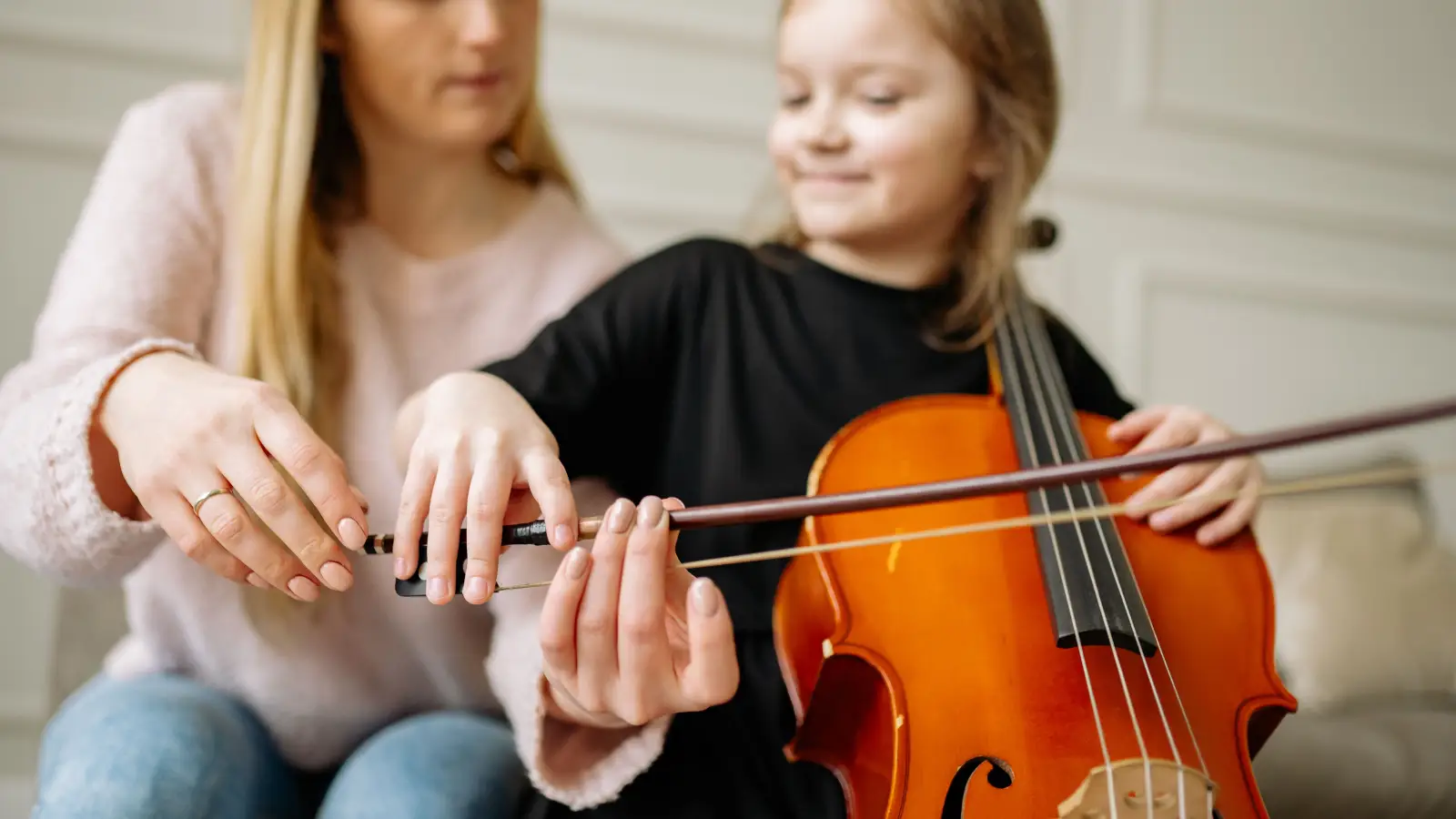
- Place your thumb pad on the stick exactly where the frog meets the leather wrapping. The thumb should bend slightly outward, with the nail pointing toward the bow tip rather than toward your face.
- Curl your middle and ring fingers over the stick. Let the bow’s weight settle into these two fingers; they do the supporting, not the gripping.
- Set your pinky on top of the stick, near the eye of the frog. Keep it softly curved—never locked or hyperextended.
- Let your index finger drape over the stick so the contact point falls around the first knuckle joint. No squeezing.
Now draw a slow bow and watch the point of contact in a mirror. For many players, this single reset straightens the path immediately.
Step‑by‑Step Troubleshooting: Which Hold Error Is Steering Your Bow?
The following causes are ordered from the most common and simplest to address, to the less frequent but more stubborn. Work through them one at a time, and test the bow path after each correction. If one fix doesn’t fully solve the crookedness, keep moving through the list—often two small adjustments together bring the bow back to square.
Your Thumb Sits Too Deep Inside the Frog
What’s happening. When the thumb wedges deep into the frog’s cutout, it pronates the hand inward and locks the bow stick against the palm. The bow naturally tilts toward the player, making the hair drift toward the fingerboard.
How to confirm. Look at your thumbnail while holding the bow. If the nail faces mainly toward your chin or right shoulder, the thumb is too deep. Also, if you feel pressure on the webbing between thumb and index finger, the placement is too far in.
How to fix. Slide the thumb back so the pad—not the tip or side—contacts the stick near the leather winding. The thumbnail should point roughly toward the bow tip, at about a 45‑degree angle. Practice open‑string long tones, keeping the thumb in this position and checking in a mirror that the bow stays parallel to the bridge. Avoid the temptation to press the thumb tighter for security; a light contact is enough.
Your Pinky Collapses or Locks Instead of Curving
What’s happening. A pinky that straightens or hyperextends loses its ability to act as a counterbalance. Without a springy pinky on top, the bow tip can dip downward, or the bow can slide toward the bridge because the hand can’t stabilize the stick’s angle.
How to confirm. Play a slow down‑bow from frog to tip and watch your pinky. If it flattens against the stick or slides off entirely, it’s collapsing. If the joint is locked as straight as a board, it’s not flexing.
How to fix. Practice pinky taps: lift the pinky off the stick slightly and let it land with a soft, curved shape. Repeat ten times without playing, then incorporate it into bow changes. A “spider crawl” on a pencil—walking the fingers while keeping the pinky rounded—also builds the right muscle memory. Be patient; this is one of the hardest fingers to retrain because it is naturally weaker.
Your Index Finger Grips Instead of Hooking
What’s happening. A clamped index finger transfers pressure directly into the stick, pulling the bow back toward the palm and creating a curved path that makes the bow veer toward the bridge on down‑bows or toward the fingerboard on up‑bows.
How to confirm. Check the index finger’s knuckle color. If the skin is white or the second knuckle is bearing weight, you’re gripping. Also, see if you can wiggle the bow slightly while holding it; if not, the grip is too tight.
How to fix. Open the hand fully, then let the bow settle back into the fingers. The index finger should make contact around the first knuckle—the one closest to the palm—and drape gently over the stick like a hook. Practice holding the bow horizontally with only the thumb, middle, and ring fingers; then add the index and pinky without tightening. It’s normal to feel insecure at first, but the bow will feel more stable once you trust this lighter hold.
Your Wrist Stays Stiff and Prevents Bow Angle Adjustment
What’s happening. A rigid wrist stops the bow from staying square to the string as the arm travels. At the frog, the wrist needs to flex slightly toward the nose; at the tip, it needs to extend away. When the wrist stays straight throughout, the bow path curves.
How to confirm. Play a full bow in front of a mirror. At the frog, your wrist should be faintly bent toward your face; at the tip, your wrist should be slightly extended outward. If the wrist remains in a fixed, straight line, the bow will arc.
How to fix. Use a “wrist clock” exercise: hold the bow vertically like the hand of a clock, then rotate the wrist so the tip draws a large circle in the air. Follow that with slow open‑string bowing, focusing on the wrist hinge at each end of the bow. Keep the motion small and unhurried; straining to get a bigger wrist movement will only add tension.
Forearm or Shoulder Tension Pulls the Bow Toward Your Body
What’s happening. When the whole bow stroke is driven from the shoulder instead of the forearm, the upper arm naturally pulls the bow inward, especially as you approach the frog.
How to confirm. Stand close to a wall with your violin. If your upper arm presses against the wall during the lower half of the bow, you’re engaging the shoulder rather than letting the elbow open freely.
How to fix. Practice open‑string down‑bows while consciously relaxing the shoulder. Initiate the stroke from the elbow, letting the forearm swing forward like a door hinge. A mirror or video recording can reveal shoulder lifting that you won’t feel yourself. This kind of tension often creeps in when a player is anxious about keeping the bow straight, so give yourself permission to let the path feel a little less controlled at first while the muscles learn a looser pattern.
When the Bow Hold Is Fine but the Bow Still Crooks
Sometimes the bow hold checks out perfect and the arm seems relaxed, but the bow still doesn’t travel straight. These less common root causes are worth investigating before frustration sets in.
The Bow Stick Might Be Warped or the Hair Tension Uneven
Sight down the bow stick from the frog toward the tip. If the stick curves left or right, the bow is warped and won’t track straight no matter how good your hold is. Uneven hair tension—looser on one side—can also cause the hair to drift. Either condition requires a trip to a luthier for assessment, straightening, or rehairing. It’s an easy thing to overlook, and catching it early can save a lot of unnecessary hand‑hold adjustments.
Your Standing Position or Playing Angle Is Off
If you habitually turn your body too far toward the music stand or hold the violin too high, the natural plane of your bow arm shifts out of alignment with the strings. Adjust your stance so the violin is roughly parallel to the floor, and stand at an angle that lets your bowing arm open naturally without forcing the bow sideways. Check in a mirror that the bow stays perpendicular to the strings throughout the stroke. Even a small twist in the torso can pull the bow off line.
String Crossing Without Adjusting the Hand Angle
A bow hold that works well on one string can go crooked on another if the hand doesn’t tilt to match the new string plane. Practice silent string crossings: place the bow on the G string, then slowly move to the D while letting your hand and wrist adjust the angle. Feel how the hand tilts slightly forward or back to keep the bow straight; then apply that awareness to repertoire. This subtle hand‑angle shift is easy to miss when you’re focused on notes and rhythm, so isolate it during practice.
A Daily One‑Minute Bow Hold Check to Prevent Drift
Consistency keeps the path straight long‑term. Build a pre‑practice routine that takes less than 60 seconds but resets muscle memory each day.
- Thumb placement check. Look at the thumbnail angle before playing a note. It should point toward the bow tip, not toward your face.
- Pinky float test. Lift the pinky and place it back down; it should land curved and stay on top through several bow strokes.
- Index finger hook test. Hold the bow horizontally with thumb, middle, and ring fingers only, then add index and pinky without adding pressure. The index should drape, not clamp.
- Slow mirror bow. Play one full bow on an open string while watching the contact point. If the bow drifts, go back to the two‑minute reset.
Add one long‑tone session per week where the only goal is a straight, flat bow path. Over weeks, these checks reconstruct the habit from the foundation up.
Frequently Asked Questions About Bow Hold and Crooked Bowing
Why does my bow bounce when I play near the frog?
Bouncing near the frog often comes from a rigid thumb or a locked pinky. The bow hand needs to act like a shock absorber; when the thumb and pinky are stiff, the natural weight transfer through the stroke becomes jerky. Soften the pinky and practice very slow frog‑area strokes, allowing the wrist to flex.
Can a crooked bow hold make my tone squeaky?
Yes. A crooked hold tilts the bow hair so it contacts the string unevenly, causing the bow to slide sideways and produce squeaks or whistles. Straightening the hold usually cleans up the tone without any extra effort.
Should my pinky be straight or curved on the bow?
Curved. A rounded pinky acts as a spring, helping to balance the bow and maintain even pressure. A straight or locked pinky removes that counterbalance and can lead to a crooked bow path and bouncing.
How long does it take to fix a crooked bow habit?
With daily, focused check‑ins, most players notice a difference within two to four weeks. Because the bow hold is a deeply ingrained motor pattern, patience pays off. Consistently resetting the hold at the start of each practice session gradually builds a new, straighter default.
When the Bow Still Crooks After Trying Everything
If you’ve worked through each hold adjustment, recorded yourself, and the bow path still won’t stay square, it’s time to bring in a second set of eyes. A violin teacher can watch your entire playing chain—hand, wrist, arm, shoulder, stance—and catch a subtle misalignment that a mirror alone won’t reveal. Sometimes the fix is a small posture tweak, like bringing the scroll slightly forward or relaxing the left shoulder, that indirectly straightens the bow arm.
If the bow itself is suspect—warped, unevenly haired, or too light for your hand—visit a trusted luthier. A quality bow in good repair removes one more variable, letting you focus purely on the hold. Above all, keep the hand soft and your daily reset habit; the body learns slowly, but it does learn.