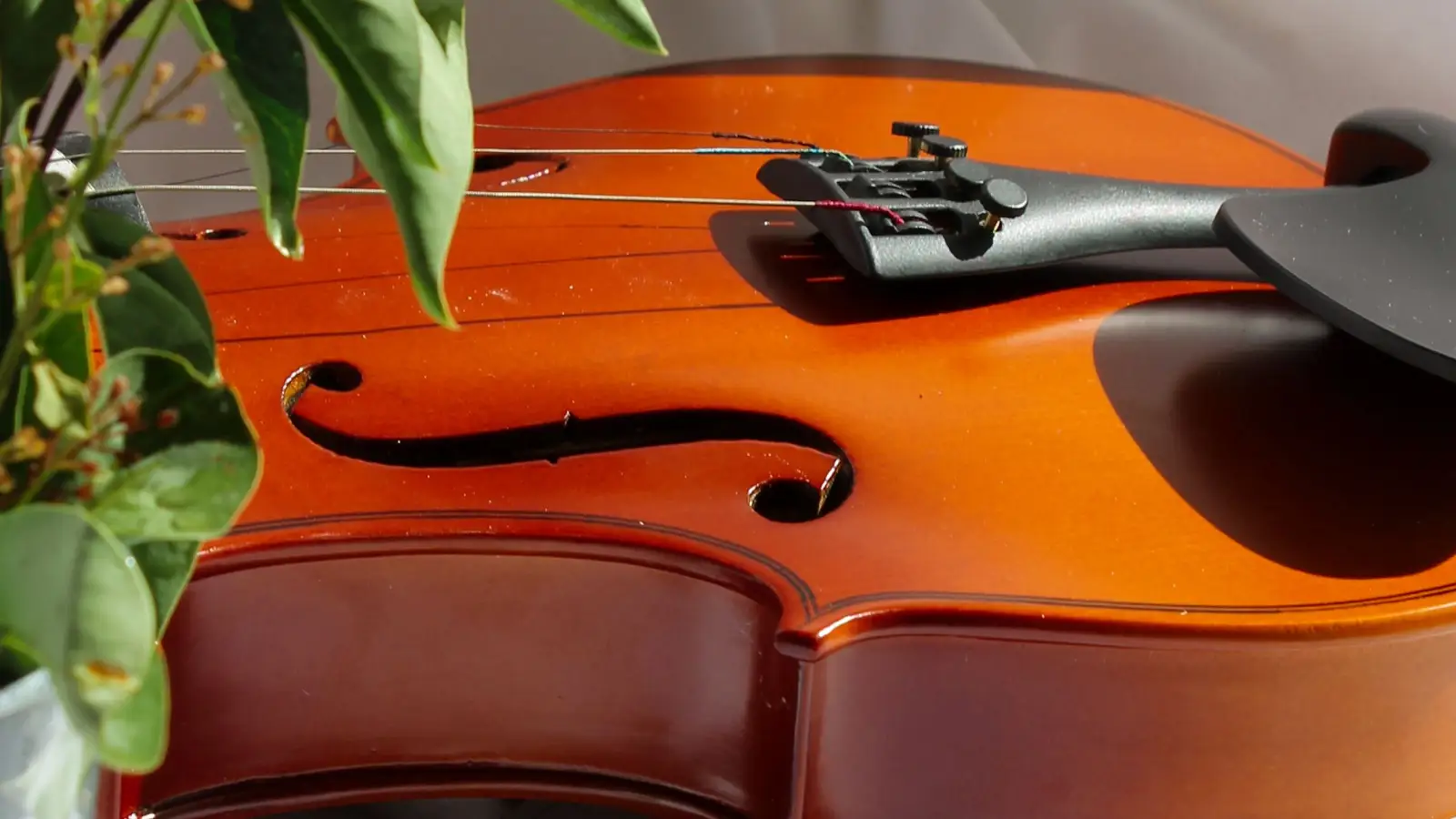
The safest way to remove rosin dust from a violin without damaging the varnish is to wipe it with a dry, clean microfiber cloth right after playing. One straight pass over the strings, fingerboard, and body lifts most of the fresh powder before it can harden. What makes this simple wipe so critical is the chain reaction you trigger the moment you swap a dry cloth for a damp one — a response that feels like cleaning but actually starts a slow, invisible breakdown of the finish.
Rosin dust is slightly acidic. Left on the varnish long enough, it can etch the surface. But the faster, more common danger is moisture. When rosin dust mixes with water, it becomes a sticky, abrasive paste. Wiping with even a slightly damp cloth spreads that paste across the varnish in a thin film, which dries as a haze you cannot wipe away later. Repeat that enough times and the clarity fogs permanently — a problem only a luthier can fix. The dry method described here sidesteps that risk completely, using only a cloth and a handful of precise motions.
The Short Version: Rosin Dust Removal in 4 Steps
- Immediately after playing, lay the violin on a soft, secure surface.
- Take a clean, dry microfiber cloth and gently wipe the length of the strings, from bridge to fingerboard, pinching each string lightly.
- Using a fresh section of the cloth, wipe the fingerboard, the area under the strings, and the entire body of the violin with light, straight strokes — never circular.
- Finish by wiping the bow stick (avoid touching the hair) and the chinrest, then fold the cloth dust-side in and store it separately.
Tools and Setup: Everything You Need for a Dust-Safe Cleaning
You do not need a kit; you need two specific items and the discipline to avoid a third.
Microfiber cloth. Use a high-quality, untextured microfiber cloth (the type sold for cleaning eyeglasses or camera lenses). It must be completely dry, free of fabric softener residue, and dedicated to the violin only. Never substitute a paper towel, a cotton rag, or a used kitchen cloth — all are abrasive enough to micro-scratch the varnish over time.
Soft-bristled brush (optional). A clean, dry, soft-bristled artist's brush or a dedicated violin dusting brush helps dislodge rosin from hard-to-reach areas: the area under the fingerboard near the neck joint, the bridge cutouts, and the inside of the scroll.
Do not reach for water, alcohol, commercial violin cleaners, or polish without explicit guidance from a luthier. The technique below is designed to be the only routine cleaning the violin needs, month after month, without putting the finish at risk.
Detailed Walkthrough: The Dry Microfiber Technique That Protects the Varnish
Step 1: Lay the Instrument Down Safely
Place the violin on a soft, non-slip surface — a folded microfiber cloth or a dedicated instrument mat on a table. Make sure the pegs and bridge are not being pressed against anything. You are about to apply wiping motions that could shift the bridge if the instrument is not stable, so a flat surface is a must.
If you are in a hurry and cannot lay the violin down flat, hold it by the neck with the scroll resting on your knee while seated. But a flat surface is always safer for a beginner.
Step 2: Wipe the Strings First
Rosin falls from the bow hair directly onto the strings. If you wipe the body first, you risk dragging string dust onto the varnish. Pinch the first string lightly between a folded section of the dry microfiber cloth and pull from the bridge toward the fingerboard in one smooth stroke. Repeat for each string, using a clean part of the cloth for each pass. This alone removes the largest source of future buildup.
If the strings feel sticky or leave a gummy residue on the cloth: rosin has mixed with moisture from the air or from breath while playing. Do not add water. Wipe until the strings feel dry to the touch. After the session, let the violin air out in its case for a few minutes before closing it.
Step 3: Clean the Fingerboard and the Area Under the Strings
Fold the cloth to expose a fresh, dry surface. Wipe the fingerboard from end to end, using a straight motion that follows the grain of the ebony. Then, slide the cloth underneath the strings (you do not need to remove them) and clean the entire upper area of the body. Rosin dust collects heavily between the bridge and the fingerboard; spend an extra moment there.
Branching scenario: If you see rosin caked on the fingerboard in a whitish crust, it has likely absorbed moisture. Do not scrape or rub hard. Use the optional soft-bristled brush to break the crust loose without pressing into the varnish, then follow immediately with the dry cloth.
Step 4: Wipe the Body — Top, Back, and Ribs
Now that the strings and fingerboard are clean, move to the varnished surfaces. Using long, straight strokes (never circles, which can create micro-swirl marks), wipe the top plate, the back, and the ribs. Keep the pressure light; you are lifting dust, not polishing. Turn the cloth frequently to avoid redepositing dust.
If there is spittle or moisture spots from playing: do not wipe while wet. Wait 10–15 seconds until the moisture has mostly dried, then gently lift any remaining powder with the cloth. Wiping a wet spot smears rosin and moisture together, creating the very paste you are trying to avoid.
Step 5: Address the Scroll, Pegbox, and Chinrest
Rosin dust drifts everywhere. Wipe the scroll and pegbox region — these areas rarely get touched but collect a surprising amount of airborne powder. The chinrest is also a dust trap, often mixed with skin oils. A quick pass with the dry cloth prevents a sticky layer from forming there over time.
Step 6: Wipe the Bow Stick — Not the Hair
Rosin dust on the bow stick is less harmful to the varnish but can transfer back to the violin the next time you play. Wipe the wooden stick (avoid the hair) with the same dry microfiber cloth. If rosin has built up on the stick itself, a soft brush can remove it. Never wipe the bow hair with a cloth you use on the violin — the residual rosin on the cloth will contaminate the hair and make future cleaning harder.
Step 7: Store the Cloth Correctly
When you are done, fold the cloth so the dust is trapped inside and keep it in a sealed bag or a dedicated case compartment. Wash it regularly by hand with a tiny amount of mild detergent and no fabric softener. A cloth loaded with old rosin acts more like sandpaper than a cleaner.
Checkpoints: What a Safely Cleaned Violin Should Look Like
After completing the routine, run through these visual checks:
- The strings should feel dry and look glossy, with no visible white powder.
- Run a dry finger lightly along the top near the bridge — no residue should transfer.
- Look at the varnish under a light source at an angle; it should appear uniformly clear, without hazy patches or swirl marks.
- The fingerboard should be uniformly dark, free of white crust.
- The bow stick should be clean to the touch.
- When you open the cloth after use, the dust should be inside, not still clinging to the exterior surface.
If everything checks out, the violin is ready to be stored. If you notice a hazy patch that was not there before, stop and refer to the next section.
If Something Went Wrong: Fixing Clouding and Rosin Smears
Even with careful technique, old damage from previous wet-wiping or neglect can surface. Here are the most likely trouble signs and what to do.
Rosin Has Smeared into a Sticky Film
This happens when a damp cloth or a spilled drink has been used in the past. If the film is fresh, take a completely dry, clean microfiber cloth and buff the area gently with straight strokes to lift whatever is still removable. Do not press; you are trying to pick up surface stickiness, not drive it deeper. If it remains tacky, stop. The safest next step is to consult a luthier — solvents can dissolve the varnish entirely and should never be applied at home without professional advice.
The Varnish Looks Cloudy in One Spot
Clouding is often the result of moisture trapped under the finish from repeated wet-wiping. There is no DIY fix for this. A luthier can assess whether the cloudiness is in the varnish layer or on top of it and use methods that are safe for that particular finish. Do not attempt to polish it out — polishing compounds are abrasive.
You Notice Fine Swirl Marks After Wiping
If the cloth was dirty, contaminated with grit, or the wrong material (such as paper towel), micro-scratches can appear. Switch immediately to a fresh, dedicated microfiber cloth. The scratches are likely superficial and will become less noticeable with proper future care, but if the varnish is deeply marred, a luthier can polish them out safely.
Frequently Asked Questions About Rosin Dust and Violin Varnish
Can I ever use water to clean my violin?
In almost every routine case, no. A dry microfiber cloth is sufficient for removing rosin dust that accumulates from regular playing. If there is a contaminant that water could remove — such as a sugary spill — wait until the spot is completely dry and see what remains. If a professional cleaning is necessary, a luthier can use a minuscule amount of distilled water on a cloth that is barely damp, not wet, and even then only if the varnish type allows it. That decision belongs to a professional, not a first-time cleaner.
What about alcohol or commercial violin cleaners?
Alcohol dissolves rosin instantly — but it also can dissolve many violin varnishes, particularly those that are spirit-based. Commercial cleaners vary widely in formulation, and a beginner cannot know which ones are safe for their specific instrument. The risk of permanent damage far outweighs any convenience. Stick with the dry method.
How often should I wipe down my violin?
Ideally, after every playing session. Rosin dust that sits for days bonds to the varnish more firmly and becomes harder to remove without moisture. A 60-second wipe-down at the end of practice is more effective than a 20-minute deep clean once a month.
Can rosin dust permanently damage the varnish?
Yes, in two ways. First, the dust is acidic and, over years of neglect, can etch the surface. Second, and more commonly, the repeated cycle of dust + moisture from wet wiping or high humidity creates a permanent cloudy haze that a luthier must mechanically remove — if the varnish is thick enough to survive it. Both outcomes are preventable by the dry microfiber routine.
Once your violin shows no trace of rosin dust and the varnish is uniformly clear, the next logical concern is the bow hair itself — it, too, carries rosin that must be maintained. Knowing how often to rosin the bow and how to clean excess rosin from the hair keeps the entire system in balance.