The trick beginners overlook is subdividing rests into counted subdivisions and using a tiny bow‑hold pulse on each subdivision to keep the internal clock running. With that, a rest stops being a silent void and becomes a measured space you control.
Why Silent Rests Throw a Beginner Off Beat
Many beginners treat a rest as permission to stop counting. They glance at a half rest, mutter “one‑two” in their head, and by the third beat they’re guessing. The pulse slips away because there’s no physical anchor tying the silence to the music. What you really want is a way to step into that silence knowing exactly where beat one will land — every single time.
The Subdivision–Pulse Method in Four Steps
- Choose a subdivision that matches the tempo (eighth notes are usually the starting point).
- Assign a consistent syllable or number to every subdivision.
- Create a small, silent bow‑hand pulse on each subdivision — a motion so subtle only you feel it.
- Synchronize the last pulse with the note that ends the rest so your entry feels inevitable.
Walking Through Each Step in Detail
Decide on a subdivision that fits the piece
Look at the tempo marking and the note values around the rest. If the beat is moderate (♩ = 80–110), eighth‑note subdivisions are safe. For very slow tempos, sixteenth‑note subdivisions keep the pulse alive without long gaps. If the piece is fast, sticking with quarter‑note subdivisions may be enough — but if you feel the beat slipping, immediately switch to eighths. A simple rule: the longest silence between any two subdivision “ticks” should not exceed roughly half a second. If the gap feels too large, pick a faster subdivision.
Give each subdivision a voice
Count them out loud first, using a syllable that is easy to repeat rhythmically. Many players use “1‑and‑2‑and…” or “ta ta ta ta.” The key is that every subdivision gets the same weight — no accidental accents that might throw off the beat. Once the pattern is comfortable, move the counting into your head. Keep it steady; if your silent counting speeds up or slows down, go back to counting aloud with a metronome.
Build the bow‑hand pulse
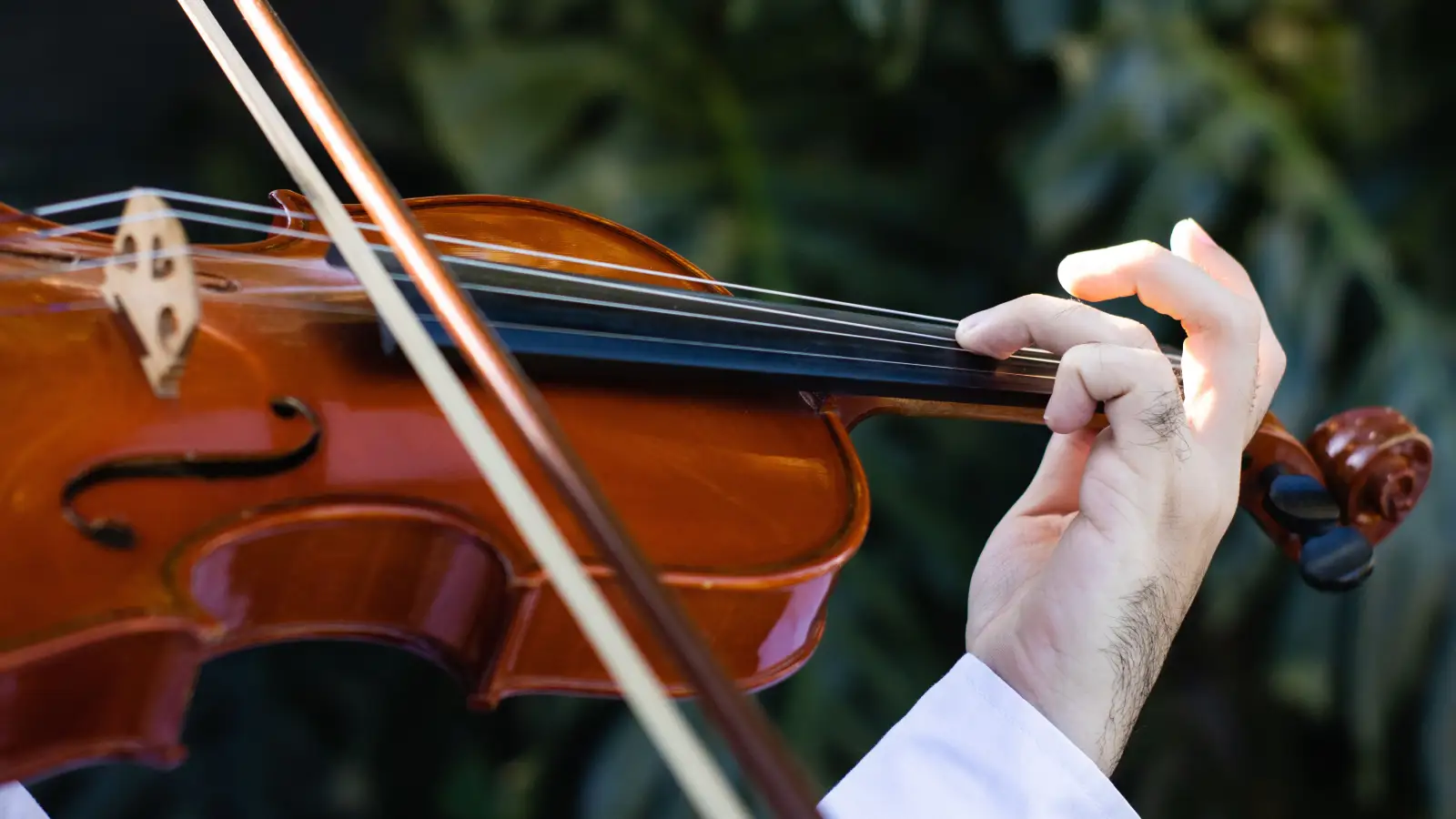
This is the part beginners miss. While you silently count each subdivision, make your right hand — the hand that holds the bow — pulse ever so slightly, as if you were about to play that note but never contact the string. For violinists and violists, a tiny wrist extension or a gentle downward float of the bow works well. Cellists and bassists can use a subtle forearm rotation or a soft impulse from the fingers. The motion should be invisible to anyone watching; it’s simply a kinesthetic “click” that keeps time in your body. If the bow starts bouncing or touching the string, ease off — the pulse is mental first, physical second.
Connect the last pulse to your entrance
Right before the rest ends, you need to know exactly which subdivision lands on the entry beat. If you’re counting eighths on a two‑beat rest (four subdivisions), the fourth one is your launch point. On that final pulse, place the bow exactly where it needs to be — ready to sound the note. Let the physical pulse flow directly into the bow stroke, so the entry feels like a continuation, not a sudden jump.
Practice with a loop that isolates the rest
Take a short passage with the troublesome rest, set a metronome, and play only from two beats before the rest through the first beat after. Focus entirely on the silent subdivision counts and the bow pulse. Once that loop feels solid, gradually add the bars before and after. This prevents the rest from becoming an isolated puzzle.
Signs the Rest Counting Is Working
- You can tap your foot (or a finger on your leg) on every subdivision during the rest without drifting.
- When you record yourself and mute the playback during the rest, your entrance lands exactly on the beat.
- Your teacher or practice partner hears a confident attack — no hesitation, no rushing.
- The bow pulse feels automatic; you no longer have to force it.
When the Trick Doesn’t Work: Quick Fixes
The bow pulse turns into unwanted sound
Dial the motion back until it’s purely internal. Imagine the pulse traveling only through your thumb and index finger; keep the bow hair safely away from the string. Practicing in front of a mirror helps you spot any visible movement.
You still enter late or early despite the subdivision
Your silent counting may be uneven. Return to counting aloud with a metronome, subdividing the beat. Then layer in the bow pulse, matching it exactly to your voice. Only after 10–15 repetitions go silent again.
The subdivision feels too mechanical or exhausting
That’s okay at first — it’s building an internal habit. Once it feels natural, you can drop every other pulse (e.g., pulse only on the “&” of each beat) as long as the entry remains solid. The goal is not to micromanage forever, but to know you can mikromanage when a rest feels risky.
Your Next Step: Swapping Anxiety for Control
Once you can subdivide any rest and keep the pulse through your bow hand, rests stop being scary silences. The natural next task is to apply this trick to entrances that start on off‑beats or tied notes — the same subdivision–pulse system works there, too, and it will make those trickier rhythms feel just as secure.