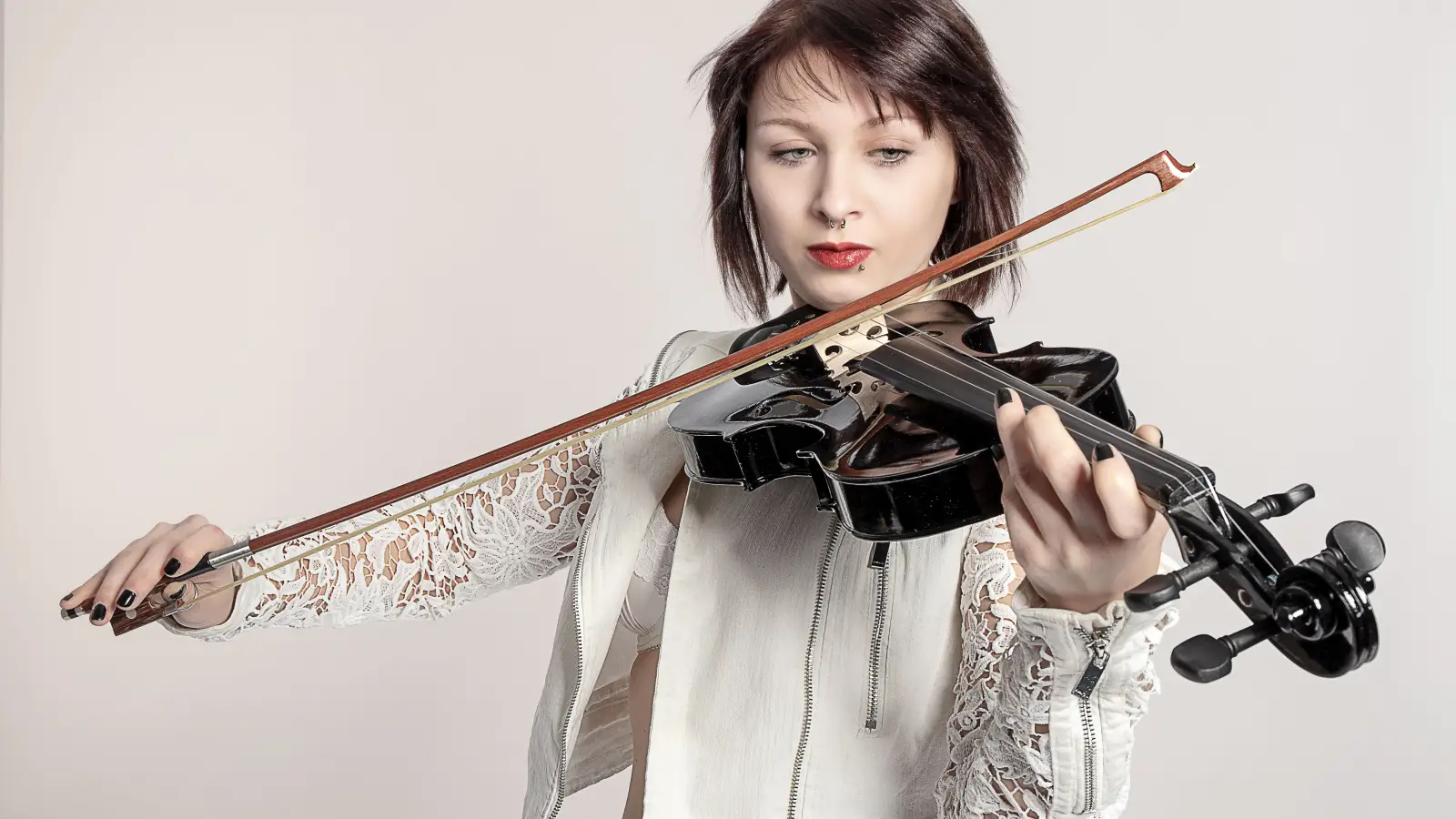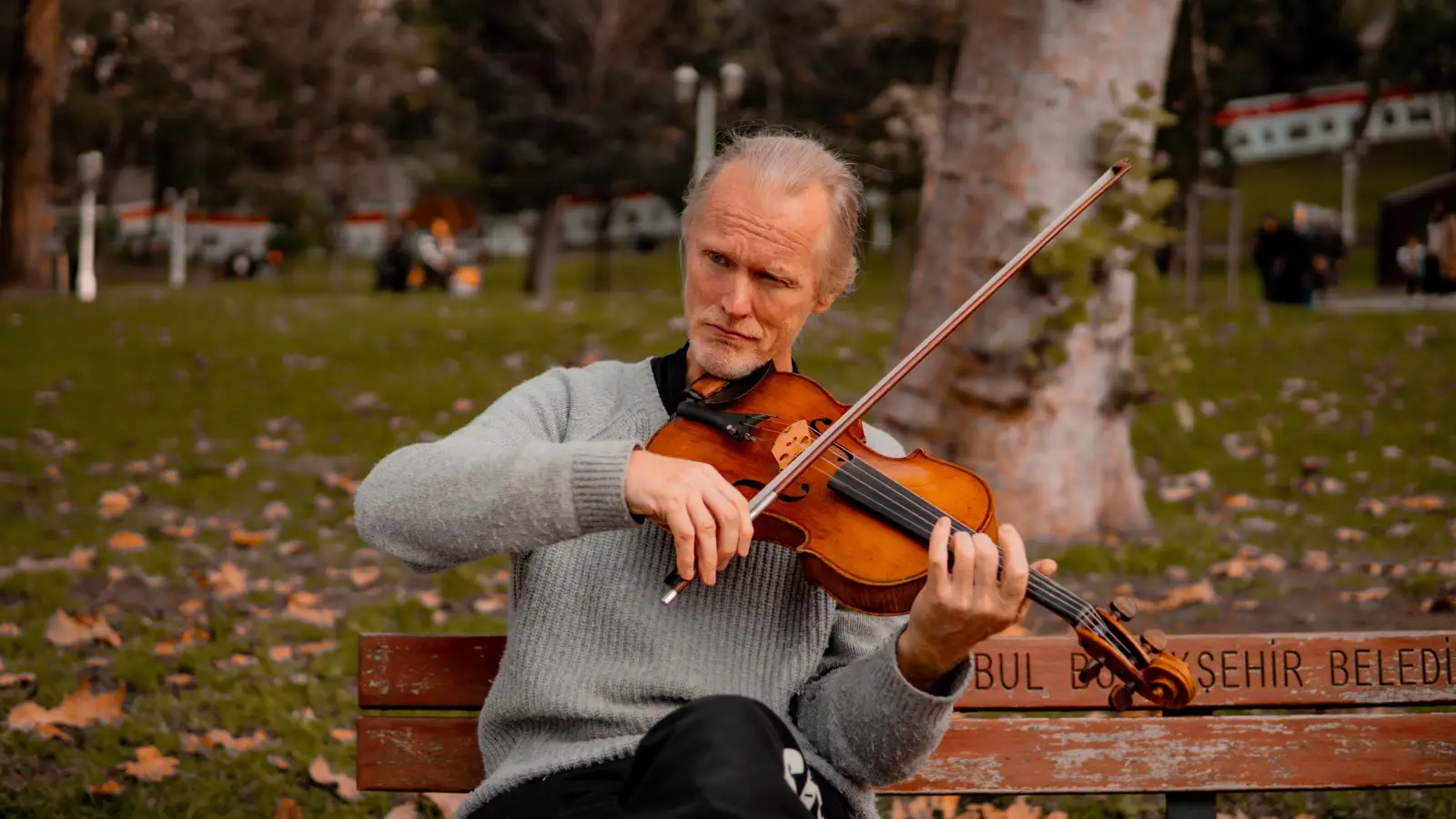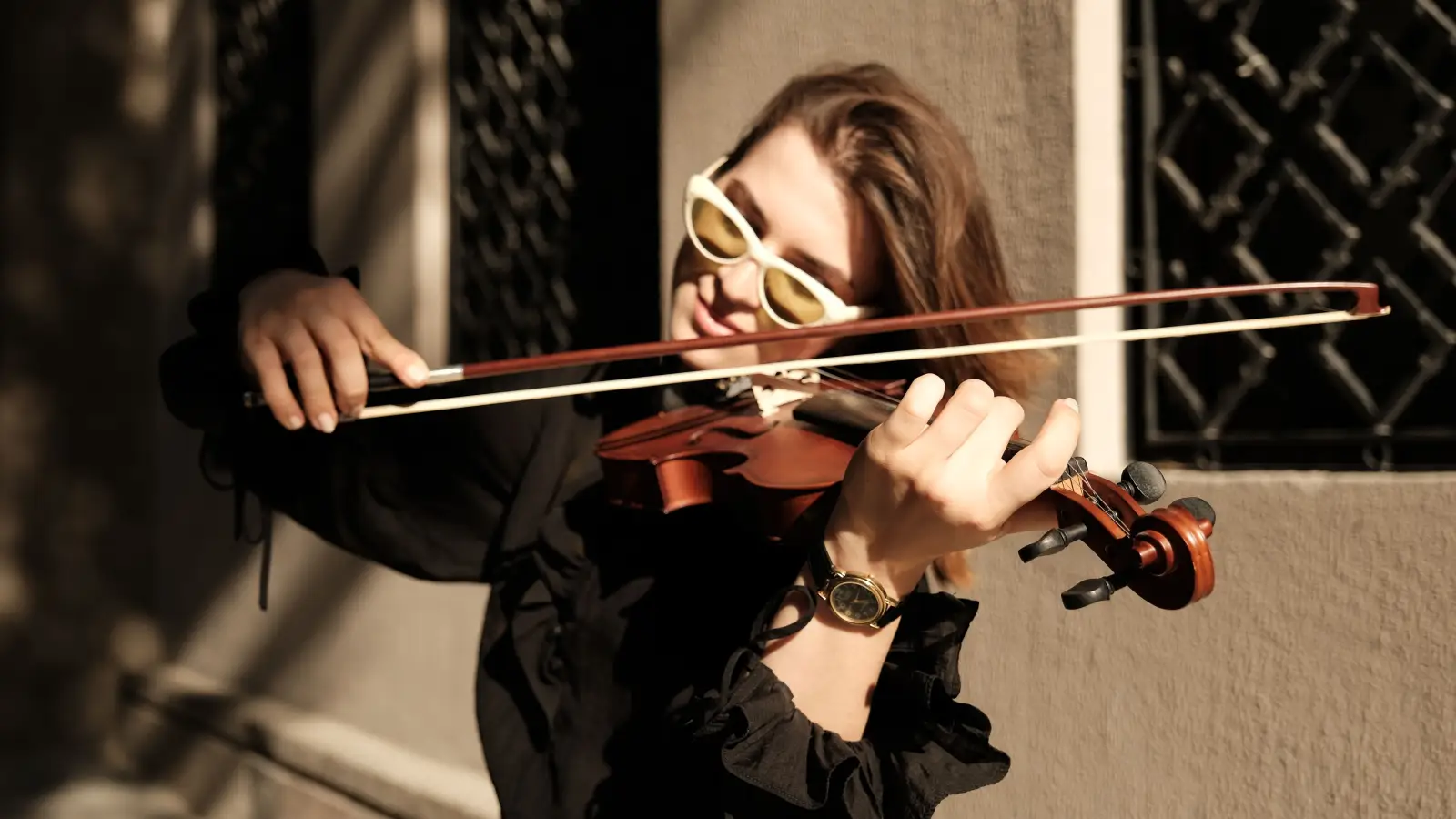
The posture error that muffles violin tone more than any other is a forward shoulder slump. When the shoulders roll in, the ribcage drops, the bow arm loses its free swing, and resonance disappears. The fix is not “stand up straight”—it is a three-point self-audit you run during any long tone.
Spot Your Exact Symptom
Find which pattern shows up most in your playing. Each path leads to a different root cause, so pick the one you recognize.
- Tight, heavy bow arm – The right arm stiffens, especially on downbows. You grip and push instead of letting weight sink into the string.
- Thin or choked tone – The bow moves correctly, yet the sound stays small and airy, lacking body and overtones.
- Shoulder fatigue and shallow breathing – Your shoulders ache early, and you catch yourself taking short, high-chest breaths.
Jump straight to the matching section below.
Bow Arm Feels Heavy and Tense
Collapse of the Ribcage Blocks Arm Weight
When the shoulders slump, the ribcage sinks and the bow arm can no longer transfer its natural mass. You end up muscling the bow, which makes the arm feel heavy and the tone forced.
Confirm it: Stand sideways by a mirror. Play an open G or D and watch whether your chest caves as the bow moves toward the tip. A video from behind will also expose a rounded upper back.
Fix it: Before you touch the bow, place a hand on your sternum and lift it an inch while drawing the shoulders back and down. Hold that ribcage height. Start a long, slow bow on any string and let the arm fall from the elbow. Repeat for three minutes.
Expected result: The bow arm feels immediately lighter, and the sound gains depth because arm weight—not muscle—drives the string.
Over-Engaged Shoulder Muscles Compensate for the Slump
A dropped chest forces the upper traps and deltoids to work overtime just to hold the bow in place. That burns energy and stiffens the stroke.
Confirm it: During a long tone, touch your upper shoulder with the opposite hand. If the muscle feels rock-hard, you are lifting instead of releasing.
Fix it: Place the bow on the string at the middle. Use your left hand to gently press down on top of your right shoulder. Play an open string while actively softening that shoulder under the touch. Do this for two minutes, then remove the hand and keep the feeling.
Expected result: Tension drops; the bow stroke becomes fluid and the arm moves as one unit from the back.
Instrument Angle Too Flat on the Collarbone
If the violin sits too horizontally, the bow arm must lift higher to reach the strings, which invites a shoulder hike.
Confirm it: In a mirror, the scroll should sit near nose height and the instrument slope about 30–45 degrees. If the scroll points at the floor or the violin is parallel to it, the angle is part of the problem.
Fix it: Raise the scroll slightly by adjusting the shoulder rest or using a taller chin rest. Aim for a tilt that lets the bow arm hang naturally.
Expected result: The shoulder stays low and relaxed; the bow arm works in its most efficient range.
Tone Stays Thin No Matter What You Try
Rounded Back Chokes the Bow-Arm Swing
A hunched upper back shortens the distance the arm can travel before the shoulder starts pivoting oddly. Smooth legato and resonant sautillé are the first to suffer.
Confirm it: Play whole bows on the G string while watching your collar area. If your neck disappears between the shoulders and the shirt pulls tight across the upper back, ribcage collapse is strangling the stroke.
Fix it: Stand with your back lightly touching a wall, heels a few inches away. Let your shoulder blades rest against the wall. Without forcing an arch, play open-string long tones from that position for five minutes, keeping the blades in contact.
Expected result: The bow draws a larger, freer arc; the thin quality is replaced by a dense core that fills the room.
Weight Transfer Isn't Making It to the String
When the ribcage drops, the arm's mass cannot feed through the bow grip—you end up skimming the surface or pressing with the index finger. Both kill resonance.
Confirm it: Watch the bow hair during a long downbow. Visible bouncing or tiny gaps between hair and string signal unstable weight delivery.
Fix it: Practice dead-weight exercises. Rest the bow on the string at the midpoint, release all grip tension until only gravity and arm weight hold it there. Start a downbow with that dead-weight feel and let the string pull the bow.
Expected result: The string vibrates fully, producing a richer, fuller tone with noticeably more overtones.
The Resonance Cavity Has Collapsed
A sunken chest literally closes the acoustic space behind the instrument that reinforces low and mid frequencies.
Confirm it: Play a double-stop (open D and A) while slouched, then while upright with an open chest. The difference in warmth is unmistakable.
Fix it: Use the balloon breath. Inhale deeply into the back and sides of the ribcage before a phrase, then play while maintaining that expanded feeling, as if inflating a balloon inside the torso.
Expected result: The instrument feels more alive and projects with less effort.
Shoulders Ache and Breathing Gets Shallow
Chronic Slump Fatigues the Upper Traps
A forward slump makes the upper trapezius hold the weight of the arms and instrument steady against gravity. The deeper postural muscles go offline, and fatigue hits fast.
Confirm it: Pause mid-practice and shrug. If the shoulders feel like they have been climbing toward your ears, postural fatigue is the driver.
Fix it: Imagine a thread lifting the crown of your head, lengthening the spine. Keep that length and play slow, large bow circles across all strings for two minutes to retrain shoulder positioning.
Expected result: Shoulder comfort returns, and endurance builds without the familiar burn.
Shallow Breathing Cuts Oxygen and Phrasing
A compressed ribcage blocks diaphragmatic breathing, forcing quick, high-chest breaths that disturb bowing rhythm and phrase shape.
Confirm it: Place one hand on your belly and one on your upper chest. Play a scale while breathing normally. If the belly hand stays still and the chest hand rises, breathing is locked.
Fix it: Before the first note, exhale fully. Let the inhalation happen as the bow stroke starts. Try inhaling on upbows, exhaling on downbows for a few minutes to sync breath and bow.
Expected result: Phrasing becomes more natural, and bow arm tension drops because the two systems are no longer fighting.
Resets That Work Across All Variants
Two drills attack the core slump that starts the whole chain.
Wall Alignment Drill: Stand with your back against a flat wall, heels 2–4 inches out. Lightly touch the wall with the back of your head, shoulder blades, and sacrum. Hold that alignment while playing long open strings. It forces the ribcage open and the bow arm into its natural range.
Three-Point Long-Tone Self-Audit: During any slow scale, check these markers:
- Shoulders – pulled back and down, shoulder blades sliding toward the back pockets.
- Ribcage – lifted and expanded, like an umbrella gently opening.
- Bow arm – swinging freely from the elbow; the shoulder is a hinge, not a pressure source.
These resets work immediately when the root cause is postural. They waste time only when the problem is equipment—a poorly fitted shoulder rest or chin rest that prevents a neutral head and spine, or when a medical condition limits mobility. In those cases, see a luthier or physical therapist first.
Keep It from Coming Back
- Two-minute mirror check at the start of every practice. Catch the forward-roll pattern before you pick up the bow.
- Mid-session bow-arm release: Let the bow hang loosely from the fingers. Swing the arm gently like a pendulum for 30 seconds, then reset the shoulder blades.
- Strengthen the back twice a week: Wall slides and light resistance-band rows build the postural muscles that hold the chest open without constant mental effort.
- Reassess the shoulder rest every few months. Shifts in practice time, clothing layers, or small body changes can make a 2 mm adjustment the difference between constant strain and ease.
- Record a side-view video once a month. The forward slump creeps back when attention goes to fingers, so catch it early.
Frequently Asked Questions
Can bad posture really affect violin tone that much?
Yes. The shoulders-forward, ribcage-down, bow-arm-restricted chain directly throttles weight transfer and damps the instrument’s resonance cavity. Even a minor alignment fix produces an audible change.
How long does it take to correct this posture mistake?
A tone difference often appears in the first session when you lock in the reset. Making the upright position automatic usually takes two to four weeks of daily, mindful repetition.
Is the problem always slumping shoulders?
Not always. Sometimes a tucked-under pelvis or a forward-jutting head collapses the ribcage indirectly. Start with the shoulders; if tone doesn’t improve, check pelvis and neck alignment.
Can I fix this while sitting down?
Yes. Sit toward the front edge of the chair, feet flat, spine long. Avoid leaning back into the chair—it rounds the lower back and triggers the same slump.
What if I still can’t get a resonant tone after fixing my posture?
First, verify the bow grip and contact point—slumped playing can train a light, skimming stroke that sticks even after you stand tall. If that’s clean, record a video and get a qualified teacher to spot subtle tension. A brief lesson or forum feedback beats guessing.
When Nothing Works
If the self-audit and resets don’t improve tone after two weeks of daily work, the problem is likely outside the posture chain. Gather these before seeking help:
- A short video clip (side and front) of you playing a slow scale.
- Notes on when the thin or heavy tone appears—string, bow direction, dynamic level.
- Details of your current shoulder rest and chin rest setup.
Take those to a violin teacher, a luthier, or a specialized online forum. The visual evidence and your observations let someone give precise, individual advice instead of a guess.