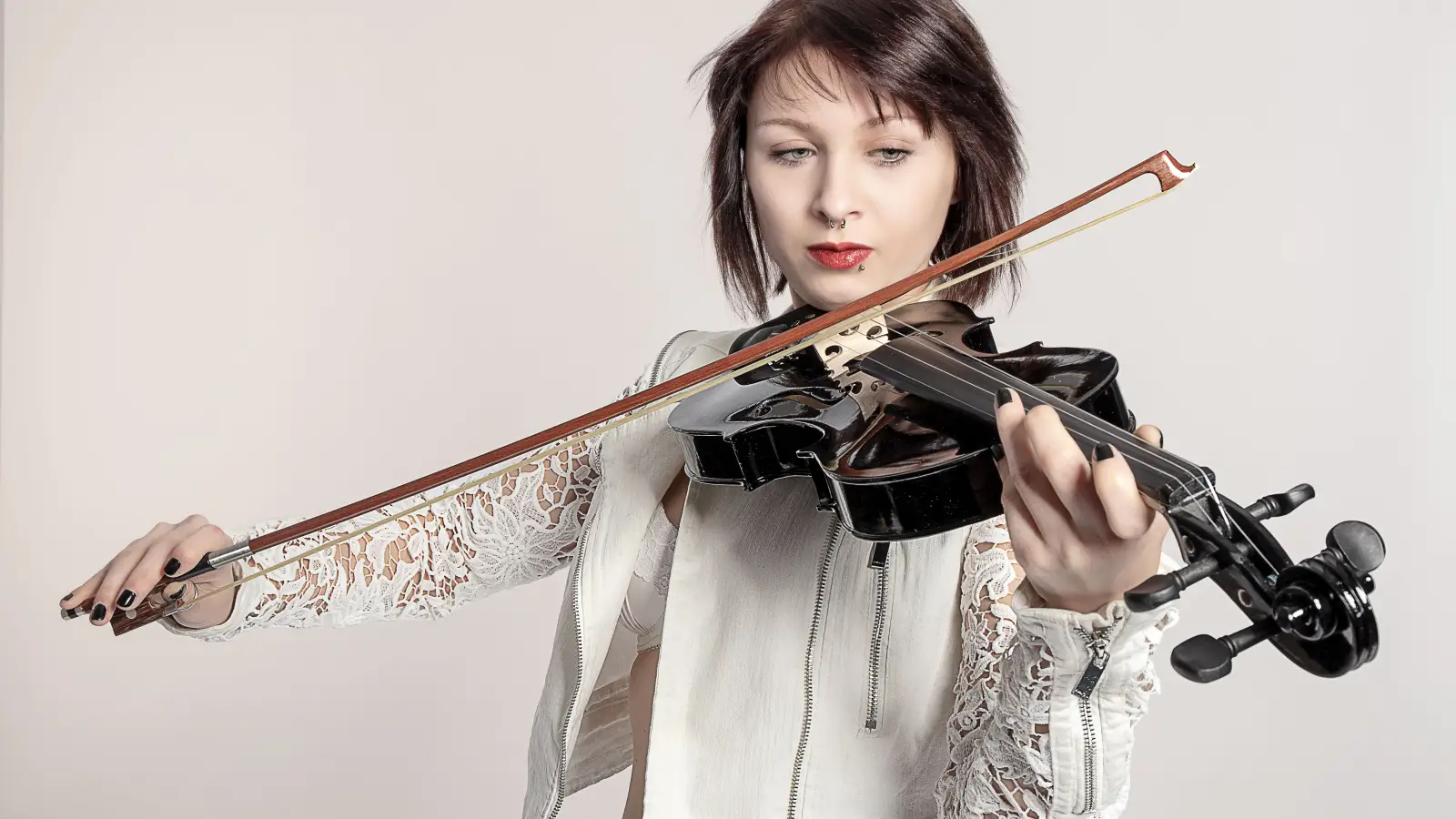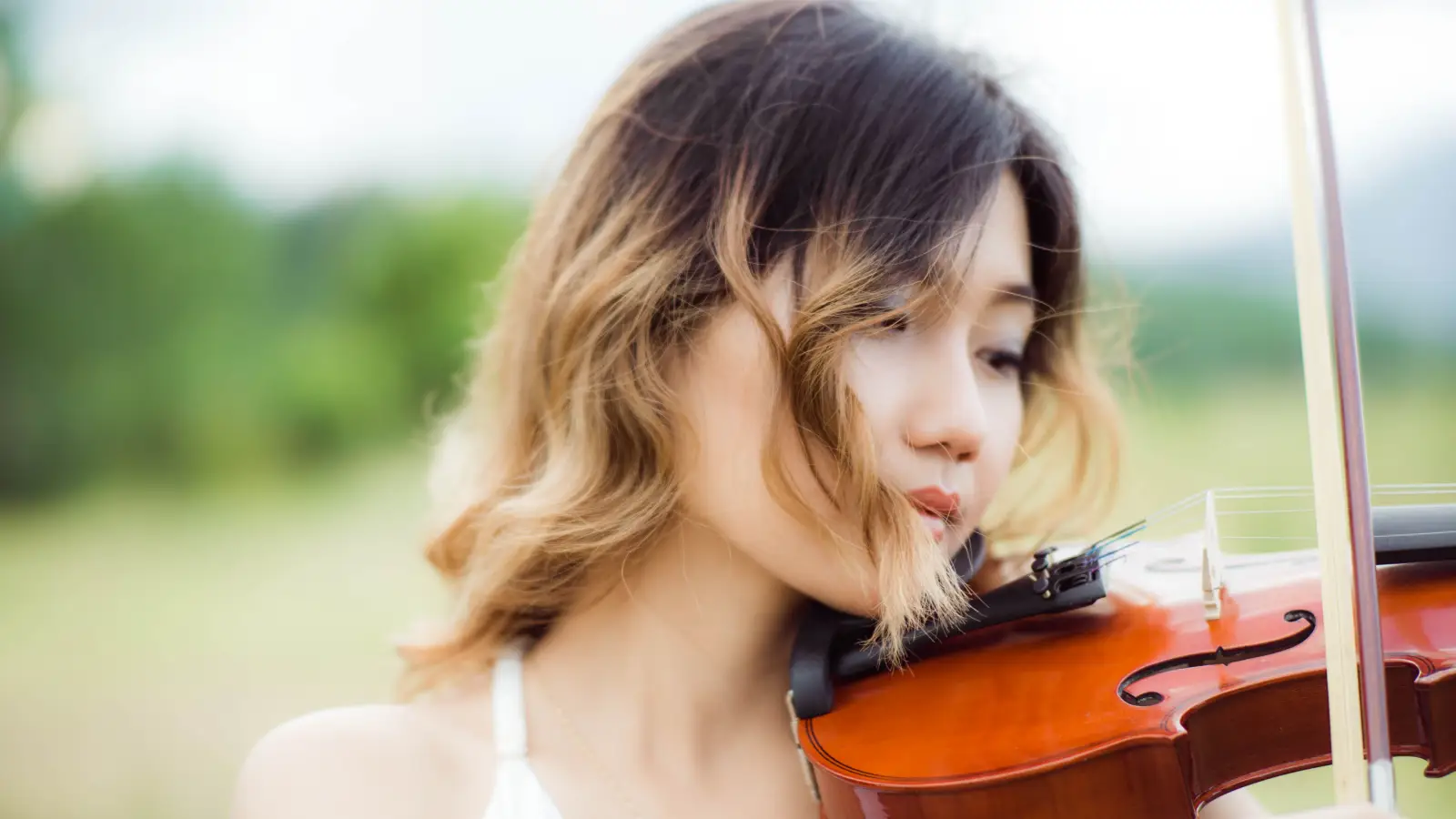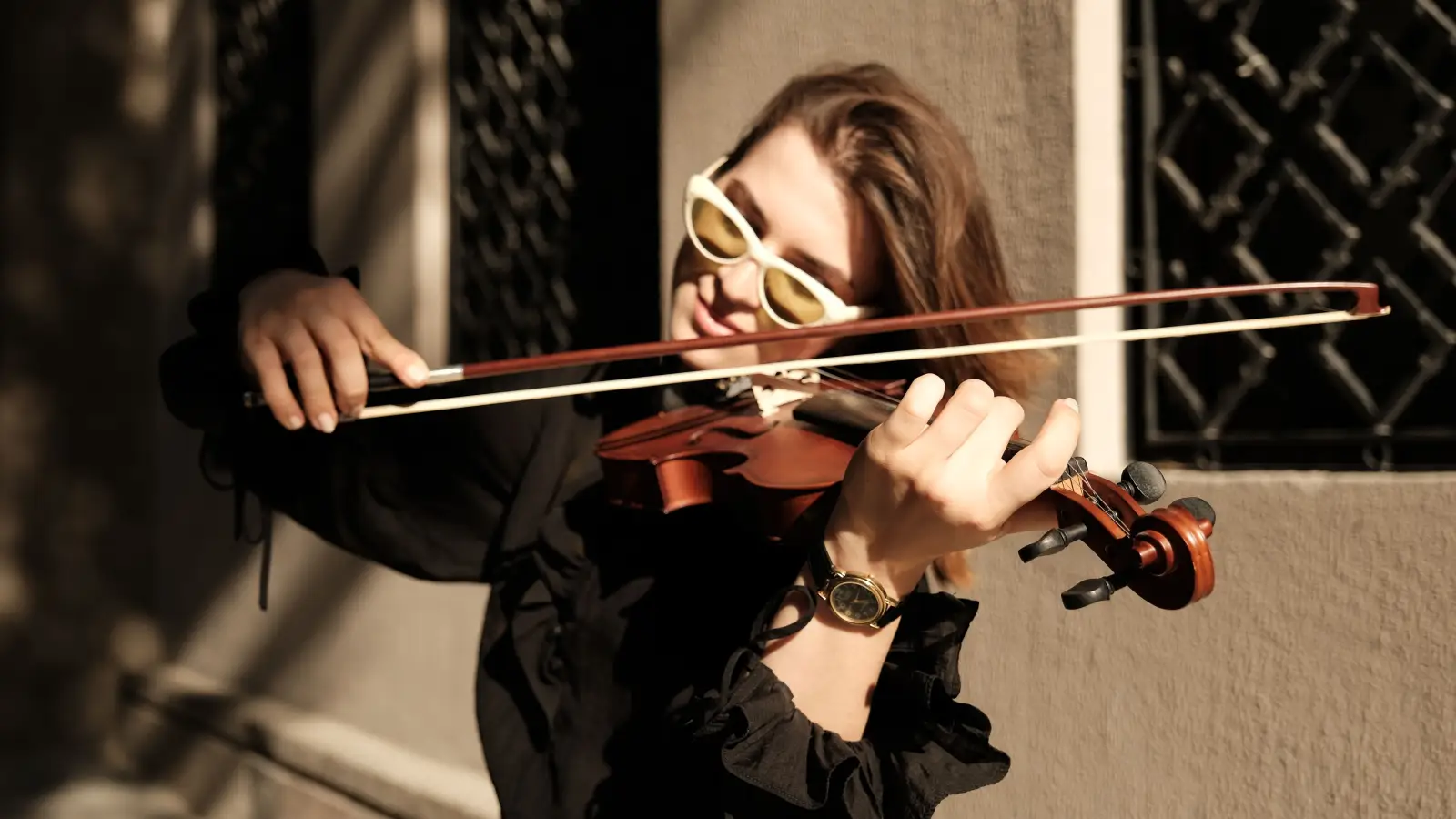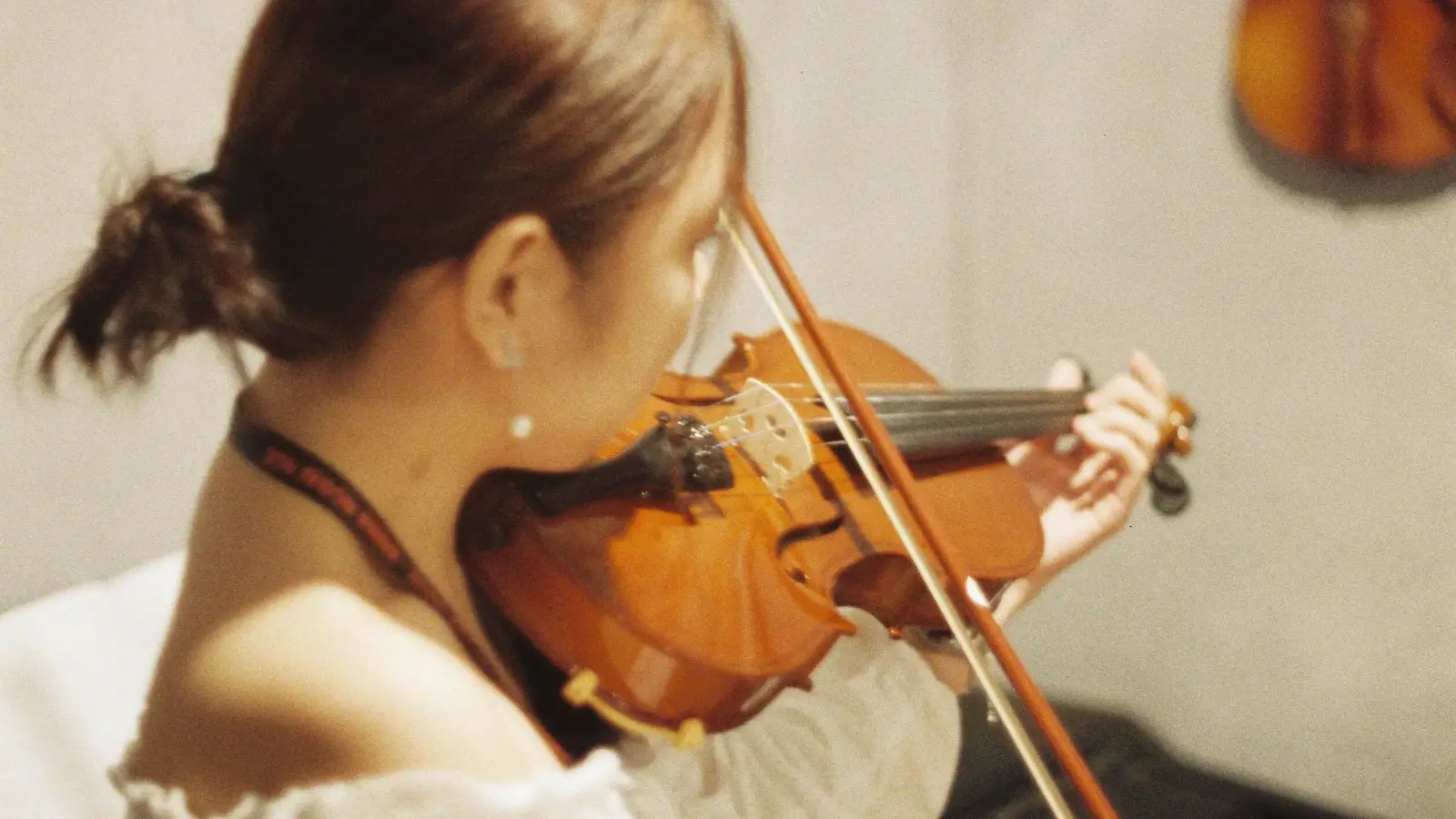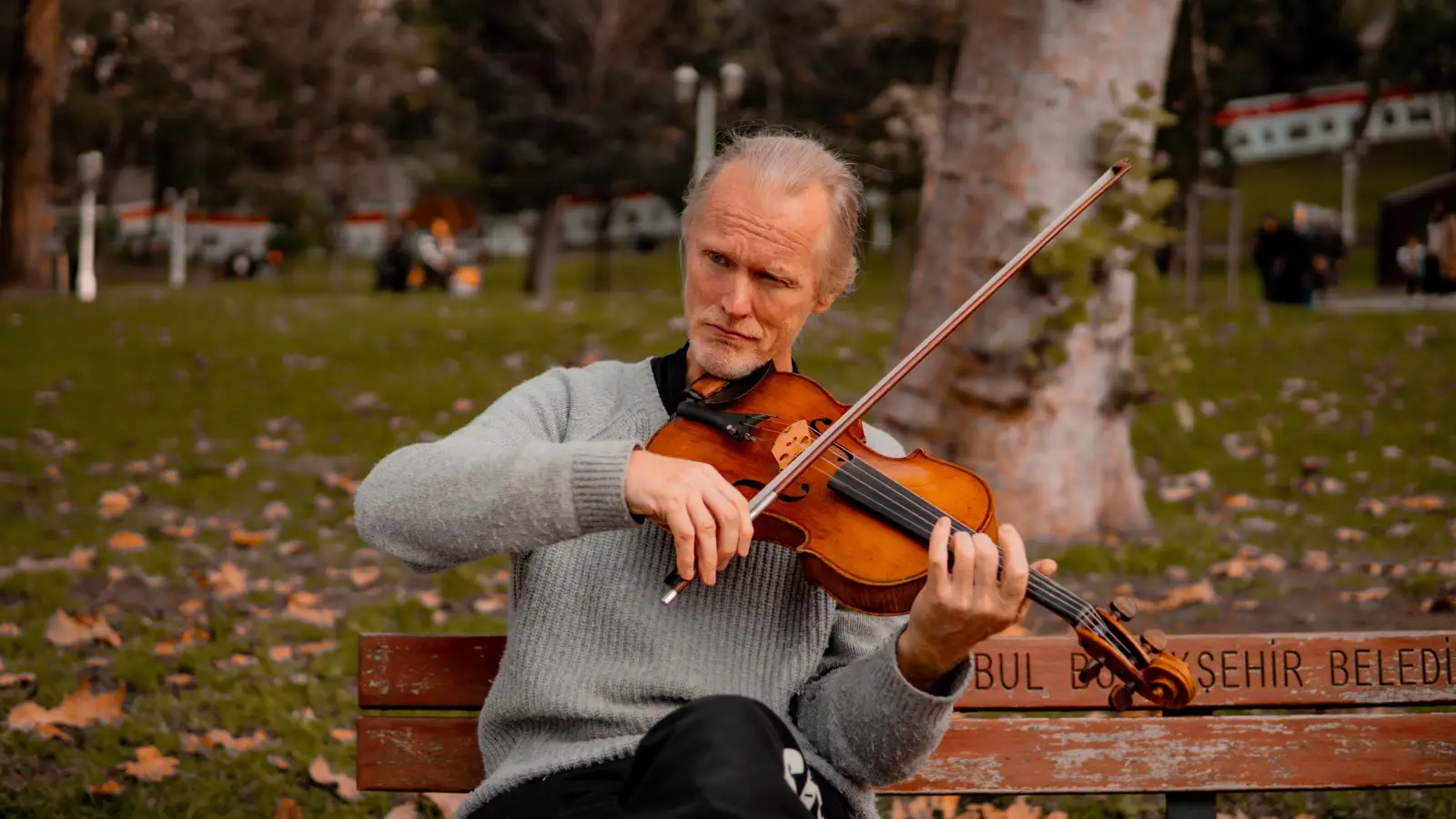
You’ve likely spent most of your violin practice standing — that’s the default for many beginners. Then a day comes when you need to sit: a community orchestra seat, a waiting room, or just tired legs. Suddenly the violin drifts, your bow arm collides with the chair, and your back feels stiff instead of supported. The comfortable seated position that solves all of this is a handful of gentle adjustments that keep your bow arm free, match the violin’s standing angle, and let your core do its job without tensing up.
Your New Seated Setup: Step-by-Step
- Choose a chair without armrests, or sit so far forward that the armrests are behind your elbow.
- Leave at least a hand’s width of clearance to your right so the bow arm never touches the chair.
- Tilt the violin forward about 5–10 degrees from your collarbone, matching your standing angle.
- Sit on the front third of the seat and tilt your pelvis slightly forward to engage your core without bracing.
- Play full bow strokes from frog to tip and confirm the arm moves freely, without brushing the chair or your side.
What to Gather Before You Start
A sturdy, armless chair is ideal — a dining chair or piano bench works well. If you must use a chair with arms, it needs arms low enough to stay out of your elbow’s path, or you’ll need to sit so far forward that they don’t interfere. A firm cushion can help if the seat is too deep for you to reach the front edge comfortably. If your feet don’t rest flat, a small footrest adds stability.
How to Dial In Each Part of the Posture
Chair and Arm Rest Clearance
Sit on the chair as you normally would, then shift forward so your hips are near the front edge. Let your right arm hang and then bring it up as if you’re holding the bow. The elbow should be able to move back past the midline of your body during an up-bow without hitting anything. If the chair has arms and they catch your elbow, slide forward until they don’t. If that still doesn’t work, find another chair — even a folding stool without arms is better than fighting a large office chair.
Matching the Violin’s Angle to Your Standing Hold
When you stand, the violin likely tilts slightly forward and downward from the collarbone, with the scroll around eye level. Sitting often causes the scroll to drop, making bowing feel heavy and pulling the instrument off the shoulder. Use a mirror and check that the fingerboard stays roughly parallel to the floor, or angled down only a few degrees. If the scroll sags, consciously lift the left hand a bit and think of pointing the neck of the violin forward instead of toward the floor. A shoulder rest that holds the instrument in this same angle while seated is essential — if your current rest lets the violin flatten out, try a different height or model.
Core Stability Without Tension
“Sit up straight” often leads to a stiff, braced lower back that tires quickly. Instead, find your sit bones — the two points of bone you can feel under your pelvis when seated — and rock your pelvis forward gently until you sense a light engagement low in the back, just above the belt line. Your shoulders stay down and relaxed. This is a small move, not a forced arch. Breathe normally; if you can’t take a full breath or your lower back aches within a minute, you’ve gone too far. The goal is a stable platform that doesn’t collapse, not a rigid military posture.
Testing the Bow Arm’s Range
Play a long, slow whole bow on an open string while watching in a mirror or with your phone recording. Notice if the bow arm ever brushes the chair back, the chair arm, or your own ribcage. If it does, adjust your seat forward or your body angle slightly until you can draw the bow from frog to tip with no contact except the strings. Check also that your right shoulder doesn’t hike up — that’s a sign you’re tensing to avoid something.
Signs Your Setup Is Working
- Your bow arm completes a full stroke without touching the chair or your body.
- The violin feels as stable on your shoulder as it does when you stand.
- You can breathe comfortably and talk while playing a long note.
- No lower back pain or shoulder tension appears after five minutes of playing.
When Things Still Feel Off
The Bow Keeps Hitting the Chair
Even after sitting forward, your bow arm still bumps. Try twisting the chair slightly so your right side has more space, or place the chair at a slight angle to your music stand. If the armrest is the culprit and sitting forward isn’t enough, find a chair without arms entirely.
The Violin Feels Slippery or Unstable
When you sit, your torso angle changes, which can alter how the shoulder rest contacts your body. Recheck that the rest’s feet are set for a seated posture — you might need a slightly taller setting. Also, practice holding the violin with a light jaw, letting the weight rest on the collarbone and shoulder rest rather than clamping with the chin.
Lower Back Aches Appear Quickly
Back pain often means you’re over-arching or bracing. Reset by leaning forward from the hips, then coming back to a neutral position with just a hint of pelvic tilt. If the chair is too soft or makes you slump, add a firm cushion.
You Can’t Seem to Stay Relaxed
Try shortening your seated practice sessions to three or four minutes at first. Focus on keeping the shoulders down and the breathing steady. It’s normal for a new sitting posture to feel foreign — small doses build the habit.
Questions Beginners Ask About Seated Violin Playing
Can I use a regular office chair?
Only if you can remove or lower the armrests far enough that your bow arm never touches them, and if the chair doesn’t swivel or roll. Most office chairs have arms that sit at elbow height, making them a poor fit. A stable, armless chair is far easier to work with.
Does sitting down affect my sound?
It can, but not in a way you can’t compensate for. Sitting slightly reduces the body’s resonance, but a good, forward-leaning posture with an engaged core keeps the violin free to vibrate. The bigger threat to sound is a cramped bow arm — that causes scratchy or weak notes.
Should I change my shoulder rest when I sit?
Not necessarily, but you may need to adjust its height or angle. Test it: if the violin tilts more in one direction when you sit versus stand, tweak the rest to restore the feel you have while standing.
How do I fit into a cramped orchestra chair?
Sit as far forward as you can without leaning on the chair back. Tuck your right elbow slightly in front of your torso during up-bows if space is tight. You might also practice with the violin angled a bit more across your body instead of straight out.
Once you’ve dialed in a seated position that lets your bow arm move freely and your spine stay comfortable, you’ll be able to play just as well sitting as standing. Next, spend a few minutes each day switching between the two — play a short passage standing, then sit and play the same thing — to lock the feeling into muscle memory.