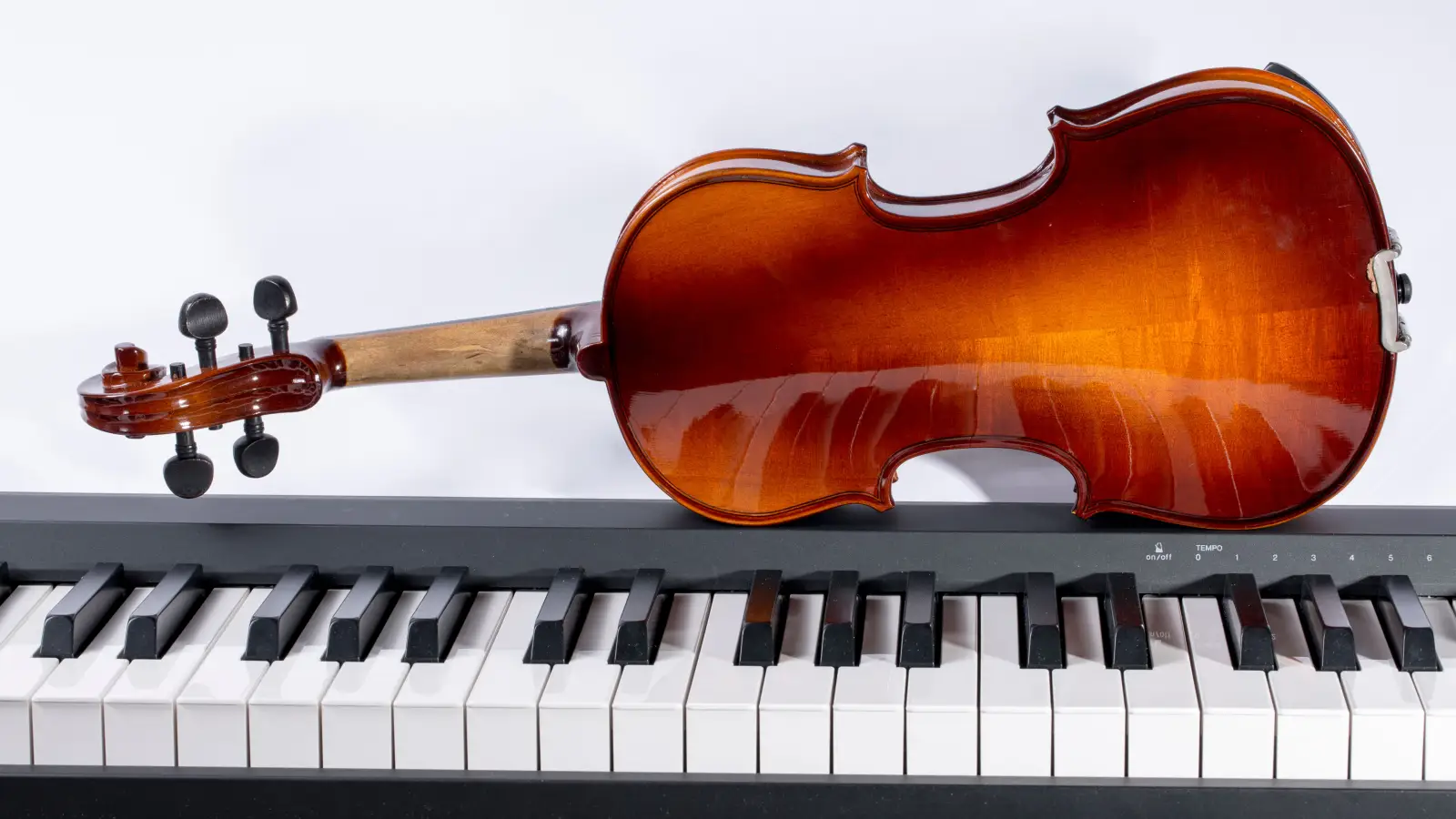
Electric violins are not easier to learn on. The whole idea falls apart the moment you consider what a beginner actually needs: brutally honest feedback. An acoustic violin gives it—every wavering bow stroke, every slightly flat finger lands with a cringe you can hear and feel. An electric violin, especially with headphones and a bit of reverb, smooths all that over. That is why most teachers push back so hard against the “easier” claim. They’ve watched students develop ghost technique on an electric and then crash when they pick up an acoustic.
That masking effect is the throughline for every comparison below. We’re not just listing pros and cons, we’re looking at what happens to foundational bow control, intonation, and dynamic sensitivity when the instrument stops telling the truth.
| Situation | Which Wins | Why |
|---|---|---|
| You mainly need silent practice | Electric violin (with headphones) | Acoustic cannot deliver true silence; electric offers near-zero volume practice without disrupting others. |
| You mainly need to build foundational technique | Acoustic violin | The acoustic body responds to bow pressure, speed, and placement with immediate tonal and volume changes, training essential listening skills. |
| You mainly need to perform on stage with a band and effects | Electric violin | Onboard preamps and effects loops let you cut through a live mix and shape your sound without external pedals. |
| You mainly need a durable, portable instrument for frequent travel | Electric violin (solid-body) | Solid-body designs survive temperature swings, knocks, and tight cases far better than a fragile acoustic soundbox. |
| You mainly need an instrument for classical exams and orchestral playing | Acoustic violin | Auditions, conservatory exams, and ensemble blend demand an unamplified acoustic tone that electric violins cannot reproduce. |
You mainly need a nearly silent practice environment
When the only way to practice is in near-total silence, the electric wins outright. Headphones turn a full bow stroke into a private concert, while the acoustic instrument next to it might still wake a sleeping child even with the heaviest practice mute. That is a genuine, non-negotiable advantage.
The hidden cost is that the headphone signal is a liar. It compresses the gap between a thin, scratchy bow stroke and a resonant, well-weighted one. A student who logs hours only in that environment builds a bow arm that sounds acceptable through a pickup but reveals its tension and unevenness immediately on a teacher’s acoustic. If this is the only practical option, the player needs scheduled acoustic check-ins—without them, the technique drifts.
You mainly need to build foundational technique
There is no contest here. The acoustic violin is the instrument every classical pedagogy was designed around, and for a reason: it broadcasts every decision your right and left hands make. Bow speed, contact point, weight, tilt—all of it changes the sound in ways you can hear in real time. That feedback loop is the fastest teacher. On an acoustic violin, a finger half a millimeter off true pitch creates audible beating against open strings; on an electric with even subtle reverb, that clue disappears.
Teachers see the damage when students try to transfer electric-only skills. The ability to shape a phrase from whisper-quiet to full-bodied using only bow pressure—that core skill—simply evaporates because the electric flattened everything before the signal reached the ear. For classical training, orchestra, or graded exams, the acoustic is not a preference, it is the required equipment. Delaying it only lengthens the unlearning later.
You mainly need to perform with effects and amplification
When the goal is to blend into a band, loop layers, or craft a processed sound, the electric is the obvious tool. A standard electric violin gives you a quarter-inch output and often a volume knob and tone control right on the body; you can plug straight into a pedalboard or audio interface without worrying about feedback howl. That is not a gimmick—it’s practical stagecraft.
What you lose is the organic harmonic richness that comes from wood resonating in a room. Even the best pickups and onboard preamps don’t replicate that. In a loud mix or a recording, that missing texture may not matter. In an unamplified acoustic jam, it lands like a missed note. If a player intends to live entirely in the amplified world, this trade-off is a non-issue. For anyone who wants to move between settings, keeping an acoustic in rotation is essential.
You mainly need a rugged instrument for frequent travel
Solid-body electric violins laugh at conditions that would wreck a wooden acoustic. No hollow chamber means no soundpost to collapse, no seams to open, no spruce top to crack from a sudden temperature drop. Many electrics are lighter than an acoustic, though onboard electronics can erase that weight savings. Still, the durability advantage is real.
The trade-off is simple: wherever you travel with only an electric, you arrive unable to join an acoustic chamber group, a folk session, or any unamplified playing. If the trip is purely about silent hotel practice, fine. If any unamplified music might happen, pack the acoustic and a quality practice mute.
When the differences practically vanish
Some debates are not worth having.
Both instruments use the same strings, the same bow, the same rosin, and the same left-hand positioning. The physical act of bowing a string is identical. Finger strength, muscle memory, and basic coordination transfer without friction. The real divergence is in what the ear hears back, not in what the hands do. This is not where the argument lives.
Tuning and maintenance are also equivalent in daily use. Electronic tuners work on both, fine tuners exist on both, and bridge adjustments follow the same logic. An electric violin might need a 9V battery swap every few months, but that is not a meaningful decision factor. Do not let battery changes steer the choice.
Deal-breakers that end the debate
Each instrument has one hard limit that makes the decision for you.
For acoustic violins, the non-negotiable is silence. If your living situation demands absolute quiet at every practice minute and you have no alternative practice room, the acoustic is simply not an option. A heavy mute can reduce volume greatly but never eliminate it; the percussive bow noise remains audible in a silent home.
For electric violins, the deal-breaker is the requirement of an unamplified acoustic tone. Any situation that demands projection without a speaker—an audition panel, a classical recital, an orchestral rehearsal, a traditional session—instantly rules out an electric. No modeling technology fully replicates the way a wooden violin fills a room. If that sound is mandatory, the electric is dead in the water.
Pricing considerations
Price alone rarely decides the question, but it shapes which setup is reachable. A beginner acoustic outfit with proper shop setup can be had for $200 to $400. A serviceable beginner electric often sits in the $150 to $300 range, though at that price the preamp and hardware are often weak. A solid electric with a quiet pickup and reliable tuners typically runs $500 to $800, overlapping with a decent intermediate acoustic.
The one case where price tips the scales decisively is the silent-practice scenario with a tight budget. A cheap electric and headphones might be the only way to get volume-zero practice inside a thin-walled apartment. In every other case, the acoustic remains the safer financial bet for skill development, because a badly set-up cheap electric can introduce uneven string response that hides poor technique and creates new problems.
FAQ
Can a complete beginner start on an electric violin?
Yes, but the long-term risk to technique is real. You’ll learn notes and fingerings fine, but the tonal feedback that trains bow control and intonation will be muted. If you go electric-first, schedule regular check-ins on an acoustic with a teacher to keep your technique honest.
Does an electric violin require less bow pressure?
No. The bow still needs proper pressure, speed, and contact to excite the string and trigger the pickup. But because the signal is compressed, a weak or scratchy bow stroke can sound passable through headphones in a way it never would on an acoustic. That can trick a learner into thinking their bow arm is cleaner than it is.
Is it true that electric violins hide poor intonation?
Yes, to an extent. On an acoustic, slightly off-pitch notes create audible dissonance against open strings and the instrument’s natural resonance. An electric pickup does not capture that resonance the same way, and any reverb or delay smooths over minor discrepancies. A player who spends all their time on an electric is likely to develop flatter, less precise intonation habits.
Can I use a practice mute on an acoustic violin to get the same quiet practice as an electric?
No. Even the heaviest metal or rubber mute reduces volume, but does not silence it. In a totally quiet household, the percussive bow sound is still clearly audible. True near-silence requires an electric with headphones.
Which instrument is lighter and easier to hold?
Many solid-body electrics are marginally lighter than a traditional acoustic, but the difference is often just a few ounces. Some electrics add weight from preamp circuitry and heavier hardware. Comfort depends more on the chin rest and shoulder rest fit than on the acoustic-vs-electric distinction, so try both before choosing based on weight claims.
The most common scenario—a beginner wanting a manageable instrument for lessons and home practice—still favors the acoustic. It keeps the feedback loop honest and gives the teacher a clear window into the student’s true sound. The one question to answer is: will my practice environment tolerate the natural volume of an acoustic violin? If silence is mandatory, get the electric and treat it as a practice supplement. If you can make noise, start acoustic and do not look back.