Scratchy tone. Bouncing bow. Wandering strokes. These problems don’t mean you lack talent—they mean you don’t understand your tool. The violin bow is a precision device with four parts: stick, hair, frog, screw. Each converts your movement into controlled sound through straightforward mechanics. Learn what they do, and you’ll fix technical faults in minutes instead of months.
Adult beginners and parents don’t have time for vague imagery. This article replaces guesswork with cause and effect. When you know the frog’s shape forces your hand into a correct hold, or that screw tension directly controls bounce, you stop relying on trial-and-error and start practicing efficiently. The bow is a control system. Master it.
The Mechanical Reason Your Bow Hold Fails
Generic advice like "relax" or "pull straight" ignores the physics. A hold fails because fingers miss the frog’s engineered contact points—the thumb channel, the pinky perch. A crooked stroke happens because you aren’t using the stick’s straightness to guide your arm. Fix the mechanics, and the instructions finally work.
Bow Mechanics in Six Fast Facts
- The stick is a spring—it flexes and rebounds, turning weight into tone.
- The hair’s rosin-coated scales grip the string; no rosin means no sound.
- The frog is a handle with dedicated spots for thumb and pinky; ignore them and you lose leverage.
- The screw adjusts hair tension: overtightened = harsh bounce; too loose = weak, floppy sound.
- The bow’s balance point, roughly a quarter from the frog, is where you start for even pressure.
- The winding and leather grip protect the stick and give your fingers consistent texture.
Detailed Walkthrough
The Stick: Your Spring-Loaded Tone Generator
The stick isn’t a passive rod—it’s a calibrated spring. Its camber lets it bend under pressure and snap back, smoothing out your tone. Beginners benefit most from the stick’s rigidity: pull it crooked and you’ll immediately feel it twist in your hand. That’s usable feedback; act on it. Carbon fiber sticks resist climate swings and stay straight with zero fuss—ideal for beginners. Wood bows, especially pernambuco, produce a warmer, more complex voice but demand a stable environment. Choose based on your practice conditions.
The Hair: The Grip That Turns Friction into Sound
Hair grips only because of rosin. Microscopic scales hook the string, creating vibration. Control how much hair contacts the string with bow tilt—flat for power, on edge for soft passages. Rosin every few practice hours until you see light dust on the stick, then wipe it off. Never over-rosin; gummy buildup kills clarity. And keep bare fingers off the hair—skin oils create dead spots that refuse to grip.
The Frog: The Handle That Dictates Your Bow Hold
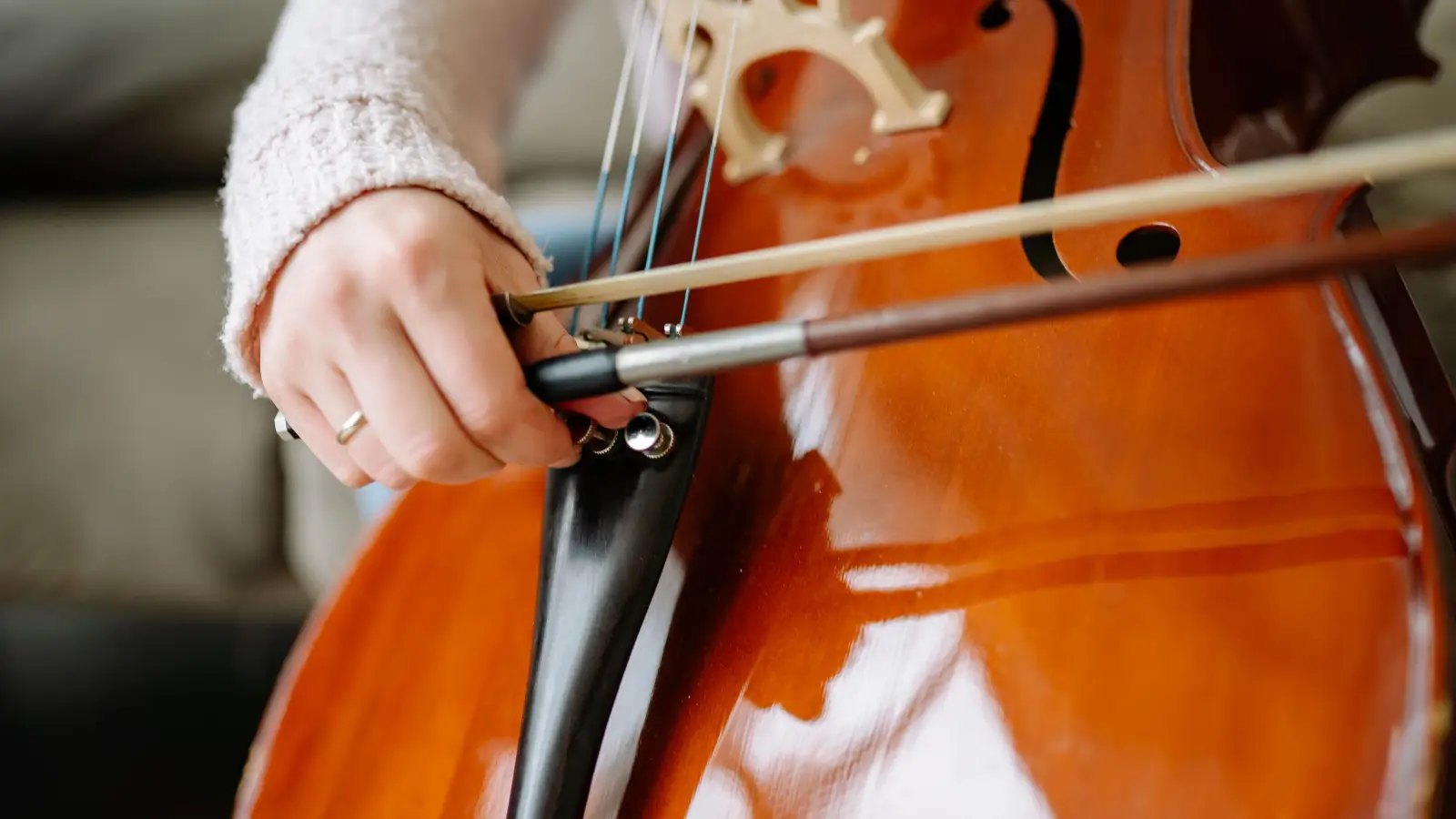
The frog is engineered, not decorative. The U-shaped channel locks your thumb in place. The rounded top gives your pinky a stable perch. If your thumb slides onto the stick, you lose power. If your pinky straightens, you lose balance. Drill those two points before every stroke: thumb fully in the channel, pinky curved on top. Everything else falls into place.
The Screw: The Tension Adjuster for Control and Articulation
Turn the screw until the hair resists light pressure but the stick still curves slightly away from the hair—a business card should slide between them with light resistance. Overtightening warps the stick and causes bouncing; undertightening makes the hair floppy and unresponsive. Tighten before playing, loosen completely afterward. That habit preserves the bow’s camber and life.
Putting It All Together: How Mechanics Build a Straight, Even Bow Stroke
When the parts work, the stroke is a coordinated system. The screw sets tension, the frog anchors your hand, the stick guides a straight line, the hair grips. Practice straight bowing by watching the stick in a mirror. Focus on moving your forearm from the elbow while keeping the upper arm still. If the tone thins at the tip, tilt the bow slightly to engage more hair—this mechanically compensates for reduced pressure. No magic, just mechanics.
How to Know You’re Using Each Part Correctly
Verify these markers during practice:
- The bow moves parallel to the bridge (use a mirror or record yourself).
- The pinky stays curved on the frog throughout the stroke.
- The hair-to-stick gap at the midpoint is about a pencil’s width when tightened.
- The rosin coating is even—no clumps or bare patches.
- The tone remains consistent from frog to tip.
Common Bow Control Problems and Direct Fixes
Scratchy, Squeaky Tone
Add rosin. If no dust appears on a cloth after wiping, you need more. Then check bow tilt—too much edge reduces grip. Finally, lighten the pressure; the bow’s own weight should do the work.
Bow Bounces Uncontrollably
Loosen the screw slightly so the stick regains its gentle curve. Next, check your pinky: if it’s rigid, the bow will bounce. Relax the hold.
Hair Skids Off the String
Level the bow so more hair contacts the string and apply rosin. Skidding usually means the hair is either starved for rosin or tilted too far.
Uneven Volume from Frog to Tip
At the frog, use less index-finger pressure. At the tip, add slight weight by leaning your hand forward. Keep the screw tension consistent—not too tight, not too loose.
Frequently Asked Bow Anatomy Questions
How tight should a violin bow be?
The hair should form a slight arch away from the stick. A business card slipped between hair and stick at the midpoint should meet only light resistance. Overtightening is one of the most common beginner errors; watch that the stick never loses its upward curve.
What is the difference between wood and carbon fiber bows?
Wood bows (pernambuco, brazilwood) give a warmer, more nuanced tone but react to humidity and temperature. Carbon fiber bows are nearly indestructible and play consistently regardless of weather—perfect for beginners, practice rooms, and outdoor gigs. Both obey the same mechanical rules.
Why does my bow hair need rosin?
Rosin provides friction. Without it, hair slides silently over the string. With rosin, each hair’s scales catch and release the string thousands of times per second, creating a sustained note.
Can a damaged screw affect playing?
Yes. A stripped or bent screw makes proper tension impossible—either the hair stays loose and weak, or it overtightens and damages the stick. If the screw becomes hard to turn or won’t hold tension, a repair shop can replace it quickly.
Your Next Logical Skill: String Crossing
Once your bow stroke is steady and straight on open strings, the direct next skill is string crossing—moving smoothly between adjacent strings without disrupting the tone. Practice slow crossings, paying attention to how the frog hand tilts slightly to change the hair’s angle, and use your elbow (not your wrist) to guide the bow to the new string level.