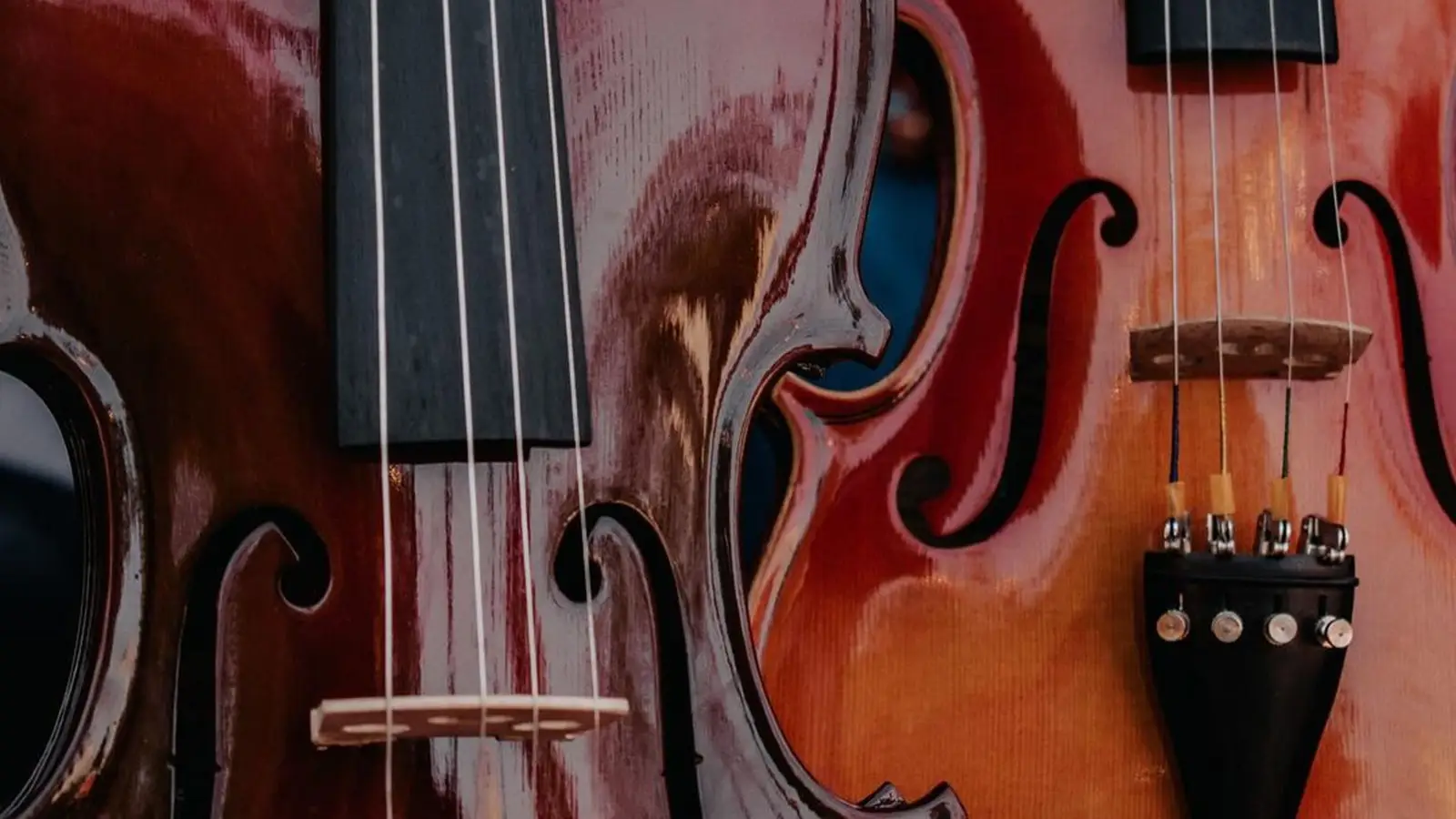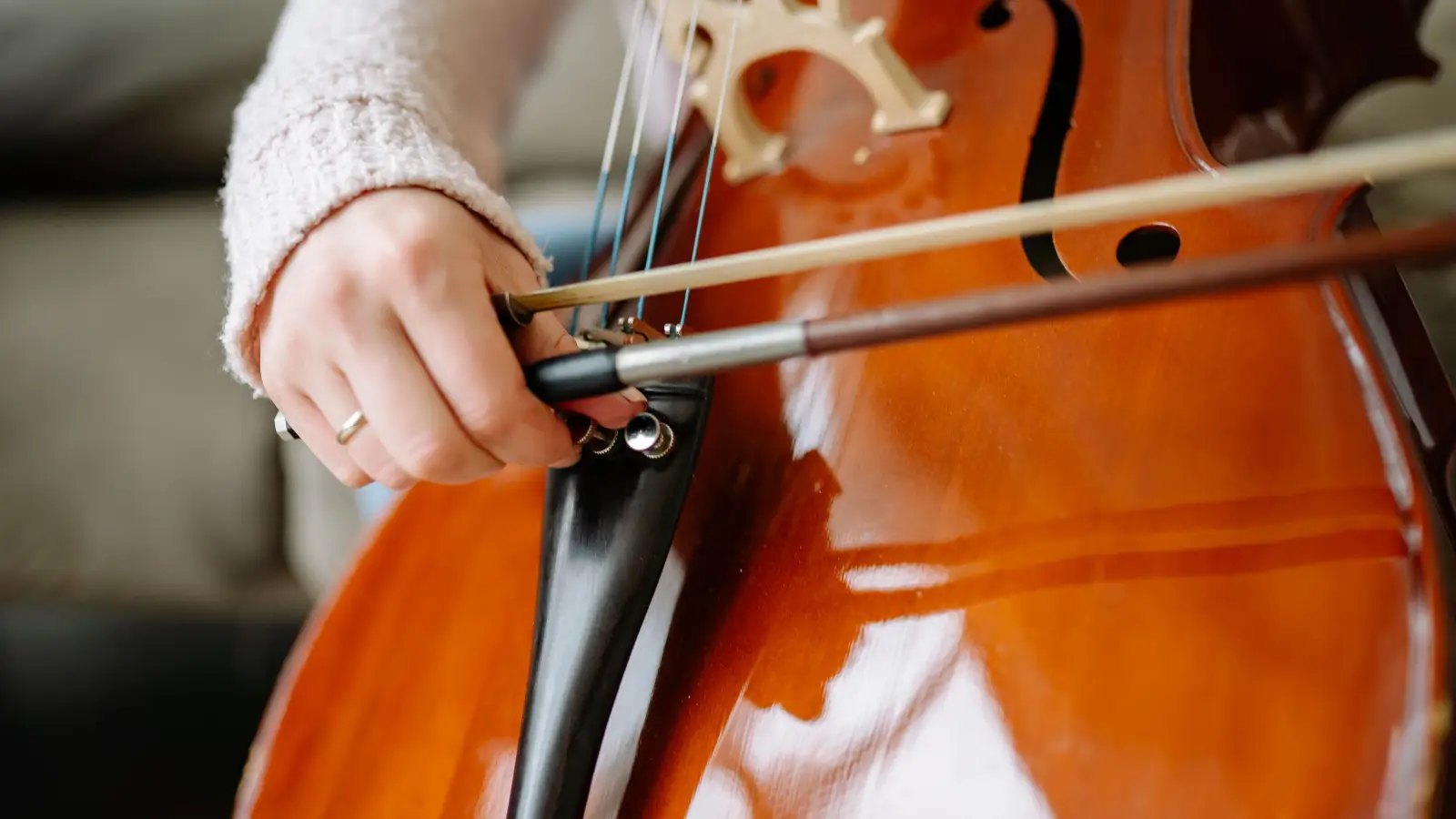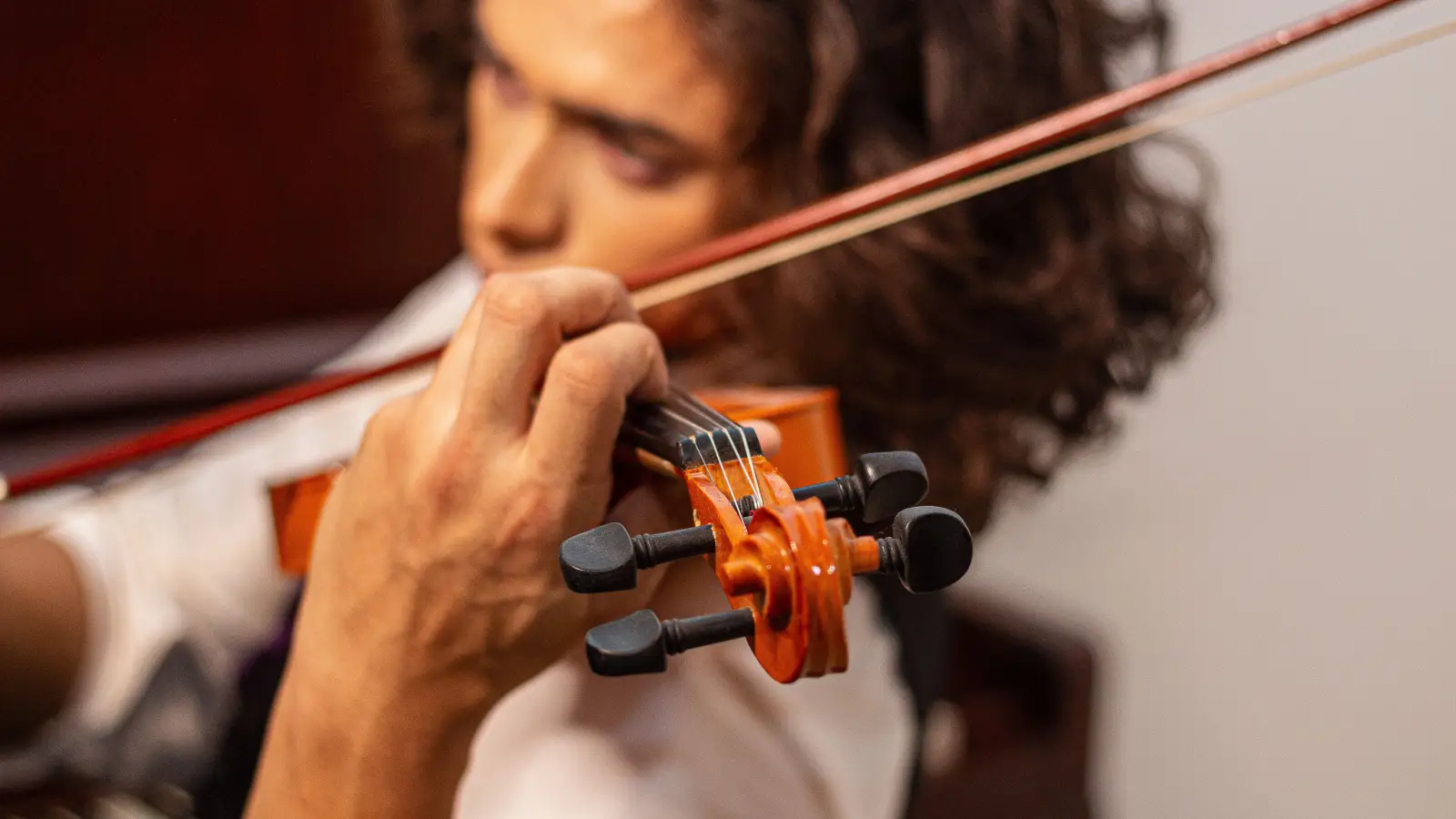
The violin fingerboard has a cylindrical camber of roughly 42 mm radius and tapers in thickness from nut to bridge. This curvature is not cosmetic—it creates the vertical separation needed for bowing one string without disturbing the next. Learners rarely notice the arch until they grapple with unintentional double-stops or find that their fingers must tilt into the string rather than press flat. The scroll’s mass adds another variable, affecting instrument balance and, indirectly, left-hand freedom.
Why Fingerboard Curvature Shapes a Beginner’s First Sound
A student who keeps catching the D string while trying to bow the A string is running into the fingerboard’s curve head-on. Recognizing the arch explains why the bow can approach a string from above and below without hitting neighbors. It also clarifies why finger pressure cannot be uniform across all four fingers—the index and pinky must angle differently to compensate for the dome. And if the scroll is disproportionately heavy, the violin tilts forward, making the left hand tense up to hold position; that tension tightens shifts and throws off intonation.
The Mechanism: Arch, Taper, and Scroll Counterbalance
Transverse Radius: The Dome Across the Strings
The fingerboard’s width rises in the middle, like a shallow barrel. Standard violin fingerboards have a radius of 42 mm—tight enough to give clearance for bowing but not so sharp that the left hand must stretch awkwardly. Without this arch, bow hair would strike two strings at once even with modest bow arm movement. The dome also functions as a tactile reference: a finger placed on the string naturally angles inward, reducing the chance of brushing an adjacent string.
Longitudinal Taper: Thickness Change Along the String
The fingerboard thickens from the nut toward the bridge. The gap between string and wood grows larger as the string approaches the high-amplitude zone near the fingerboard’s end. If the board were uniformly thin, the vibrating string close to the bridge would slap against it. A beginner can verify this: press a string at first position, then at third—the feel changes. The extra clearance at the lower end demands slightly more finger travel but prevents buzzes.
Scroll Mass: Not Just a Scroll, a Balance Point
The scroll and pegbox together form a counterweight. In a well-set-up violin, the center of mass sits near the neck root, keeping the instrument stable on the shoulder without excessive chin pressure. A scroll that’s too heavy pulls the headstock downward; too light and the chin rest end lifts. Either imbalance forces the left hand to brace, which adds stiffness to the fingers and compromises smooth shifting. The scroll also contributes to neck rigidity, limiting parasitic vibrations that could dull the tone.
Misconceptions That Derail Left-Hand Technique
Assuming the Board Is Flat Because It Doesn’t Look Curved
The arch is subtle—maybe 1–2 mm of rise over the width. That visual subtlety leads many to treat the fingerboard as a plane, which results in flat-fingered placement. The consequence: fingers not only land on the intended string but also dampen the adjacent one.
Believing the Curve Is a Vestigial Design, Not a Functional One
It’s tempting to see the curve as a carryover from baroque craftsmanship without practical purpose. Yet if the fingerboard were truly flat, bowing technique would be radically restricted—the bow would need to stay within an impossibly narrow angular window. The arch is a bowing necessity, not an aesthetic detail.
Dismissing Scroll Weight as Irrelevant to Sound
Scroll mass might seem divorced from tone production, but balance affects muscle efficiency. A violin that dips forward recruits compensatory tension in the shoulder and left thumb. That tension transfers to the hand, stiffening vibrato and making position shifts jerky. It doesn’t change the string’s vibration directly, but it changes the body that drives it.
Curvature vs. Nut Width: Two Separate Setup Factors
Students often blend these concepts. Nut width is the side-to-side distance between the outer strings—it governs string spacing. Curvature is the arch across the fingerboard. A narrow nut with a steep radius can still give excellent bow clearance, while a wide nut with a flatter radius invites accidental double-stops. When trying violins, feeling the arch and measuring the nut width separately provides a clearer picture of how the left hand will move.
Common Questions
Why is a violin fingerboard curved?
The curvature separates the strings vertically from the bow’s perspective. The center strings sit higher than the outer ones relative to the bow hair, so the bow can pivot to a single string without grazing its neighbors.
What is the fingerboard radius for a violin?
Typically 42 mm at the nut, staying fairly constant through most of the board before flattening slightly near the bridge. Some instruments use 40–44 mm depending on the player’s preference and playing style.
Can the curve wear down?
Yes. Fingernail wear and repeated planing during refits can reduce the arch. A worn-flat fingerboard makes clean bowing harder and may require re-cambering by a luthier.
Does a warped fingerboard affect intonation?
A warp changes the string’s effective vibrating length inconsistently across the board. Notes may go sharp or flat unpredictably, and buzzes can appear where the warp pinches the string closer to the board.
Are all bowed string instruments’ fingerboards curved?
Yes, though the radius and taper vary. Cellos and basses have proportionally larger curves, while baroque violins sometimes had slightly tighter radii. The principle remains: an arched board enables clean single-string bowing.
Using the Curve to Improve Your Playing
Press a fingertip across the fingerboard to feel the dome. Then, in practice, allow your fingerpads to land at a slight inward tilt—this matches the natural geometry and keeps other strings free. If the violin feels neck-heavy, have a luthier check the scroll-to-body weight ratio; sometimes a different chinrest or a small counterweight helps. The curved interface is not a passive surface: when you work with it, fingering accuracy and bowing clarity both improve.