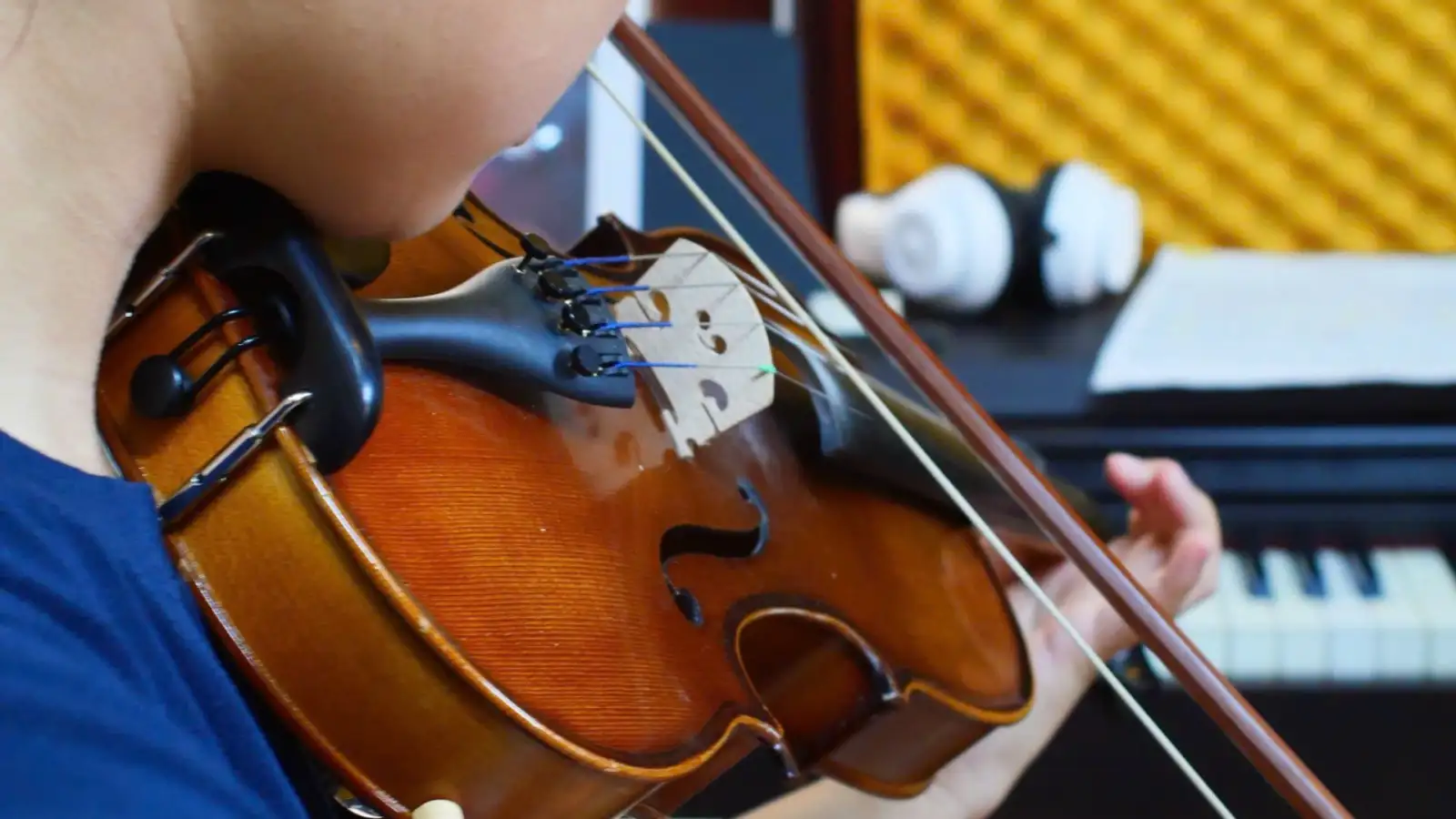
A Violin Shoulder Rest Does More Than Hold the Instrument Up
A shoulder rest fills the gap between violin and shoulder and frees your left hand. Here's why it's a setup you tune to your body, not a one-time buy.
Everything a beginner needs to get the violin playing well and keep it that way, from essential accessories to tuning, string changes, and daily care.
A shoulder rest fills the gap between violin and shoulder and frees your left hand. Here's why it's a setup you tune to your body, not a one-time buy.
How steel, synthetic, and gut violin string cores change tone, tuning stability, and durability for adult beginners, and how to choose between them.
Shoulder rests sorted by design principle: how rigid frames, foam wedges, inflatable bladders and shoulder cushions change where the violin contacts your body.
Light, medium, and heavy violin strings change how hard the string is to press. Here's how tension, gauge, and setup decide what your fingers feel.
Rosin hardness, not color, decides how your bow grips in cold dry air or hot humidity. Learn how to read your climate and pick a cake that works.
Set violin shoulder rest height, tilt, and placement in playing position, then run a release test to confirm the fit. Change one variable at a time.
What violin strings are made of, how steel, synthetic, and gut cores behave, and the daily care and replacement habits every adult beginner needs.
Treat rosin as a system: what it is, how friction makes sound, choosing by feel over label, applying it correctly, and cleaning up so the bow behaves.
Wipe the chin rest, shoulder rest feet, and case lining instead of leaving them untouched. Here is the contact-point routine that actually matters.
The black film on violin strings is rosin dust, skin oil, and metal wear from the windings, not dirt. Here is why it forms and why a dry cloth is enough.